A few years ago, I was in a cafe where they roast their own coffee. This place is a special place for us.
While we were sat in the garden with our freshly brewed coffee the owner of the cafe came over for a chat. We talked about the great service they’d given us during the COVID lockdowns delivering wonderfully tasting coffee to our house. This led to a conversation about other places where we’d ordered coffee. He asked about a roaster that he knew which was nearer to our house and whether we’d ordered from them. I told him that I’d looked at their coffee, but that “it was expensive.” His reply to me was something along the lines of “so they didn’t manage to sell you their story.” It took me a few seconds to respond to him then what followed was a master class in the difference between cost and value.
When people say to me “that’s expensive” I return to that conversation and remind myself that what people are stating isn’t that something costs too much, what they are communicating is that they don’t see the value.
“Price is what you pay. Value is what you get.”
Warren Buffett
Value comes in all sorts of shapes and sizes but is always defined by the buyer. There are lots of different aspects to the definition of value and it’s rarely about one single thing.
Sometimes the value is seemingly straightforward and without differentiation – a litre of E10 petrol from the local supermarket will get me just as far as the litre from the motorway service station but one will cost me significantly more than the other. There’s a cost difference but the functional difference is negligible. Easy?
Sometimes the value is situational – the value of the expensive service station petrol changes if I’ve been stuck in traffic and don’t have enough fuel to get home. It’s then that I’m willing to pay whatever it takes to get me to where I need to be.
Sometimes the value is non-functional – in a world where there is little functional differentiation suppliers love to build non-functional elements like point-schemes and loyalty rewards. It’s amazing what people will do for points. I wonder how many people drive past one refuelling station to get too another “for the points”. There are many non-functional elements, perhaps it’s the ethics of an organisation, or the way that their app works, perhaps the people serving you are nicer, or the shop is cleaner.
At times you get what you pay for – there’s a proverb that says “buy cheap, buy twice” which I’ve certainly experienced. I do a lot of walking, and I’ve learnt over the years that the cheap boots aren’t up to the job. You won’t see a professional workman with cheap tools, they aren’t worth the effort.
Sometimes the value is mostly emotional – I don’t buy coffee beans from a small independent roaster hundreds of miles from my house because they make more litres of coffee than cheaper brands. I buy it because I like the taste and the reason I like the taste has a lot to do with the feelings surrounding the associated memories. It’s an emotional buy, there is a limit to how far I’m willing to go for an emotion, but I will go quite a long way for a taste.
As times the value is historic – there’s an electronics shop not far from my house where the service has been so poor, in the past, that I’m not going back again. It’s probably 10 years since I’ve been in and everything could have changed, but my history is preventing me from reliving past experiences. There are other places where I’ll return because the value is always good.
“A product is not quality because it is hard to make and costs a lot of money, as manufacturers typically believe. This is incompetence. Customers pay only for what is of use to them and gives them value. Nothing else constitutes quality.”
Peter Drucker
There are all sorts of values that we can associate to something. Sometimes the values add up to a story that feels expensive, at other times we are willing to pay more to get the value.
Next time someone tells you that you are too expensive, you could cut the cost, but the outcome for both of you will be so much better if you trying to work out how to increase the value.
“The reason it seems that price is all your customers care about is that you haven’t given them anything else to care about.”
Seth Godin
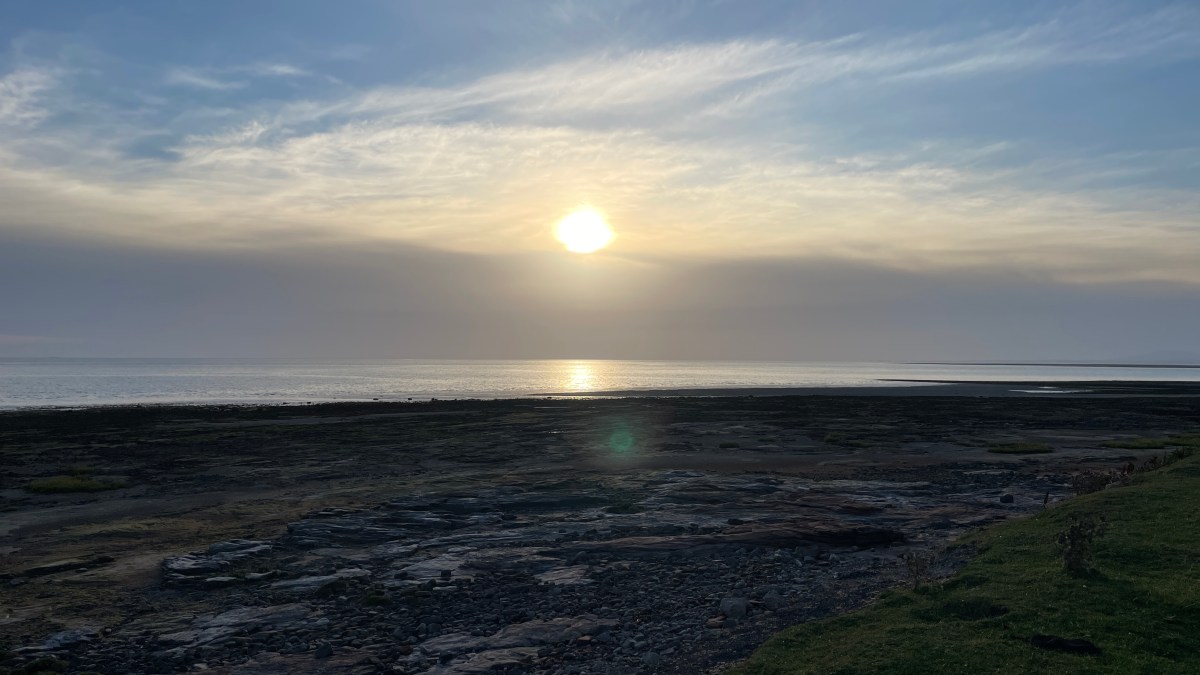
Header Image: This is the nearby Cockerham Sands on a glorious evening with birds flying everywhere.
 Graham Chastney