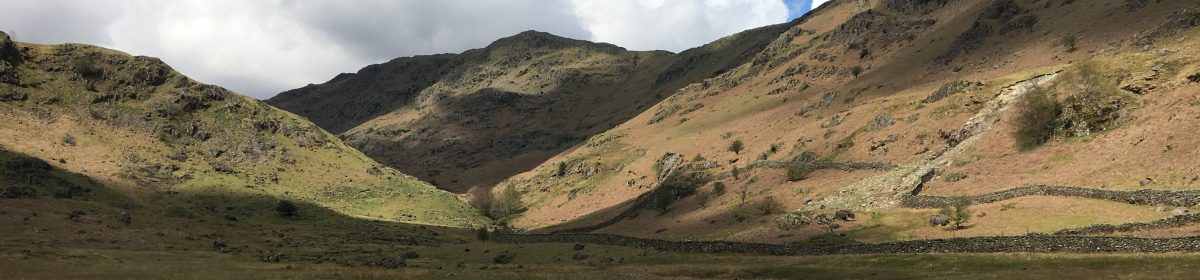
Fairfield Circular from Grasmere via Seat Sandal | Birkett FAR 4 | Graham’s Guides

A moderately long walk that takes in Fairfield one of the higher Lake District peaks (No.13 in Wainwright’s List). On a good day the views are spectacular.

Graham’s Walks Vitals

  • Distance: 6.4 miles/10.3 km
  • Elevation: 3195 ft/972 m
  • Difficulty: Moderate
  • Map: 🗺
  • GPX: 📁
  • Graham’s Cafe: This walk starts just outside Grasmere where you will find Mathilde’s Cafe and Lucia’s (awaiting a guide)
  • Classification: Birkett, Wainwright

The Area

This area is steeped in local folklore. Part way around the route it passes close to Grisedale Tarn which plays a significant part in the story of a battle supposed to have occured around 945 AD. A little further out of Grasmere towards Thirlmere the A591 splits into two with a large pile of stones between. This is supposed to mark the falling place of Dunmail, the last king of Rheged in a battle with the Anglo-Saxon King Edmund, grandson to Alfred the Great.

This story is set in that time of British history which is post the Roman Empire and there’s no clear overall ruler of the islands that we now call Britain. Rheged was occupied by the Britons at the time as was most of the west of England, Wales and south western Scotland. The Anglo-Saxon’s were the incomers to this part of the country.

According to the folklore, Dunmail is killed and his sons have their eyes gouged out to stop them being a problem in the future, but the king’s crown is not captured. A group of elite men take the crown and flee up what is now known as Raise Beck to the Grisedale Tarn and deposit the crown there. Here, in echoes of the King Arthur legends, the crown is waiting for the next king to come and claim it. There’s a lot more to this story, which is already eloquently covered here.

While we are talking King Arthur, let’s move on to Stone Arthur near the end of the route. The rocky outcrop at the peak of Stone Arthur is known as Arthur’s Seat. There may be a connection to the legendary king, but just as likely is that “Arthur” sounds similar to a word meaning “leader” in old English. It’s not the only place in the Lake District where Arthur pops up.

Stone Arthur doesn’t really belong on either the Wainwright or Birkett lists as it’s not really a summit it’s more of a rocky outcrop from Great Rigg; its prominence from Grasmere is what gets it listed.

Stone Arthur is sometimes included in the Fairfield Horseshoe route, this is a significant extension as it’s a 656 ft/200 m decent and re-climb.

This route includes four Birketts and Wainwrights: Seat Sandal, Fairfield, Great Rigg and Stone Arthur.

The Walk

In my guides to Birkett walks I’ve tried to stay close to the walk as described in Complete Lakeland Fells. It’s not always possible, but I try. On this route I’ve made a couple of changes, at the beginning and at the end.

At the beginning Birkett suggests parking on the verge near to the entrance of Mill Bridge Lane on the A591. There are a couple of places you could still conceivably park here, but most of it I no longer available due to “police notice” signs. To avoid encouraging you to break the law I’ve shifted the start a bit further along the A591, nearer to Grasmere, where there is a lay-by and much more verge parking on a straight piece of road. A word of caution though, park on a grassy verge with care they are muddy (as the van that parked behind me found out).

Because I’ve moved the start I’ve also moved the route down from Stone Arthur at the end of the walk. I did try to follow Birkett’s description of the route down, but it’s not on any of the maps I could see, nor could I see it on the ground. The alternative route down is straightforward to follow, but is also significantly more popular.

There is another change at the start of the walk. Birkett describes the obvious route up Seat Sandal, but also says that it’s blocked by a gate marked “private.” The gate to the obvious route up is no longer marked “private” and hence that’s the route I’ve taken.

From the verge on the A591 head towards the Travellers Rest on the roadside, beyond which you’ll cross over Mill Bridge. Just a short way beyond is a lane to the right. There are coast-to-coast route signs at the start.

Follow the lane up the hill until you can see the path up the ridge of Seat Sandal which you access through a gate to the left.

The path to the top is quite well defined, passing through a couple of gates on the way.

The top of Seat Sandal is defined by a cairn with a nearby stone shelter.

Continue in the same direction beyond the summit and the path ahead will become clear. The path follows the route of a now dilapidated wall. On a good visibility day you will see Grisdale Tarn slightly to the left and the impending ascent of Fairfield ahead.

Before you can ascend Fairfield you first need to descend to Grisedale Hause a steep drop of about 500 ft/150 m.

The ascent of Fairfield is similarly steep and mostly on gravel. It’s not technically difficult, it’s just steep. The route starts by following the same wall, but veers off to the right as you ascend.

There are several stone shelters at the top of Fairfield which makes it a great place for a refreshment stop. From the summit you can see a huge amount of the Lake District peaks with particularly good views across to the Helvellyn massif.

The route to Great Rigg is south of the Fairfield summit on a wide well trodden path.

Beyond the Great Rigg summit is a path off to the right to Stone Arthur.

Stone Arthur is defined by a prominent set of rocks with glorious views across Grasmere.

Continue the path down until it becomes a lane which comes out onto a road. This road is a loop off the A591, pick the direction that will take you back to your transport.

Alternatives and Extensions

One huge alternative to this route is the Fairfield Horseshoe which is a completely different walk and will be covered at some other point under the Birkett label of FAR 3. The Fairfield Horseshoe route shares a couple of peaks (Fairfield, Great Rigg) with this one, but is a very different walk.

You can miss Seat Sandal out if you want to by heading up to Grisedale Hause via the coast-to-coast route. This will make the walk shorter but you’ll still need to make the steep ascent of Fairfield.

This route can be started from Grasmere village. This adds to the length of the route without adding any particular interest.

The Coast Guard to Coast signs and the route up
The initial lane
Through this gate
Ascend through this gat
This is Stone Arthur which is the route down
Look back at the ascent
Summit of Seat Sandal
The route down from Seat Sandal along the wall, with views of the route up Fairfield
I said it was steep and gravel.
A look back at Seat Sandal
The summit of Fairfield
Plenty to see
The route to Great Rigg
The summit of Great Rigg
First glimpse of the route to Stone Arthur on the ridge in the middle
The route down to Stone Arthur
First glimpse of Stone Arthur beyond this somewhat odd title wall
This is all there is to Stone Arthu from the summit
The route down towards Grasmere
Time for some traversing
Make sure you head to the left
Down here to the lane
Stone Arthur from below

Wansfell Circular via Troutbeck | Birkett FAR 5 | Graham’s Guides

A lovely walk heading out from the popular lakeland village of Ambleside.

Graham’s Walks Vitals

  • Distance: 7.1 miles/11 km
  • Elevation: 2122 ft/646 m
  • Difficulty: Moderate – boggy in places.
  • Map: 🗺
  • GPX: 📁
  • Graham’s Cafe: None, but there are plenty of options for a cafe in Ambleside at the start or end of the route. There’s also The Old Post Office Tea Room in Troutbeck part way around.
  • Classification: Birkett, Wainwright

The Area

Bill Birkett muses: “A much loved hill, Wansfell is to Ambleside what St. Paul’s is to London.” I’m not really sure I know what he means by that because I’m not really sure I know what “St. Paul’s is to London”. I suspect it’s something to do with the way St. Paul’s stands above the London skyline.

Wansfell must have impressed the norse invaders if the common understanding of the origin of its name is correct – “Wans” pointing to “Woden” or, in English, Odin the leader of the Norse gods.

There are two peaks in this route. Birkett’s 541 counts Wansfell Pike and Wansfell. Wainwright’s 214 only counts Wansfell. Interestingly the OS map shows Wansfell Pike and Baystones, the word Wansfell is shown alongside the ridge between the two. The summit of this peak is the one marked as Baystones, and thus the summit of Wansfell. Clear? This confusion does mean that many people get to the top of Wansfell Pike and call it done but Wainwright has these words for hikers: “A grassy hummock, a little higher than many around, is the true summit of the fell: a few small stones confirm it. It is an unattractive place, rarely visited; better is the rocky top of Wansfell Pike, which at least is mildly interesting and unique in possessing an iron gate.” A Pictorial Guide to the Lakeland Fells: The Far Eastern Fells.

On this route you descend into Troutbeck where you’ll pass several roadside wells with different names above them. These are cattle troughs erected in the 1800s and the names above them most likely point to locals at the time despite them being marked as St. John, St. James, and Margaret. It’s also worth noting that what we know as Troutbeck today is really a set of hamlets within the Troutbeck valley with wonderful names like Town End, Town Head, High Green, High Fold and Low Fold which are still visible on the map.

An interesting name on this route is “The Hundreds” this refers to an ancient practice of splitting the land into areas that could sustain 100 cattle. The commoners in an area where then given a “hundred” to farm.

The Walk

This walk starts at the Low Fold Car Park between the A591 Lake Road and Old Lake Road.

Turn left out of the back of the car park on Old Lake Road. Turn right up Fisherbeck Lane and go with it as it turns left. At the t-junction turn right along Blue Hill Road. Continue along Blue Hill Road as it becomes a bridleway traversing the Wansfell hills.

The end of Blue Hill Road is marked by a gate with a path up to the right heading straight up the hillside. This path takes you all the way to the first peak – Wansfell Pike. This path is well defined and there aren’t any navigational decisions to make but it is advisable to take in the view (and let your lungs recover) as you ascend. At times it can feel a bit like you are climbing a staircase.

From Wansfell Pike follow the path along the ridge wall, with the wall on your left, to the summit of Wansfell marked Baystones on the OS Map. There’s a stile in a wall about half way along, the true summit is a short distance beyond a second wall.

It’s necessary to retrace your steps a little bit, back through the wall, to pick up the path heading down to Nanny Lane. The path you want heads to the left down hill. If visibility is reasonably good you should be able to see a wall which will take you to the lane as you descend.

Nanny Lane takes you all the way down into Troutbeck. At the end of the lane is a t-junction onto a road. Turn right along the road and proceed until you reach the Old Post Office Tea Room.

Just beyond the tea room is a lane off to the right marked as Robin Lane on maps which will start the traverse back to your starting point.

Robin Lane becomes Hundreds Road. Part way along Hundreds Road a footpath branches off to the left through a gate. This path takes us all the way back to Ambleside via High Skelghyll and Skelghyll Wood. The views on this section are spectacular. There are several benches to stop and take in the scenery.

The path becomes a lane and drops down onto Old Lake Road not far from the car park. Turn right towards the car park.

Alternatives and Extensions

If you are a lover of waterfalls you can adjust the start of this walk and head towards Stockghyll which is fabulous when water levels are high. This extension will also add in the option of a stop at Force Cafe and Terrace, personally, I prefer my refreshments at the end of a walk.

If you are looking for a slightly shorter route and the thought of descending into Troutbeck doesn’t excite you it’s possible to chop a corner off by aiming for the end of Hundreds Road. Part way along Nanny Lane there’s a kissing gate on the right from where a path heads back towards Wansfell. A short distance along this path there’s a route off to the left which goes across the moorland to the end of Hundred Road. You’ll need to keep a look out for the path to Skelghyll wood on the right.

Another alternative is to miss the Wansfell/Baystones summit out and head straight down to Nanny Lane from the summit of Wansfell Pike.

There are a few places where it’s possible to make your way down to the shore of Windermere from the traverse. While it might look like a nice thing to do, you’ll then be walking into Ambleside alongside the A591 which can be extremely busy. One of the routes down, though, takes you to Stagshaw Gardens which is a woodland garden where, in the spring and early summer, there is a wonderful display of azalea and rhododendron.

The Climb out of Ambleside with Loughrigg Fell in the foreground.
Blue Hill Road
The end of Blue Hill Road, take the path to the right
The path to the summit
Nearing the summit of Wansfell Pike and Wainwright’s iron gate
The view along Windermere from Wansfell Pike
The ridge wall towards the summit of Wansfell
Up and over the wall part way along
The summit is now in view
It’s not that much of a summit when you get there
The path to the left is the one you want
Either path works here, but the one to the right is the one I took
The stile onto Nanny Lane
Nanny Lane down to Troutbeck
Margaret’s Well
The Old Post Office Tea Room with the lane off to the right just beyond it
Views of Windermere opening out on Robin Lane
Hundreds Road to the right, the path you want to the left
Views of High Skelghyll
Views from Skelghyll Wood
Almost back in Ambleside
Onto Old Lake Road, head right back to your vehicle

Silver How and the Langdale Edge | Birkett LAN 2 | Graham’s Guides

A lower level walk that goes takes you from the softer southern fells into the more craggy Langdale fells. Including Birketts, Wainwrights and bird’s eye views of several lakes.

Graham’s Walks Vitals

  • Distance: 6.9 miles/11 km
  • Elevation: 2172 ft/662 m
  • Difficulty: Moderate
  • Map: 🗺
  • GPX: 📁
  • Graham’s Cafe: You are likely to drive past Chesters by the River
  • Classification: Birkett, Wainwright

The Area

This walk begins in the Langdale Valley starting at either the Lake District National Park Dungeon Ghyll Car Park or the roadside near Harry Place Farm. The National Trust Stickle Ghyll Car Park is also a reasonable starting place and is free if you are a member. When I recently did this walk, I forgot about the National Trust car park, where I had free parking, even though it’s only a few metres further down the road. There are regularly overflow arrangements for parking near to the New Dungeon Ghyll Hotel.

This walk includes Sickle Tarn, the stream down from the tarn is Stickle Ghyll which I have seen confused with Dungeon Ghyll which is a different ravine to the west of Stickle Ghyll.

This whole area, Dungeon Ghyll in particular, became a popular Victorian tourist destination inspired by the romantic poets, most famously the Wordsworths and their friends. What is now the Old Dungeon Ghyll Hotel evolved out of a farm house that was there before the tourists arrived. The Lake District has been a tourist destination for a long time.

This walk includes Silver How which is renown for its views; Wainwright described the views of Rydal and Grasmere as “bird’s eye” which sums it up nicely. Linking Silver How with the Langdale Edge takes us from the softer fell profiles of the south Lake District into the more rugged profiles as you head north and west.

Silver How is a popular walk from Grasmere village as a family friendly 3 miles walk.

A few name details for this walk: A “How” is a derivation from the Norse for “hill”; “Blea” is again norse this time for “dark blue”; “Rigg” continues the Norse naming meaning “ridge.” We see “Lang” in “Lang How” and “Langdale” which is still in use today in Cumbrian dialect and means “long.”

This walk includes four Birketts – Silver How, Lang How, Castle How and Blea Rigg. Silver How and Blea Rigg also count as Wainwrights

The Walk

The walk can be done in either direction. I’ve described it in the direction outlined by Birkett, if I was to walk it again I would walk it in reverse of this description. The route starts by walking to the end of the Langdale Edge climbing slowly to Blea Rigg with a rapid descent down the side of Stickle Ghyll. There are paths down both sides of Stickle Ghyll which are tourist routes with high footfall making it necessary for both paths to be highly stepped to constrain erosion. Personally walking down uneven rough stone steps is one of my least pleasurable types of walking; I prefer to walk up this type of terrain.

Setting off from the National Park car park head down the bridleway alongside the river towards to start of the valley, this will bring you out onto the road near to Harry Place Farm. Follow the road for a short distance to the right until just beyond the farm buildings where you should see a sign showing the footpath up the hill to the left.

A short way up the hillside you’ll go through a gate from where the path will swing to the right and alongside a wall on your right.

You’ll follow this path around to the left and steadily up and around Thrang Crag above Chapel Stile. There are some great views to the south from this path.

The path will cross a waterfall and then a short distance beyond there is a path heading off to the left and up to the top of Silver How.

Take some time to enjoy the view from the top before heading off towards Lang How which is north-westward.

The path towards Lang How misses out the top so you do ned to head off to the right near to one of several unmarked tarns on the route. From the top of Lang How you head back to the path you just left a little further along.

The path continues on up the ridge towards Castle How. Birkett’s book doesn’t define a top for this hill and the book is a bit ambiguous. The Database of British and Irish Hills (DoBIH), which some regard as the definitive list for hill baggers, defines the top as grid reference NY307075 (wikipedia) and is what I have included in the route map. This reference is again a short distance from the main path. While, personally, I do like to reach a defined summit I’m not going to get worried about being stood on an exact point, especially if there are several potential summits, as there are in this case,

From the defined Castle How summit we return to the path and continue along the ridge to Blea Rigg.

Between Castle How and Blea Rigg the views down to Easedale Tarn open out to the right. The physical summit of Blea Rigg isn’t that well defined either; according to the DoBIH it’s NY301078 if you want to be precise.

As you continue along the path beyond Blea Rigg and if visibility is good you should be able to see the rocky crags of Pavey Ark and the protuberance of Harrison Stickle ahead. Further progress will extend these views to include Stickle Tarn which is where we are heading.

Most paths lead to Stickle Tarn; the path you need to avoid is the one to the right which will take you up onto Sergeant Man.

Continue on the path to the edge of the tarn heading to the left and the outflow of Stickle Ghyll. You can go down either side of Stickle Ghyll, you can even change your mind part way along. My preference is to cross the river near to the tarn and travel all the way down on the western side. As I’ve mentioned earlier these paths are mostly rocky steps and require care.

The paths from Stickle Gyle emerge near to the Old Dungeon Ghyll Hotel from where your vehicle will be a short walk easterly along the road; assuming you’ve parked at this end of the valley. The walk back to Harry Place Farm will take a while longer.

Alternatives and Extensions

You should seriously consider doing this walk in reverse of what I have described, as mentioned earlier.

There are several ways to extend this walk but most of them would add several miles onto the route. It would also be possible to do the same ridge walk but from the Grasmere valley heading up to Silver How from the more common route and returning from Blea Rigg via Easedale Tarn.

Leaving the car park
Early view of the route down
The car park at Harry Place Farm
the start of the ascent
The first little gate
Early views to the south of Langdale
The path does get narrow in places
The cairn at the summit of Silver How
A glimpse of Grasmere
Unnamed Tarn on the route to Lang How
Cairn at Lang How
Views down to Easedlae
Reaching the top of Blea Rigg
First view of Stickle Tarn
The route down Stickle Ghyll
Continuing the route down
Looking back on the ridge walked

Loughrigg Fell Circular from Ambleside | Birkett LAN 2 | Graham’s Guides

This walk gives a lot of views for just 300m of ascent across a little over 6 miles.

Graham’s Walks📌
Distance6.3 miles/10.1km
Ascent1391ft/423m
DifficultyModerate
Map🗺
GPX📁
Graham’s CafeParking is in Ambleside where there are several cafe options.
ClassificationBirketts LAN 2

The Area

Loughrigg Fell sits as a viewing platform at the junction of several valleys giving it views across much of the southern Lake District. On a good visibility day the walk starts with views of Windermere, Coniston, Coniston Old Man, and the Lancashire Fells to the south. As you ascend the vista opens out to the Langdales, Loughrigg Tarn and Elterwater. Nearer the top the panorama adds in Grasmere and the surrounding hills including Helm Crag and Fairfield. If you are really fortunate you can view some of the northern lakeland fells through Dunmail Raise with the Helvellyn massif standing alongside. The later stages of the walk add in Rydal and Nab Scar.

There are so many hills visible on this route that it can be difficult to distinguish all of them; an App I find particularly useful for this is PeakFinder which allows you to point at a panorama and see the hill names above each peak.

Loughrigg Fell has been heavily quarried over many years making it pitted and potholed especially at the top. This has removed any straightforward ridge to the top, near to the top the available paths can feel a bit like a maze, up and down. Bill Birkett notes: “A proliferation of paths makes route finding rather tricky along the top.”

This walk follows quite closely the route described in Bill Birkett’s Complete Lakeland Fells as LAN 2. Loughrigg Fell is also a Wainwright.

The Walk

This walk starts from the main carpark in Ambleside, the one on Rydal Road near to Bridge House. There’s a Public Toilet in the car park.

The route starts with a little bit of navigation. Head back to Rydal Road and head to the left out of Ambleside past the Fire Station. Just beyond the Fire Station head left down Storey Lane. At the end of the lane is a paved path that leads alongside Stock Ghyll as it flows towards its confluence with the Rothay. There’s a stone footbridge over the River Rothay onto Under Loughrigg road.

Turn right over the bridge and after a short while left onto a paved lane that heads up the hill. There’s currently a post at the end of the lane indicating it’s a public bridleway. The lane heads pretty much straight up until it turns to the left and then switches back to the right. At the right-hand switch there’s a footpath off the bridleway to the left. There’s a small wooden footbridge at this point. There’s also a gate before you get to the tarn.

Beyond this point the path winds its way up to Lily Tarn where it’s worth a bit of an explore. There are some glorious views from the various hillocks that surround it. Lily Tarn is apparently good for a swim, but quite shallow.

With the tarn on your left follow the path up the hill towards the sheepfold.

The path is well defined at this point and continues until it intersects the path from Skelwith Bridge. Continue uphill on the other side as the path fringes Loughrigg Fell to the top. The top is defined by a stone built trig-point.

There are several path away from the top, picking the right one can be a challenge. The one you want is directly opposite the one you walked in on. You should be able to see Grasmere, where you are heading, which will help you get your bearings.

The path down is well used and in the latter stages becomes stepped until it reaches Loughrigg Terrace above Grasmere. Turn right onto the path along the terrace with the mere on your left.

The walk here is the popular walk to Rydal Caves which you will reach by following the contour around. On most days you’ll be able to see the path without any problems as it will be dotted with people.

At Rydal Caves take the path down until it reaches the lane that leads down to Pelter Bridge past the small car park. Before the bridge take Under Loughrigg which is the road to the right. This road will take you alongside the River Rothay all the way back to the footbridge and the path alongside Stocks Ghyll, Rydal Road and into Ambleside.

Alternatives and Extensions

It’s difficult to know where to start on the alternative routes for this one, there are many. I’ll give a few.

On your way back from Grasmere you can choose to take the lakeside route back along Grasmere, via the river Rothay alongside Rydal. That’s straightforward enough.

From the top you can miss out Grasmere and head straight across the top to the caves. It’s probably quicker, but misses out several views.

There are a set of stepping stones part way along Under Loughrigh which, given the right conditions, would allow you to cross over to the A591 a little earlier. It’s fun, but not with the payback of walking down the busy A591. There are several places where you can cross to the A591 if the need arises.

You can take a swim in Grasmere or Rydal joining someone most days. There’s also the option of descending to Loughrigg Tarn before reascending to the summit. Loughrigg Tarn is one of the best swimming spots in the lakes, but it’s a lot of down and then back up. Probably better to plan that for another day.

Parking at the main carpark in Ambleside can get busy. There are various options in Ambleside itself probably the best alternative is Miller Bridge Car Park which is only just the other side of Rothay Park. Also, it’s not too much further to walk from Waterhead via the Rothay Bridge and onto Under Loughrigg from the other end. Another alternative is to use the Rydal car parks, but they are often busier than the ones in Ambleside.

Although it might look like it can be done, please don’t expect to be able to drive the length on Under Loughrigg it’s closed part way along.

The Bridge Across the Rothay
Under Loughrigg
The Footbridge on the way to Lily Tarn
There’s a gate on the way to Lily Tarn
This is Lily Tarn
The view across Windermere from near to Lily Tarn
Loughrigg Tarn and Elterwater beyond
The top is in sight
The view from the top toward Grasmere
On the way down to Loughrigg Terrace
Along Loughrigg Terrace
Looking back towards Rydal
The stepping stones

Wainwright’s 214 and the end of a Subplot

This story has two beginnings.

One beginning is no longer recoverable from my memory, lost in time and masked by other memories. This beginning is on a family holiday in my early childhood with parents of three children determined to enjoy the countryside.

The other beginning is in a small room with a group of young men talking about life. I am supposed to be the experienced one in the room, but the truth is that I’m learning just as much as they are. We are looking at a book with the title Storyline. The basic thought of this book is that many stories follow a pattern, and if you consider your life as a set of stories you can decide where in that pattern each of your stories are. What is more, you can choose the stories that you want to participate in and consciously write your own life stories.

One of the stories that I wanted to write was around my fitness and sustaining a lifestyle that would enable me to be healthy.  I don’t play a sport, and I’m not really a fan of the gym even though I attended one at the time. I’ve always enjoyed hiking making it the obvious choice for my fitness story, but what would the aim be? How would the story go?

Many great stories have a climactic event near the end where a target is met or a goal achieved. Sometimes it’s easier to build the story from that event backwards, which is what I did? I needed a hiking goal that would give me something to aim for over an extended period, which was also interesting enough for me to keep going.

Not far from where I live is the Lake District National Park and within its confines are a set of mountains, some that I have walked many times, others I would never choose to visit. The paths and peaks of this area where described in a set of guidebooks written by A. Wainwright known as Pictorial Guides of the Lakeland Fells. There are 214 hills described and climbing each of them has become a goal for many, and seemed like the obvious aspiration for me. Goal set.

There were a couple of options for the climactic event, I hadn’t climbed the highest of the 214, the highest in England, Scafell Pike. I wanted the big day to be a social occasion and leaving a big one to be that hill would exclude several people including family members. The alternative was obvious, a smaller hill in a prominent place which many could climb, even the smallest amongst us. The most northerly hill of the 214, Binsey, is number 191 in size and sits on its own. It’s not naturally part of another walk, you walk it on its own and I’d never walked it, so it seemed like the natural choice. Binsey would be the final walk with family and friends, a climactic event to look forward to, an occasion to celebrate.

(I kept Scafell Pike to for my penultimate walk. My penultimate hill was Great End which seemed fitting)

There was also the challenge of when this event would take place and several years back it seemed sensible that I should be able to do this walk by my fiftieth birthday. A goal with a date.

Working back through the other phases of the story was just as important though, and one of the phases in every good story is the time of struggle. There aren’t many great stories that where everything goes according to plan, struggle is normal, and the Storyline approach encourages you to recognize what those struggles might be and to prepare for them. The primary constraint was always going to be time, I have responsibilities and people that are important to me who are always going to be higher on the priority list. My preparation for this struggle was simple, I was going to hold the target of my fiftieth birthday lightly and keep a good record of my progress to stop myself becoming dispirited. As it happened my fiftieth birthday came and went without my climactic event, but I am proud of the priority choices that I made instead, important people and family situations that needed my time.

Intermittent goals were also important. It seems like a lifetime ago that I was stood part way around the Fairfield Horseshoe with two close friends taking selfies as we reached a third of the hills climbed (which is, of course, part way between 71 and 72). I reached the halfway mark on Great Mell Fell where my celebration was a picture on social media and great encouragement from family and friends:

Every story needs a beginning, a reason to start. Most of the time these beginnings occur when something happens unexpectedly and the only response is to start out on the journey. It doesn’t have to be an unexpected beginning though, there are parts of our lives were we get to write the story, we choose the beginning and the journey, we even design the ending.

Completing the Wainwrights has been a story that I wrote, I didn’t write every detail of it, that would have been dull, but I did create the plot and saw it come to fruition. The journey was an adventure and completing it with friends and family was one of those life occasions that will stay with me. An extra special treat was that I got spend it with my Grandson for whom it was his first Wainwright, hopefully the first of many.

The questions I’ve been asked more than any other is “what are you going to do next?” What’s the next climactic event? I haven’t decided yet. I love hiking and will continue to do that. There are many of the hills that I didn’t see the top of because of the weather, perhaps I’ll revisit those. There are other routes up many of the hills, perhaps that will be the goal. I counted all of the hills that I climbed in my childhood and prior to starting the story, perhaps I’ll revisit those. Some suggested swimming all of the lakes in the Lake District, but I’ve nearly done that already, for the permissible ones that is. No, I won’t be aiming to complete the Munros. All I can be sure of is that I will be writing a new plot. Thank you to everyone who has joined me on this one, whether it’s been in person or online.

Heading Image: This is Jimmy and Grandad who have accompanied me on many of my walks. When I started taking them with me I had no idea that I would become a Grandpa before I completed this subplot. The best stories all contain something unexpected.