“Expensive” is a definition of value not cost | Working Principles

A few years ago, I was in a cafe where they roast their own coffee. This place is a special place for us.

While we were sat in the garden with our freshly brewed coffee the owner of the cafe came over for a chat. We talked about the great service they’d given us during the COVID lockdowns delivering wonderfully tasting coffee to our house. This led to a conversation about other places where we’d ordered coffee. He asked about a roaster that he knew which was nearer to our house and whether we’d ordered from them. I told him that I’d looked at their coffee, but that “it was expensive.” His reply to me was something along the lines of “so they didn’t manage to sell you their story.” It took me a few seconds to respond to him then what followed was a master class in the difference between cost and value.

When people say to me “that’s expensive” I return to that conversation and remind myself that what people are stating isn’t that something costs too much, what they are communicating is that they don’t see the value.

“Price is what you pay. Value is what you get.”

Warren Buffett

Value comes in all sorts of shapes and sizes but is always defined by the buyer. There are lots of different aspects to the definition of value and it’s rarely about one single thing.

Sometimes the value is seemingly straightforward and without differentiation – a litre of E10 petrol from the local supermarket will get me just as far as the litre from the motorway service station but one will cost me significantly more than the other. There’s a cost difference but the functional difference is negligible. Easy?

Sometimes the value is situational – the value of the expensive service station petrol changes if I’ve been stuck in traffic and don’t have enough fuel to get home. It’s then that I’m willing to pay whatever it takes to get me to where I need to be.

Sometimes the value is non-functional – in a world where there is little functional differentiation suppliers love to build non-functional elements like point-schemes and loyalty rewards. It’s amazing what people will do for points. I wonder how many people drive past one refuelling station to get too another “for the points”. There are many non-functional elements, perhaps it’s the ethics of an organisation, or the way that their app works, perhaps the people serving you are nicer, or the shop is cleaner.

At times you get what you pay for – there’s a proverb that says “buy cheap, buy twice” which I’ve certainly experienced. I do a lot of walking, and I’ve learnt over the years that the cheap boots aren’t up to the job. You won’t see a professional workman with cheap tools, they aren’t worth the effort.

Sometimes the value is mostly emotional – I don’t buy coffee beans from a small independent roaster hundreds of miles from my house because they make more litres of coffee than cheaper brands. I buy it because I like the taste and the reason I like the taste has a lot to do with the feelings surrounding the associated memories. It’s an emotional buy, there is a limit to how far I’m willing to go for an emotion, but I will go quite a long way for a taste.

As times the value is historic – there’s an electronics shop not far from my house where the service has been so poor, in the past, that I’m not going back again. It’s probably 10 years since I’ve been in and everything could have changed, but my history is preventing me from reliving past experiences. There are other places where I’ll return because the value is always good.

“A product is not quality because it is hard to make and costs a lot of money, as manufacturers typically believe. This is incompetence. Customers pay only for what is of use to them and gives them value. Nothing else constitutes quality.”

Peter Drucker

There are all sorts of values that we can associate to something. Sometimes the values add up to a story that feels expensive, at other times we are willing to pay more to get the value.

Next time someone tells you that you are too expensive, you could cut the cost, but the outcome for both of you will be so much better if you trying to work out how to increase the value.

“The reason it seems that price is all your customers care about is that you haven’t given them anything else to care about.”

Seth Godin

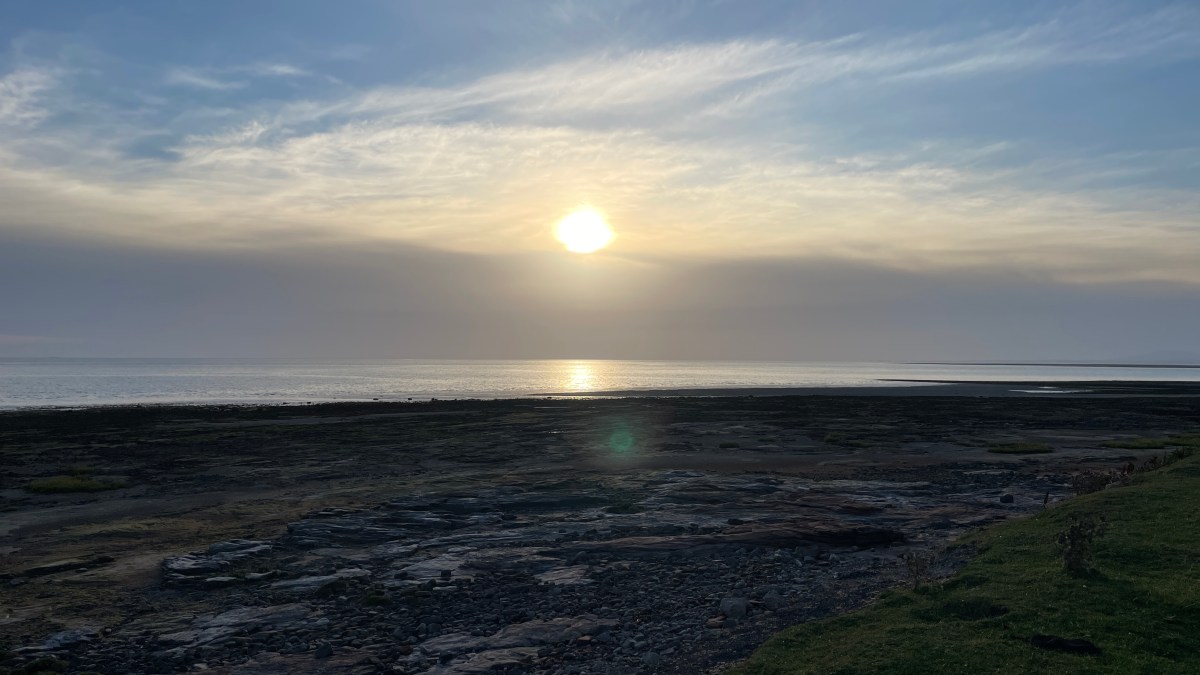
Header Image: This is the nearby Cockerham Sands on a glorious evening with birds flying everywhere.

Repeat after me: “Meetings are work” | Working Principles

It’s a work morning and I open my calendar to see what the day has in store for me. It’s heavily littered with meetings, and I wonder to myself “when am I supposed to get some work done?”

Later on that day a meeting, amazingly, finishes early and I quietly vocalize to myself “Great, now I can get some work done.” I look down at my list of tasks and realise that my brain is too addled to be able to get anything constructive done in the fifteen minutes that I have.

I’m not a fan of meetings, perhaps you already guessed, I’m in good company:

Meetings are by definition a concession to deficient organization. For one either meets or one works.

Peter Drucker

A committee is an animal with four back legs.

John le Carre

If you had to identify, in one word, the reason why the human race has not achieved, and never will achieve, its full potential, that word would be ‘meetings.’

Dave Barry

I’ve searched all the parks in all the cities – and found no statues of Committees.

Gilbert K. Chesterton

What is it about meetings that make us feel this way? Why doesn’t a gathering of people around a subject make us feel fulfilled, energised? Why would I rather be writing a document?

What is it that is so broken here?

Is it the way that meetings are run that is broken? Or perhaps it’s my attitude, others appear to have an enthusiasm for gatherings that I can’t muster? Or maybe it’s a collective problem that we all need to own our part of?

Let’s take a look at a few more quotes:

“The magic to a great meeting is all of the work that’s done beforehand.”

Bill Russell

Let’s start by thinking about the work that happens before a meeting.

Most of us can tell when someone is winging it and most of us are rightly frustrated by those meetings where a lack of preparation wastes everyone’s time.

So many good meetings are created in the hours before the session.

I’m currently doing a series of meetings which are really training sessions. These meetings are being recorded because we expect people to go back over the content which is motivating us to be prepared.

Those meetings feel so rich.

“If we have a clear agenda in advance, and we are fully present and fully contributing, the meetings do go much faster.”

Unknown

We live in a very distracted world and no more so than at work. We apply half our attntion to many virtual meetings and the result is that things that could happen in ten minutes take twenty, thirty, forty minutes.

Despite what you think, you are not enabled for multi-tasking.

I hope that’s we’ve all attended meetings where we’ve been in the zone, fully present, and felt the exhilaration of getting something done that perhaps you didn’t think could be done, or would take a long time to get done.

“The longer the meeting, the less is accomplished.”

Tim Cook

In our virtual working world it’s so easy for people to call a meeting and pick the length. It’s a truism to say that the time taken for a meeting grows to meet the time available. How many 1 hour meetings should have been 30 minutes? How many 30 minute meeting should have been an email? Meetings rarely finish early while I’m sure much of that is to do with people’s attention to the meeting sometimes it was just poor meeting management.

I’ve worked internationally for over 30 years and have learnt to recognise that timekeeping differs around the world. There are some cultures where time appears to be more liquid than we expect in the UK.

In every organisation there are individuals that have their own view on the meaning of an hour and a minute. I make no apology for my reputation as a fierce timekeeper. Far too many meetings have all of the energy sucked out of them by the weight of time.

The thing that is regularly going through my head in these situations is the cost-benefit analysis of the meeting. Yet, there are times when I come out of a meeting and know that the value of the gathering was way higher than the hours spent, that things were achieved that would have taken days to get done in any other way.

“Great things in business are never done by one person. They’re done by a team of people.”

Steve Jobs

This is the reality of business, it’s about the team and teams need to communicate. We have many different ways of communicating but nothing comes close to the meeting. While so many meetings are frustrating, time-wasting, energy sapping, distracted, sinkholes for precious, never to be recovered, minutes there really is no replacement for them. When they are well-prepared, engaging, focussed, enlightening gatherings they can be magical places where real work gets done.

I am trying to change my attitude and to remind myself that meetings are work – but I have a long way to go.

Header Image: This is a sculpture called the The Praying Shell which overlooks Morecambe Bay near to where 23 Chinese cockle pickers tragicly died in 2004. The sculpture was envisioned before the tragedy it’s become something of a symbol for it.

"We now accept the fact that learning is a lifelong process of…

“We now accept the fact that learning is a lifelong process of keeping abreast of change. And the most pressing task is to teach people how to learn.”

Peter Drucker

“A man should never be promoted to a managerial position if…

“A man should never be promoted to a managerial position if his vision focuses on people’s weaknesses rather than on their strengths.”

Peter Drucker

"No institution can possibly survive if it needs geniuses or supermen to…

“No institution can possibly survive if it needs geniuses or supermen to manage it. It must be organized in such a way as to be able to get along under a leadership composed of average human beings.”

Peter Drucker

"They’re not employees, they’re…

“They’re not employees, they’re people.”

Peter Drucker

"Only three things happen naturally in organisations…

“Only three things happen naturally in organizations: friction, confusion, and underperformance. Everything else requires leadership.”

Peter Drucker

"Follow effective action with quiet reflection. From the quiet reflection…

“Follow effective action with quiet reflection. From the quiet reflection will come even more effective action.”

Peter Drucker

"There is nothing so useless as doing efficiently that which should…

“There is nothing so useless as doing efficiently that which should not be done at all.”

Peter Drucker

"People who don't take risks generally make about two big mistakes a year…

“People who don’t take risks generally make about two big mistakes a year. People who do take risks generally make about two big mistakes a year.”

Peter Drucker

"The most important thing in communication is to…

“The most important thing in communication is to hear what isn’t being said.”

Peter Drucker

"Ninety percent of what we call 'management' consists of making it difficult…

“Ninety percent of what we call ‘management’ consists of making it difficult for people to get things done.”

Peter Drucker