Levens Deer Park Circular from Levens Hall, Carnforth | Graham’s Guides

A glorious parkland walk with interest all year round. Closer to home than the Lake District with a wonderful Graham’s cafe at the start/end.

Graham’s Walks📌
Distance3.2 miles
DifficultyModerate
Map🗺
GPX📁
Graham’s CafeLevens Kitchen

The Area

Levens Deer Park is part of the grounds of Levens Hall, it is free to enter. Parking for free at Levens Hall as is use of the toilets. Then on top of that, you can go to Levens Kitchen at either the beginning or the end of the walk, or both if that’s how the mood takes you.

What’s not to like, parking, toilets, walk and cafe all for the cost of a coffee. You could even pick up some fresh bread and cakes at the bakery.

While we love the Lake District there are days when we would rather be a little closer to home and away from the visiting hoards; this walk is one of our favourites on such occasions. That’s not to say that this is a second-best walk, it’s a wonderful little ramble. It’s not overly long and not too arduous, but is long enough to get the lungs going with enough elevation to stretch the legs. There’s plenty of interest too; waterfalls, goats, deer and if you are fortunate jumping salmon.

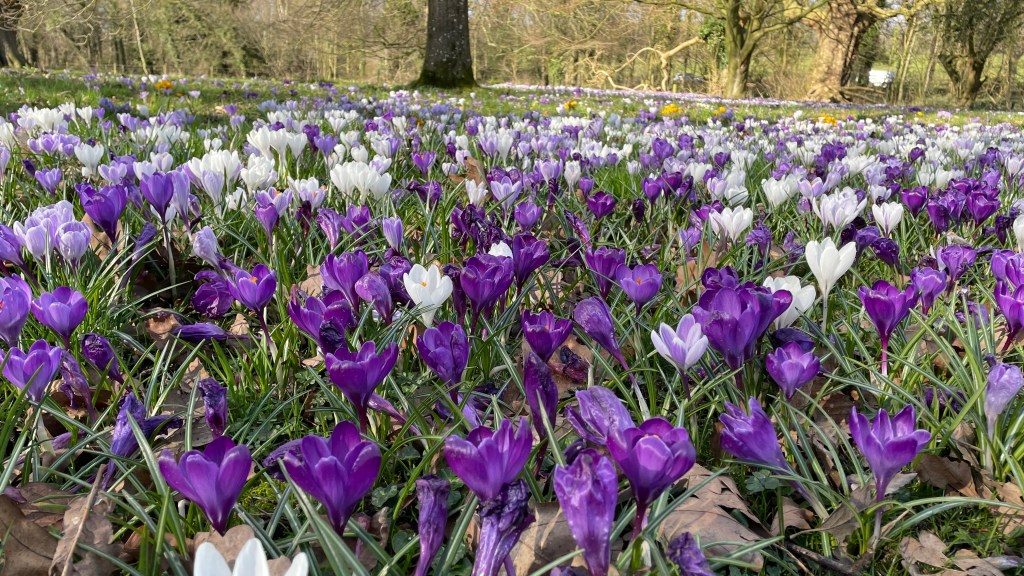
This walk is good all year round. In the spring there are blankets of crocus alongside the river near to the car park and blankets of snowdrops in other places. The summer brings cooling dappled light along deciduous tree lined avenues. In the autumn the trees transform into an explosion of colour giving great views along the river, this is when the salmon do their leaping. Cold crisp days in the winter bring a different light and the joy of crunching through parkland.

While the parkland may look naturalistic, it was actually landscaped over 300 years ago at the same time as the gardens at the hall. Imagine the physical manpower involved in landscaping such a vast area 300 years ago!

The Walk

There are a few places on this route where a decision needs to be made, most of the time the route is defined by the parkland. At the farthest end of the walk you leave the park to cross the river and then reenter it to return.

We start this walk from the car park of Levens Hall. It’s free to park and I’ve never known parking to be a problem. If the car park is closed for any reason there is also parking on the road leading down from the A590. Not really sure how to describe this parking option, so here’s a pin for it.

Head out of the hall the way you came in, along the avenue through the stone archway. You will need your wits about you as you cross the road; the cars can come fast and there isn’t an obvious place to safely cross.

Once on the other side of the road we are going to do this walk clockwise which means walking along the road for a short distance, across the river and into the park through the small steel gates in the wall and then down some steps onto the path.

You should now be able to see in front of you the river Kent to your right as it sweeps to the left. The path follows this same sweep up a gradual incline. There’s also a signpost showing the walk. This sign also, currently, advises you not to swim in the river because of pollution, it always looks clear, but the danger is often what you can’t see.

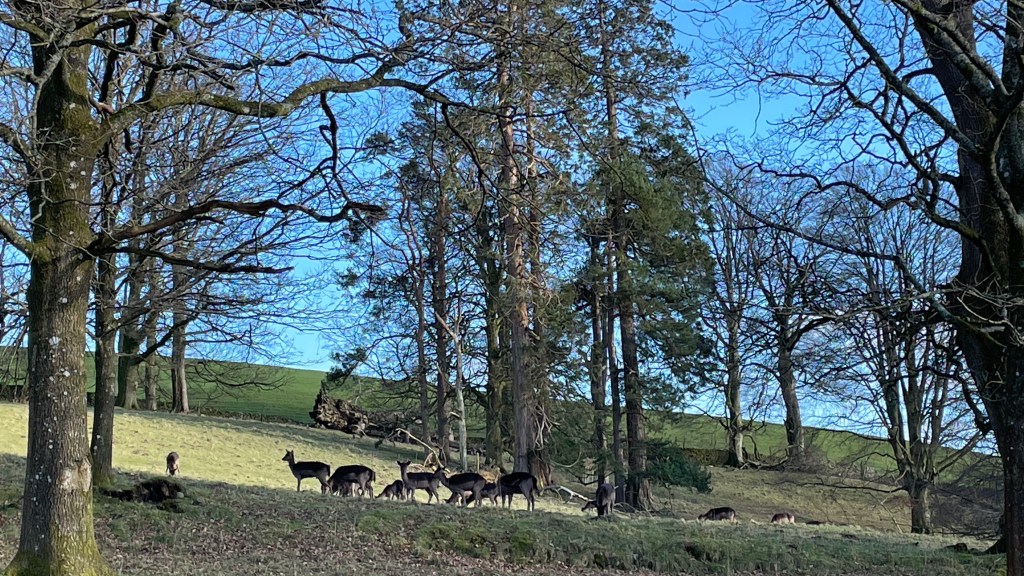
If you are fortunate you may see some black fallow deer or some Bagot goats. The deer are regularly on this side of the river, but the goats are more regularly on the other side near to the end of the walk. The black fallow deer are a dark variant of the common European fallow deer. The Bagot goats have striking horns and very cute kids in the spring.

We follow this path across the park and upstream. The path is well defined and eventually takes a lefthand turn reaching a stile and gate over a wall. On the far side of the wall turn right and follow the wall along the edge of the field. This is one area where it can get muddy in wet periods.

The path follows the wall across a field, over another stile, and across the middle of another field.

On the far side of the second field a gate opens out on to a lane by a cottage. Turn right and follow the lane until you come to a path underneath the A590 as it travels over the River Kent. The lane continues on the other side.

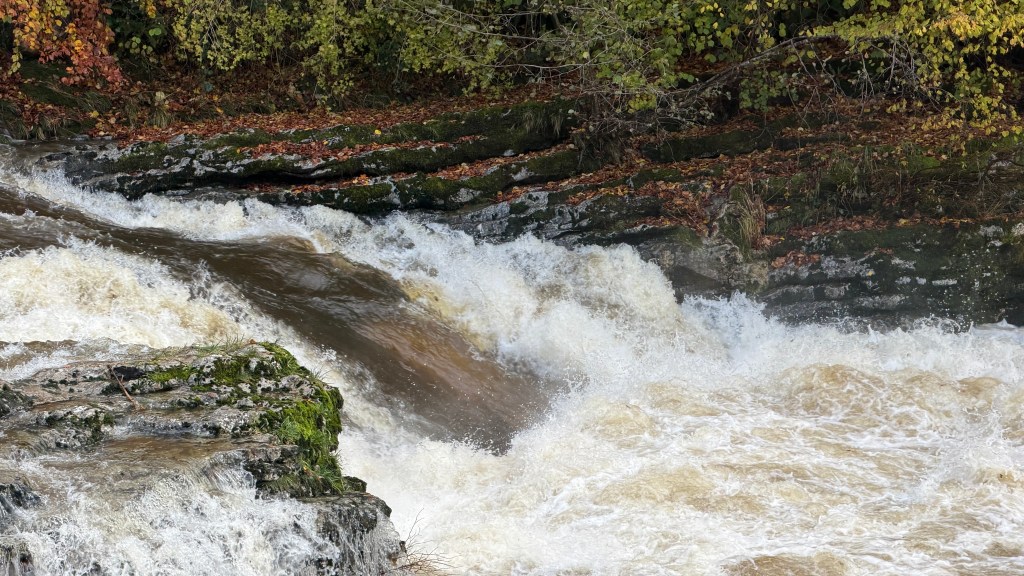
A short way along the lane you will come to some cottages. Just before these cottages there’s a small carpark. To the rear of the carpark there’s a waterfall where, in the right season and if you wait long enough, you can see salmon leaping.

Continuing along the lane you will get views of several other waterfalls. This area is abundant with snowdrops in the spring.

The lane comes out at a road-bridge over the river to the right. Walk across the bridge and take the road to the right on the other side. It’s mostly righthand turns on this walk – it’s a clockwise walk. The views aren’t great for this small section as the river is masked by a large stone wall.

Follow the road over the A590 dual carriageway beyond which you will see a gate to the right. There’s a stile with a small gate at the top over which you will turn left. You are now back in the deer park on an avenue of mature deciduous trees. You follow this avenue most of the way back to the hall.

I imagine that the owners of the hall would promenade along this avenue with all the trappings of the important, or hunt the deer on horseback.

Near to the end of the avenue the path veers off to the right following the route of the river back to the road. This is the area where the Bagot goats tend to frequent.

Cross the road back to the hall and your vehicle.

Alternatives and Variations

There’s an extension to the route at the far end that takes in the now disused upper-reaches of the Lancaster Canal and also takes in Sedgwick House and the Hincaster Tunnel. This extension is fully described as Walk 3 on the Lancaster Canal Towpath Trail.

At the top of the walk, before crossing over the River Kent there’s a short extension to a footbridge a bit further upstream beyond the wonderfully named Nannypie Lane. I’ve seen photographs of salmon leaping in this area, but never seen any myself.

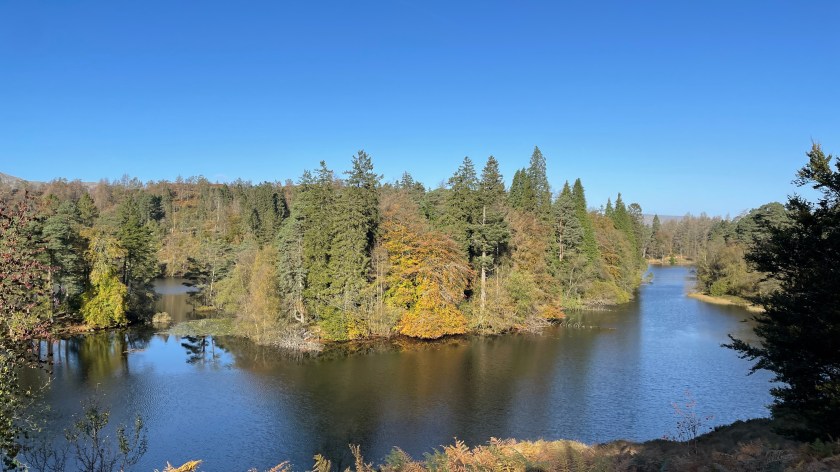
Glorious Autumn colours
Snowdrops by the River Kent
Crocus in full bloom
Black Fallow Deer
Watching for Salmon

Helm Crag, Gibson Knott, Calf Crag Circular from Grasmere | Graham’s Guides

A beautiful moderate ridge walk with views across to many of the Lake District larger mountains.

Graham’s Walks📌
Distance8.2 miles
DifficultyModerate
Map🗺
GPX📁
Graham’s CafeLucia’s Cafe + Bakehouse
Mathilde’s at The Heaton Cooper Studio

The Area

Helm Crag, while not one of the highest peaks in the Lake District, is one of the better known ones. The rocky outcrop that sits at the end of the ridge has a shape that provokes several nicknames. The shape of the outcrop have provoked popular names the Lion and Lamb and The Old Woman Playing the Organ depending on where you are viewing it. I have no idea why it’s an Old Woman the shape isn’t that specific, the Lion and Lamb reference is from the Bible and makes sense from certain directions. While this rock formation is distinctive, it’s not the summit, that’s a bit further along.

This walk starts from the valley where it can be quite sheltered. Although the ridge is quite low, it can be very exposed even if the weather in the valley feels benign. I recommend that you take extra clothing in anticipation of this.

We are starting this walk from Red Bank car park in Grasmere. On this occasion I decided to pick some bagging up at Lucia’s on the way through the village – the choice, sweet-chilli sausage roll and a raspberry blondie, both were excellent.

(Bagging: is a Cumbrian term for a packed lunch.)

This walk takes in three Wainwrights (Helm Crag, Gibson Knott and Calf Crag) there is a forth available at Steel Fell if you fancy a variation. This extended route is also known as the Greenburn Horseshoe and is traditionally done the other way around, starting on Steel Fell. I’d recently been up Steel Fell on a different route so chose the beauty of Far Easdale.

The Walk

Leave Red Bank Car Park and head through Grasmere aiming for Easedale Road via Broadgate. Broadgate is directly opposite the entrance o the car park. Follow Easdale Road past the Glenthorne Quaker Centre, then past the entrance to The Lancrigg. The Lancrigg sometimes offers parking which can be a great alternative for this walk.

Further along the road you will come to a small gathering of houses. This is where the road ceases to be tarmac and where we need to depart from it. At the end of the tarmac, the lane continues straight-on, but there is also a lane off to the right, up an incline. A short way along this lane it will veer to the left and then there is a bridleway to the right. This should have a footpath post pointing you towards Helm Crag.

Follow this path to the top of the crag. This part of the path is well marked and stepped in places. It does zig-zag a bit, but the main route Is clear.

From this point on this is a ridge walk until we get beyond Calf Crag. There are a few path off to either side, but the main path is the one we are going to travel.

The rocky outcrops along the top of Helm Crag are dramatic, but I don’t recommend climbing them unless you have particular skills.

The summit of Gibson Knott isn’t very distinct if that kind of thing matters to you but it did make for a great place to stop and eat my bagging.

From Calf Crag head down hill following the same ridge route. Once you’ve descended a little you’ll notice a path off to the left heading down into the valley and following the route of Far Easedale Gill. This path will take you all the way down to the path that started your Helm Crag ascent. The path crosses the stream a couple of times as you descend. If you are close to the stream you won’t be far wrong.

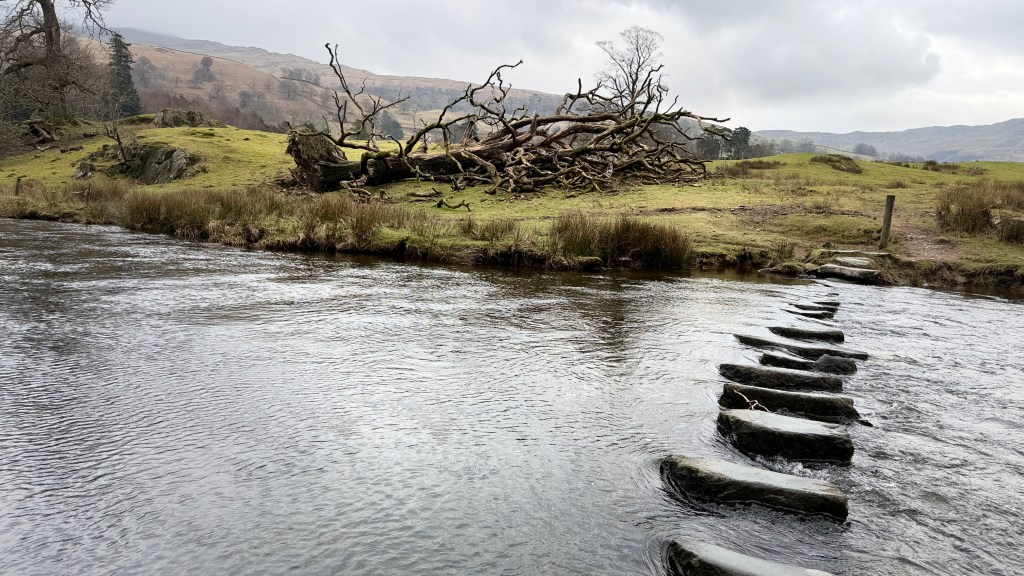
You’ll find with this walk that the number of people will diminish the further away from Grasmere that you walk. A few people make it to the top of Helm Crag, very few make it up Gibson Knott. You are most likely to have Far Easdale to yourself until you get to the stepping stones and footbridge at Stythwaite Steps.

Beyond Stythwaite Steps the path soon becomes a bridleway.

The route back to your car simply retraces the route you’ve already travelled through Grasmere village.

Alternatives and Variations

As a ridge walk there aren’t too many variations to this walk.

You can add Steel Fell in and create the Greenburn Horseshoe. This is a good walk, but can get quite wet and muddy at the top after Calf Crag.

This walk can be done in either direction, my only caution to that is the descent from Helm Crag which includes quite a few steps. I prefer to walk up steps.

The walk can be shortened by descending from either side of the ridge between Helm Crag and Gibson Knott. There’s also the option to descend on the Greenburn side after Gibson Knott.

Heading out with Helm Crag on the right
The path to the top of Helm Crag
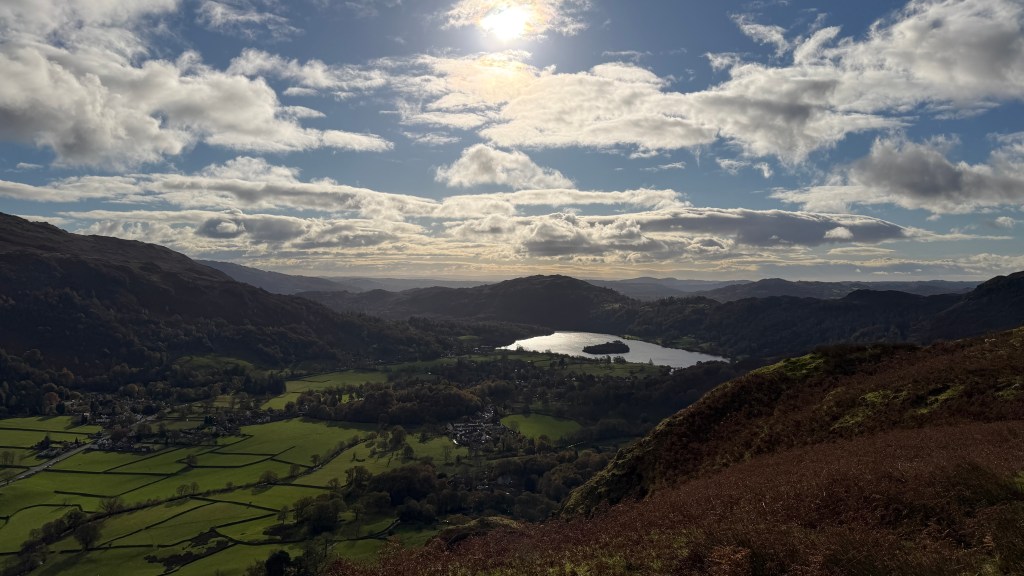
Looking back, with Grasmere behind
Continuing the ascent
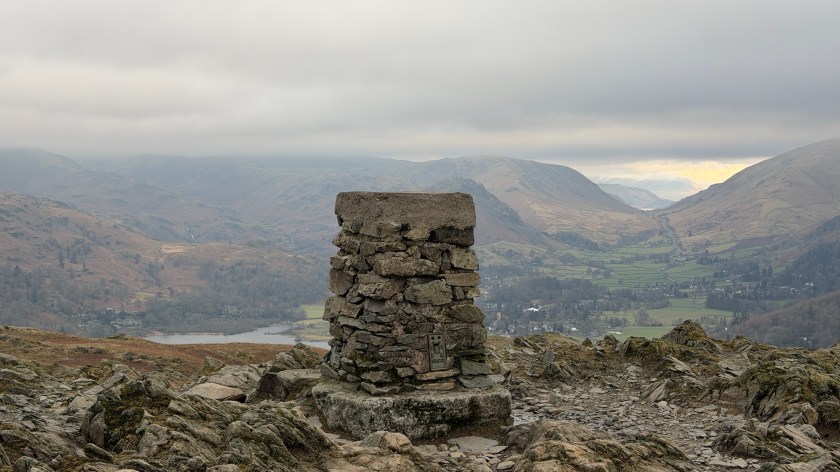
Almost at the top of Helm Crag
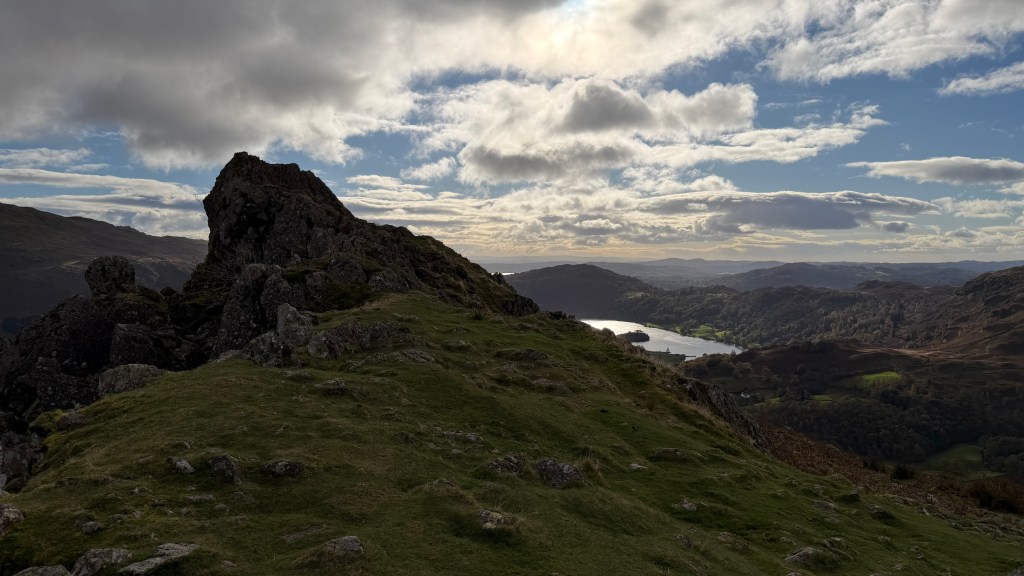
The Lion and Lamb
The walk ahead to Calf Crag on the right, with the path down to the left
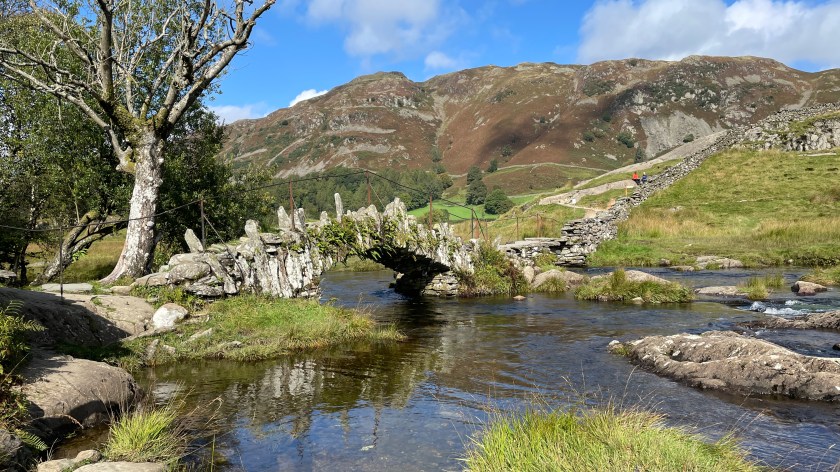
On the footbridge at Stythwaite Steps

Silverdale Circular via Scout Wood and The Cove | Graham’s Guides

A favourite revisited, with an added glorious surprise.

Graham’s Walks📌
Distance2.6 miles
DifficultyModerate
Map🗺
GPX📁
Graham’s CafeThe Wolf Cafe

The Area

While we love the Lake District, we are privileged to be surrounded by many beautiful places a bit closer to home. Silverdale is somewhere we have visited regularly even spending holiday weeks. A frequent route for us is a circular walk from Wolfhouse through Scout Wood, across the village to The Cove and back to the car and a cafe stop.

On a recent visit our walk was tinged with sadness; one of our favourite cafes, the one at Wolfhouse itself, had closed a few months before. We have many fond memories of sitting in the tiny cafe, or the outside courtyard having rented the house next to the gallery a coupe of times..

Silverdale sits on limestone which makes this countryside what it is, showing up in outcrops, forming the cliffs and in the miles of drystone walls. While we are reflecting on Silverdale, it’s worth noting that it’s probably not called Silverdale because of the colour or even the metal, it’s far more likely to be a morphing of a Norse word. There are quite a lot of things around the Irish Sea that were named by the Vikings.

The Walk

On the map this walk starts from Wolfhouse itself, but on our latest visit we set off from the entrance to Scout Wood which is a little way up the hill from Wolfhouse. There’s room for a few cars there; it’s also a great place to start one of the alternatives to this walk which adds in Jenny Brown’s Point. The entrance to Scout Wood is through a gap in the limestone wall immediately followed by a fork of the path, we take the one to the right, the higher road.

This portion of the walk takes us along the top of a limestone cliff covered in ancient woodland on one side, with pastureland, over the drystone wall, on the other. The cliff is known as Woodwell Cliff reflecting the presence of the Woodwell at the bottom. There is another route around Silverdale that takes in the various ancient wells in the area but that’s not what we have planned for today.

This is sheep country, they are likely to be in the fields on at least part of this walk; this also means that it’s a great walk in the spring when the lambs have been born.

We follow the path along the top of the cliff and through the woods. At the end of the woods is a kissing-gate where the woods opens out. The path takes a bit of a wiggle here to the right and then to the left where there’s another gate following which the route is again defined by the cliff, a wall and some more pastureland.

At the end of the wall there’s a gap to the right onto a path alongside a field and onto a lane known as The Chase.

We are at the outskirts of the village here and about to meet Stankelt Road. At the end of The Chase turn right and then the next left down a lane. At the end of the is a farmhouse and to the left of it is a gate into a field. The path here runs along the back of some houses to the left and opens out to a wonderful view across the open countryside to the right. If you know what you are looking for you can see the outline of the huge Middlebarrow Quarry now disused but providing another variation to this walk.

At the end of the field there’s a small gate onto a lane that takes you down the back of St John’s Church and onto Emersgate Lane. Turn right onto Emersgate Lane and a short way along you will see a narrow lane on the left between two houses. Some would call it a ginnel or even a snicket; the name you use for a narrow lane can define you in the eyes of certain people.

At the end of the footpath you will come out onto Cove Road near to the children’s playground, plenty of fun here for the younger ones, the zip-wire is particularly good.

As its name would suggest Cove Road is what will take us to The Cove. Unfortunately, there isn’t a defined path along the full length of Cove Road so you do have to be watchful for vehicles. It’s generally not too busy and the tightness of the space means that, hopefully, none of the vehicles are travelling too quickly.

Having travelled along Cove Road for a little way the road will take a sharp righthand turn towards Arnside at Cove Orchard and Cove House. We, however, are taking the road off to the left called Cove Lane. Anyone like to guess what the defining feature of the landscape is in this area?

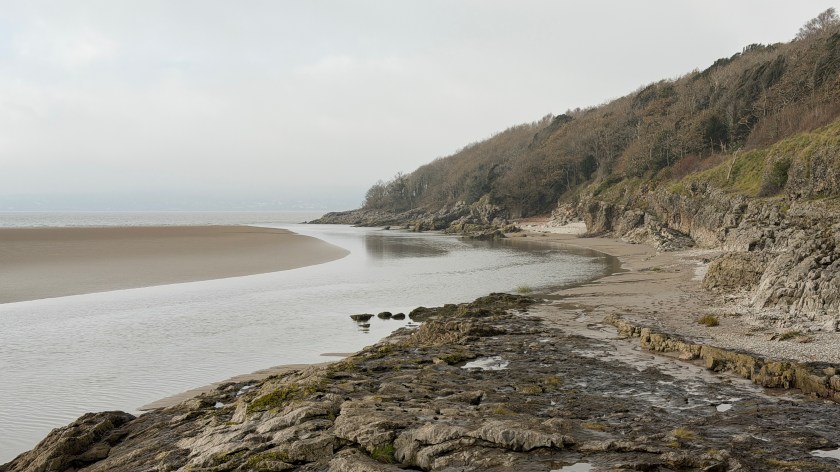
Cove Lane takes you down to the long-anticipated cove. We are quite relaxed about how we name things in the UK despite our love of definitions. A lane and a road have distinct meanings but are used interchangeably in many situations. This is one of those situations; a cove would normally define an inlet of water and here that’s not really the case. It’s a very lovely cutting in the limestone down to the shore, but I’m not sure it’s really a cove. Also, I’m not sure whether to call it a beach.

As you enter The Cove note that there’s a path off to the left, that’s where we are going after we’ve done a bit of exploring.

To the right is a cliff that curves around and in which there is a cave. The cave doesn’t go very deep, but it’s big enough to get into. The clamber up has become smoothed by the many feet that have made their way up and care is required. The house on the land above the cave has a tenuous connection with the Bronte sisters via its original owner Rev Carus Wilson.

What lies beyond the cove is the flatland of Morecambe Bay which often has an other-worldly look about it. If you are there in the afternoon or evening the bay looks particularly spectacular with the sun on it; the sunsets can be amazing. This isn’t, however, a place you go to for the traditional seaside experiences. You’re unlikely to see any sea, or waves, and I wouldn’t recommend going in if you did; the combination of tidal forces, mud, quicksand and swirling winds can be deadly. If an exploration out into the bay sounds like an appealing idea, the best way of doing it is to join the Kings Guide to the Sands on one of their walks.

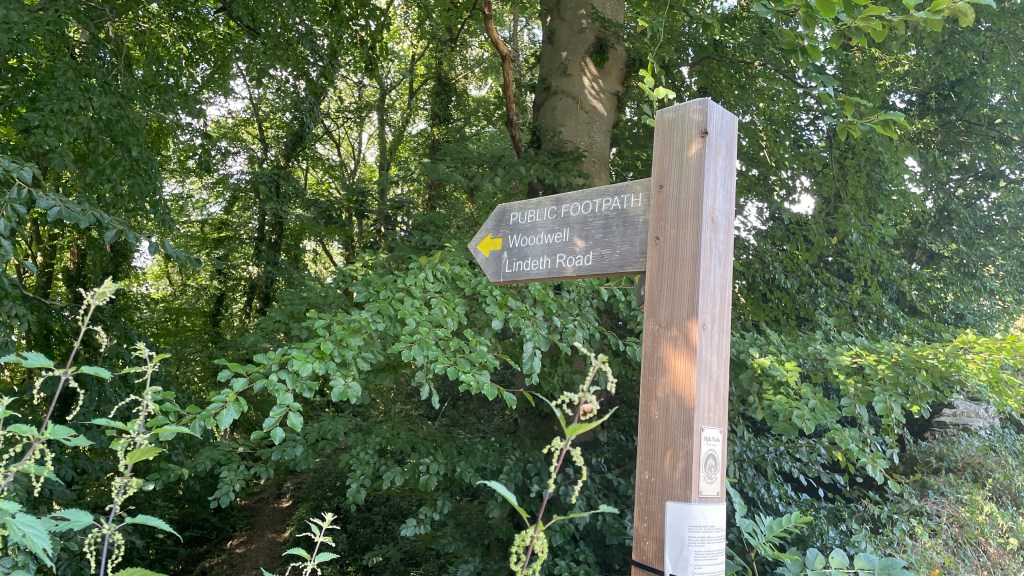
From the cove we wander up the path along the top of the cliffs, through a kissing gate and across a couple of fields with further views across the bay. In the far corner of the second field there’s a gate out onto Stankelt Road. Stankelt Road becomes Shore Road as it heads down to Silverdale Beach past the Silverdale Hotel. We are heading along Lindeth Road which is the other option you should see in front of you at this point.

Lindeth Road leads all the way back to Wolfhouse. There isn’t a path all of the way and there are portions of this section where you have to walk on the road. It’s a steady uphill climb back to the car.

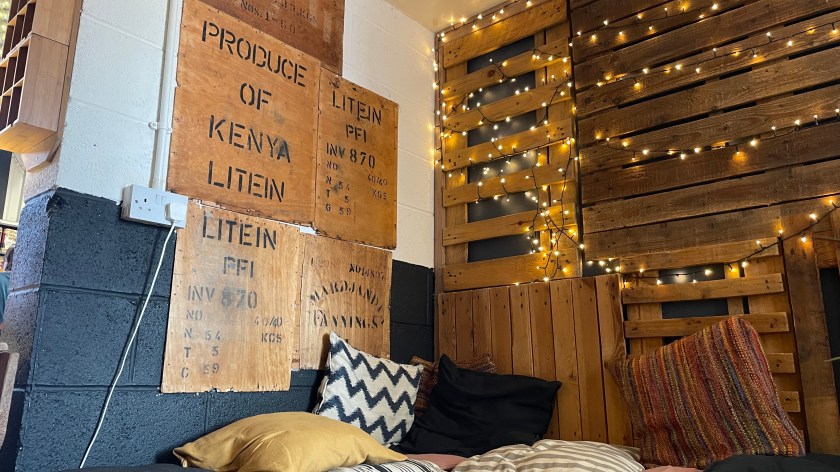
As we rounded the corner we were delighted to notice that the cafe at Wolfhouse appeared to be occupied, a board outside confirmed that to be the case, and boasting a new name The Wolf Cafe. We’ve known a few iterations of the cafe at Wolfhouse, and it’s always been an excellent place for a refreshment stop. As we weren’t planning on visiting the cafe our sojourn only involved a drink and a cake so I’m not in a position to comment on the broader menu. The coffee was glorious, the cake was excellent and we’ll certainly be back, perhaps next time we’ll do food. Interestingly the new owners operate the Lone Wolf Bakery in Lancaster.

Alternative and variations

Silverdale has a huge variety of options for a morning, or afternoon, tramp; so many that I’m not sure I know where to start.

Perhaps the best place to start is at the beginning?

As you walk up the hill from Wolfhouse rather than turning left into Scout Wood you can turn right and take the path to Jenny Brown’s Point via Heald Brow and the Copper Smelt Kiln Tower. This will turn the walk into a figure of eight walk bringing you back up to Wolfhouse. You could do the walk the other way around and head down to Jenny Brown’s Point via Gibraltar Farm and the Lindeth Tower coming back over Heald Brow to join the path into Scout Wood. Whichever way you go it’s worth noting that the path near to the Kiln Tower is on the shoreline and changes regularly as erosion and accretion play their part. There’s also the option to explore Jack Scout and the Giant Seat on this route. At the right time of the year Jack Scout has excellent brambling.

Another adaptation would be to take a detour across to Middlebarrow Quarry by taking the path to the right just before you arrive at St John’s Church. This will bring you out onto Bottom Lane. At the end of Bottom Lane, you can head up into Eaves Wood heading right around to the Quarry entrance. You can’t currently get into the quarry, but there are several places where you can get a good view inside. If you head anticlockwise around the back of the quarry you will eventually come out at Arnside Tower via Middlebarrow Wood. From here you could head up Arnside Knott, but that would be another walk altogether. From Arnside Tower you can take the path into the back of Holgates Holiday Park and down the road to The Cove.

If you are feeling like you want to gain a bit of height to get a better view, a short extension to the walk is to head up to The Pepperpot in Eaves Wood on your route to The Cove. The monument marks the Golden Jubilee of Queen Victoria in 1887, but the real star is the view from this elevated position.

From The Cove, given the right tidal conditions, you can follow the shoreline to Silverdale Beach from which you can rejoin the route. If, however, you are enjoying the shoreline walking you can carry on all the way to Jenny Brown’s Point with a couple of options to head back inland along the way, including the option to head into Jack Scout. I can’t guarantee that any of this is going to be possible on any given day such is the fluidity of the coastline around Morecambe Bay.

There are other options for a cafe in Silverdale Village itself where there are also public toilets and a convenience store not far off the route as shown.

Heading into Scout Wood
Through the woods
Time to be nosey – peaking into back gardens
In the cove
Across the fields
Gibraltar Farm
The glorious surprise

Clock House Farm, Cow Hill, Fulwood Park Wood and Ladywell Circular | Graham’s Guides

A local walk providing endless variations if you know where to look with plenty of history thrown in for good measure.

Graham’s Walks📌
Distance3.6 miles
DifficultyModerate
Map🗺
GPX📁
Graham’s CafeNot on this one.

A short walk from my front door is a portion of the Guild Wheel. From where I join I can walk east and soon get to Fulwood Row, if I walk west I reach Fernyhalgh Lane. Both of these roads allow me to traverse the M6 motorway and then onward into the mixed countryside beyond.

I’ve pondered a few different ways of depicting the matrix of walks that are available from this local area and decided on a few of guides with lots of descriptions of the available variations. Think of the variations as a menu of options that can be added on, or taken away, depending on your day. If you do venture into this area my advice to you is to follow the lines on the map and follow the lines on the ground. There are lines on the ground that are delightful but aren’t on the map, there are lines on the map that aren’t that well defined on the ground.

This walk is shown as starting on Fulwood Row at about the point where it goes under the motorway. There are normally plenty of places to leave a car here if that’s your method of transport.

While the adjacent houses are relatively modern, ours was built right at the end of the last century, the routes are mostly ancient. Fulwood Row and the initial footpath is clearly visible on the archive maps from the 1840s as are the other major landmarks of this walk. The most significant landmark that isn’t on the maps from the 1840s is the M6 motorway, that wouldn’t arrive until the 1950s.

This is a long post, there’s a lot more to describe in the this environment, particularly one where the old is intersected by the new.

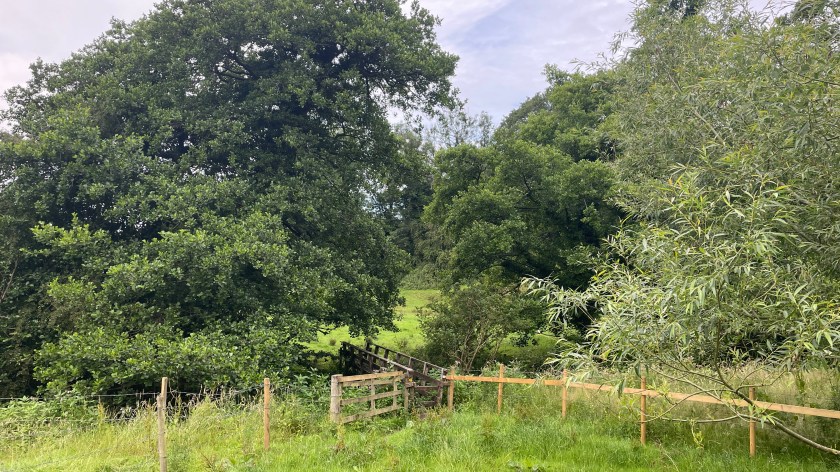
Our walk begins on Fulwood Row which we follow under neither the M6, up the hill on the other side, past the Guild Wheel exit on the right continuing on to Clock House Farm. Continue across the front of the farm buildings, none of which appear to be used for farming anymore. Beyond the farm buildings you’ll come to gate with a stile a little further along. Hop over the stile and onto a bridleway running alongside several fields. These fields are regularly visited by Roe Deer and Hare, there’s also a good selection of birds including a local Tawny Owl. Buzzards nest in the trees on the other side of the field.

At the end of the fields you’ll come out onto Cow Hill, carry on straight, along the road a while further until you see a stile on the left. Walk across the field along the hedgerow to another stile. Once over the stile turn left on the road where the lane to Clarkson’s Fold is visible. You’ll also notice the local, normally patriotic, flagpole. Travel along the lane, through the farm, out the other side, across a field, over a small footbridge, across another field, over a stile and onto a narrow tree lined lane. You can’t see any of this from the farm gate because the footbridge is down a slope and hidden behind some trees, also, the paths across these fields aren’t really visible on the ground. When I last went over the stile, just this morning, it was broken which made for an interesting scramble. Turn left one over the stile.

This lane is another one of those ancient routes that used to be vital links between small communities in a time before cars. From Cow Hill this lane goes out to Haighton and the farms beyond, we’ll leave the many routes beyond here for another guide. Head down the hill around the back of a house on the left and onto a road. Walk past some fancy gates and across a bridge where you’ll see a path on the right alongside Savick Brook. The brook flows through Preston, out the other side and into the Ribble, for the latter part of its journey it becomes the Ribble Link Canal. There are several places where you can walk alongside the brook, I have a plan to string a route together at some point.

After the bridge the path travels alongside the grounds of Haighton House. In the spring and early summer the stream is banked with successive wild flower; Snowdrops to Bluebells, Wild Garlic to Campions and Cow Parsley. Sadly, in recent years, this area has become completely engulfed by Himalayan Balsam by the mid summer. While we are talking about alien species it’s worth noting that this is also the stomping ground of a local flock of Ring-necked Parakeet with their distinctive call.

The path takes a few twists and turns here, but if you follow the path on the ground you won’t go wrong, and will arrive at a footbridge over which you will join the white-fence lined driveway of the House. The wood here is known locally as Bluebell Wood, on the map is titles Fulwood Park Wood, some people also call it Squire Anderton’s Wood, but that’s somewhere else. I have a morning ritual in these wood, this is a headphone free zone, the birdsong is so varied that it would be a shame not to listen in, besides there’s good evidence that birdsong is good for our mental health. Is there anything like the chorus of Blackbird, Wren, Song Thrush and Robin accompanied by Nuthatch, Treecreeper, Gold Crest and many more.

At the end of the driveway you’ll exit through some gates onto the road. A little further along there’s a path off to the right just before the road crosses back over the brook to the left. The house on the hill is called The Mount which is apt. Here we are on Fernyhalgh Lane which takes us to Ladywell, a place of pilgrimage since at least the 11th century. There’s an interesting legend about a sailor who, in danger of shipwrecked, prayed to the Virgin Mary and received instructions to create a shrine at a place with a spring called Fernyhalgh, hence the name Ladye Well. It’s also worth noting that the name Fernyhalgh is a combination of two Anglo-Saxon words – “ferny” meaning old and “halgh” meaning shrine. This place may have been a place of pilgrimage even before Christianity came to England. Ladywell and Ladyewell, with and without an “e”, are both used on signs in the local area. There’s still a chapel, retreat and shrine on the site which you will see on the right as you walk up the cutting past the outflow from the spring.
Just beyond the entrance to the shrine grounds there is a small gate on the left with a path across a field. At the far end of the field there’s a stile. To the left you’ll see a path across another field and a footbridge over the motorway. On the other side is a path that runs alongside the motorway back towards Fernyhalgh Lane. The houses here sit on the site of some of the skirmishes prior to the Battle of Preston during the Second English Civil War. There’s a sculpture that commemorates this not far from the end of the footbridge, we aren’t going that way today.

As the path nears the bottom of the bank there’s a t-junction, to the left will take you across a footbridge and up on to Fernyhalgh Lane, we’ll go right and rejoin the flow of Savick Brook. Further along cross the footbridge over the brook to the left and up onto the Guild Wheel again notable by a return to tarmac. The Guild Wheel will take you back to your transport if you head left (you will get to your transport if you head right but not for many miles). Having crossed Fernyhalgh Lane for the last time you’ll pass a local landmark known as Peter’s Garden which commemorates Peter Ward who was one of the driving forces behind the Guild Wheel, following a lifetime of cycling.

Now, the variations, where to begin?

At the start of the walk, rather than following the route onward to Clock House Farm you could take a right turn on the Guild Wheel. This is a good walking alternative, but opens up another set of walks which I’ll cover in another guide. There’s also a couple of options on the left of Fulwood Row, one is almost opposite the Guild Wheel junction, this will take you across some fields and drop you onto Fernyhalgh Lane near to the motorway and cut out most of the walk. The other option on the left is just before Clock House Farm, this takes you down another ancient pathway to the footbridge over Savick Brook near to Haighton House, this route can be very muddy, but is a good option for a shorter walk.

Once you’ve travelled across the fields beyond Clock House Farm and you drop onto the road at Cow Hill rather than continuing straight on, you can turn left. The road will bring you to a right-hand turn and another lane on the left. If you follow the lane down the hill it will bring you to bridge over Savick Brook with the path off to the right immediately before it. In the same way, you can skip the lane down to Clarkson’s Fold and continue on the road to the same lane from the other direction.

As you come through the fancy gates at the end of the Haighton House driveway you can extend the walk a bit by heading up the hill to Shepherd’s Hill Farm, walk through the farm and out the other side from where you’ll see a path off to the left. This path will bring you around the back of Ladywell Shrine. You can also continue a bit further before heading back to the footbridge over the motorway.

At the end of the driveway for Haighton House you can shorten the walk a bit by turning left across the bridge over Savick Brook. This is Fernyhalgh Lane, continue along until you get to where the Guild Wheel crosses.

Another variant of this walk comes as you head up the hill past the Ladywell Shrine, rather than heading left across the field you can carry on a bit further where there’s another footbridge across the motorway. The map shows a path running from the end of the bridge alongside the motorway, that is one of those paths that’s not very well marked on the ground and you’ll find yourself tramping through waist high vegetation. To avoid the tramping you can carry on straight beyond the end of the bridge and will come out onto Pittman Way, from here you have a multiple choices to get back onto route.

From the end of the footbridge over the M6 on the original route, there are several paths through the houses that bring you out onto Midgery Lane which connects up with the Guild Wheel just beyond the bridge over the brook. This path will take you up through Hindley Hill Woods – I have no idea why it’s called Hindley Hill Woods.

Beyond Clarkson’s Fold
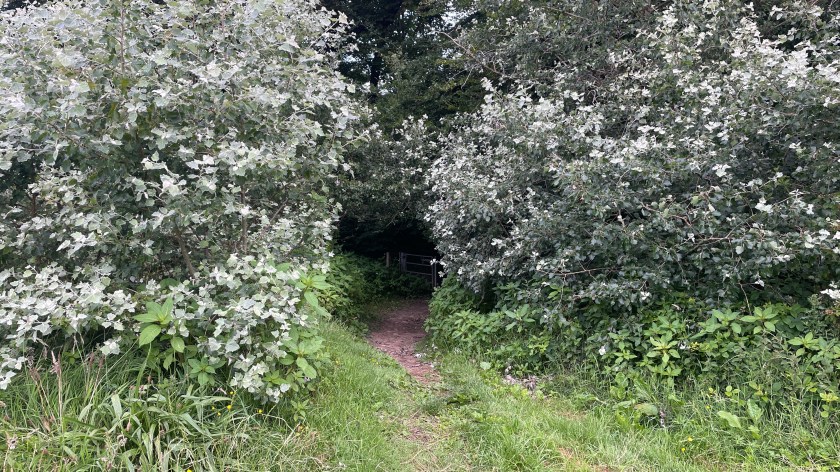
The entrance to the path alongside Savick Brook (on the right)
Follow the path on the ground…
Savick Brook in the early spring
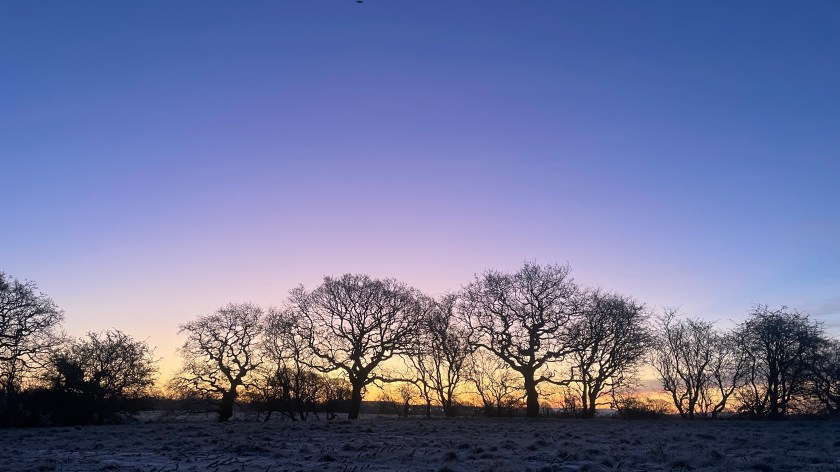
Winter trees
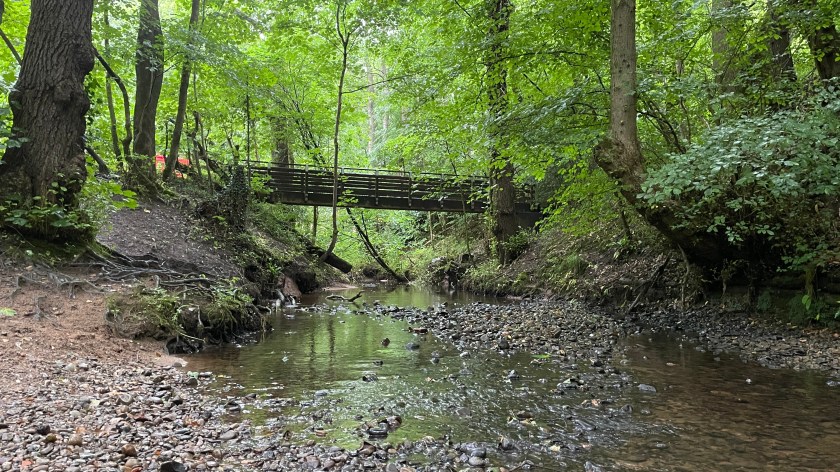
The footbridge into the woods
Joining Haighton House driveway