Leave the door open for the unknown, that’s where the important things come from… for, to acknowledge the unknown is part of knowledge.
Rebecca Solnit, A Field Guide to Getting Lost
Header Image: This is some of the local Blackthorn blossom. It explodes into this wonderful white for a few days and then is gone. It’s leaving is often hastened by a spring storm, but not this year, so it has been glorious.
Today has started like many of my days with an email from someone declaring a truth on the back of some numbers that they have assessed. I use the word “assess” here to indicate that they took a number at face value and did nothing to understand it beyond basic a/b=c maths
In this case they have undertaken a basic analysis of counting the volume of different <somethings>. They’ve put each of these <somethings> into a different category, then by the joy of Excel they’ve calculated the percentage of those <somethings> that meet the criteria they are wanting to assess.
I’m talking about <somethings> because I don’t want to call out the particular numbers – for the rest of the post I’ll use foodstuffs to illustrate my challenges.
Creating a percentage is all well and good, isn’t it? It’s straightforward maths after all, what could be clearer? Except, what they have inadvertently done is create a meme that contains a mistruth that will take many cycles to rectify. As the old saying goes “a lie can travel halfway around the world before the truth can get its boots on.”
These mistruths take many different forms, their perniciousness coming from their ability to hide undetected within the details of the calculations. They lie there hidden in plain sight making fools of everyone willing to accept them.
In many cases the numbers are obviously wrong if people knew where to look. Looking requires a certain level of scepticism, but it will pay off in the long run. Here are a few of the where my own scepticism leads me when people present me with numbers.
Classification Misinformation
Using apples as an example, perhaps the simplest way of classifying them is as either red or green. The challenge with this classification system is that there are apples which are neither wholly green or wholly red, how are they classified?
There are several ways that you could go, and this is where the purpose of the classification is important to understanding the validity of the information being portrayed.
If your aim was to show that red apples were more popular than green ones, you could classify all apples with a colour as red. This wouldn’t be untrue, it would just be stretching the definition of red.
Another way would be to create a classification for the ones in the middle, let’s call it pigmented. Even then you run into the same problem, how pigmented does something need to be to fall into this classification?
Our motives for the classifications that we choose are complex, sometimes known and often unknown.
Volume Misinformation
Within the UK, based on a European regulation, many adverts that make a statistical claim need to justify that claim. As such it’s common to see at the bottom of a screen for goods like cosmetics something like “XX of YY customers agreed that blah“
What’s interesting about these claims is how often the YY in this claim is tiny. Huge brands that sell to millions make claims on the basis of a few hundred participants at most. There are many times when the sample is less than a hundred.
As the volume of participants reduces the influence of each one increases massively.
Often the volume of participants is a strange number which makes me suspicious that they’ve only surveyed the volume of people required to justify the claim they are making.
(The claim is often completely subjective. It’s not that big an influence on me to know that 87% of people said that their skin was more luminous.)
We do the same in business. We try to base decisions with long-term consequences on the tiniest samples. “We’ve succeeded in doing this for one customer so it will be brilliant for all of our other customers.” It’s a stretch for anti-aging cream, our latest product is no different.
Exclusion Misinformation
Most samples of data require some level of cleansing. The world is full of data, most of it is littered with inconsistencies. It’s, therefore, necessary to clean the data up, and the easiest way of doing that is to exclude the bits that are outliers. The alternative approach is to only count the things that fit our criteria.
People don’t like to see other as a classification, it’s messy and raises questions, far better to just exclude them.
The problem with excluding some of the data is that it makes the other numbers appear larger when our old friend the percentage is used.
Let’s take types of nuts as an example. If we have a bag of mixed nuts and we separate them out into the various types we may come up with a sample a bit like this:
Nuts
Volume
Walnuts
12
Hazelnuts
9
Pecan
11
Almonds
7
Peanuts
10
A fictional bag of mixed nuts – no I didn’t count an actual bag.
If we include all of the types above in the scoring then the following is true:
Nuts
Volume
Percentage of Total
Walnuts
12
24%
Hazelnuts
9
18%
Pecan
11
22%
Almonds
7
14%
Peanuts
10
20%
A fictional bag of mixed nuts – but what is the peanut doing there
As we all know – a peanut is not actually a nut, it’s a legume. It may be present in the bag of mixed nuts, but in our data, we can justifiably decide that it’s erroneous. That exclusion has a significant impact on the other numbers:
Nuts
Volume
Percentage of Nuts
Walnuts
12
31%
Hazelnuts
9
23%
Pecan
11
28%
Almonds
7
18%
A fictional count of actual nuts – I still wouldn’t buy this bag, it’s got too many walnuts in it
I can now claim that a third of the nuts in the bag of mixed nuts were Walnuts, can’t I? But I cannot claim that Walnuts were a third of the bag of mixed-nuts.
THe description we give can be very important.
Quality Misinformation
We need to be constantly alert to the quality of the data that we use. Some data is better than others.
Personally I find people’s attitude to certain sources of data a mystery.
There are millions, perhaps billions of pounds spent each year on creating new and better ways of counting things. Many of these systems will count things that are already being counted. The justification for these new systems is regularly a lack of trust in the old system. What fascinates me is a preference to start at the beginning of counting rather than to regain the trust in the old system. Often the lack of trust is based on the flimsiest of reasoning and an under estimation of the complexities of counting things.
I work in IT and one of the things we do is to count the number of systems, servers and the like, that people have. We do this counting across thousands of customers and hundreds of thousands of systems. This environment is not static, every day hundreds of people are adding or removing systems. What’s more a system doesn’t simply go from being there to being not there, it has various states in its lifecycle at the beginning it needs to be commissioned, at the end it needs to be tracked through various stages.
Some of the systems are counted automatically, they tell us they are there on a regular basis. Other systems are manually counted, they don’t have the ability to tell us of their presence, the person working on them is supposed to tell us that they have been added or taken away. Every time you add a human into the process the level of accuracy reduces, but some data is better than no data, isn’t it?
The best that we can hope for in this dataset is that it is broadly correct and most of the time broadly correct is all we need. That’s enough quality for us to make the decisions that we need to make.
Broadly correct is fine for us because we understand the fuzzy parts, we know the bits to trust and the parts to have less trust in. Where it gets tricky is when people start making claims about these numbers in a way that doesn’t reflect that fuzziness. We tend to round things up, or down to the nearest tens of thousands because that’s where we are confident. That’s the level of leeway that we give ourselves. Others declare exact numbers and in so doing give a misleading perspective on the data.
Extrapolation Misinformation
Most of the time we collect data to help us to make decisions. One of the ways in which we guide our decisions is by drawing straight lines.
One of the core skills of humans is to pattern match. We look at items on a graph and cannot help but see a trend. Most of the time the trend that we see is a straight line, sometimes are see a curve. In this age of Covid many of us have looked at charts and wished to see those early signs of a wave slowing down and the curve to head downwards once more.
The problem we have is that our need to see lines is so strong that we really struggle when things aren’t a line, we really dislike charts that are just a scattering of dots. The reality is, though, that many of the things that we look at are random, they are that scattering of dots without a clear concise line.
Beware of seeing lines where they don’t exist.
It’s all about context
Number don’t stand on their own, they exist within a framework of time and place. They are influenced by the way that we create them. We like to make numbers neat and tidy, even when they aren’t. Every number is an interpretation of the person who created it. The things that we exclude say as much about the data as the things that we include.
Without understanding the context in which a set of numbers have been created we can’t derive any true meaning.
The problem that I see, so often, is that the context is hidden and opaque.
It falls upon those of us who produce numbers to make sure that we explain their meaning illuminated by the context in which they were created.
The problem with memes is that they often hide that context, that’s one of the reasons why they are difficult to stop.
Anyway, I’m off to delve deep into an Excel spreadsheet to work out whether we should include the peanuts, or not.
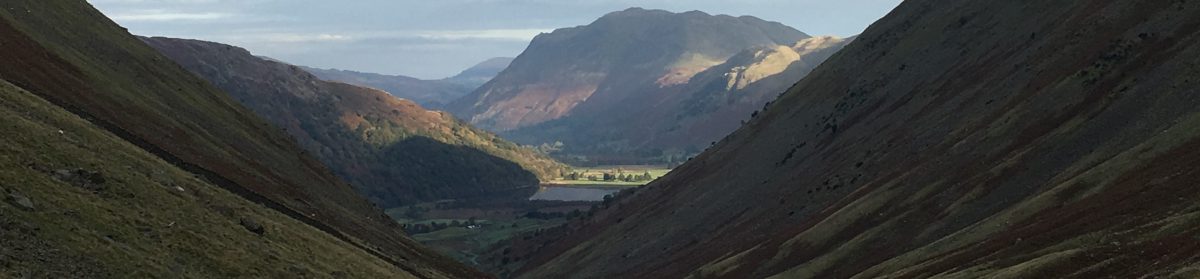
Header Image: This is Small Water which is tucked between Harter Fell and Mardale Ill Bell on a glorious day in the hills. Alongside it runs the Nan Bield Pass which links together the remote communities of Mardale and Kentdale which would, otherwise, be a very long walk around. I have no idea why it’s called Nan Bield Pass, or whether Nan Bield was a person or is describing a feature.
It was a lovely spring day. The walking had been lovely. The views were beautiful. The weather was crisp and clear.
There were a few people around, but for the most part it had been a quiet day, despite the car park being full when I arrived at eight in the morning.
I was loving a slow descent along the ridge from High Street to The Rigg which makes you feel like you are on top of the world and gives you panoramic views in every direction.
The “Birds, Beasts and Relatives” audiobook by Gerald Durrell was playing through my jawbone headphones. Occasionally I would pause the audio a few times to locate the skylarks singing overhead, they sing so beautifully.
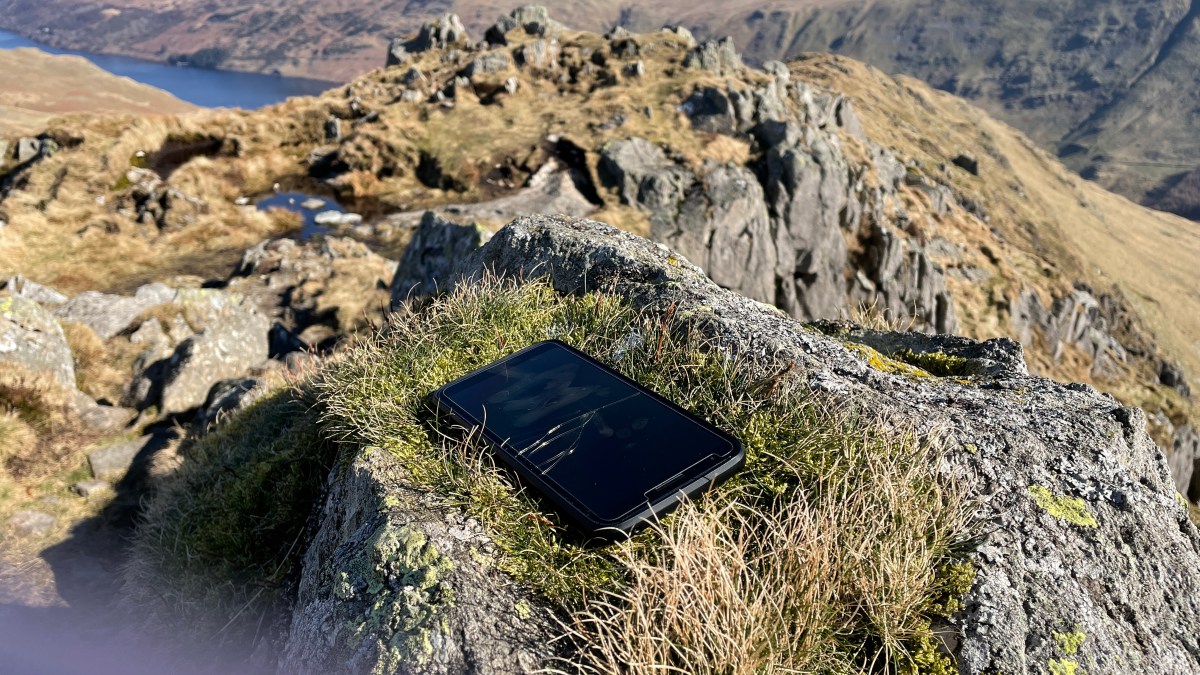
As I stood for a little while taking it all in a different noise grabbed my attention. Initially I thought that it was on the audiobook, like the reader had inadvertently left their phone alarm on. Something made me stand a little while and eventually I came to my senses and realised that this noise was not coming through my headphones and was nearby. Looking around I noticed, a good way off the path a mobile phone beeping for attention.
Climbing down I picked it up and started to ponder my next steps.
When I initially picked the phone up it was receiving a call, but I wasn’t quick enough to answer it. After that it continued making a noise that I took to be the locator tone that most modern phones allow you to activate.
The phone was, of course, locked, so I couldn’t call any obvious numbers and this wasn’t a time to use the emergency call option.
I was half-way up a hill, which meant that I was also half-way down. There are routes that are mostly up, and some that are mostly down, but this one didn’t have that obvious inclination. If I headed down, there would become a point where there wasn’t going to be a signal and I suspected that I wasn’t far off that point.
While I was in the middle of my pondering a couple passed me, also heading down. Naturally I asked them if they were looking for a phone, they said they weren’t. The woman of the couple then said to me something that made me ponder: “There were those three young lads and the girl heading up the hill, I bet it’s the girls.” The man agreed with a nodding affirmation.
As she said this I was struck by the strangeness of this classification, why would it be the “girl”? What made her think that?
There was nothing on the phone to indicate a potential gender, the phone was in a nondescript plain black cover after all. The background image on the phone was of a group of four young women, but she hadn’t seen that. Even having seen the image I’m not sure I would have leapt to the assumption that the phone belonged to a woman. I’m not even sure why she felt the need to classify it down to one of the group, I would have expected a man to come for it just as much as a woman.
Let’s be clear here, the group being described were people in their twenties, I guess, so not “boys” or “girls”. The couple who had classified them this way can only have been in her thirties themselves. I wondered how they would have felt being defined this way.
Sometimes procrastination is the best approach, I hadn’t finished my food or my coffee and decided that I would sit a while, wait and take in more of the surroundings. All this time the phone continued its occasional beeping, for which there didn’t appear to be any mechanism of responding while the phone was locked. While I sat there, I sent Sue a text to include her in the pondering. The skylarks continued their singing.
As I drank my final mouthful of coffee the phone burst into life with a different tone. Looking at it the screen told me that the phone was receiving a call from “Tom”. A thought flashed through my mind “what do I say now?” It hadn’t occurred to me before that point quite how to answer the phone. Swiping to answer the phone I said to myself “Just say ‘hi’ you muppet.”
Tom was, indeed, a member of the group that the earlier couple had mentioned. He explained that the phone belonged to the woman and that she was on her way back down the path. I stood up, waved to show where I was and told him that I was wearing an orange jacket. He could see me from where he was, and I could see the woman coming towards me. I headed back up the path towards her and handed the phone over. She said thank you, explained how she had been using the phone locator software to make it beep. I explained how I’d found it and wished her a great day walking.
I sent another text to Sue telling her that the phone had been returned to its rightful owner. The skylarks continued their singing.
Heading down I was so disappointed that the couple had been correct in their classification.
Header Image: The phone beeping away as I waited for something to happen. Slightly disappointed that the image has part of my finger it.
The difficulty lies not so much in developing new ideas as in escaping from old ones.
John Maynard Keynes
Header Image: This is Haweswater. It’s a reservoir with a history. Below these still waters lie the remains of the village of Mardale which were flooded to provide water to the growing city of Manchester via a 56 mile long aqueduct.
I was recently in a conversation about listening to audiobooks and the headphones that I wear. I was quite sure that I had already written a post about the headphones that I’ve worn for a couple of years, having checked it appears not, so here it is.
I like walking.
Several mornings a week I walk for at least an hour before work. I regularly walk further on a weekend. Most of the time I walk alone, apart from the company of an audiobook, or a podcast. Sometimes I listen to music, but that’s not very often. I prefer to get lost in a story or the narrative of a good podcast.
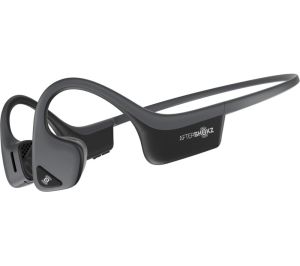
I have tried many headphones for this situation over many years, but none of them have come close to the AfterShokz Trekz Air. While other headsets may have given better audio quality, none of them come close to being the complete package of these bone conductive headsets.
Aftershokz Trakz Air
Bone conductive headsets don’t go into your ear at all, they vibrate the bone of your scull. They do this by placing what is effectively a small speaker on to the bone just in front of the middle of your ears by using an over-ear headband. If that sound weird, it isn’t, you hear the sound just like you hear all sound and you don’t feel anything. It turns out that you do a lot of hearing through these bone normally. The first time I put them on the only strange thing was how normal it was. The second time I adorned them I didn’t even think about it.
From my perspective these are the things that make AfterShokz so good:
Ambient sound – because my ears remain open the AfterShokz don’t block out any of the sound around me. Whilst out walking this is not only a safety issue, it also allow me to remain alert to the sounds of the day, including the activities of the local wildlife.
Waterproof – they perform brilliantly in any weather I don’t have to worry about them becoming damaged.
Comfortable, even with glasses – once I put these headphones on, I soon forget that I am wearing them. I wear glasses and the over-ear design is thin enough that it remains comfortable.
Steady – these headsets stay in place wherever and whenever. I’ve tried all sorts of in-ear headphones, but they all work their way out eventually and I spend part of my day putting them back in. When I am all gloved up in a snowstorm on a mountain rearranging my audio is that last thing I want to do.
Hood compatible – I quite like walking whilst wearing a hood in the wind and rain. The AfterShokz works really well in this situation staying in place and not requiring any adjusting. Some of this is down to the excellent hood that I have on my walking coat.
Simply work – I use these headphones with an iPhone and the integration is seamless. Turn them on and they connect every time. The buttons are responsive and easy to use.
Long battery life – I can walk all day and the Trekz have never run out of juice if they were charged. The power is so good that I sometimes forget to charge them, and they have run out in that situation. Having said that I owned them for several months before that happened. When it did happen, I was out walking and near to the top of a mountain when I heard an unexpected voice. It took me a little while to realise that it was the headphones asking, “charge me”.
Excellent support – the pair I currently have are my second ones. The previous ones stopped working in one ear (or should that be cheek?). A short phone call with the support team and a replacement arrived in a couple of days.
Built in microphone – the inbuilt microphone is useful if I want to make or receive a call whilst I am out walking, but I generally don’t want to, I’m out walking to disconnect.
Robust – these headphones have done a lot of miles in some inhospitable conditions. They’ve been dumped into backpacks, coat pockets, laptop bags and still look as good as they did when I got them. I don’t have to treat them like delicate electronics. They come with a protective case, but I’m not good at that kind of care.
There are a couple of times where the AfterShokz don’t work so well, just for a little balance:
Noisy roadsides – sometimes high-volume roadsides are unavoidable. In this context bone conductive headphones can struggle to compete with the ambient sound. I try to avoid these situations so it’s not too much of an issue but just this morning I cross eight lanes of the M6 via a footbridge and paused the audio part way across. Pausing the audio is a single easily accessed button on one cheek so that’s not too difficult a thing to do.
High winds – like noisy roads, high winds can make it difficult to hear. This is often fixed by the wearing of a good hood. AfterShokz do provide earplugs with the headphones to help block out the ambient sound, but I never saw the point of these.
USB Plug – I have several USB cables on which the plug isn’t long enough to charge the Trekz, it’s only a millimetre or so, but it makes a difference. To compensate for this, I have the cable that was supplied with the headphones plugged in to my charging block. I never have to use it more than once a week and it’s on my desk where I work, so not a hassle at all.
In conclusion, I am a big fan. If these ones broke I wouldn’t think twice about getting another pair, but I’m not expecting that any time soon.
Header Image: A windy wet day, with my hood up, on a local hill called Clougha Pike. These sculptures are by Andy Goldworthy and there is some debate about their name. It’s difficult, where they are located, to take a picture which gives you a good scale perspective, so it might be helpful to know that you can stand inside the pobs and there’s a step to help you.
This started out as a single post but appears to have turned into two.
A quick recap from the previous post – we’ve had a new kitchen installed; this has changed everything. We’ve combined two rooms into one and nothing is in the same place that it used to be. We’ve also got a whole new set of appliances including a new tap that gives immediate boiling water, but not yet including a fridge because of supply issues caused by something or other. For a more complete description see the first post: Problematic Process Change in the Kitchen – from CMO to FMO.
I’ve been amazed by just how many things we do without thinking in a kitchen, I think of them as stored procedures, subroutines that we use all the time without being conscious of doing them.
It’s been fascinating to witness just how difficult it has been to rewire the order of the tasks in these stored procedures, many of which I’ve been doing in the same way for over twenty years.
The most dramatic change has been caused by the new, wonderful, boiling water tap.
For as long as I can remember and certainly for the last twenty years the making of a hot beverage at home has been done in a certain order:
Enter kitchen and go straight to the kettle.
Fill kettle and turn on.
Prepare beverage ready to receive hot water.
Place hot water into prepared beverage.
Dependent upon beverage: Construct beverage ready for consumption.
Take beverage to the place where it’s going to be consumed.
That’s all there is, six steps, and one of those is dependent upon the type of drink being made. The kettle is always put on first because there is a lead-time between turning it on and hot water being available, everyone knows that it just makes sense.
With the boiling water tap there are now only five steps:
Enter kitchen and retrieve a hot beverage receptacle.
Prepare beverage ready to receive hot water.
Place hot water into prepared beverage.
Dependent upon beverage: Construct beverage ready for consumption.
Take beverage to the place where it’s going to be consumed.
One of our superpowers as a species is our adaptability so you would expect that I would switch to this mode of operation within a few days of the change but that hasn’t been the case. What makes this interesting it that the new procedure is almost identical to the one I’ve followed in various workplaces for more than twenty years also. Workplaces generally have boiling water on tap, just like our kitchen now does.
Yet, I still walk into the kitchen and look around for the kettle. My first instinct is to put the kettle on. I’m reasonably sure that if we put a kettle back into the kitchen I would subconsciously start to use it as the primary mechanism for boiling water just because it’s there.
People say that you need to do something for 21 days for it to become a new habit, but we are beyond that time now, and my routine has still not changed. For those of you who read my recent post on being wrong you’ll be interested to know that the 21 days for a new habit thing – also wrong.
This is where we get the “21 days” idea from:
“These, and many other commonly observed phenomena tend to show that it requires a minimum of about 21 days for an old mental image to dissolve and a new one to jell.”
Notice the “a minimum of about”? Another of the many things that have lost their meaning as they’ve transitioned from research to soundbite.
More recent research suggests an average of 66 days but gives a range of “from 18 days to 254”. That’s a difference of 2 and a half weeks and over 9 months!
I’m not yet at 66 days average – I’m not expecting it to take 9 months though.
As well as the factor of time there’s clearly something about my stored procedures that are driven by context. Why else would I be able to follow one procedure without issue in one location, and struggle to follow an almost identical procedure in a different location?
The seemingly simple mental instruction to make a coffee is turning out to be more complex than I would have thought. The five simple steps I initially perceived each contains a multitude of interwoven complexities. Making a drink at home is different to making a drink in an office. Even the initiation is different, at home the decision to make a drink is always an individual one, in an office it’s sometimes a collective one. Ahead of making the decision to get up from my desk and move into another room is layered with all sorts of hidden impulses. My desire for a drink isn’t just about thirst, it’s also about opportunity, routine and many other factors.
It’s going to take me a while to get used to the new way of doing things. Each day brings a set of nudges towards embedding the new routines.
Aristotle, quoting someone else, wrote “Change in all things is sweet.” I’m not sure I can taste the sweetness just yet, but I think I know what he means.
Header Image: Wastwater and the screes beyond. Some days this valley is inundated with people clambering to the top of England’s highest peak. On other day, like this one, it’s a bit damp and you can have the place to yourself.
How many process sequences do you think you have stored in your mind? There are many things that each of us does without consciously thinking about it because they are stored procedures that most of us don’t think through step-by-step, we just do them. Some of these processes are so embedded, for me, that I would struggle to articulate what the steps were. For most of us our brains do a fabulous job of storing these things away in our subconscious so that we don’t have to think about them each time we do them.
What are the steps involved in leaving the house? What are the decisions that I am making as I do it? Am I checking that everything is locked, or is someone else still in the house? What don’t I check because I already, subconsciously, know the answer? Have I picked up that thing that I left by the door, so I didn’t forget it?
I hadn’t really given much to this time thought until recently when my normal processes have been disturbed by the installation of a new kitchen. Who would have thought that the refactoring of a single room (or two, I’ll explain later) would impact so many different things?
It’s like the house has had half of its operating manual ripped-up and rewritten.
Let me give you some context. Yes, we’ve had a new kitchen fitted, but that simple statement hides several factors that would be useful for you to know:
We used to have a kitchen and a utility, now we only have a kitchen that incorporates the space that used to include the utility.
We have moved the oven from one end of the room to the other end.
The washing machine that used to be in the utility has moved into a different space in the new room.
Nothing is in a cupboard where it used to be – cutlery, crockery, spices, pans, glasses, mugs, utensils everything is now somewhere different.
For three weeks we used a makeshift kitchen was in the garage.
There is still one vital appliance that is in the garage because of supply issues on its replacement (Brexit? COVID? Who knows?) – this is the fridge.
We no longer have a kettle; we have a tap that issues us with boiling water. More about that later.
The new layout makes much more sense than the old one – it’s unquestionably better.
I’m involved in process change as part of my job and we regularly have conversations about CMO (Current Model of Operation), TMO (Transitionary Model of Operation) and FMO (Future Model of Operation). We often talk about these different modes as a continuum with each change only impacting a small part of a process, and a few people.
Thinking back through my kitchen experience I’ve had some new insights into how people respond to change. The move out of the kitchen into the garage was one change, the move back into the new kitchen was another change, both changes required us to adapt how we did things. Note that neither change is yet fully completed.
During the TMO (Garage) nothing felt comfortable because it wasn’t better, it was worse. We embraced this time because we knew that something better was coming. We were a little nervous of the new world, but we had chosen that future and were excited to see what it would bring. There are many times when we are expecting people to embrace a change which places them into a worse position for a period of time on the promise that things will get better. Often. though, they haven’t been a part of designing the future world, they don’t have a nervous excitement.
Even the FMO (New Kitchen) didn’t feel comfortable immediately, there are parts of it that still feel uncomfortable. We are in control of much of those new operating procedures though and will make it work for us. Part of the reason that we haven’t fully settled in is because we are still going out to the garage for refrigerated items. That one simple issue is significantly more jarring than the extra nine steps out into the garage would suggest. We are expecting a new future and see it tantalisingly close, and yet, we can’t attain it. There isn’t anything I can do to expedite the delivery of the fridge and that sense of helplessness is remarkably stressful.
It’s not surprising that in a world where people have continuous change thrust upon them that they don’t always embrace it with delight. This is particularly true when the future that they are being asked to adopt isn’t one that they have chosen. Autonomy and mastery are important aspects of people’s motivation, yet we constantly take these away from people as we drive standardisation of tools and processes for an opaque greater good.
Header Image: This is the view approaching the slightly strangely name The Cage at Lyme Park in Cheshire. Its name, apparently, comes from its use as a holding prison for poachers, I think I would have found a new name for it if I owned it. It just goes to show how difficult change can be.😉
Here’s a word that’s been used in so many different contexts that its primary meaning is in danger of becoming secondary. The characteristics of a physical snowflake – unique, delicate, brittle, intricate, etc. – have made it the go-to metaphoric label for all sorts of things many, probably mostly, negative.
Snowflake as office speak is highlighting those same characteristics but primarily focussed on uniqueness:
“This is going to end up as a snowflake server” = “that server is going to be a one-off”
“What they are designing is a snowflake solution” = “that solution is going to be a unique design”
Like it’s usage in other contexts the snowflake label isn’t, generally, a positive thing and is often used as a derogatory label. This is certainly true in my own work context of IT solutions.
The term snowflake was first used to describe IT servers in the book The Visible Ops Handbook which was published in 2005, so this isn’t a new idea. It’s also not the only metaphor that people have used for this phenomena, another popular one is the idea of cattle v pets. This is how Martin Fowler describes the idea:
it can be finicky business to keep a production server running. you have to ensure the operating system and any other dependent software is properly patched to keep it up to date. hosted applications need to be upgraded regularly. configuration changes are regularly needed to tweak the environment so that it runs efficiently and communicates properly with other systems. this requires some mix of command-line invocations, jumping between gui screens, and editing text files.
the result is a unique snowflake – good for a ski resort, bad for a data center.
From this initial scope the label has moved beyond servers to all areas of technology. It’s become so ubiquitous that it’s reaching a point of concept entropy.
I work within a product focussed organisation and success, for us, is partially measured by people deploying and using our product as it was designed. What we do is quite complex, there are hundreds of ways of doing similar things, so we constrain what people do to reduce the complexity. What we don’t want are thousands of things that are similar, but different, snowflakes. From this standardisation mindset a snowflake is a problem, it requires extra work, and not just when it’s deployed, for the whole of its life it will be a special case. Operational teams want things to be in a “known good” state, they desire uniformity even if standardisation is suboptimal.
There was a time when people would just call something like this “non-standard”, or “unique”, but the snowflake label appears to have overtaken that.
In reality, though, difference is not only good, it’s essential. The trick is to have uniqueness where it adds value, and to standardise where it doesn’t. Standardisation is great at reducing cost, but it can also significantly reduce value if it’s incorrectly applied. The real value in standardisation, done well, is in removing the nugatory effort that is so prevalent in many organisations, releasing people to focus on the value adding uniqueness.
As a rule, I’m not a fan of labels. Labels have a habit of sticking around long beyond their usefulness. Even when they are removed they often leave behind a sticky residue. I see the same happening with the snowflake label.
I do regard it as a bit of a shame that we have chosen to use one of nature’s spectacularly intricate and beautiful phenomena and turn it into a negative label. Snowflakes are amazing, and not just at the ski resort.
Header Image: This is Buttermere looking back towards Buttermere village on one of those still autumnal days.
“In the universe, there are things that are known, and things that are unknown, and in between, there are doors.”
William Blake
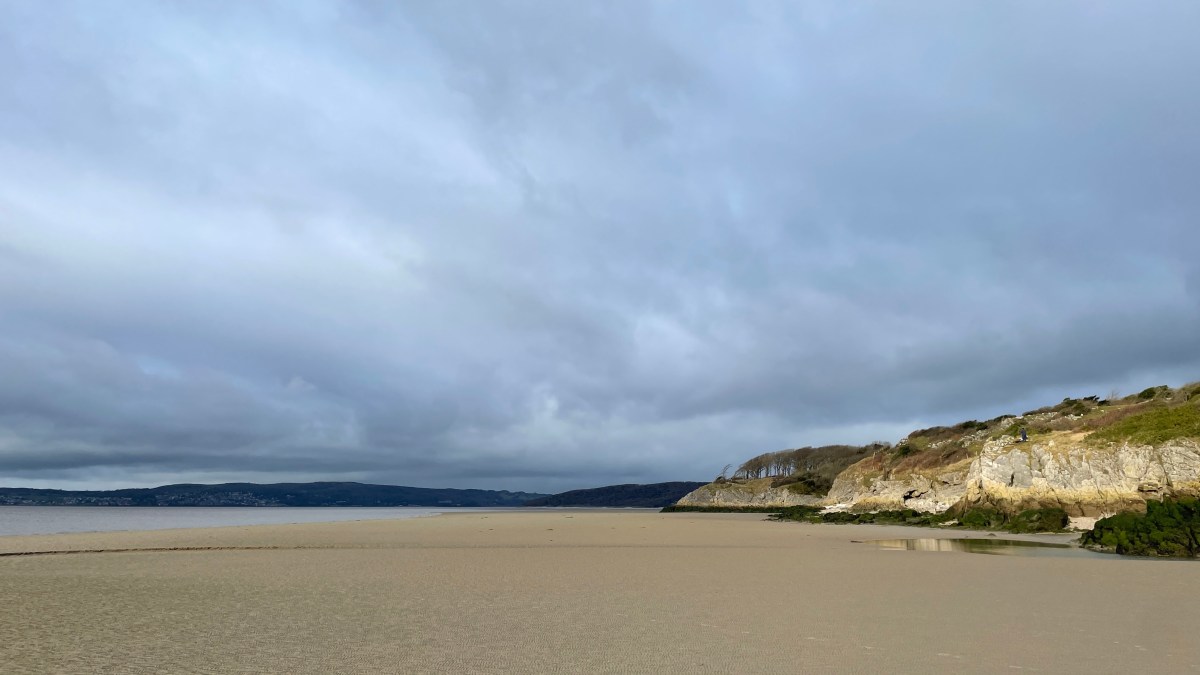
Header Image: This is a view from near Jenny Brown’s point in Silverdale, not far from Walduck’s Wall. It seemed an appropriate picture for the quote, this area always feels like a place if discovery to me.
“Great things are done by a series of small things brought together.”
Vincent Van Gogh
Header Image: Enjoying a beautiful autumnal walk along the shores of Derwentwater. Putting several small things together, covering a lot of ground and being rewarded with glorious views.
For those of you who haven’t managed to make the link Tuckman Theory is the model for teams that goes through the Forming, Storming, Norming, Performing phases (F.S.N.P.). From experience the whole F.S.N.P. thing appears to work for many of the teams that I’ve been involved in. Teams spend a whole heap of time at the beginning trying to work out who they are, why they exist, and how they are going to work together. Those same teams eventually get to a place where they are highly productive (sometimes).
Time to do a bit of digging into the research. It didn’t take long to find reliable evidence that F.S.N.P isn’t a great model for how teams come together. Bother. I’m wrong. I don’t like being wrong.
How am I going to cope with this news? How am I going to respond?
This post isn’t about F.S.N.P., or Kubler-Ross, it isn’t even a post about how all models are wrong, it’s a post about the process of changing our understanding.
How am I supposed to process these, and many other, changes to long held understanding? How do I even know what needs to change, or what to change them to?
Perhaps the easiest thing to do is to ignore the new evidence when it comes up and carry on as if nothing has changed. At one level Kubler-Ross hasn’t had that big an impact on my life, but how would I know? It may have influenced the way that I’ve behaved in situations where a different approach may have resulted in a different outcome. What if this wrong thinking has closed a door that would have stayed open had I approached it in a different way? Every one of these models sit amongst a web of other understanding, they aren’t self-contained boxes of knowledge they each interact with all the others. What if F.S.N.P. together with another untruth create in me an understanding that is outright dangerous?
Ignoring the problem doesn’t sit well with my deep need for truth. Even if it requires work and even if the impact is small, I still need to change my understanding.
This is where it gets a bit tricky, because, as we’ve already seen, I’ve been burnt before. How do I choose a model for change that will work, and is correct? How far do I have to go to convince myself that I’m not just replacing one falsehood with another? What benchmark does the new way of thinking need to reach to be accepted as truth?
There are, as you might imagine, several models for change.
In healthcare there’s the Transtheoretical model (TTM) which talks about six stages of change – precontemplation, contemplation, preparation, action, maintenance, relapse. It accompanies these stages with a defined ten step process for change that includes self-reevaluation, self-liberation and counterconditioning amongst other word gymnastics. TTM does show good results in some areas of behavioural change, but it also has areas where it would appear to be less than effective. Also, I’m not really contemplating outright behavioural change here, I’m wanting to replace one model of understanding with a different one.
Maybe a different field of thought has an answer for me? Change Management? Here we find the Lewin model of unfreezing, changing and refreezing, and John Kotter’s 8 step process, the Proci ADKAR model and many more. These models aren’t that helpful either, they are focussed on organisational change and that’s not what I am wanting to do either.
Perhaps I’m looking in completely the wrong place by thinking about this as change when what I am actually talking about is learning. Understanding how we learn ought to be simpler, didn’t it? Or maybe not, it turns out that theories of learning abound – behaviourism, cognitivism, constructivism, transformative, geographical…
I quite like the idea of constructivism which highlights that we learn by building on to what we already know. We understand new things in the framework of what we already understand – we get to understand algebra through an understanding of basic maths, people who learn a second language can often add a third and fourth relatively easily.
Thinking about constructivism became a bit of a light-bulb moment for me. I’d been approaching my untruths as if they were a problem, which they are, but not the problem I thought they were. I thought that what I needed to do was to get rid of the bad models so that I could replace them with good models. What constructivism allowed me to see was that bad models were gateways to better models. As an example, understanding the Tuckman F.S.N.P. model helps with understanding the variant DAU model. What’s more, understanding the problems with the Tuckman model allows me to critically assess the DAU model and decide whether it’s a better way of talking about team dynamics in the future.
Anyway, I’m off to talk to some people and hopefully I’ll learn something.
PS: One thing I have learned and that’s to be cautious of all models that propose phases of human behaviour which appear to be fraught with dangers. Humans clearly don’t work in phases, which isn’t surprising, we aren’t machines, we are unique highly complex biological organisms. Whatever makes us think that we can simplify our behaviour down to a series of steps especially with something so personal as grief?
PPS: For everyone who’s mind drifted off into thinking about different styles of learning while reading this – that’s also wrong, probably, there’s certainly no evidence for it.
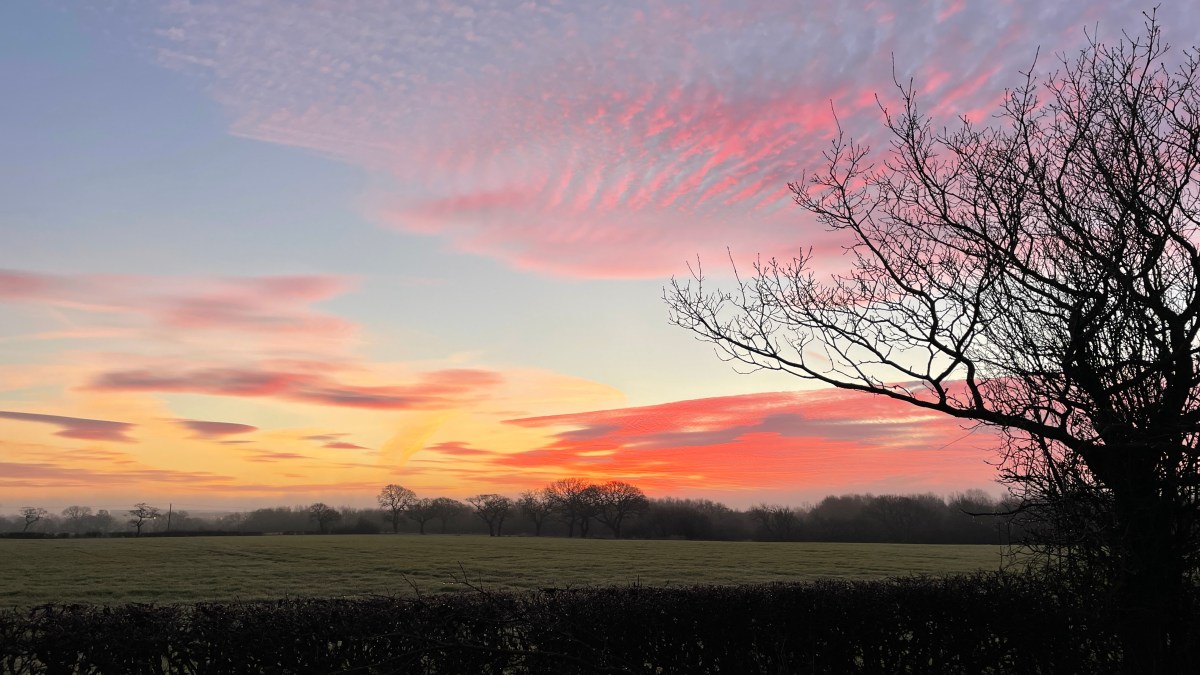
Header Image: The days are starting to get longer around here and my morning walk in the dark is transitioning to be a morning walk in the midst of a sunrise.







 Graham Chastney