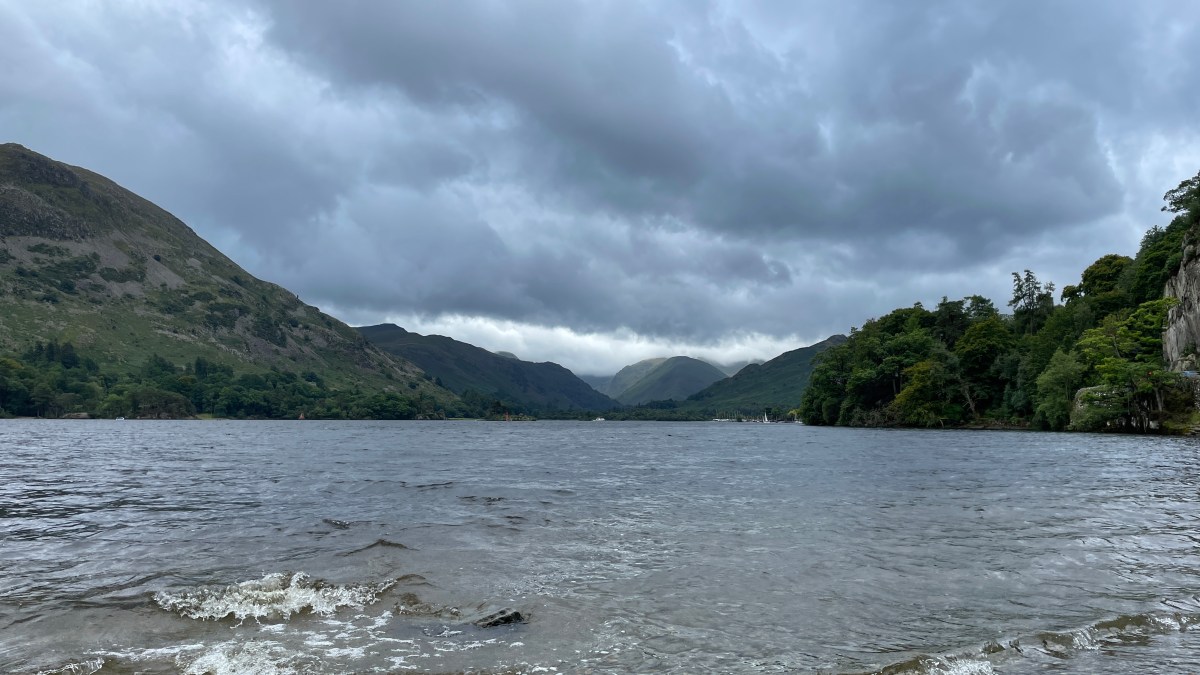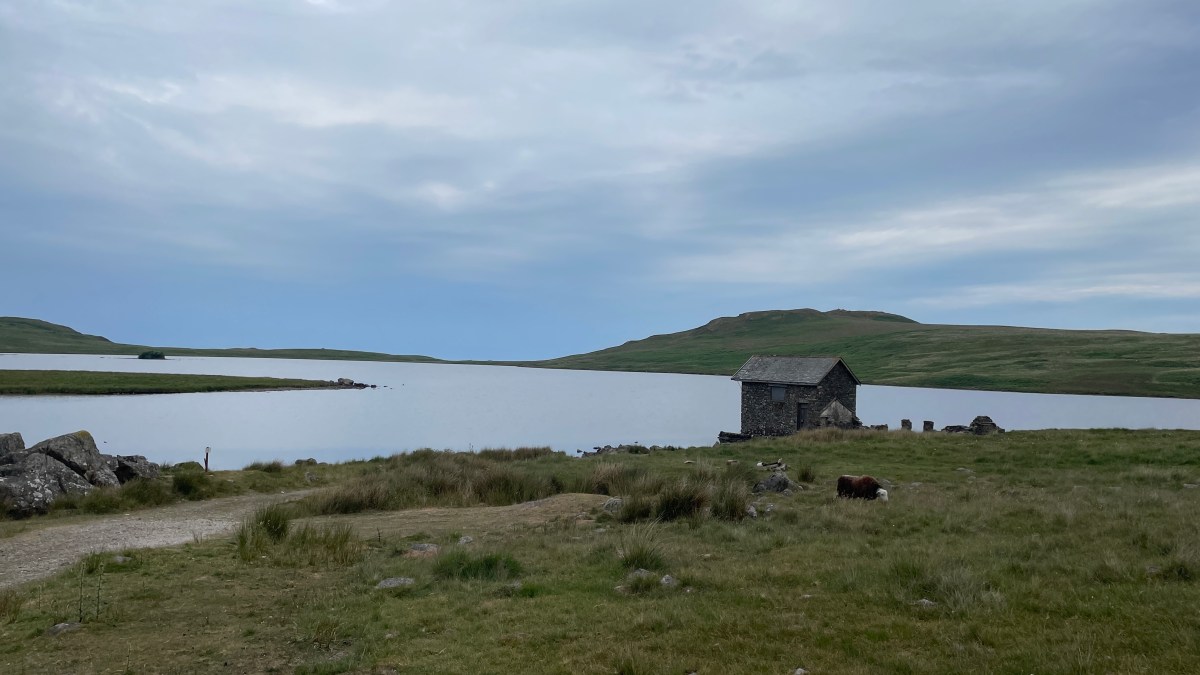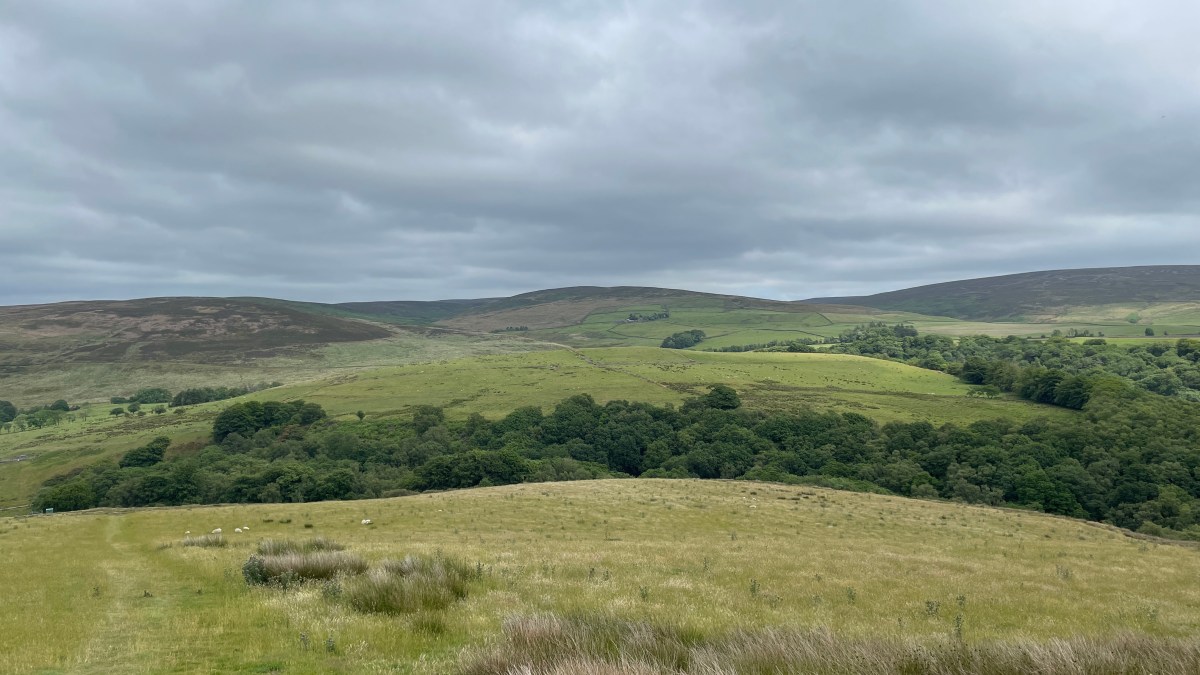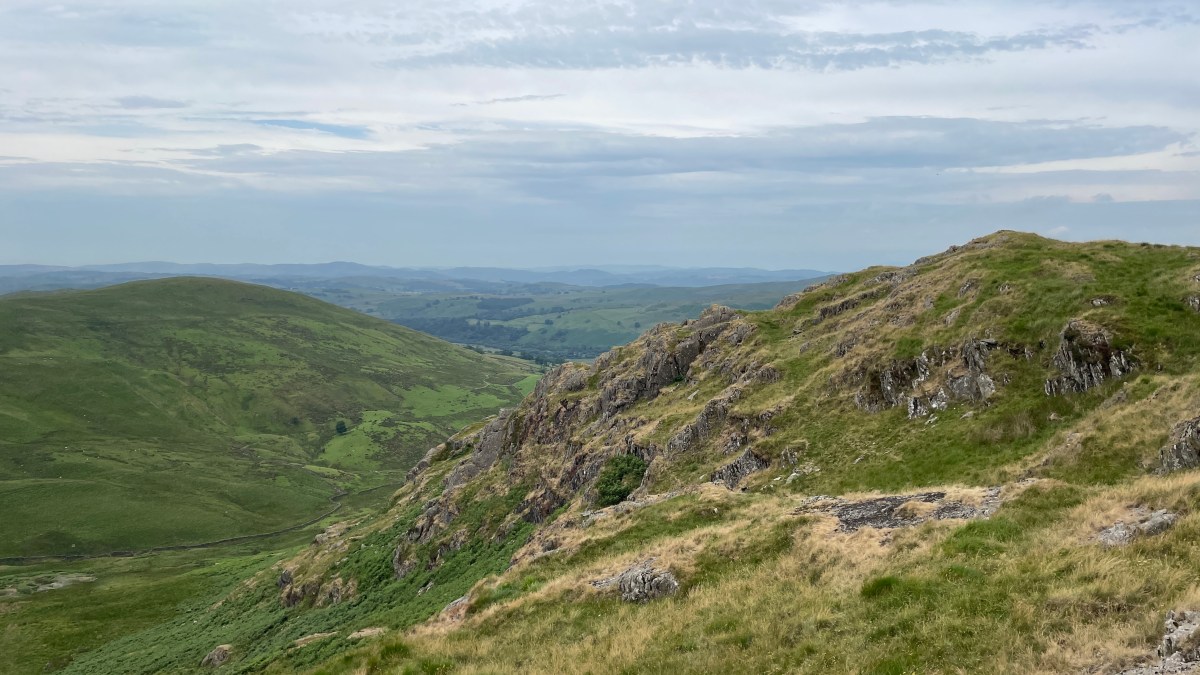
‘The book might have given you an idea, but it didn’t change your lives.’ – Raynor Winn

A short extract from Landlines by Raynor Winn:

From nowhere a couple flop down in the heather next to us.

‘Well, hello there. We’re walking the Pennine Way, going north just a few days at a time. But you, I know you’ve walked a long way.’

I look down at my clothes, muddy, ripped, smelling of dried bog-water. ‘I know, we do look a bit of a mess.’

‘No, you can’t get away with it like that. I know who you are. Your book changed our lives – it changed the way we live our lives. We would never have given ourselves the time to just walk, not before we read your book.’

I look at the couple, heading towards middle age, but glowing from the wind, sun and enthusiasm. ‘The book might have given you an idea, but it didn’t change your lives.’

‘How do you know that?’

‘Because books don’t change lives. They can change how you think, but it’s you that changed your life. You allowed the book to influence you, then you chose to change how you live. The power was always in you, the book just opened the door.’

‘Ooh, you make me feel quite powerful, quite in control.’

‘I think we all are, if we allow ourselves to be. Do you want a jelly baby?’

Raynor Winn, Landlines

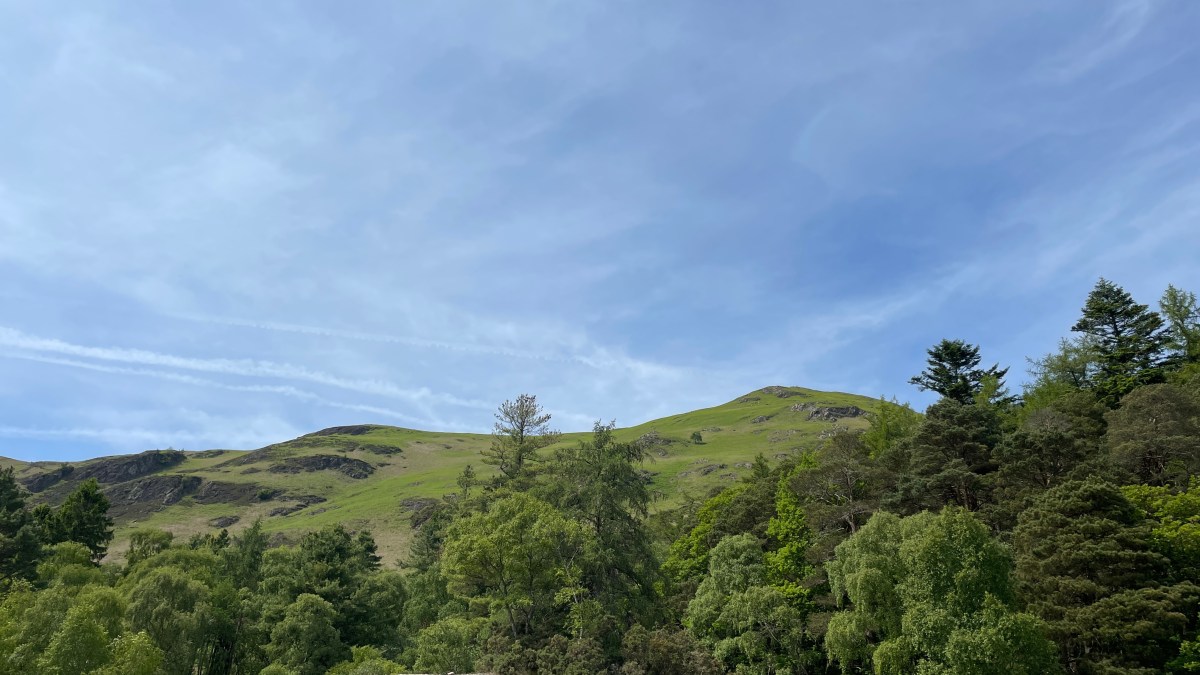
Header Image: This is Castlerigg Stone circle looking out over St. Johns in the Vale and towards Helvellyn on a strange August day of showers and a little sun. These stones have stood here for several thousand years, and a bit of precipitation isn’t going to make much difference to that. Why did someone put them here, there are lots of theories, but no one really knows.

Questions are Powerful | Working Principles

There’s a line in a U2 song:

We thought that we had the answers, it was the questions we had wrong.

U2

Most of business seems to be focused on answers, fast answers, definitive answers, simple answers, answers that lead to action.

Not much of business is focused on asking the right question.

Without the right question, we can’t get the best answer.

A big part of my current role is to be the person that people come to for answers. Quite often the questions I am asked are defined in simple terms with people looking for a specific answer. I’m grateful for this, people know I’m busy and don’t want to have a debate about something that is likely already covered in a document, or I can answer in a couple of sentences.

Although the answers are often straightforward sometimes experience tells me that there is something behind the question. When I get that feel my response to the question is often another question. Most of the time all it takes is a simple “tell me more?” from which the conversation hopefully opens into something more valuable.

I say hopefully because asking questions is tricky, particularly in written form.

In his book Nonviolent Communication, Marshall Rosenberg dedicates a whole chapter to the skill of “Observing without Evaluating” in which he summarizes:

“The first principle of NVC entails the separation of observation and evaluation. When we combine observation with evaluation others are apt to hear criticism and resist what we are saying”

The challenge with so many questions is that they come with hidden evaluation. I try to avoid the simplest question “why?” for that reason. While I may be genuinely asking “why?” what I risk people subconsciously hearing is “why are you asking that, that sounds like a daft idea, don’t you know better?” the result being that an open question instantly becomes a closed one.

Despite the risk of questions becoming loaded with evaluation I still think that they are the best way of broadening a conversation. Stepping back and ask the question is a powerful thing.

Another area where questions are powerful is in documentation. Returning to my previous post on writing for the reader, I’ve found that many people think in questions. I now spend as much time writing FAQ as I do on the formal documentation. We are no longer in a time when people read documents end-to-end and I’m not sure that we ever were.

What people need is to get an understanding. Knowing that the answer they seek is somewhere in the middle of fifty pages isn’t immensely helpful. Having the answer to a question that points you somewhere else can be more useful.

There is a challenge here, people who live by questions only know the answers to those questions. Their knowledge is limited to their ability to ask good questions. If you don’t know something exists, how are you going to know to ask about it. If you ask people at the beginning of a project what questions they think should be in an FAQ you’ll find that they are extremely limited.

I find that people who live by questions tend to miss the big picture and that robs them of the ability to rationalise other answers. As a way of breaking that down my FAQ answers sometime expect people to work for the answer, and in so doing they hopefully get the broader view.

Questions are everywhere, sometimes the answers are easy, sometimes they are more difficult, or even unknown, but questions are always powerful. I believe that the wise people of the future will be the ones who know how to ask good questions.

To question a wise man is the beginning of wisdom.

German Proverb

One who is afraid of asking questions is ashamed of learning.

Danish Proverb

To a quick question give a slow answer.

Italian Proverb

Header Image: Time for a swim in a somewhat chilly Devoke Water.

Writing for the reader | Working Principles

It’s time to start a new series, called Working Principles – a few ways of doing things that I find make life more successful when I follow them. I’m not sure how many of these there will be, I’ve never written them out before, but having started I already have several titles listed out.

In our education system we are taught to write essays. The purpose of authoring an essay is to demonstrate what we know about something. In education we write for our purposes – to pass an assessment.

When I started work, I would write in the same way, documents full of information that I knew, but I never stopped to consider the purpose of writing and who I was writing for. I was several years into my career before someone pointed out that I should flip my perspective around and ask a couple of questions when I write:

  • Who am I writing this for?
  • What do they need to know?

Simple questions, but it’s clear from the many communications that I read that they aren’t common questions. In my mind I have a phrase which applies to a lot of business writing “never mind the quality feel the width.”

There are so many documents, emails, presentations which completely miss the needs of the person they are trying to communicate with. A plethora of words missing their purpose. A mountain of lexicon going to waste.

These are questions I’ve tried to stick to over the years of my career and they’ve helped me and hopefully helped the people I’ve been writing for.

When the reader is in focus, I use fewer and simpler words.

When the reader is front-of-mind I write things in a different order. Putting the need first.

When I focus on what the reader needs, I can leave lots of unnecessary information out.

(When I write a blog post the person that I am writing for is mostly myself 😊)

You don’t write because you want to say something, you write because you have something to say.

F. Scott Fitzgerald

Header Image: This is the view from the local hills, just a few minutes drive from my house.

Graham’s WFH Tip #12 – Keep an Eye on Incremental Change – Marginal Gains and Losses

Things change, all the time, some changes are for the better, some for the worse, but how many of them go unnoticed?

I recently got a new laptop having become aware that my previous laptop was becoming annoyingly slow. It was annoying, but not so bad that it was top of my priority list to sort. Even having received approval for a replacement it still took me weeks to go through the process of getting it ordered.

(Part of the delay was my own expectation of how draining the ordering process would be – I have to say that it was straightforward and only took a couple of days.)

I knew my old laptop was a problem but when it arrived, I was shocked by the difference a new device made to the way I work.

The previous device was memory constrained and would take several seconds to open an application, being memory constrained I couldn’t leave many apps open, hence my day was filled with hundreds of delays. The impact of these delays wasn’t limited to the time it took to load an app though, those few seconds would regularly interrupt my flow of thought, I’d get distracted by another task and never get back to the previous one. At the end of the working day, I would regularly find half written communications that were waiting for some additional information that I’d gone off to retrieve only to be distracted along the way.

This degradation in my working didn’t happen all at once, it built up over weeks and months. I would handle each slice of performance degradation with a minor change to my working process. Each slice being layered onto the previous ones and before I knew it, I was walking through treacle puzzled by how long things were taking.

If anyone is thinking about the analogy of the frog in boiling water here – please don’t, it’s not true. Marginal Gains is a better analogy, but even this doesn’t quite work because of its focus on optimization in a particular area. There aren’t many of us who’s working role requires us to become optimised in a specialty, most of us are generalists and it’s in that broad spectrum of activities where we need to be effective. Take communication as a broad example – I need to be productive at communicating. Reducing the time it takes for me to write an email isn’t going to have much impact on my overall productivity. There is a point at which authoring an email can be so slow that it detracts from my communication productivity, but spending time drafting emails is only a proportion of what I do. I also write documents, create diagrams, attend meetings, create videos, respond to chat all with the intention of communicating. And communicating is only one of the areas where I need to be productive.

I’ve spent enough time with the methods that promise to revolutionise my productivity to know that a revolution isn’t what’s going to happen, I need to incrementally make changes for the better.

There are fewer external reference points in our working-from-home-working-from-anywhere worlds, that’s one of the challenges we must be on guard against. This means that there are fewer places where we can notice that someone is working better than we are. There aren’t those times when you sit next to someone and notice that their device is way better, or worse than yours. There aren’t those times when someone shows you a new way of doing something that gives you an incremental advantage to your working day. Now let’s be honest here, there weren’t really that many opportunities for those interactions in an office, but there were some.

What each of us needs to do is to take ownership of the responsibility for our own productivity within the scope of our control, however large or small it is. We need to notice the productivity detractors and work to remove them, we need to find ways of improving our productivity step-by-step. That’s the tip for today – own what you can of your personal productivity.

Header Image: This is the view from the top of a hill called Shipman Knots looking back towards Kentmere.

Blessings #207 – Petrichor, the smell of first rain

Who remembers this series? I’m not sure why I stopped, the last one was back in 2017, but I was struck by a thought on my morning walk today and it felt perfect for a Blessings post.

Petrichor: a pleasant smell that frequently accompanies the first rain after a long period of warm, dry weather:

Here in the UK, we have had an exceptionally dry, and hot, late spring.

The river that runs through the country’s wettest valley has completely dried up.

The seas around the UK are exceptionally, alarmingly, warmer than they should be.

Disposable BBQs have caused devastation across several areas of natural beauty and fire crews are on high alert.

I’ve not been out of my shorts for weeks.

(I try to keep shorts for social time. Even though I work from home I try to wear trousers to work in, it feels more businesslike.)

There’s also been a dryness in my spirit. I’m not going to go into details here, it’s sufficient for me to say that Sue and I have been through, and are still going through, a time of notable change which hasn’t been easy. In times of dryness, it’s easy for our eyes to be focused inward and to miss everything that is wonderful around us. I have had a daily practice of writing down three things that I am grateful for and another three that I am excited about but even that has become stale and repetitive.

I remember starting to write this series of posts with the intention of reminding myself of all the blessings that I have in my life. Using the act of writing them down as a method of meditation. So here I am again, contemplating the blessings around me.

As I stepped out of my house this morning for my regular morning walk, I could smell the rain in the air. The petrichor was already evident to my nasal senses, the odour of ozone and geosmin being carried by the light breeze ahead of the darkening sky. There wasn’t a drop of water to be seen, but I knew that it was coming, the scent of rain was telling me it was on its way. I debated putting a coat on, but concluded that I would rather be wet from the rain than wet from my sweat.

In the last couple of days, we have experienced petrichor on a few occasions. We are a long way away from the levels of rainfall we would normally expect for this time of year, but the weather here has changed.

The change may only be temporary and may not give us everything that we hope for, but the relief is welcome all the same.

The petrichor being a promise of imminent change to come, a pledge of refreshment.

In my own life I also sense a petrichor, telling me of a change on its way.

It is worth me noting here, that some of the petrichor has been accompanied by thunderstorms and flash flooding. Much of the flash flooding is caused by everything being so dry that the water just flows off the top and doesn’t soak in. I hope that I’m not too dry to receive the rain when it comes.

I’m holding on to the promise of what I am sensing. I am counting the petrichor as a blessing.

Rain features quite a lot in the Bible, but I feel drawn to one of the parables, the stories, that Jesus told:

“Anyone who listens to my teaching and follows it is wise, like a person who builds a house on solid rock. Though the rain comes in torrents and the floodwaters rise and the winds beat against that house, it won’t collapse because it is built on bedrock. But anyone who hears my teaching and doesn’t obey it is foolish, like a person who builds a house on sand. When the rains and floods come and the winds beat against that house, it will collapse with a mighty crash.”

Matthew 7:24-27 – Building on a Solid Foundation

Header Image: Just to show that when it’s dry in the UK, it’s not really barren. This is Ullswater in the Lake District from a couple of weekends ago. You can’t tell from this picture, but this lake is a lot lower than it should be.

Automation Makes You Rigid and Brittle (and Speeds You Up)

Automation is everywhere, without it we would struggle to do all sorts of things that we regard as part of our normal day-to-day lives.

The letters that we receive through our door are automatically sorted.

The containers in our fridges have been automatically filled.

The item I’ve just ordered online will be automatically picked and loaded into a logistics system (with some help from humans)

I’ve just received an automated notification on my phone asking for feedback about a recent interaction with someone from an insurance company.

As you can see I’m using quite a broad definition of automation here, but much of what I am about to say is particularly applicable to IT automation, an area that I work with every day.

Each of these automations is dependent upon a set of criteria to work. They have prerequisites. They need to have a steady “if this” before they can “then that.”

For automation to operate stably the “if this” needs to be known, predictable and repeatable. The “if this” can be complicated but the complexity needs to be constrained. For automatic letter sorting to work there needs to be an address that a machine can process. In the UK we use postcodes for the heavy lifting on that process, automation struggles with “Aunty Mable, Birmingham”. Automated container filling requires containers that fit a dimension profile.

The known, repeatable and predictable constraints that automation requires introduce rigidity into the end-to-end process. Ask a human to fill a completely random set of containers and they will use their flexible ingenuity to get the containers filled. You can’t ask the same of an automated system.

For automation to pay back the “if this” needs to stay the same for an extended period, automation needs volume. A container filling plant will run batches of work because switching between configurations takes time. You can’t do a one-off with a different size in the middle of the current batch.

Every good automation system has an exception process to deal with things that fall outside the parameters of the “if this”, but exception processing is the last thing you want to be doing. Exceptions are very expensive indeed. Imagine the parcel logistics situation where nearly all of the items are automatically handled, but a small number of them isn’t. What is going to handle those exceptions? A human, the pinnacle in flexibility. Not only is the human more expensive than the automation, but this human is also likely to be under-utilized driving in even more cost. Hopefully, the volume of exceptions is low, but if the “if this” is too brittle it’s easy for the exceptions process to become overrun and overwhelmed.

Flexibility comes with an inflated cost of production; automation comes with the cost of rigidity. We need to pick which is most important for the phase that we are in.

I see many projects where people are leaping to automation early in the activity without understanding that this drives a rigidity that isn’t helpful this early in the activity. I’ve worked on several projects where we’ve had to redevelop the automation to align to needs that have only become evident part way through the development cycle. Minor changes driving bigger changes. Development effort wasted on automation that hasn’t had the opportunity to get anywhere close to its required batch size. There’s also a risk that constantly changing automation carries unnecessary brittleness.

Some years ago, I adopted a three-phase thinking:

  • Define the process
  • Optimise the process
  • Automate the process

I think this idea came from Lean but I struggled to find any reference to it in that documentation. It might even have been a Six Sigma thing. It doesn’t really matter where it came from, it makes sense to me.

Don’t get me wrong here, I’m not suggesting a massive waterfall activity where a whole project is defined, then optimised, and only then automated. Automation is best delivered throughout the lifecycle of development, but we should try to avoid taking on the rigidity too early in the cycle. We should automate what is known and predictable, avoiding automation of the unknown until we need to. We should also strive to make the cost of change in automation as low as possible so that the required batch size can stay low.

Automation is good, so long as you know exactly where to put the machine.

Eliyahu Goldratt

Header Image: We’ve seen a lot of this blue-sky stuff recently, and we aren’t really sure what to do with it. Taken in the Lake District from the shores of Derwentwater.

Idea of the Day: Jevons Paradox – why isn’t it getting cheaper?

Graham’s summary: As things get cheaper, we increase our use such that we end up paying more than we did before.

Jevons Paradox is named after William Stanley Jevons (1835-1882) who was an English economist and logician.

The life of ideas is something that fascinates me. How long does it take an idea to become mainstream? Why do some ideas live and others don’t? That kind of a thing. This particular idea is over 150 years old and is still being hotly debated.

It’s also worth observing that Jevons wrote about the paradox at the age of 30; he was dead by 46.

The paradox is summarised by William Stanley Jevons as follows:

“It is a confusion of ideas to suppose that the economical use of fuel is equivalent to diminished consumption. The very contrary is the truth.”

Several real-world examples of this:

As our vehicles get more efficient, we travel more, and the level of oil consumption continues to rise.

As clothes cleaning technologies have taken the labour out of cleaning, we clean far more than we used to, the result being that we now spend more time cleaning clothes than we used to. Interestingly, there’s a secondary effect here, cleaning clothes more regularly has required us to have more clothes, but that’s a whole other conversation.

In the world of IT the cost of storage continues to go down, per gigabyte, but the rate at which we are storing things is accelerating even faster. Storage is just one technology commodity, the same is true for compute and networking capacity.

I’ve been involved with several conversations with customers where they expected the deployment of a new system to reduce their costs, only for the new system to increase use and drive higher costs overall.

Jevons paradox is hotly debated in energy circles where the concern is that as renewable energy becomes more efficient the result is an overall increase in our use of energy rather than a displacement of the non-renewable alternatives.

Over recent weeks there has been a vogue for organisations to announce huge reductions in their workforce resulting from the expected use of Artificial Intelligence (AI). Here’s one example: BT to axe up to 55,000 jobs by 2030 as it pushes into AI | BT | The Guardian. Apart from the observation that 2030 is a lifetime away in AI terms, does it also overlook Jevons and his paradox? Yes, lots of jobs will be directly impacted by AI, but how many of those will just morph into different jobs?

What if, having made a unit of work cheaper – which is what AI is doing – we use more of it and the result is that we need more people than we used to? That’s the challenge of Jevons Paradox.

Are the organisations declaring staff reductions just short-sighted?

Header Image: This is the river Dart in Devon. The Dart is famous amongst wild swimmers, and this is one of the most popular places to swim. We weren’t swimming, but only because we’d just been for a swim in the sea, and we were doing a bit of exploring during a short trip to the south of England.

“The White Noise of Modern Life” – can you hear it?

I’m currently loving reading a book about a man, Chris, who is walking the coastline of the UK. This isn’t as easy as you might suppose if, as the author is doing, you are determined to stick to the actual coastline of a small nation with a very jagged perimeter and lots of islands.

What makes this a compelling story is that Chris’ walk is as much about mental attitude as it is about the physical challenge.

As you can imagine, part of the time is spent in cities and coastal towns, but there are huge sections where the walk is through sparsely populated areas.

Upon leaving one of our country’s busier cities the author used this phrase – [it was great to be away from] “the white noise of modern life.”

Something about this phrase reverberated around my mind, and I’ve pondered it several times since.

In recent years, the term white noise has taken on a broader meaning, breaking out of its signal processing origins. In this quote I think Chris is referring to all those things that we are so used to being there that we no longer notice them. They are there, all the time, in the background, vibrating the air.

As I pondered, I started trying to listen to the white noise and to hear those things that many of us allow into our modern existence to fulfil a purpose, bringing with them noise.

I sought out times when I could turn other noises down to see what was underneath, it would take me a few minutes each time, but this is what I found in my surroundings.

On my morning walk, a time when I deliberately try to have a time of quiet, I have been aware of a significant white noise for some time. I regularly post videos of my walk on Instagram, but rarely with the original audio, and that’s because my walk is always accompanied by road noise. There is an eight-lane motorway near to my house and I never walk far enough away from it for there not to be a level of tyre hum. When I made the effort to listen there were other noises that I wasn’t aware of, over in the near distance there’s a warehouse which was being accompanied by the serenade of vehicles maneuvers, there was also the hum of machinery at a nearby building site. All white noise that my brain was filtering out until I paid attention to it.

Returning home, I sat in my office and listened. The clock had stopped, I’ve written about that before. Outside a workman was using an impact driver to erect some woodwork in my garden. There is the low hum of the powered air-filter underneath my desk and another buzz which I eventually discovered to be one of the LED lights, my main monitor also has a slight buzz. My desk is positioned in front of a window that looks out into our garden. I love to have the window open for the fresh air and the sound of the birds, but the window also opens to the sound of the motorway. My laptop is quite quiet, but it isn’t silent. All imperceptible most of the time but lurking in the air.

Sitting in my lounge there’s some more white noise that I can hear. It’s coming from near the TV, but the TV isn’t the cause, one of the boxes has a hard drive in it, which must be spinning iron as it’s causing a vibration that is slightly rattling the glass shelf on which it stands. It’s not much, but more white noise. As I sit in silence for a little longer, I can also hear that the uplighter in the corner has an electrical hum. More air vibration.

We are privileged to have a small room where there is a chair and not a lot else, deliberately. I sit in there and I am struck by how quiet it feels, I can’t put my finger on what has changed, but it’s notably more peaceful in this place away from other noise generators.

I suppose the real question here is – so what? Does the noise we surround ourselves with have any impact upon us? I’ve done a bit of reading around, and the answer is inconclusive. There’s a link between noise and stress, which is clearly negative, but white noise is also linked with stress reduction. There are studies that show that white noise can have a positive, and negative, impact on both performance and stress depending on the volume. The impact of white noise is also dependent upon the type of activity being undertaken.

As the noise I’m talking about here isn’t true white noise, I’m not sure that we can claim the benefits, but do we need to do something about the negatives?

If we look at the primary source of white noise in my life, the road noise, there is research but it’s not really talking about my situation:

Despite my inconclusive research findings, I have a feeling that the noise around me is generating a level of stress, nothing major, but enough to be noticeable. We can give up our quiet spaces too easily and I’m determined to do a bit more to protect my own. I’m also looking to reduce the white noise in my workplace, although most of that is irrelevant at present as the workman is still building in my garden.

For those of you wondering here are the book details:

  • Title: Finding Hildasay: How One Man Walked the UK’s Coastline and Found Hope and Happiness
  • Author: Christian Lewis
  • ISBN-10‏: ‎ 1035006790
  • ISBN-13: ‎ 978-1035006793

Header Image: The local tree canopy is looking radiant in its green out on my morning walk.

The Personality of Cable Connections – Do they talk to you as well?

I may be revealing a bit too much about myself in this post, but here goes 😊

In my mind different connector types have different personalities and they speak to me in different voices.

Take USB as an example.

A solid chunky Type-A USB connector has those characteristics to its personality. It speaks in the low adult voice of someone who has been around for a while and seen it all. There’s nothing stressed about a Type A, it knows its place in the world, it knows that it is still THE standard despite what others think.

The Type-B connector doesn’t really have a voice, more of a whisper. It’s so rarely seen out in public choosing to hide away in the back of printers mainly. (If you don’t know what a Type-B is then I think I’ve made my point 😉)

The Mini-AB connector is the stressy one of the bunch; watch out for its sharp corners. It feels that it could have been used for so much more, if only it had been given the chance. Sullen is the tone of its replies when I scrabble my way to the bottom of the cable box where it lurks on the rare occasion when it’s needed. Sometimes it gets into reminiscing for the good old days when things were different, and it saw far more of the limelight.

The Micro-AB connector is a self-assured mid-lifer. It’s a bit geeky but knows its place in the world. It has the self-assurance of someone who has changed the world, even if it does need to be treated a bit more carefully than Type-A and is no longer the star of the show. Its voice reflects this quiet confidence, it sounds a bit like a middle-manager running a successful organisation.

Type-C is the hipster of the group – cool in every way. Seeing a massive future ahead of it, its crafted curves give it a laid-back voice. It looks over a Type-A and says, “well done old-timer, shall we walk together for a while?” knowing it is the heir.

HDMI connectors come as a family, the only difference in their voices is the pitch. They have exactly the same attitude, which is temperamental and unpredictable.

RJ45 connectors sound like the chipmunks from the cartoon.

I’ve gone too far already but wanted to end on an old favourite that I still see occasionally.

The VGA connector speaks the soft voice of someone who has seen too many years. It’s considered and precise but can only really talk about one subject. It always talks about the past.

I sometimes wonder what they talk about while they are together in the black box in the cupboard?

Header Image: The Hawthorn is fabulously in bloom at the moment.

Office Speak: T-Shaped People – I’m not sure I’m any shape?

The idea behind T-shaped people goes like this: The vertical axis is supposed to symbolize someone’s depth of skills in one particular area, whereas the horizontal demonstrates the breadth of their skills across different areas. Think about it like this, if you invest all your energy in training people on how to do their job you end up with I-shaped people who only have the skills to do one job. That might be fine in a world where people just do one job, but in the creative economy you need people to work across different disciplines, people who can work interdisciplinary. They don’t need to know every discipline in detail, they need a basic understanding. These people with a wide, shallow knowledge in many disciplines and a deep knowledge in their own disciple can be envisioned as a letter T, rather than an I.

Lay a set of T shaped people together and you get lots of areas of overlapping skills which make for great interdisciplinary teamwork.

While I understand the metaphor, it’s not very good, is it? I don’t use the term myself, it’s the kind of Office Speak that I dislike, let me explain why.

Let’s start with the beginning of the metaphor – the I-shaped person. Do you know anyone whose skills are truly I-shaped, absolutely linier? The only thing that this person brings to the business is their ability to do one role. Let’s pick an example, in my business that could be a coder who can only code – they can’t do even the smallest amount of design, product management, test, deployment, analytics or even user documentation. I’m sure there are people who are like that, but they are very few and you may want to employ them because they probably bring something special to the role that they do.

If most people aren’t I-shaped, what are they? Honestly, I don’t think that they are any shape. I’m not even sure that you can describe most skills in a way that would allow you to put them into a box and classify someone proficient. Even in the skills where you can clearly define proficiency there’s a huge variance. Take driving as an example, there’s a defined proficiency for it in most countries – the driving test resulting in the driving license. Yet, how many of us know someone who has a driving license, yet wont drive on the motorway, or in the dark, or into a city. Are these people proficient, or not?

Think about other skills, ones for which there isn’t a defined level of proficiency. How do you measure someone’s amiability, or their honesty, how about clarity of thinking, or adaptability, and a huge one for our current age their ability to learn? Where do these fit into the I or the T? How do you even measure these in such a way that would allow you to put them on any chart?

Most of us don’t just have our employment skills though, we have all sorts of other skills. These skills aren’t in a separate bucket that we leave outside our office when we start work each day, they are our skills. A few personal examples: I learnt map reading as a boy scout, I’m convinced that the way I understand technical diagrams is heavily influenced by that skill. I used to do youth work at the local church and that’s strengthened my listening abilities and my ability to command a room. Working with people in volunteer roles has taught me about motivation. I’ve read several books about neuroscience, a fascinating subject. Where do these skills fit in the T?

The final reason I don’t think that the metaphor is very good is that it’s been endlessly corrupted. Let me give you some examples.

There are the people who want to define the thickness of the T – “that’s a fat-T role” or “that’s a thin-T role”. I don’t think that this is a comment on someone’s stature, I think what they are trying to say, in the case of “fat-T” is that the role needs someone to be very general with only a small amount of specialty, whereas a “thin-T” person needs to be very highly specialized in one area, but not so much in the breadth areas.

Then there are the people who start applying other letters to different situations.

There’s the X-shaped Executive, which just confuses me, I can’t see how this fits with the metaphor at all. The best that I can understand is that the X is there to symbolize that someone has intersecting skills as a leader and as a subject-matter expert. In other words, Executives have more than one I and they overlap?

Where do the E-shaped people fit in? Well, it turns out that this is a different metaphor all together with E symbolizing the four attributes that happen, conveniently, to begin with an E – expertise, experience, execution and exploration. These are often depicted as the different strokes that make up the letter E.

We haven’t finished though, where do you think an M-shaped person fits in? Here we are back to the metaphor with the two vertical bars of the M representing people who have deep skills in multiple areas.

Then there’s Pi shaped people? From what I can understand they are just M shaped people with an attitude.

People without a specialty can be described as a dash or hyphen. I hope no-one ever uses this definition in real life to describe an actual person.

Then there’s the ultimate description, the one that blows the metaphor completely apart – the comb-shaped person. They have deep skills in many different areas spread across a breadth of knowledge. This, for me, would represent most people except I don’t believe that you can put people’s skills on two dimensions. None of us fit neatly into two dimensions in any way that is meaningful.

Things have various qualities and the soul various tendencies, for nothing presented to the soul is simple, and the soul never applies itself simply to any subject. That is why the same thing makes us laugh and cry.

Blaise Pascal

Header Image: This is the view from the White Beach on Iona looking north towards Staffa and Mull.

Office Speak: “on a Page”

Something like this has happened to me hundreds of times in my career.

I am working on a solution to a problem, and I have a set of diagrams that describe how we can get things fixed. I’ve even created a commentary for the diagrams to explain the contents of the diagrams.

The answer to the issue is complex and is going to require multiple steps. Each step will need to be completed before the next one starts making it a sequence involving several teams.

The need for different teams means that I need to set up meetings to talk through the resolution. I’d quite like to put together a short document that talks people through it, but this is an organization driven by email, reaction, and most of all distraction. I know that getting people to read and interact with a document is not going to give me the results that I need. There’s a chance that a meeting will help me make progress.

It’s then that someone points out that there’s already a meeting where this kind of thing can be discussed. I ask what it is I need to do to get on the agenda. I’m directed to the person who organizes the meeting schedule, they book me a slot on the meeting and send me the standard slide deck that I need to fill in.

I open the standard slide deck and my heart sinks as I read the title of each page:

  • Problem Definition on a Page
  • Solution on a Page
  • Plan on a Page
  • Costs on a Page
  • Sales on a Page
  • Risks and Issues on a Page
  • Actions on a Page
  • Stakeholders on a Page
  • Current State Analysis on a Page
  • Mode of Operations on a Page
  • Customers on a Page
  • Team on a Page
  • SWOT on a Page
  • Integrations on a Page
  • Coffee Order on a Page

What is meant here is that I have one page to say all that needs to be said on this topic, the use of animation is cheating. It’s really shorthand for: “keep it simple enough for us to understand, don’t embarrass us by making it overly complicated.”

Each of the standard slides looks fine, but when I come to edit them it it’s clear that this template has been put together by someone who really doesn’t know how to make something that someone else can use. I am conflicted by the desire to stick with the standard verses doing my own thing in half the time.

This is a complicated set of activities; how can I be expected to get your solution on a page? How do I do that? I could make the diagrams smaller so that the details fit on, I could also simplify the diagrams. The problem with both options is that neither is very helpful. The small diagrams, I know, will just make people’s eyes bleed, the simplified diagrams will give people a simplistic view of the situation. Unfortunately, the rules are the rules, and the solution has got to fit on a page. I ask how firm the rule about a single page is, the reply is “No you can’t have more pages, we struggle to get people to focus for one.”

There is, of course, a third option, and that’s to get a bigger page. Unfortunately, most people are reading the material on a screen so it’s a bit of an academic argument. The point isn’t really about fitting material to a page, the true message is about simplifying the story.

I have some sympathy for the on a page approach. I’ve been in so many situations where someone thinks that you care enough to go through their entire documentation to get an understanding of what it is they are doing. I’ve also sat in meetings where someone describes everything in intricate detail despite being told that all you want is the overview that will help you to formulate the questions. Conversely, I’ve also been in an on a page meeting where it’s clear that someone is trying to hide something in the simplification. Mandating a single page feels like a blunt instrument to use when really what is required is someone to set the scene correctly.

I attend the scheduled meeting. Everyone looks at my on a page deck, which has taken hours to create; the attendees of the meeting conclude that I need to have another meeting to talk through the details with their teams. In this meeting we talk through all the diagrams and agree it’s the correct answer.

Header Image: This is the Lismore Lighthouse, taken from the ferry from Oban to Mull.

Graham’s WFH Tip #11 – Meeting Management – Recognise your emotional responses

There seems to have been a lot of chatter about meetings recently.

Some of the discussion being prompted by a set of tweets, followed by statements, from those involved in Shopify. They are seeking to radically decrease the meeting burden on people:

I have a lot of sympathy for the idea that meetings are bugs, most of them are not desirable and add little value. Like bugs meetings have consequences.

If you read the linked article you’ll realise that the tweet isn’t quite as radical as it may seem on first reading, but to be fair, the proposal is quite radical including meeting free days, large meetings limited to certain days, and an automated deletion of all recurring meetings with more than three attendees. This latter activity being a one-off thing to clear out people’s diaries.

Previously Microsoft published some data on the change in meetings with the switch to home working during the COVID pandemic:

Meetings are still consuming a lion’s share of our time. Since February 2020, the average Teams user saw a 252% increase in their weekly meeting time and the number of weekly meetings has increased 153%.

Great Expectations: Making Hybrid Work Work (microsoft.com)

What? That’s a huge increase.

Why such a massive increase just because people are working from a different location?

There are, of course, many reasons for this swing, some of them practical, many of them emotional. It’s those emotional responses that I want to think about for a little while in the hope that we can start to see them for what they are.

Now that you are working from home you have huge flexibility to join meetings of all sorts of shapes, sizes, priorities, and subjects. The emotional cues have changed though, your viewpoint on the plethora of meetings is limited to what you can see, and something is nagging in your head reminding you that you can’t see everything anymore. You can’t get a general feel of who is meeting who in the way that you could when everyone was in the same office. Your emotional response to meeting invites has changes. You treat every invite as equally important when you know that it can’t be true. How do you respond differently to the noisy person, or the person who calls something “URGENT:” and “CRITICAL:” or the one I’m seeing increasingly “MANDATORY:”

There’s an additional stickiness to regular meetings. I’ve seen this cycle happen hundreds of times – a regular gathering of a small group of people takes place. You add someone into the meeting to talk through a particular subject and they remain on the invite list. Others get added for other subjects. Before you know it there are meeting invitations flowing backwards and forwards, upwards and downwards. The small, focussed, meeting now has an invite list of 60 people and regularly has 40 attendees. The small 5 person catch-up has grown from 30 mins three times a week, to every day at 6pm, for an hour – most contributions are still provided by the original 5 people. The value of the meeting hasn’t changed but its costs have spiralled.

As an invitee to one of these meetings, how do you decide whether you should attend? Do you ask for an agenda and only attend when the subject is something that is your responsibility? (Agenda? What’s one of those? :-)) Do you trust the person who organises the meeting to stick to the agenda? What do you do if there is no agenda, which is increasingly common? What happens if someone asks a question about your area and you’re not there? How will you know if they discuss something that impacts your area, and you don’t pick it up in the minutes? Can you ever trust minutes anyway? But the minutes are now a video, and who has time to watch the videos. What if you miss something important? How much of this is an emotional response?

You tell yourself that you’ll join the meeting, even if you don’t get any value from it, because you’ll use the time to catch-up on some emails. You know this is practical folly, you know that this type of multi-tasking places a huge burden on your productivity. It’s not practical considerations that are driving you, this is an emotional response. You’d rather take the significant hit on your productivity than face the potential of missing out.

Working from home has taken away many of the people interactions that you used to value. Joining a call, any call, includes a certain amount of social time. Having spent an hour listening to whale music and trying to read a 50 page report, you are ready to talk to someone, anyone. You know that the social side of this meeting is going to be minimal, but it’s better than nothing. You want to be sure that you haven’t been forgotten. The last thing you need, in the current climate, is for people to forget who you are.

Let me give you some simple advice here – by giving in to these worries that are going around your head, you are compromising your ability to do excellent work. Most of those meetings that you attend do not add value to you and you should remove them from your calendar. You may miss something important, but you are paying a massive price to mitigate that fear. Remember, you survived, just fine, with fewer meetings before you started working from home.

Here’s my tip to you (sorry it’s a bit long): Decide to manage the load that meetings place on you. Recognise the emotional responses to meeting invites and resist the temptation to join everything and anything. Be particularly cautious of regular meetings, do an audit and cull the low value ones. If you aren’t speaking at most of those meetings it doesn’t need you to be there.

Header Image: This was the scene on my regular morning walk today – cold, crisp, misty, and beautiful. There was fun moment though, there’s a big iron gate at the end of this path which was frozen shut. Thankfully, a short detour and I managed to find a gap in the fence.