My Tools: AfterShockz Trekz Air – Bone Conduction Headphones

I was recently in a conversation about listening to audiobooks and the headphones that I wear. I was quite sure that I had already written a post about the headphones that I’ve worn for a couple of years, having checked it appears not, so here it is.

I like walking.

Several mornings a week I walk for at least an hour before work. I regularly walk further on a weekend. Most of the time I walk alone, apart from the company of an audiobook, or a podcast. Sometimes I listen to music, but that’s not very often. I prefer to get lost in a story or the narrative of a good podcast.

I have tried many headphones for this situation over many years, but none of them have come close to the AfterShokz Trekz Air. While other headsets may have given better audio quality, none of them come close to being the complete package of these bone conductive headsets.
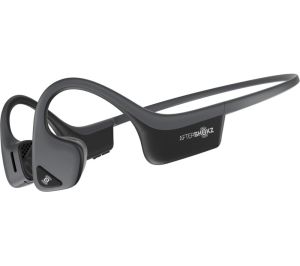
Aftershokz Trakz Air

Bone conductive headsets don’t go into your ear at all, they vibrate the bone of your scull. They do this by placing what is effectively a small speaker on to the bone just in front of the middle of your ears by using an over-ear headband. If that sound weird, it isn’t, you hear the sound just like you hear all sound and you don’t feel anything. It turns out that you do a lot of hearing through these bone normally. The first time I put them on the only strange thing was how normal it was. The second time I adorned them I didn’t even think about it.

From my perspective these are the things that make AfterShokz so good:

  • Ambient sound – because my ears remain open the AfterShokz don’t block out any of the sound around me. Whilst out walking this is not only a safety issue, it also allow me to remain alert to the sounds of the day, including the activities of the local wildlife.
  • Waterproof – they perform brilliantly in any weather I don’t have to worry about them becoming damaged.
  • Comfortable, even with glasses – once I put these headphones on, I soon forget that I am wearing them. I wear glasses and the over-ear design is thin enough that it remains comfortable.
  • Steady – these headsets stay in place wherever and whenever. I’ve tried all sorts of in-ear headphones, but they all work their way out eventually and I spend part of my day putting them back in. When I am all gloved up in a snowstorm on a mountain rearranging my audio is that last thing I want to do.
  • Hood compatible – I quite like walking whilst wearing a hood in the wind and rain. The AfterShokz works really well in this situation staying in place and not requiring any adjusting. Some of this is down to the excellent hood that I have on my walking coat.
  • Simply work – I use these headphones with an iPhone and the integration is seamless. Turn them on and they connect every time. The buttons are responsive and easy to use.
  • Long battery life – I can walk all day and the Trekz have never run out of juice if they were charged. The power is so good that I sometimes forget to charge them, and they have run out in that situation. Having said that I owned them for several months before that happened. When it did happen, I was out walking and near to the top of a mountain when I heard an unexpected voice. It took me a little while to realise that it was the headphones asking, “charge me”.
  • Excellent support – the pair I currently have are my second ones. The previous ones stopped working in one ear (or should that be cheek?). A short phone call with the support team and a replacement arrived in a couple of days.
  • Built in microphone – the inbuilt microphone is useful if I want to make or receive a call whilst I am out walking, but I generally don’t want to, I’m out walking to disconnect.
  • Robust – these headphones have done a lot of miles in some inhospitable conditions. They’ve been dumped into backpacks, coat pockets, laptop bags and still look as good as they did when I got them. I don’t have to treat them like delicate electronics. They come with a protective case, but I’m not good at that kind of care.

There are a couple of times where the AfterShokz don’t work so well, just for a little balance:

  • Noisy roadsides – sometimes high-volume roadsides are unavoidable. In this context bone conductive headphones can struggle to compete with the ambient sound. I try to avoid these situations so it’s not too much of an issue but just this morning I cross eight lanes of the M6 via a footbridge and paused the audio part way across. Pausing the audio is a single easily accessed button on one cheek so that’s not too difficult a thing to do.
  • High winds – like noisy roads, high winds can make it difficult to hear. This is often fixed by the wearing of a good hood. AfterShokz do provide earplugs with the headphones to help block out the ambient sound, but I never saw the point of these.
  • USB Plug – I have several USB cables on which the plug isn’t long enough to charge the Trekz, it’s only a millimetre or so, but it makes a difference. To compensate for this, I have the cable that was supplied with the headphones plugged in to my charging block. I never have to use it more than once a week and it’s on my desk where I work, so not a hassle at all.

In conclusion, I am a big fan. If these ones broke I wouldn’t think twice about getting another pair, but I’m not expecting that any time soon.

Header Image: A windy wet day, with my hood up, on a local hill called Clougha Pike. These sculptures are by Andy Goldworthy and there is some debate about their name. It’s difficult, where they are located, to take a picture which gives you a good scale perspective, so it might be helpful to know that you can stand inside the pobs and there’s a step to help you.
A Year in Review – 2021 on grahamchastney.com

There are several ways of doing a review for a year.

I suppose I could talk about the statistics, but that seems a bit dull, just because something is popular doesn’t mean that it was any good.

If I were to do a review by the visitor numbers, I would tell you that the top three posts this year are:

As these were all posts from previous years it may suggest that I haven’t been writing this year, which I have.

The other way of looking at the last year might be to look at the posts that I’ve written and to comment on those.

Perhaps I could talk about the distinct types of post. I’ve written a few “I’m reading…” pieces, but only three. This again might suggest that I’ve only read three books this year which wouldn’t be true (that’s only counting the new books, I’ve also reread some). I tend to write these review type posts when I have something personal to say. There are so many great reviewers around that these books don’t need another one, what I try to bring is my voice.

It was fun writing about these books:

There are also the “Office Speak” posts which make me smile and provoke some of the best reactions. I hope no-one takes them too seriously.

I suppose I could talk about the where I felt provoked to write something. I particularly liked these ones:

There is one post, though, that will stand out for many years to come and that’s because it marked the end of an era for me. I’ve had a goal for several years to complete a set of mountain walks and this year I did:

This post doesn’t describe all the significance of achieving the goal, or the changes it’s made in me along the way. What it does do is give me something to look back on and remind myself that “I did that”.

Thank you for being with me on the journey.

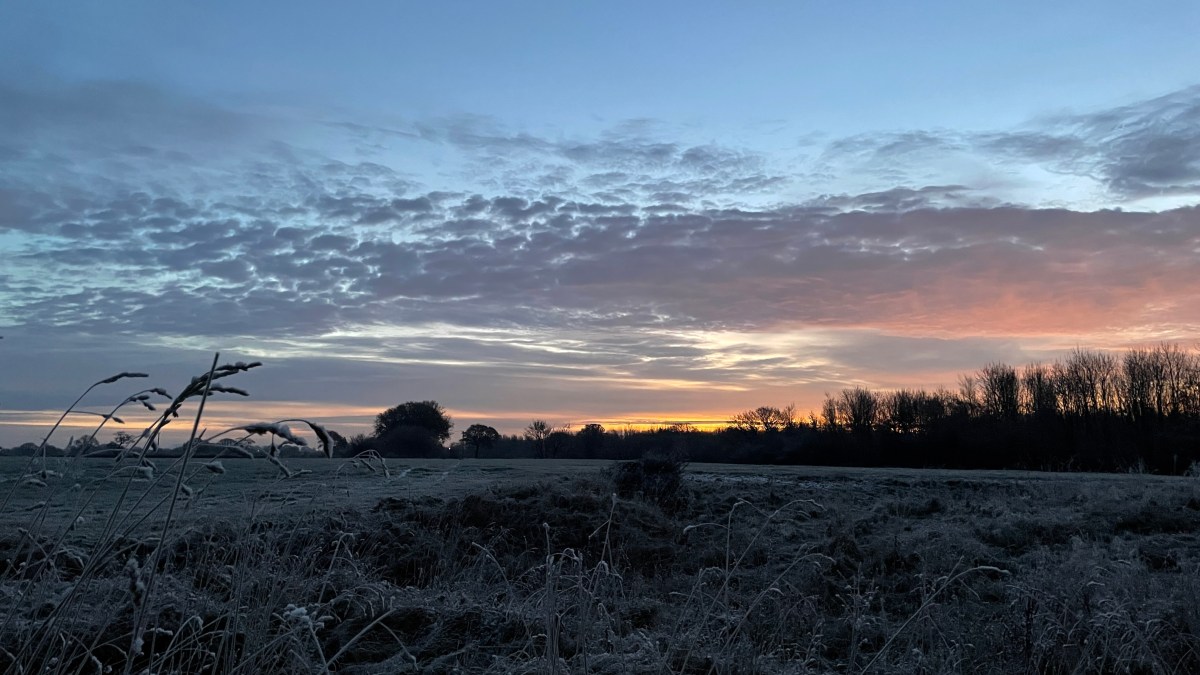
Header Image: I’m writing this on the shortest day of the year so thought it was fitting to have a sunrise picture from my local morning walk. I’ve taken this same picture for a few years now – #fromthefencepost – it’s amazing to see the different weather and changing seasons.

I’m reading…”Team Topologies: Organising Business and Technology Teams for Fast Flow” by Matthew Skelton and Manuel Pais

There are a set of books that I have recommended to people more than any other. I’m a technical leader, but these books aren’t technical, they are all about designing and building teams.

The top three in this collection of books are:

I’m now pondering whether I should start with a different book – Team Topologies. It’s not that Team Topologies says anything different to the three books above, the readers of The Mythical Man Month, Peopleware and Drive will see a lot that they recognise in this book. What Team Topologies does is summarise many of the findings of these books into practical applicable structures, linking them to models and practices that others have found useful.

The basis of this book is a simple question based on Conway’s Law:

Any organization that designs a system (defined broadly) will produce a design whose structure is a copy of the organization’s communication structure.

Melvin E. Conway

In other words, your systems will reflect your people structures.

The question that Team Topologies asks is this – if you reverse Conway’s Law does it work the other way around?

In Graham’s overly simplistic phrasing – if you design your people structures will you get the systems that you want?

Spoiler alert: Yes, you will.

What are those people structures? That’s the bulk of the document in which Skelton and Pais outline Team First Thinking, Four Fundamental Team Types and Three Essential Team Interaction Models.

That’s pretty much where I’m going to stop the review of the book because I don’t want to rewrite the book, nor do I want to oversimplify what they have written. This book isn’t a long read after all, it’s only 185 pages without references, etc. If you want a summary, then this graphic is a good place to begin: Team Topologies in a nutshell.

What I will say is this though, this is a book of principles and concepts, types and models, it doesn’t contain team blueprints or a team design handbook. It’s not a Haynes Manual for teams and that’s a good thing. People aren’t components and teams aren’t vehicles.

Whilst there are types of teams, each team needs to be designed in its own way because each team is different. The people within a team make it unique and the context in which that team works makes it unique. The words model and type are there to tell us that these aren’t prescriptions. Prescribing a structure to a team is a folly that will probably cause more damage than good. Looking at a team structure through the lens of a model or a type may give insights into the frustrations that a team is experiencing and from that the next iteration of a team design will emerge, but that’s different to a team blueprint or a business process reorganisation.

We’ve learnt how to do iterative design for technical systems, it’s time that we applied that same design approach to the teams that build those technical systems. What Team Topologies tells us is that this Team First approach may have even greater rewards than the effort we spend designing the technical systems.

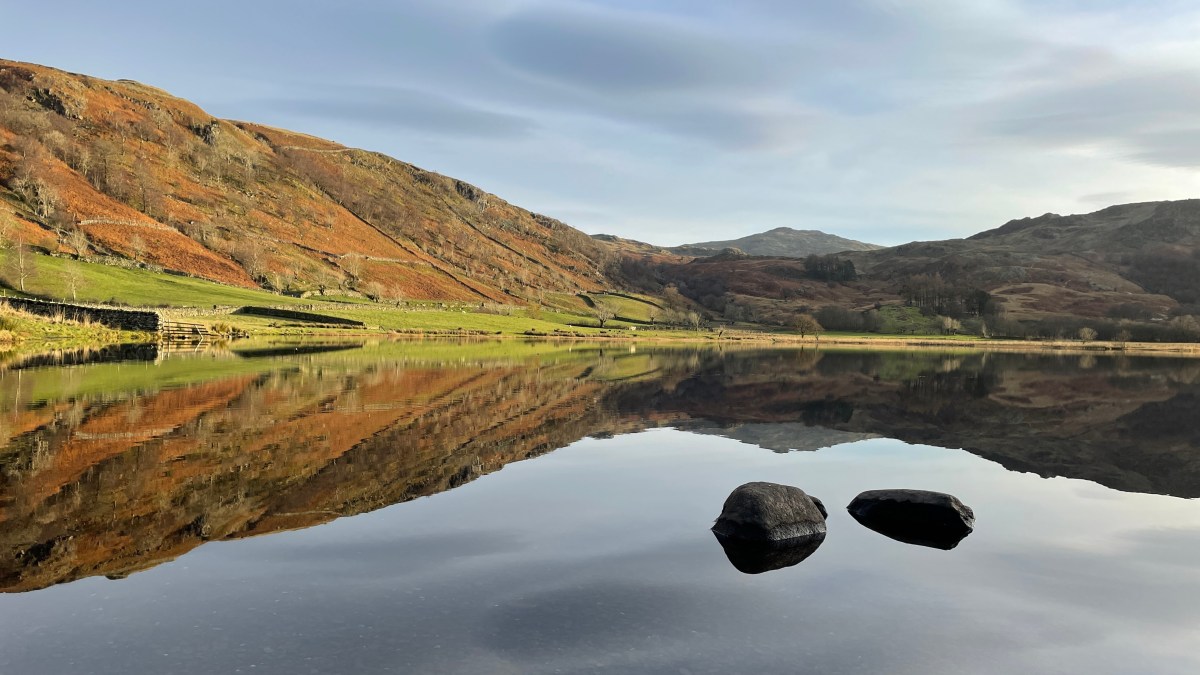
Header Image: This is Watendlath Tarn on a beautiful frosty autumnal day. My father-in-law was born in a house just to the left of this picture.

I’m reading…”Human kind” by Rutger Bregman


I like to challenge my way of thinking about things.

We each see the world through a complex lens of learning and experiences, some of the learning has been conscious, but so much of it has been absorbed through the subconscious as we go about our day-to-day activities. As an example, I have grown up with the understanding that keeping up with the news is a good thing to do, I happen to read the same paper that my parents do, I tell myself that it’s because it does a reasonably good job of reflecting a correct worldview, but what if it’s the other way around? What if this brand of newspaper is defining my worldview? Take the idea of “keeping with the news”, why is that important to me and is it truly important? What if reading the news regularly is doing me harm?

Human kind is a book that challenges several Western European worldviews – including reading the news on a regular basis. The news isn’t its main target though, that is veneer theory and the underlying assumption that we are all innately selfish, only interested in personal gain and it’s only the veneer of society that is stopping us sliding into anarchy.

The book is based on the difference in thinking between two philosophers – Thomas Hobbes and Jean-Jacques Rousseau. This isn’t the first book to look at these conflicted philosophies, this is a debate that’s been going on for a long time.

Hobbes, to massively oversimplify, believed that people are basically “solitary, poor, nasty, brutish and short”.

Rousseau believed that “People in their natural state are basically good. But this natural innocence, however, is corrupted by the evils of society”.

The Hobbesian argument is characterised by the novel Lord of the Flies which many of us, across western society, read and studied as children. It’s the story of a group of boys stranded on an island and the tragedy that follows. Through it we take in the Hobbesian viewpoint and adopt it as fact. This is the viewpoint that tends to dominate in Western cultures. In Human kind, Bregman investigates whether Lord of the Flies portrays the reality of what would happen by searching for a real-life example of boys stranded on an island, this he finds, and the outcome, it’s fair to say, is more Rousseau than Hobbes.

There are numerous other examples of experiments being undertaken to prove the Hobbesian perspective. Like many books of its type, Bergman, in Human kind, reviews each of these experiments and finds many of them to be wanting.

This book tells stories of television shows that are set up for dramatic conflict that are so full of collaboration that they a dull in the extreme.

There are experiments where people are supposed to have behaved like savages, naturally, where the reality was riddled with manipulation.

The Norwegian Prison system is used as an anti-pattern for most Western incarceration institutions.

There’s a fabulous story of a community peacefully subverting a march by fascists in their town, rather than engaging in the annual fight.

Therein lies the big question of this book. We treat people from a worldview, one that has been influenced by repeated affirmation, by literature, by science, a worldview that tells us that people are out to get whatever they can get for themselves. What if that worldview is wrong? What difference would it make if the opposite worldview was correct and people are generally decent, corrupted, but decent?

Sadly, we are fixated with the negative. Near the end of the book Bregman quotes Richard Curtis, film producer:

If you make a film, about a man kidnapping a woman and chaining her to a radiator for five years – something that has happened probably once in the whole of human history – it’s called a searingly realistic analysis of society. But if I make a film like Love Actually, which is about people falling in love, and there are about a million people falling in love in Britain today, it’s called a sentimental presentation of an unrealistic world.

Richard Curtis

What difference would it make to our world if we stopped spending so much time pushing people away, treating them as potential kidnappers and instead embraced them?

Imagine the impact if our default position was compassion rather than suspicion?

Bergman finishes the book with 10 Rules to Live By of which number 1 is “when in doubt assume the best” and number 7 is “avoid the news” 😉

Throughout this book Berman refers to his upbringing as a preacher’s kid and has a good deal to say about the prevalent Christian worldview, and, in several places, the words of Jesus. Speaking as a Christian, it led me to ponder how much of what I believe is more influenced by Hobbes than by Jesus. Time to do a bit more reading while asking different questions.

If you want to find out more, Bregman’s interview with Daniel Pink is a great listen:


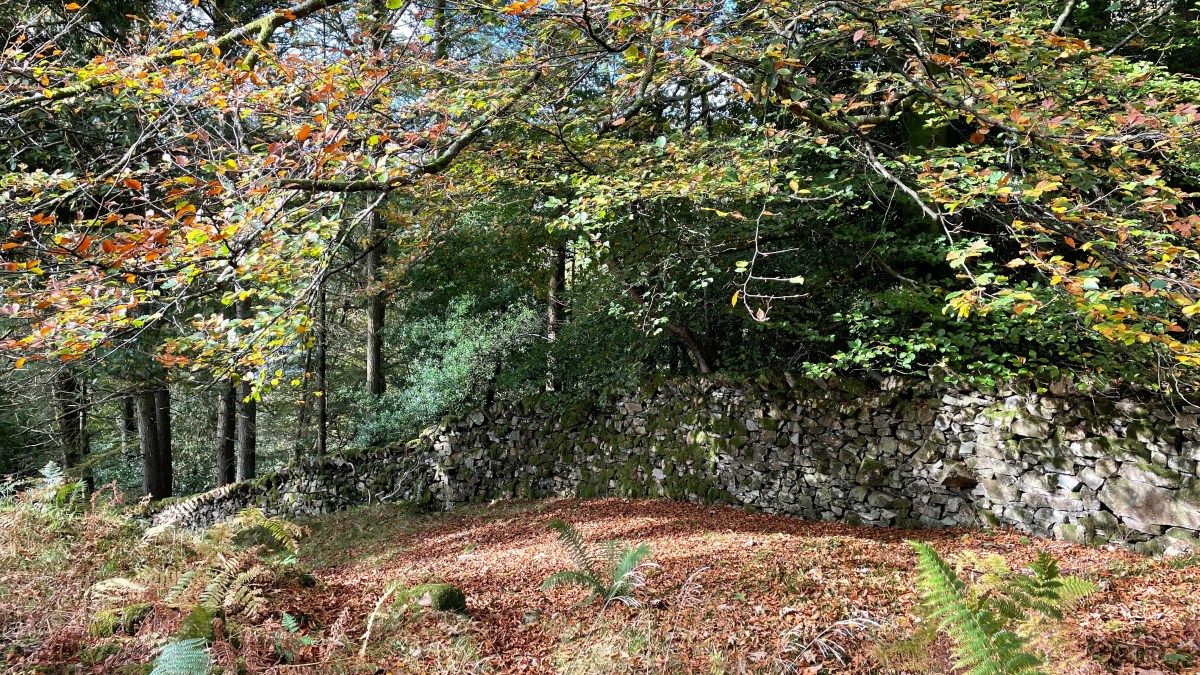
Header Image: The autumn leaves have been fabulous this year. This is a place called Wood Close, just off the Coffin Trail near to Grasmere.

Workplace Collaboration Advice for Introverts (Revisited)

I wrote most of these words in 2017 and I’m revisiting them now, given the significant change in the workplace in that time.

You walk into a restaurant on your own and see that there are two choices for where to sit.

To your left there’s a bar with a few people sitting around talking, the barman looks chatty and you recognize one of the group as an acquaintance.

To your right there’s an alcove with a table and a couple of chairs.

Which do you choose? 

If you thought that going left sounded great it’s likely that you are an extrovert. The opportunity to go and chat with a group of people sounds interesting, exciting even. You get your energy from interacting with other people. 

If you thought that going right sounded wonderful, it’s likely that you are an introvert. The opportunity to spend some time on your own, and perhaps get that book out of your bag, sounds like just what you need. You can make your own energy. 

Given the choice above, I would choose to sit on my own in the restaurant and I’d probably have a book with me. I’m a bit of an introvert but nowhere near the extremes. In fact, 70% of people are somewhere in the middle. I might choose to join the group at the bar depending on whom the person I recognized was. 

You’ll notice that I haven’t correlated being an introvert with being shy, because they aren’t always the same thing. 

Many of us spend our days in a work context that prefers the extrovert.

Meetings, for example, generally favor the extroverts. They are dominated by the loud and the interactive, even if the loud and the interactive don’t always deliver the most. 

Open-plan offices favor the extroverts as well. Being thrust into a group of people with limited barriers to interaction is an extrovert’s view of heaven, but an introvert’s view of hell. One of the stated benefits for open-plan offices is the ability to interact fluidly, which is only helpful if you are an extrovert. 

Our collaboration tools tend to favor the extrovert. The constant interruptions and interactions give them energy to feed off, but draining the introvert.

In a world of complex problems and complex solutions we need to interact and we need to collaborate, all of us, introverts and extroverts alike. 

How do we build a world where the introvert brings their best value in collaboration with a team?

Here are some techniques and tools that I have observed. I also asked several colleagues – via a couple of social collaboration tools – how they collaborated as introverts which provided some really helpful insights.

Understand the Difference Between Synchronous and Asynchronous

If you have a few hours and want to start an interesting conversation, ask a group of people what their favorite collaboration tool is. People can be quite passionate about which collaboration tools work and which don’t. There are many reasons why people like one tool over another. Some of that has to do with their view on how collaboration happens and some of that is influenced by whether they are an introverted or an extroverted themselves. Extroverts, in general, aren’t fans of collaboration tools because they “just want to speak to someone.” When they do use a tool, though, they prefer ones that provide feedback immediately – synchronous tools. A phone is a synchronous collaboration tool, as is a web conferencing system. Zoom is a dream for extroverts. 

Introverts are different, as they prefer to consider before they respond. Therefore, they are likely to prefer collaboration tools that allow them to respond in their own time – asynchronous tools. Enterprise social networks like Microsoft Yammer and Facebook Workplace are asynchronous collaboration tools. Chat based tools like Slack and Microsoft Teams are asynchronous tools as well but they blur the line between synchronous and asynchronous. These messaging apps are really asynchronous tools, but we expect people to respond synchronously. The grandparent of asynchronous collaboration is, of course, email but even here some cultures expect an immediate response.

Maximize the Asynchronous Mechanisms and Tools

As an introvert, asynchronous collaboration tools are your friend. They allow you to respond in a considered way, as you don’t need to respond immediately.

Try not to get sucked into cultures that expect you to respond immediately. Remember that your power is in your ability to consider and then respond. You still need to respond, just not immediately. Unfortunately, you can’t assume that the extroverts have considered your response in the asynchronous tool, they’re too busy on conference calls to read anything.

Minimize or Ignore the Synchronous Mechanisms and Tools

Meetings are inevitable, and they’re not going away any time soon. I live in the hope that the world will move beyond the current teleconference-dominated work cultures.

As an introvert, you probably view meetings as things that get in the way of doing work. If you are working with a team of extroverts they probably have a different viewpoint.  You’re only real option is to try and minimize your involvement in meetings. The ways of doing that will depend on the team that you are a part of and your place in that team.  You should also turn down all of the notifications on the tools so that you aren’t being constantly interrupted.

Work in the Open

Sometimes as introverts we want to go off into our little corner to formulate our response and only return when we’ve got the full answer. We don’t really want to show people our work, and we definitely don’t want people asking how we are getting on.

Modern document collaboration platforms like GitHub, Google Docs and Office 365 allow us to work on our thing in the open so that others can see in without having to interrupt. We may not like people rummaging around in our workings, but it’s better than sending regular email updates, or responding to endless instant message requests. 

Stay Visible Working from Home

Having said all of the above, in our working from home world, there is a danger that you might become invisible to the extraverts. You do need to have some visibility, even if it’s detracting you from being productive. This is a balancing act, I tend to keep myself signed in to one of the collaboration tools and also choose to attend certain meetings partially because it means I remain visible. There are also certain people, extraverts, who I choose to take a call from, again because it’s important to be visible to them.

Collaboration isn’t a tool, or even a process, it’s a culture. Part of what makes up that culture are our various personality types. Use the tools and techniques that enhance your contributions whilst recognizing that others need to use different tools and techniques to draw out their contribution. The magic happens in the meeting of these different facets. 

Header Image: This is the view from Tongue Pot, a great place for a swim.

Wainwright’s 214 and the end of a Subplot

This story has two beginnings.

One beginning is no longer recoverable from my memory, lost in time and masked by other memories. This beginning is on a family holiday in my early childhood with parents of three children determined to enjoy the countryside.

The other beginning is in a small room with a group of young men talking about life. I am supposed to be the experienced one in the room, but the truth is that I’m learning just as much as they are. We are looking at a book with the title Storyline. The basic thought of this book is that many stories follow a pattern, and if you consider your life as a set of stories you can decide where in that pattern each of your stories are. What is more, you can choose the stories that you want to participate in and consciously write your own life stories.

One of the stories that I wanted to write was around my fitness and sustaining a lifestyle that would enable me to be healthy.  I don’t play a sport, and I’m not really a fan of the gym even though I attended one at the time. I’ve always enjoyed hiking making it the obvious choice for my fitness story, but what would the aim be? How would the story go?

Many great stories have a climactic event near the end where a target is met or a goal achieved. Sometimes it’s easier to build the story from that event backwards, which is what I did? I needed a hiking goal that would give me something to aim for over an extended period, which was also interesting enough for me to keep going.

Not far from where I live is the Lake District National Park and within its confines are a set of mountains, some that I have walked many times, others I would never choose to visit. The paths and peaks of this area where described in a set of guidebooks written by A. Wainwright known as Pictorial Guides of the Lakeland Fells. There are 214 hills described and climbing each of them has become a goal for many, and seemed like the obvious aspiration for me. Goal set.

There were a couple of options for the climactic event, I hadn’t climbed the highest of the 214, the highest in England, Scafell Pike. I wanted the big day to be a social occasion and leaving a big one to be that hill would exclude several people including family members. The alternative was obvious, a smaller hill in a prominent place which many could climb, even the smallest amongst us. The most northerly hill of the 214, Binsey, is number 191 in size and sits on its own. It’s not naturally part of another walk, you walk it on its own and I’d never walked it, so it seemed like the natural choice. Binsey would be the final walk with family and friends, a climactic event to look forward to, an occasion to celebrate.

(I kept Scafell Pike to for my penultimate walk. My penultimate hill was Great End which seemed fitting)

There was also the challenge of when this event would take place and several years back it seemed sensible that I should be able to do this walk by my fiftieth birthday. A goal with a date.

Working back through the other phases of the story was just as important though, and one of the phases in every good story is the time of struggle. There aren’t many great stories that where everything goes according to plan, struggle is normal, and the Storyline approach encourages you to recognize what those struggles might be and to prepare for them. The primary constraint was always going to be time, I have responsibilities and people that are important to me who are always going to be higher on the priority list. My preparation for this struggle was simple, I was going to hold the target of my fiftieth birthday lightly and keep a good record of my progress to stop myself becoming dispirited. As it happened my fiftieth birthday came and went without my climactic event, but I am proud of the priority choices that I made instead, important people and family situations that needed my time.

Intermittent goals were also important. It seems like a lifetime ago that I was stood part way around the Fairfield Horseshoe with two close friends taking selfies as we reached a third of the hills climbed (which is, of course, part way between 71 and 72). I reached the halfway mark on Great Mell Fell where my celebration was a picture on social media and great encouragement from family and friends:

Every story needs a beginning, a reason to start. Most of the time these beginnings occur when something happens unexpectedly and the only response is to start out on the journey. It doesn’t have to be an unexpected beginning though, there are parts of our lives were we get to write the story, we choose the beginning and the journey, we even design the ending.

Completing the Wainwrights has been a story that I wrote, I didn’t write every detail of it, that would have been dull, but I did create the plot and saw it come to fruition. The journey was an adventure and completing it with friends and family was one of those life occasions that will stay with me. An extra special treat was that I got spend it with my Grandson for whom it was his first Wainwright, hopefully the first of many.

The questions I’ve been asked more than any other is “what are you going to do next?” What’s the next climactic event? I haven’t decided yet. I love hiking and will continue to do that. There are many of the hills that I didn’t see the top of because of the weather, perhaps I’ll revisit those. There are other routes up many of the hills, perhaps that will be the goal. I counted all of the hills that I climbed in my childhood and prior to starting the story, perhaps I’ll revisit those. Some suggested swimming all of the lakes in the Lake District, but I’ve nearly done that already, for the permissible ones that is. No, I won’t be aiming to complete the Munros. All I can be sure of is that I will be writing a new plot. Thank you to everyone who has joined me on this one, whether it’s been in person or online.

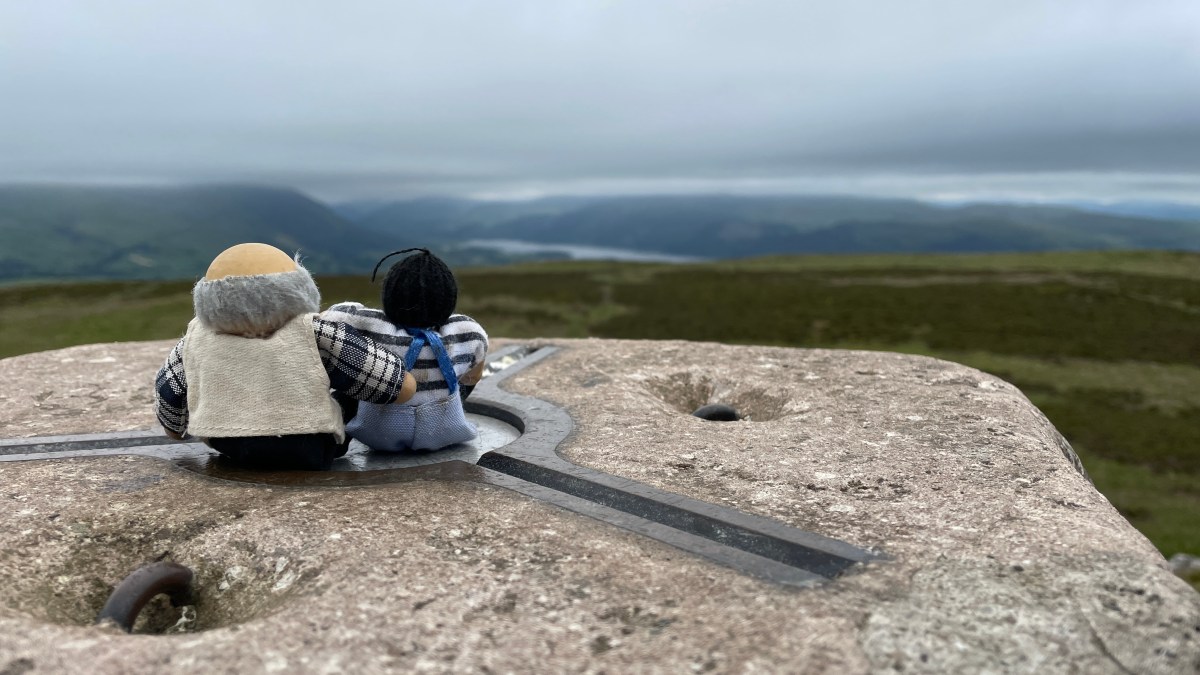
Heading Image: This is Jimmy and Grandad who have accompanied me on many of my walks. When I started taking them with me I had no idea that I would become a Grandpa before I completed this subplot. The best stories all contain something unexpected.

Experience – The Teacher

Experience may be a great teacher, but it’s not always a good teacher.

Anonymous

What have you leant from experiences? I suspect that for most of us the list of experiences is long and extensive.

Experiences that built us up.

Experiences that taught us not to go somewhere or do something.

Experiences that showed our limitations.

Experiences that we would happily relive every day.

Experiences that we will do anything to avoid them happening again.

Experiences that have taught us who to trust, and who to avoid.

Each of these experiences have formed a part of our character, parts of our personality and our way of thinking.

I approach a situations differently to you because my experience is different to yours.

Sometimes our experiences give us an intuition into a situation that others don’t have, but there are just as many times when our experience result in unhelpful bias. Our experience has taught us well, but hasn’t always taught us correctly.

It’s always a good time to build new experiences, perhaps it’s time to deliberately seek out experiences that challenge our biases.

Header Image: These are the edges of the paths near where I live – full of life.

The Power of a Ticking Clock

A few months ago I changed the location of my home office, it’s still in my house, it’s just in a different room. There’s now a bookcase behind me, and on that bookcase is a clock. It’s an analogue clock with a small pendulum that used to reside on the mantlepiece at my grandparents. It’s a relatively plain wooden clock, but it carries with it memories.

For years that clock has stood silent in various location around my house, the thought of keeping it wound was somehow daunting and so the pendulum remained still. A busy life and clockwork machinery didn’t feel like companions.

The clock is in a prominent location and visible just over my shoulder when I am on video calls. Several of my colleagues have commented on the clock telling the wrong time to which I would normally joke that it told the correct time twice a day, which is better than many clocks.

Recently the thought occurred to me that, as I was spending more time in my home office, I should give the clock a try and see what happened. Perhaps it would stop the comments.

The first hurdle was that I had the clock but no key to wind it, but that’s no impediment in the age of Amazon and next day delivery. As you would expect, also in the age of Amazon, I now have two keys, because two were cheaper than one.

I opened the clock face and looked at the two keyholes trying to decide which one was the clock and which the chime. My intention was to have the clock working without the chime because I wasn’t sure that I wanted the chimes going in meetings. I couldn’t decide which was which so wound both of them just a couple of turns to see what happened. A quick tap of the pendulum and the familiar tick-tock eased into it’s gentle rhythm as if it had only stopped a couple of days previously. I turned the minute hand around to the top and listened as the chime rang out – bong, bong. The chimes were out of sync by several hours, but that was easily fixed after I referenced YouTube.

The clock continued for the rest of the day and it kept remarkably good time so I left it running.

In just a day of running I started to notice something about the clock, it’s steady continuous tick-tock was having an impact upon me. As my mental state sped-up with stress, the clock acted as a metronome to bring me back to rhythm. The chimes that I had anticipated being annoying interruptions became soothing reminders of the day’s progression. The sounds of the clock were gently easing their way into my daily soundtrack. The constancy become comforting. I suspect it’s also having a positive impact on my productivity.

The clock is still ticking and I’ve become a little bit obsessed about winding it and adjusting it. It’s almost like it is talking to me and asking me to look after it.

The day after I first wound the clock, I was on a call with the colleagues who had commented about my clock and none of them noticed that the clock was now running until it chimed for the time that the meeting was due to finish. These chimes have a secondary benefit, people respond to them and end meetings as they chime. That wasn’t something I was expecting.

(This post has again demonstrated to me the madness of the English language – every time I typed wind, wound or winding I would look at it and have to convince myself again that these were the correct spellings and that I wasn’t talking about the movement of air, an injury or something you do to a baby.)

Header Image: This is the clock, on its shelf, ticking.

Walking into Redemption

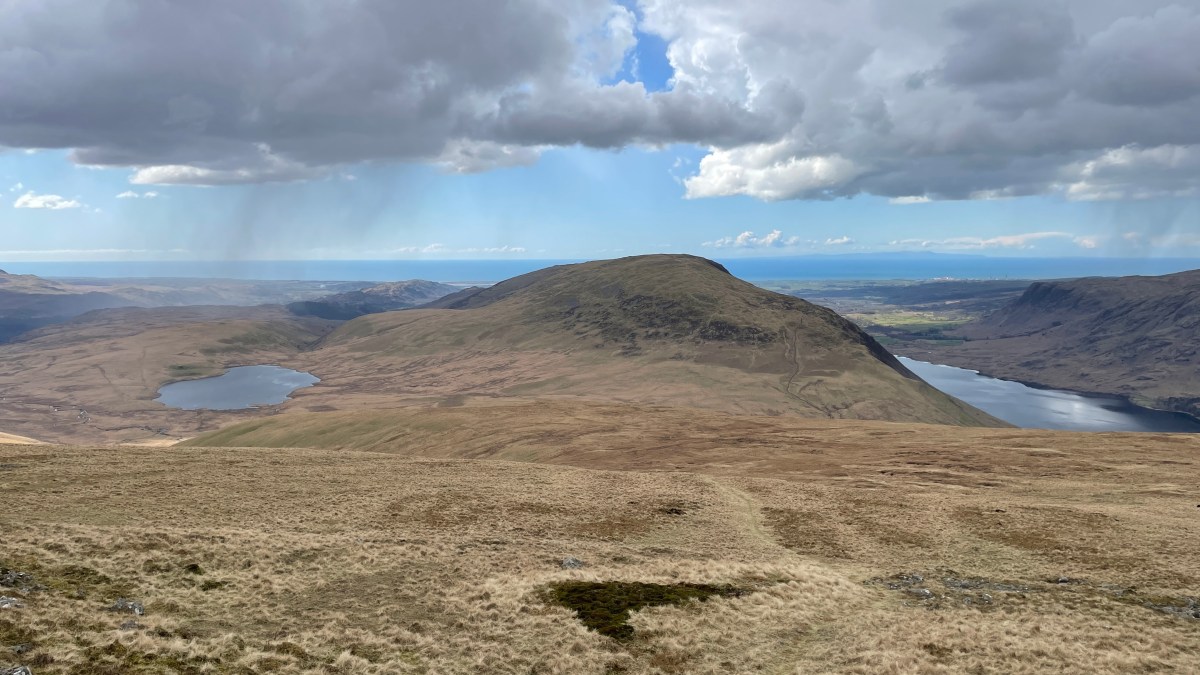
The image in the header of this post is from last weekend, during a glorious day walking in the hills.

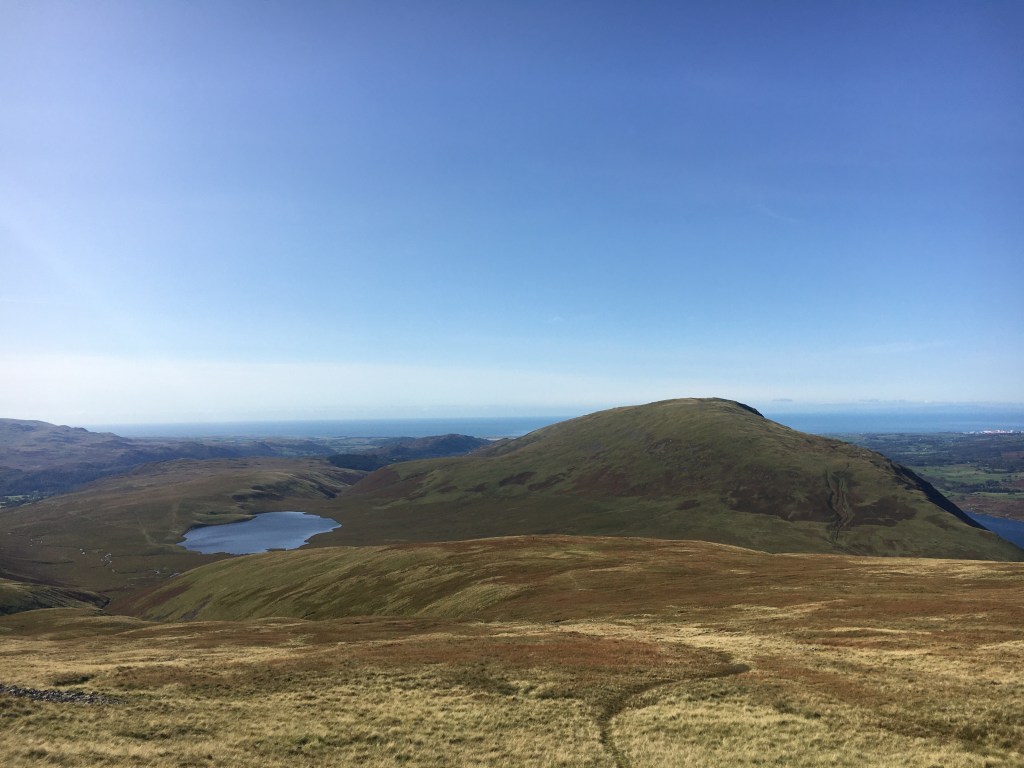
This following image is taken from a similar place on the same path in September 2020 which was the last time that I was out and about in the fells of Cumbria.

The difference in my feelings between these two days is stark. The scenes are similar, but I was in a different place altogether.

I have been trying to complete a set of 214 hills known as the Wainwrights for several years now, and in 2020 I was down to my last few. At the start of the year it seemed that there would be no reason why I couldn’t tick of the last few and celebrate a goal completed. But this was 2020 and the year of a pandemic and the associated restrictions.

Personally, the impact of the pandemic has been minor, there are things that I’ve wanted to do but not been able, but mostly things have carried on as normal. One of the areas that I’ve found the most difficult, though, has been the restrictions on access to the mountains. I wholeheartedly agreed with the lockdown measures, but that didn’t stop me missing the feeling of walking a path to a summit.

In late 2020 there was a short window when we were allowed to get out and climb. I was so looking forward to parking up, putting on my boots and heading out. I set out early and made the journey to my starting point in good time. As I crossed passes that gave a view of my destination, I was delighted to see that the peaks were free of cloud. Further along the journey the road runs alongside a lake that was mirror flat calm. It was going to be a wonderful day.

I parked up, put on my boots, checked my gear and headed out.

Part way along the path I was starting to warm up and it was time to take a layer off. A feeling of dread gripped me as I opened my backpack to put in the removed layer – where was the blue waterproof bag that had my lunch in it? This was going to be a long day and I was going to need some food at some point. Emptying the contents of the backpack onto the fellside just confirmed, sadly, that the food was back in the car. There was no choice but to return and pick it up.

Yomping back was frustrating and so was opening the boot of the car to see the bright blue lunch bag directly in front of me.

Heading out for a second time my steps took on a frustrated stomp. It was a beautiful day that may well be the only day for months that I would be able to this, and I was still in the car park.

Half a mile or so out of the car park the back of my legs started to feel wet. It took me a little while to realise that this wasn’t a splash of water, or even sweat, it was coming from my backpack, lots of water dripping from the base. For the second time dread washed over me as I reached into my backpack to realise that the drinking bladder had come apart and most of the water was now sploshing around inside. I took the bladder out, fitted it back together, but there was precious little water left. Fortunately, I had some spare clothes in another waterproof bag in my backpack, so I changed, emptied the rest of the water out of the backpack, checked that I was definitely carrying a spare drink in a bottle and, even more frustratedly, head out again.

I few miles further along and only about a half of the way up my back started to spasm. I’ve had this before in my lower back, it’s the result of too much time at a desk, but this was higher up and far more painful. When I get a spasm in my lower back I just need to slow down and walk through it, so I carried on. I slowed down, then I slowed down some more, eventually I was walking ten steps then breathing for ten breaths while I stretched, then walking ten steps. It was pitiful and my head was a swirling mass of frustration. Instead of enjoying an exhilarating walk in the mountains I was walking in treacle with a whirlwind in my head.

Eventually I listened to my body and sat down.

I looked around myself and couldn’t see the beauty because the mist of frustration was too thick.

I felt shame for wasting a glorious opportunity.

As I sat, I wrapped my arms around my legs and wallowed in the emotional and physical pain of failure.

I didn’t post any pictures that day, I didn’t want anyone to know that I had given up.

I’ve carried some of those feelings around for months. Last weekend that all changed.

The first real opportunity for many months arrived and I was determined to revisit and redeem that day of frustration, shame and pain.

I set off from the car park and triple checked that I had my blue lunch bag, I also checked a couple of times more after I’d begun my walk.

I’d replaced my water bladder, which was sitting comfortably, and without leaks, in a new backpack.

After some more research and conscious of my previous back problems I travelled a route which started in a different place.

It was wonderful. A fabulous spring day of blue skies and crystal-clear views across the Irish Sea to the Isle of Man, north to Scotland and south as far as Wales. The views from the summits and ridges were spectacular across the Lakeland fells.

Part way down I sat in roughly the place where I had submitted on my failed visit, and took a picture, the one in the header. I reveled in the sense of achievement, of having achieved what had been so frustrating. I felt the shame lifting as I succeeded where once I had failed. The weight I had been carrying for months was gone, I walked into redemption.

Not Crossing the Flood – Laws, Guidelines and Principles

It has been raining for two days, prior to that we had snow and ice, it’s quite wet out there.

Not only is it wet it is very muddy and the number of routes that I can use for my morning walk has become restricted. Thankfully there are still routes open along bridle paths and paved areas so the walking continues.

This morning, in the dark, I set out on one of the routes that I was expecting to be not too muddy and not too wet.

Part way into my walk I headed down a short hill where the two days of rain had turned the tarmacked path into a very shallow stream flowing in from springs on either side. A couple of days ago this was an sheet of ice. At the bottom of the hill is a stream over which a wooden bridge sits before the path ascends again. Just before the bridge is a path off to the left which is always muddy, even in the summer, but in the spring that path is the route to the best bluebells in the area. Straight ahead, though, the tarmac continues.

As a peered through the pre-sunrise gloom I could see that there was something different about the path this morning. A little further along the path seemed to be moving. As I progressed it became clear that the stream which normally travels under the bridge was no longer constrained by its banks and was now covering the path.

It wasn’t clear in the dark how deep the water was, nor how fast it was flowing, a cautious approach was required. I am aware of the perils of fast flowing water and recognised that being swept of my feet was a possibility that needed to be considered.

A couple of steps into the expanse the water was already half way up my boots and I decided that at was time to explore a different route. This required some rethinking and some retracing but no great loss.

I write this at a time when the rate of COVID-19 infection in the UK is rapidly accelerating and we are in a national lockdown.

Every day our news is filled with two types of COVID-19 story; there are stories about the numbers and the lives impacted by this terrible virus, then there are stories about the lockdown regulations.

We like to talk about the lockdown regulations. In England the rules change almost as often as the weather and the only way of keeping up is to talk about it. It’s almost replaced talking about the weather as a pastime. Our current regulations are defined as things that we should not do (guidelines) and things that we must not do (laws). The news outlets are constantly running stories about people breaking the laws and being fined, and stories of celebrities and politicians breaking the guidelines. The radio debate shows must run at least one phone-in a week for people wanting to discuss what is, and isn’t, against the regulations. Much of the reporting and the discussion hinges on how close to breaking the law can people get without being prosecuted. As an example – the guidelines tell us that we can exercise outside which we should do locally and that we can be joined on our exercise by one other person from a different household. So we endlessly debate the definition of locally. Then the police fine someone for traveling a few miles and the papers are full of it for days, the fine is the retracted. The Prime Minister cycles in a location that is several miles away from his home and the papers are again ignited.

Meanwhile the scientists are telling us that all contact with other people is dangerous and that we should stay at home.

As I was out on my wet daily exercise this morning I was thinking about these discussions when I was struck by the parallel with my flood situation.

The flood was a dangerous situation.

Specifically how dangerous, for me, I don’t know, I didn’t push it that far. I decided that there was a greater principle at play which was one of risk and reward. The risk, though likely moderate, wasn’t worth the risk. There are many things that I could do at the edges of the law and against the COVID guidelines that I choose not to do because the same applies, the risk is not worth the reward and I follow the principle of staying at home.

The law gave me the right to cross the flood, likewise the law gives me the legal right to travel 70 miles to one of my favourite places for a walk. I chose not to cross the flood because my knowledge guides me that it is the low risk thing to do. I am allowed to travel for exercise, staying local is a guideline, and so I choose to stay at home because that’s the low risk answer for me and for everyone else who I might come in to contact with.

We shouldn’t be pushing to the edge of the law, we should be walking in the middle of the principle, using the guidelines as guides.

Header Image: This is a fuzzy nightmode picture of the flood.

I’m reading… “The Midnight Library” by Matt Haig

Imagine that our universe is just one of many universes, an infinite number of universes even.

Then imagine that if there are multiple universes that you exist in each of those universes, but it’s a different you, a you that has made different decisions and taken different paths.

Now imagine that you could look back through your life and the decisions that you have made and can travel to the universe where that version of you exists – the you that chose to stay at home the day when they were involved in a fatal car accident, the you that chose to invest in that opportunity, the you that took that job offer.

Which of those lives would you choose? What would you do differently if you could?

The Midnight Library is a thoroughly enjoyable book that explores choice, regret, happiness, significance and meaning seen through the life of Nora Seed and her encounters with the librarian Mrs. Elm.

Header Image: This is the shoreline at Silverdale on a frosty day in lockdown.

I’m reading… “English Pastoral: An Inheritance” by James Rebanks

I’ve been following a bit of a theme, focussed on the countryside. This wasn’t initially a deliberate act on my behalf it was something I fell into and then continued. It happened like this; while I was part way through listening to “Wilding” by Isabella Tree, “English Pastoral” by James Rebanks was released, having enjoyed “Wilding” and also having previously enjoyed “The Shepherd’s Life” also by James Rebanks I decided to dive in.

In describing Wilding I talked about learning from the mavericks, the people doing things differently. Rebanks is another maverick, but in a different way. Rebanks farms in the northern fells of the Lake District which is a very different context to that of the Knepp Estate in West Sussex, yet both of them are trying to find a different way to treat the land on which they live.

English Pastoral is a biographical commentary on the countryside and the significant changes that have occurred over a relatively short period of time.

I was a boy living through the last days of an ancient farming world. I didn’t know what was coming, or why, and some of it would take years to reach our fields, but I sensed that day might be worth remembering.

This book tells the story of that old world and what it became. It is the story of a global revolution as it played out in the fields of my family’s two small farms.

English Pastoral – James Rebanks

For anyone in doubt, all is not well in the English countryside, and all is not well with farming. In English Pastoral Rebanks talks through the events that led him to the realisation that the ways in which we are currently farming are not sustainable, and that a different path needed to be followed.

The last forty years on the land were revolutionary and disrupted all that had gone before for thousands of years – a radical and ill thought-through experiment that was c0nducted in our fields.

I lived through those years. I was a witness.

English Pastoral – James Rebanks

We have sustainably farmed the English countryside for many generations, but in recent decades the successful farmers have been those who embraced the modern ways of mechanisation, efficient cattle breeds raised in large sheds, large fields, massive farms and extensive use of chemicals. At the same time the rest of us have become “strangers to the fields that feed us” as the supermarket has dominated our buying. Farming is now in the middle of a huge international system of food production in which productivity and efficiency are the measures of success. We each benefit from that system in relatively low cost food, but at what price?

I have come to understand that even good farmers cannot single-handedly determine the fate of their farms. They have to rely on the shopping and voting choices of the rest of us to support and protect nature-friendly sustainable agriculture.

English Pastoral – James Rebanks

Rebanks is trying to learn from the old practices that he was brought up with and to return his farm to something more sustainable. This involves rebuilding some wildness, returning rivers to less straight routes and re-establishing a farming mix that isn’t just focussed on a single product. this inevitably has an impact on productivity, but perhaps not as significant as you might expect, and even if it does perhaps that’s a price worth paying.

We have a tendency to think in terms of blueprints and models. If we see someone doing one thing and being successful at it we try to copy it. What we miss by doing this is the context in which the originator of the idea built their way of doing things. English Pastoral isn’t describing a blueprint, it’s trying to open our minds to the possible.

Having read both Wilding and English Pastoral I am left at a loss as to what to practical steps to take, personally. I am one of those “strangers to the fields that feed us”, but I’m not sure how best to get reacquainted.

Header Image: This is what the northern fells can look like, imagine farming here.