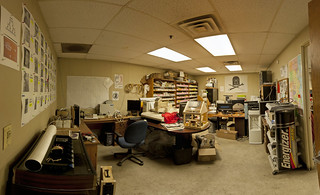
Productive Workplace: Virtual Collaboration Spaces

Virtual collaboration – ability to work productively, drive engagement, and demonstrate presence as a member of a virtual team

Over the last week I have spent 24 hours on teleconferences as a member of a virtual team, this has been a quiet week for teleconferences.

I have also responded to many emails and instant messages.

Between those activities I have also contributed to collaborative spaces where the team members are spread across the globe.

Of the 20 or so people sat in the same office as myself today I won’t work with any of them and there are far more desks than people.

I could, and sometimes do, do this job in a local coffee shop, at home, in the garden there are only a few restrictions stopping me working up a mountain or at the beach.

What I do isn’t unusual, it’s quite normal for many people, particularly those in large global organisations, but it wasn’t always like that.

A bit of historical perspective.

What we regard as the standard place of work, the office, has probably only existed since the 1730’s so it’s less than 300 years old. We needed these places of work because we were bound by two things primarily.

The first constraint was the machine; we needed to go into the factory because that was where the machine was that we were operating. This is still mostly the case, but the number of people needed to look after the machines is radically reducing as automation takes over.

The second constraint that meant people went into places of work was communication. In order to process an order, as an example, the piece of paper needed to be walked around an organisation. If you wanted to get a set of people to work on something you needed to have a face-to-face meeting and a common place of work so that you could work together. That communication restriction no longer exists, we all have a myriad of communication mechanisms – video-conference, audio-conferences, web-conferences, instant messaging, email, collaborative workplaces, on-line forums, social media, the list goes on.

People are now in a position to choose where they work and many choose to work from home unless there is a specific reason for them to be in an office. This is killing off the traditional office as a standard workplace.

If we’ve all gone virtual already, why does virtual collaboration appear in a list of key skills for 2020?

There is a dichotomy and that is this:

We have a lot of virtual collaboration tools available to us, but we are still very poor at virtual collaboration.

Some of the reasons that we are poor at virtual collaboration is down to the current tools available. I’ve just listened to a colleague spend 15 minutes getting everyone together into a virtual meeting between two organisations. The delay was down to a couple of technical issues for a couple of the key attendees at the meeting. Anyone who has been involved in any virtual meeting will recognise this experience. I wonder how many minutes of hold music are played internationally every day?

My view, though, is that the biggest issue that we have with virtual collaboration is ourselves.

One of the big selling point for virtual meetings is the reduction in travel costs. Back in 2008 Verizon estimated this as between 5 and 35 times cheaper. I argued at the time:

When it comes to virtual meetings I have to admit to being something of a cynic. My issue isn’t with the cost savings of moving meetings virtual – my issue is with the diminished value of these meetings.

I don’t think that anyone would argue with me that any virtual platform – video or audio – detracts from the value of the meeting. This results in meetings that are protracted in length and tend to communicate at a very high level. Any discussion that has required a deep understanding or close collaboration has been, in my experience, a failure.

With all of these limitations I wonder whether the value of many virtual meetings is so low as to make them more expensive than face-to-face meetings.

This is still, to a large extent, my viewpoint.

What has changed in that intervening period has been an explosion in the belief that meetings produce work, and because virtual meetings are free then we can get lots of work done by having lots of virtual meetings.

In a quote from Leadership Freak:

Remember, you don’t get anything done in a meeting. Things get done after meetings.

The time to value ratio of meetings continues to degrade at a pace, which is a shame, because meetings have always been a fundamental part of commerce, they are deeply engrained in all societies. In the words of Tom Peters:

Every meeting that does not stir the imagination and curiosity of attendees and increase bonding and co-operation and engagement and sense of worth and motivate rapid action and enhance enthusiasm is a permanently lost opportunity.

Getting to the purpose of this post in this series on the productive workplace; virtual collaboration is massively impacted by the locations we choose.

As video becomes more prevalent this is going to become a greater issue, there are plenty of people who will have to start smartening up to go to work, but it’s more than that, lighting has a big impact on video quality. Even for conference calls, external noise is an issue. One of my best friends is the mute-all key-combination, anyone dialled in from Starbucks generally needs to be catapulted from the call.

People talk about having IT systems that are as reliable as the dial-tone, if only mobile calls were as reliable as that.

Distraction is another huge issue for virtual collaboration. How many times have you heard someone say “Sorry I missed that, can you say it again.” While this might seem like it’s productive for the person being distracted it’s a huge productivity pull on the people who they are collaborating with.

Many people choose to participate in virtual collaboration from home precisely because this the place with the best lighting and sound; not everyone is in this privileged position though.

Some interesting videos, though this subject doesn’t seem to be one that people produce interesting videos for:

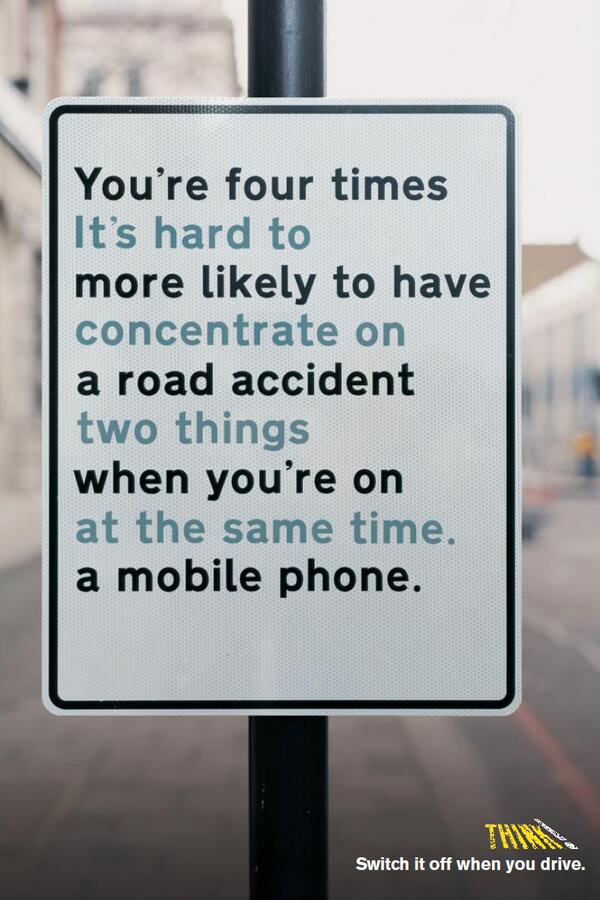
https://www.youtube.com/watch?v=_PetSsZIpOY


Productive Workplace: Cognitive Load Management Spaces

Cognitive load management: ability to discriminate and filter information for importance, and to understand how to maximize cognitive functioning using a variety of tools and techniques.

You have access to more information than any other person in history, you’ll have access to even more information tomorrow. It would take you more than a lifetime to consume the information that will get uploaded produced in the next minute. There are over 600,000 files uploaded to Dropbox in a minute, there are nearly 1,500,000 videos uploaded to YouTube every 30 seconds and that’s just two of the popular internet services.

One Second on the Internet is a great visualisation of the pace of change.

You cannot possibly hope to keep-up; you live in a world where there are vastly more things that you don’t know that you don’t known than things to know.

One of the most popular posts on this site is one titled: “There’s no such thing as information overload only failure to filter“. At the simplest level I agree with the statement but I think that it’s such a massive simplification that it’s not really very useful. One of the problems with it is the assumption that the necessary tools for filtering exist and exist in such a way as to be useful.

I think it’s a bit more like this cartoon:

We haven’t quite figured out filtering yet

The reality is, though, that this is the world we are all working in, a world that can easily and quickly overload our mental abilities, a world screaming out for attention. I use the word attention because it’s the scarce resource.

There has already been significant evolution in the tools that we have available to us for filtering and visualisation and there’s plenty more to come, but I’ve talked about their impact on the workplace already in the posts on Computational Thinking  and Sense Making. I haven’t yet talked much about attention though and we all live in the middle of an attention economy that is competing for our precious cognitive capabilities.

“…in an information-rich world, the wealth of information means a dearth of something else: a scarcity of whatever it is that information consumes. What information consumes is rather obvious: it consumes the attention of its recipients. Hence a wealth of information creates a poverty of attention and a need to allocate that attention efficiently among the overabundance of information sources that might consume it”

Herbert A. Simon

There is a whole army of people and associated technology seeking to manipulate our attention for their purposes. The Google results that you see are not the results that I see because Google is trying to give me results that keep my attention. The attention that I give them has a direct link to their revenue after all. They’re filtering my results for their purposes. Google aren’t the only ones doing this, it’s now normal practice for many of the sites that we visit every day. While this might give us the information and services that we think we need the challenge this creates is one of filter bubbles where we only see what the algorithms decide to show us. Breaking out of the bubble can be a problem; I’ve been very conscious of my filter bubble while researching this blog.

The impact of all of this data, and the attention engineering we are subjected to, is that we are steadily conditioning ourselves to live in a world driven by distraction turning us into people in constant need of stimulus. I’ve written over 50 posts in the category my brain and over 30 in the category information addiction (there is some overlap between these two numbers) many of these focus on the impact that the new world is having on our mental abilities. Steve recently highlighted an experiment where people would rather suffer the pain of an electric shock than be in a place with no stimulus.

We try to multi-task between activities, sometimes with fatal consequences:

What we need are workplaces that facilitate us giving the correct amount of attention to the right thing in the right way with the minimal amount of needless distraction, whilst also protecting us from being completely embedded into a filter bubble.

We all know about spam email, but how many of us also have spam people in our workplace (physical and virtual)?

Are there places that you go to where the impact of spam people is made worse by the acoustics and the room layout?

Can you think of a time when that spam person has highlighted something important to you that you wouldn’t have found out through your normal filters?

The primary distractions that people talk about are acoustics and devices.

Noise has a massive impact on our ability to concentrate and give attention to something. We would want people dispensing drugs in a hospital to be giving full attention to that task, but noise in hospitals has become such an issue that the number of mistakes is increasing. Personally I’ve sat in many offices where the background noise levels affected my ability to focus and now regard a set of earphones as essential.

The issue of acoustics applies to all types of workplaces and we need to do a better job of getting it right.

The other major factor impacting attention is devices. Many of us have been in a conversation where it became clear that the person we were talking to was no longer giving us their attention because they had been distracted by a device. The attention economy techniques reach right into every workplace. I make it a rule that I will just stop talking when someone is distracted by a device. On one occasion I sat for over 5 minutes waiting for someone to come back from their device, they didn’t even notice that I had stopped talking.

I’m not suggesting that we should banish devices from the workplace, but we do need to create ways of muting their impact even if that’s through training and policy.

Some videos you may find interesting:

Productive Workplace: The Happiness Blanket in the Office?

I wonder what this blanket would show for workers in a standard open plan office:

More importantly; I wonder how many workplaces undertake empirical studies on the well-being of its people? Considering how much time people spend in the workplace and the value of what they do there you would have expected a mountain of study and data about it, but it’s surprisingly difficult to find.

Productive Workplace: Design Mindset Spaces

The design mindset is the latest skill in our series on the future productive workplace.

Sometimes the simplest words are the most problematic to define; design is one of those words. It is used as a verb and a noun; on dictionary.com it carries 17 different definitions.

To try and get an understanding people use a quotation by the art director and graphic designer Paul Rand:

Design is the method of putting form and content together. Design, just as art, has multiple definitions; there is no single definition. Design can be art. Design can be aesthetics. Design is so simple, that’s why it is so complicated.

Steve Jobs is also quoted:

Design is not just what it looks like and feels like. Design is how it works.

Mindset is perhaps a little easier to define as:

The established set of attitudes held by someone.

In other words, a mindset is a way of thinking, so perhaps design thinking is a better phrase, partly because its use has increased in recent years:

https://books.google.com/ngrams/interactive_chart?content=design+thinking%2C+design+mindset&year_start=1800&year_end=2000&corpus=15&smoothing=3&share=&direct_url=t1%3B%2Cdesign%20thinking%3B%2Cc0%3B.t1%3B%2Cdesign%20mindset%3B%2Cc0

If you go to the design thinking article on Wikipedia you get this definition:

Design thinking has come to be defined as combining empathy for the context of a problem, creativity in the generation of insights and solutions, and rationality in analysing and fitting various solutions to the problem context.

(You’ll also notice that the Wikipedia design thinking article has a number of issues flagged against it)

One of the leading proponents of design thinking are the d.school at Stanford University. They talk about design thinking as a process which moves iteratively through: empathise, define, ideate, prototype, test.

No process would be complete without a set of methods to make it work and they have define many, including: brainstorming, storytelling, why-how ladders, point-of-view madlib and empathy maps, to name a few.

(If you are interested in design thinking the d.school makes a 90 minute crash course freely available)

You might like to take a few seconds to look around the d.school space as it was in 2009:

Does that look anything like the place where you normally work?

New methods clearly need new types of spaces, but what are the characteristics of those places?

There are multiple different pieces of research about the impact of a space on the way that people behave in relation to creativity alone.

One study, for instance, highlights the impact of a messy desk:

Working at a clean and prim desk may promote healthy eating, generosity, and conventionality, according to new research. But, the research also shows that a messy desk may confer its own benefits, promoting creative thinking and stimulating new ideas.

Tidy Desk or Messy Desk? Each Has Its Benefits

Another study points to ceiling height having an impact:

“When a person is in a space with a 10-foot ceiling, they will tend to think more freely, more abstractly,” said Meyers-Levy. “They might process more abstract connections between objects in a room, whereas a person in a room with an 8-foot ceiling will be more likely to focus on specifics.”

Ceiling height can affect how a person thinks, feels and acts

The effect of the environment on all of our other senses has an impact to.

We’ve now discussed many space types each enabling different methods for enabling: sense-making to social intelligencenovel and adaptive thinking to computational thinkingnew-media literacy to trans-disciplinarity working. Some of them requiring similar spaces, but some needing quite different space. The question is, how do these all fit together into a working space? What would a design thinking approach to that problem be?

One of the trends in building design in recent years is known as Activity Based Working (ABW). Activity Based Working designs many different activity spaces into an environment where people can work in a way that is ideal for what they are doing, rather than creating a set of identical personal spaces where people always work. These are predominantly flexible shared spaces. That change in working is one of the things the GlaxoSmithKline were looking for when they redesigned their headquarters:

Some video’s you might find interesting:

http://www.youtube.com/watch?v=lGOTwFvkfhU

https://www.youtube.com/watch?v=-FzFk3E5nxM

Because it's Friday: Q2 Spaces – Interviews with artists in their spaces

I’ve always been fascinated by the different places that people work in even more so since writing the Productive Workplace series.

This week I came across a series of videos that visit artists in their creative spaces.

As I watch them I’m drawn to some spaces, repulsed by others, intrigued by all of them:

Productive Workplace: The Trans-disciplinary Space

I’m living in a bit of a buzzword storm at work at the moment. This is nothing new, it comes and goes. I have to apologise is I let some of this storm spill out onto this post, or perhaps I should just get them out of my system right at the start.

Do any of these mean anything to you:

  • T-shaped professionals
  • Square-shaped teams
  • E-shaped professionals
  • Double-deep professionals
  • New Renaissance man
  • Versatilist
  • Co-creation
  • Co-editing
  • Co-curation
  • Crowd-sourcing
  • Trans-disciplinary
  • Inter-disciplinary

All of them are relevant to this post, but each one demonstrates the problem I’ve had writing it and why it’s taken so long.

Let’s start with trans-disciplinary as it’s in the title of the post:

Trans-disciplinary: literacy in and ability to understand concepts across multiple disciplines

Remember; this is one of the skills we are all going to need in the future of work so we ought to, at least, understand what it is.

The background to the term is that people are generally expected to be highly skilled in one particular discipline. Conversely, the convention goes, that to be highly skilled in one particular area makes you quite narrow and creates barriers between you and other highly skilled individuals from other disciplines. There are many problems, though, that require people from multiple skills to come together to get to a solution so we need to be able to co-create and co-edit.

I’ve faced this expectation all of my working life:

“you wouldn’t understand because it’s not a technical question”

I happen to be predominantly technical, but that doesn’t mean that I’m not interested in all sorts of other areas. My experience is that most people are the same even if their working environment does  encourage them to learn about other disciplines.

Putting that little rant to one side; the need for the future are people who are highly-skilled, but not narrow. If we are going to fix big complex problems we need people from all sorts of disciplines and experiences to come together to find solutions.  In order to come together people need to be able to communicate and connect across the disciplines.

Imagine a coder, an artist and a teacher working together to produce an app that encourages learning. Alternatively, a mathematician, a biologist and a 3D modeller working together to create a representation of a virus.

This is where one of my buzzwords from above comes in – T-shaped professionals. This is a terms that was first used, as far as I can tell, by Tim Brown of IDEO. The term is used to mean people who are broad generalists and also have deep expertise in an area, it’s also used to mean people who can communicate broadly combined with deep problem solving skills. Think about the thousands of specialities all working to produce Wikipedia.

(This is where a number of the other buzzwords come in. Once someone has proposed one shape people are bound to want to propose other shapes. I’m just going to provide the links: share-shaped teams, E-shaped professionals, new renaissance man, versatilists)

I know of one company that even puts the requirement to be T-shaped into their handbook for new employees:

We value “T-shaped” people.

That is, people who are both generalists (highly skilled at a broad set of valuable things—the top of the T) and also experts (among the best in their field within a narrow discipline – the vertical leg of the T).

This recipe is important for success at Valve. We often have to pass on people who are very strong generalists without expertise, or vice versa. An expert who is too narrow has difficulty collaborating. A generalist who doesn’t go  deep enough in a single area ends up on the margins, not really contributing as an individual.

The thing that we all need to recognise is that it’s teams that accomplish complex things, rarely individuals on their own. A team isn’t a set of individuals though. A team is a cohesive unit which needs to work together. People who can make an individual contribution by being highly-skilled in an area while communicating  across a team of people with their own skills.

In my post on the Novel and Adaptive Thinking Space I talked about the idea of The Studio of the Future. One of the key factors for this studio space is it’s personal flexibility. There’s no point in being T-shaped though if there isn’t anyone for you to collaborate with, the point of being trans-disciplinary is to build effective teams.

The Hackerspace

Hackerspaces (apologies for another buzzword) are community operated physical spaces where people socialise and work together.

The Wikipedia entry defines Hackerspaces this way:

Milwaukee Makerspace LibraryA hackerspace (also referred to as a hacklab, makerspace or hackspace) is a community-operated workspace where people with common interests, often in computers, machining, technology, science, digital art or electronic art, can meet, socialize and collaborate.

These spaces have been produced for the kind of trans-disciplinary activity that we’ve been talking about, but it’s not just about the space it’s also about the philosophy dwelling within the space. An important part of this is the ownership of the space and the resulting freedoms. These spaces give people the context in which they interact with others to develop and strengthen their T-shape.

As I think around the office where I work there are a number of meeting rooms that people have commandeered to create what they need. They call them things like war-rooms or project-rooms. They are often messy because they have white-boards squeezed into them and flip-charts stuck on walls where they aren’t supposed to be. Some of the tables have been split out so that people can have a large screen for their little work area. I’ve worked in these places too, it’s not very satisfactory, they really need a space that they can hack for their use.

Some videos to make you think:


Productive Workplace: The New Media Literate Space

When I started work, just to show how much of a dinosaur I am, I would produce work by hand writing a document with a pen. I would then walk it to the typing pool where a not-so-friendly lady would skilfully bash keys to produce a document. If the document needed a diagram I drew it. These documents contained a tiny amount of data (not that my hands felt that way about them) they were just text after all. Very few diagrams because my drawing isn’t that good, definitely no animations, sound or video.

Things have changed, although it’s hard to be specific about how much data we now produce, no one would argue that we are creating a huge amount of data, exabytes (thousands of petabytes (thousands of terrabytes)) of it every single day. Most of that data isn’t text, the majority of data in transit is video. Over half of all downstream traffic is taken up with just two site – Netflix and YouTube.

We now live in a world of new media, but not just new types of media, unprecedented amounts of it.

That’s where new media literacy comes in:

New media literacy: ability to critically assess and develop content that uses new media forms, and to leverage these media for persuasive communication

Today I received an email that looked like this:

HMRC Spam Email

I knew straight away that it was SPAM; for starters outlook.com had stuck it into the junk mail, but even if it hadn’t, there is no way that the UK Government would be sending me an email with a zip file attached. The email didn’t have my name in it and didn’t have any verification information on it to suggest to me that it was from them. Also, the email address used isn’t the one that I give to the UK Government. I haven’t opened the zip file to see what kind of information the supposed official form asks for because zip files can contain all sorts of nasties and I don’t need that kind of hassle. I’m also immediately suspicious of any email that looks like it’s giving me free money. I know these things because that’s the arena I work in and the age I live in, but I’m not sure my mum would have been so new media literate.

The other day my daughter told me that she’d heard that Subway were stopping selling ham so that they could serve only Halal meat, something that’s becoming a newsworthy issue in the UK. She’d also seen something on Facebook about it which apparently added to its credence. The irony was that she was telling me this as I was watching a Subway advert for breakfast bacon sandwiches which made me somewhat sceptical. It didn’t take long to understand that the truth was somewhere in between.

Howard Rheingold said this:

“Increasingly I think the digital divide is less about access to technology and more about the difference between those who know how and those who don’t know how.”

Howard talks about five digital literacies which map quite closely onto the new media literacies we are talking about here:

  • Attention – What am I going to give my attention to? How do we get someone’s attention?
  • Participation – How do I decide what I am going to participate in? How do I curate what I’ve found so that I can find it again?
  • Collaboration – Who am I going to collaborate with? How do I know that they are trustworthy?
  • Critical consumption of information (or “crap detection”) – How do I filter the HAM from the SPAM?
  • Network smarts – What communities am I going to participate in?

Dan Gillmor has also produced 5 principles of new media literacy (pdf) focussed primarily on the issue of trust and critical consumption:

  1. Be sceptical of absolutely everything.
  2. Although scepticism is essential, don’t be equally sceptical of everything.
  3. Go outside your personal comfort zone.
  4. Ask more questions.
  5. Understand and learn media techniques.

The Fishing Boat

The river of new media is wide and dangerous, but it’s also full of goodness and riches. The primary flow of the river is outside any single organisation.  What organisations need is people who know how to navigate to different parts of the river and to bring back the goodness; becoming known as outside-in.

These outside-in workers need to work in places that allow them full access to the river. For a long time the primary security question for most organisations has been how they protect their clean corporate network from the big bad world outside. That approach invariably leads to frustration for the outside-in workers who will always want more access and more bandwidth. It’s understandable when these people decide that it’s just easier to work in the coffee shop or at home. Organisation still need to protect themselves, though, from the outside-in worker who brings back something dangerous; that’s not the only challenge that organisations face in this outside-on world.

The Office Video Studio

As we’ve already seen, new media covers a broad set of capabilities including lots of audio and video. If an organisation is going to get people’s attention and foster participation it’s no longer good enough to create a document or to send an email.

The workplace needs to enable creation and collaboration in all the new media types including audio and video. Video used to be an expensive thing to do but now everyone is a producer with 100 hours of video uploaded on YouTube every minute. People already need places that are  compatible with the creation of that audio, video and other media types. Even person-to-person video conferencing is difficult in the modern open-plan office because of the practical issues of noise and visual distraction.

Most people produce at home because that’s the only place where they can get the space they need. It’s not a great way to be professional in production though unless you have some specialist capabilities at home. Production quality is important because it’s one of the things that will mark out your video as worth watching among the other 100 hours uploaded in the last minute, as an example. Professional video studios have specific characteristics to enable high quality production, they aren’t required all the time, but people do need access to them. Other studio types may also be required if their characteristics are sufficiently specialist.

Although the place is important for some of the functions of new media literacy my view is that the primary issue is network connectivity. Outside-in workers will gravitate to the place where they can get the best connectivity to the river and for many that’s at home.

Some videos to give you a wider perspective:

The Productive Workplace: The Space for Computational Thinking

Computational thinking: ability to translate vast amounts of data into abstract concepts and to understand data-based reasoning.

This post marks the half-way mark of this series of posts on the productive workplace and the need to support the skills and activities of the future.

Like many of the previous post it’s worth having a definition here:

Computational thinking is the thought processes involved in formulating problems and their solutions so that the solutions are represented in a form that can effectively be carried out by an information-processing agent.

Cuny, Snyder, Wing

Or more simply:

Computational thinking describes the mental activity in formulating a problem to admit a computational solution.

In the IT buzz-phrase Top 10 for 2014 Big Data is certainly in their. Like most phrases it’s going through a significant amount of definition entropy as people seek to claim it for their own benefit. What is clear, though, is that what we call Big Data today is only just the start of the sea of data that is going to become available in the coming years.

Another IT buzz-phrase for 2014 is Internet of Things with Gartner estimating that there will be 26 billion units on the Internet by 2020, each of them sending out streams of data.

If we are going to gain insights from all of this data then we are going to need to be equipped with a set of creative skills and metal techniques.

Much of the ocean of data is going to be freely accessible so it’s not going to be the possession of data that is going to be the value differentiator; it’s going to be the ability to gain insight from the data that’s going to set people and organisations apart.

The processing of the data is also becoming incredibly cheap, even free, so those capabilities are not a differentiator either. It will be the ability to point the processing in the right direction to solve the problem and gain the value that will be the required skill.

That’s where Computational thinking comes in with skills like:

  • Decomposition
  • Pattern recognition
  • Pattern generalisation and abstraction
  • Algorithm design

What is the workplace that best supports this way of working?

In earlier posts I’ve used an existing location type as an analogy of what is needed in the future workplace to enable the skills and activities being described. Finding an analogy for this one has been tricky because I’m not sure that there is a current workplace that does this type of work. The nearest I got to was the Physics Lab.

The Physics Lab of the Future

What is needed is a place where it’s possible to formulate the right question, decide on the model or abstraction for that question, compute the question and test the answer to the question. A bit like a physics experiment. The problem with this analogy is that it’s already out-of-date, most physics takes place on data and simulations already. So you have to think back to the physics lab of old, that place which was full of prisms, Newton’s balls, Foucault’s pendulums and van der Graaf generators.

Within this space we were schooled in the art of experimentation and the writing of the lab report. While I, like many, hated the writing of the lab report it did at least teach us a method that required us to formulate the purpose of the experiment before we carried it out.

I chose a physics lab because physics is about abstraction which is what computational thinking is about. We can’t see electricity or gravity, but we can build experiments to see the effects of it. That’s what we are going to have to do with all of this data that we are generating; build experiments that show us an effect.

Like the modern physics lab though, the computational thinking lab is mostly virtual, but doesn’t consist of people sitting at desks with screens. As most modern physics experiments are done with teams; so will most problems that need computational thinking.

Perhaps what I am envisioning is something a bit Iron Man J.A.R.V.I.S. but integrated into a team experience and not being solely used by the lone maverick.

The computational thinking space is likely to share many of the same characteristics as the Novel and Adaptive Thinking Space and the Sense Making Space. The important activities are thinking and collaboration both of which are greatly influenced by the space in which they are undertaken.

Some videos to make you think:

The Productive Workplace: The Cross-Cultural Space

Cross-cultural competency: ability to operate in different cultural settings

It’s worth starting this post with some definitions of culture:

Culture: The behaviours and beliefs characteristic of a particular social, ethnic, or age group.

Culture: The way in which people solve problems and reconcile dilemmas. (E. Schein)

Culture: How contrasting values and conflicts are habitually mediated. (F. Thompenaars)

Cross-cultural competency is the ability to move between different groups and still perform, to stay productive. Cross-cultural competency also enables people with different ways on solving problems and reconciling dilemmas to come together to deliver value.

I’ve travelled and worked across a number of cultures.

My birth was in London, I was raised in Yorkshire and have lived in Lancashire for all of my adult life. For those of you with little knowledge of English culture it’s enough for you to know that Yorkshire and Lancashire both have roses as their emblem, but of decidedly different colours and often went to war over it.

I work for an organisation that is Head Quartered in the USA. We joke that the USA and the UK are “two nations divided by a common language”. We may both call it English, but we use it very differently (a question for my American friends: have you ever wondered why no one in the UK is named Randy?) It’s not just the language tough, our beliefs and behaviours are very different.

My job has meant that I have worked across organisations in many sectors including defence, public sector, finance, healthcare, automotive, utility and alongside many IT organisations. Every organisation has its own culture some inspiring, some draining.

Yet, in each of these contexts certain things remain with little differentiation: the five legged chair, the formica covered desk, the ugly phone, the bland partition, the three drawer pedestal and the rows. All bolted together to stop anyone changing anything.

All of the billions of people on this planet seem to have made it a global goal to turn all working environments into a mirror image of every other working environment.

There is lots of research that shows that diversity, including cultural diversity is a facilitator of innovation. It’s the differences in experiences, ages, skills, disciplines, working styles and thinking styles that together makes us different from the machines. Diverse groups achieve things that one-dimensional groups don’t.

Is it not conceivable that diverse working environments can complement the culture of the diverse team? If culture is the way people solve problems and reconcile dilemmas is it likely that the standard office configuration helps or hinders cross-cultural competency?

Many people have experienced the positive impact of taking a piece of work to a different place. So why have we created working environments that are globally homogeneous? It has the advantage that if I travel to the other side of the world I know what I am getting I suppose, but at what cost?

One of the most inspiring places I’ve ever worked in belonged to a travel company who had decorated each of their meeting rooms in the style of a place that they took customers too – a Greek taverna, an American dinner, an English bar. It felt weird to be working in these places knowing that they were in the middle of a normal city office, but it was inspiring.

The other element of the standard office that drives out diversity is the lack of flexibility. People tend to sit in the same rows for years and years. They can’t break the rows because they are bolted together. They can’t move because that would mean arranging for other people to move, and those people are cemented where they are. In my previous post on this topic I highlighted Building 20 at MIT where one of the key factors in its value was its flexibility. As I look out on an open plan office there are some people who are sat at the same desk as they were 15 years ago, I know because I used to be here 15 years ago also.

At the travel company site the open office space was provisioned on a flexible basis. Everyone had a mobile pedestal with their things in it, they all had mobile phones and none of the desks were in rows. Some of the desks were in groups and some were on their own. Each night people were expected to clear the desk they had worked at and placed their belongings into the mobile pedestal and place it back into the storage area for pedestals. No one had a desk they called their’s. Each morning people would sit in the most appropriate place. If they were working together with other people they could reserve a set of desks that were near to each other. If they were working on their own, they could sit on their own.

The flexible nature of the office was completed by having mobile flip-charts, whiteboards and projection screens that could be wheeled to wherever they were needed.

I didn’t work in this office long enough to know whether this was successful, but I loved the concept.

Some videos to make you think:

The Productive Workplace: The Novel and Adaptive Thinking Space

Novel and Adaptive Thinking: proficiency at thinking and coming up with solutions and responses beyond that which is rote or rule-based

Ask yourself these questions:

  • When was the last time you had a brilliant idea at the place where you work?
  • What precipitated that idea?
  • When was the last time you had a brilliant idea while outside the place where you work (at home, on a walk, cycling, relaxing, in the garden)?
  • Where were you when you had your best idea?

I know for myself that the answers to these questions are significant and point away from the workplace being a great place to think.

We’ve talked before about the changing work activities, particularly in the west, and the skills needed. This is leading to a concentration of jobs that require high-skill and abstract thinking. If it can be done by rote or by rule then it’s likely to be off-shored or automated.

The ability to see situations differently, to create unique solutions, to generate responses that are innovative has always been highly valued, never more so than now.

Brian Mathews, Virginia Tech tells this story:

How can we make the floors cleaner? That’s the question that Proctor & Gamble asked its chemists. Years of working on this problem, however, yielded no improved cleaning solution.

So Proctor & Gamble took a different approach and hired a design firm. Rather than focusing on chemical improvements, the designers watched people clean. Observations uncovered the real problem: mops. People spent more time cleaning their mops than they did cleaning their floors. The mop was an ineffective tool for the task at hand.

This insight led to the development of the Swiffer—a billion-dollar product line for Proctor & Gamble. The lesson learned is that innovation isn’t simply about asking the right questions; it’s also involves framing questions differently. Our approach to problems is affected by the manner in which they are presented. To the chemist, a cleaner floor was a scientific problem, while to the designer it was a human problem.

It’s vital that we are able to shift perspectives when we need to generate different types of results. If our thinking is too narrow then we may miss breakthroughs. How we formulate problems is just as important as how we solve them. In fact, our ability to discover and translate problems may well be the

There’s a joke that a consultant is someone who you pay to tell you what you already knew and charging you for the privilege. While there is a certain truth in the joke, there is also the reality that people can get stuck in standard ways of thinking about things and bringing in an external viewpoint can help frame the question more widely.

Bringing in someone external can only be a temporary fix though, the real challenge is in building cultures and working environments that reduces group-think and encourage adaptive thinking perspectives.

One group of people who have always been measured on their ability to be inventive and to constantly see things through a different framework are the artists.

The traditional home of an artist is a studio.

The Studio of the Future

What are the characteristics of a studio that makes it a place of creativity for an artist?

When I think of an artist studio I imagine somewhere with mystique. I’m not an artist and I’ve never really understood these places of creativity, but I recognise the results that they produce.

There’s a gallery of different studios here, to get you thinking.

As I consider it there are characteristics to the artist studio that might help us to understand how to build workplaces that support novel and adaptive thinking:

Flexible

Every artist studio I have ever seen has had a very limited amount of fixed equipment. Where they have been fixed it has been because of necessity; the furnace in a glass blowing studio can’t be moved easily.

Light

Light is significant issue for all artists, but not just because of the practical need to see what you are doing. Light has a massive impact on productivity and it’s become universally understood that working in a windowless office is both bad for productivity and bad for creativity.

Personal

Most of the studio spaces I can think of have a personal element to them. There is something of the individual artist embedded in the place.

Open

While not universally the case most artist studios are created to enable the most open space. There is often a lot of what you might call white-space.

Tidy and Disorganised

There’s a level of organisation to an artist studio that could be regarded as both tidy and disorganised. Artists don’t operate clean desk policies as a norm. There are often pieces of half-finished work and objects of curiosity in various places, but they are rarely a complete mess.

Quiet

The control of sound is just as important as the control of light. I talked a good deal about that last time. I haven’t really focussed, yet, on electronic noise that comes from all the gadgetry that we let into our lives, but I will. It’s enough to say, at this point, that concentration requires focus and we gain focus in quiet places. The present and future challenge to quiet spaces is our insistence on taking our gadgetry with us wherever we go.

Each of these characteristics enable artists to build different frameworks by which to see their art in many different perspectives. Contracts that experience to the experience outlined in 1987 by Tom DeMarco and Timothy Lister who wrote this:

When the office environment is frustrating enough, people look for a place to hide out. They book conference rooms or head for the library or wander off for coffee and just don’t come back. No, they are not meeting for secret romances or plotting political coups; they are hiding out to work. The good news here is that your people really do need to feel accomplishment of work completed. They will go to great extremes to make that happen. When the crunch is on, people will try to find workable space no matter where.

If you peek into a conference room, you may find three people working in silence. If you wander to the cafeteria mid-afternoon, you’re likely to find folks seated, one at a table, with their work spread before them. Some of your workers can’t be found at all. People are hiding out to get some work done. If that rings true to your organisation, it’s an indictment. Saving money on space may be costing you a fortune.

Does that read like it was written by someone sat in your office today?

While I’ve titled the workplace that we want for novel and adaptive thinking The Studio of the Future there is much about it that is ancient. We have always been most creative in certain places and these are places that inspire us. The other element about these spaces is that they make us happy, and that very important for productivity.

Many of these elements apply to what is acknowledged to have been one of the most creative workplaces of all time – Building 20 at MIT.

What was Building 20’s innovation secret? Architectural author Stewart Brand asked former occupants why Building 20 – of all the places at MIT, or in the world – had hatched so many innovations. Here’s what they told him: “Windows that open and shut at the will of the owner!…The ability to personalize your space and shape it to various purposes. If you don’t like a wall, just stick your elbow through it….We feel our space is really ours. We designed it; we run it. The building is full of small microenvironments, each of which is different and each a creative space.”

From The Build Network.

Some extras to help you think:

http://video.mit.edu/embed/6821/

The Productive Workplace: The Socially Intelligent Space

Social Intelligence is the second of the future skills that we will need to create working spaces for.

Social intelligence: ability to connect to others in a deep and direct way, to sense and stimulate reactions and desired interactions.

What has the social interaction between people got to do with work spaces though?

We all recognise spaces that are socially unintelligent, we normally call them words like impersonal and sterile. Organisations have recognised this too. It wasn’t that long ago when on entry to a bank you would be met by a set of dark wood cashier desks with a thick glass barrier. These would form a barrier to anything that went on behind, it would also form a barrier to any social interaction. If you wanted to talk to someone you would have to do it through the glass or make an appointment. At the appointed time you would be shown into a dark wood panelled office and discuss your finances over a desk with a person in a suit with very limited social interaction.

While this type of bank still exists in places the move to internet banking and other demographic changes has enforced a change that has made the typical bank configuration not that dissimilar from a coffee shop. If I do go into a bank, which isn’t very often, I will be met by a person stood by a table with a tablet on it. They will check my appointment and show me to a comfy seat, from there I will be greeted by someone who will show me to a small booth, with more comfy seats, where we will discuss the business of the day. The bank can no longer differentiate itself by the efficiency of the way that it processes my transactions, that’s a given, they have to compete for my attention and if I don’t like the experience I’m not going to give them my attention, my money follows my attention.

There are other places where a similar shift has, to a certain extent, taken place. If I go to see the General Practitioner (Doctor) I sit alongside them rather than across a desk.

The purpose of this shift is to help me to interact socially.

The Breakout Area of the Future

There have been many initiatives and management fads aimed at getting people to interact in their workplaces. We’ve had management by wandering around; stand-up meetings, two pizza meetings, walking meetings, the third place and many more.

Looking at the office in which I work most there is precious little social interaction. We’re primarily IT people so perhaps it’s not surprising, we do have a certain nerdy reputation after all. I’ve worked with most of the people who sit near me long enough to have seen them in different spaces, put us together in a restaurant and we’d interact quite socially. I know because I’ve seen it.

Even the simple step of moving a conversation to a table changes the way that people interact. The intelligence comes from knowing this and using this knowledge to change the context.

It’s interesting that we still call these places Breakout Areas, which suggests that they are the place where we take a break from the important activity that we should be doing. If we remind ourselves that the machines are going to be doing more of what we traditionally regard as work, then we have to start seeing these areas as the place where the real work gets done.

I was recently looking around a university with my daughter and the faculty building where she would be based had far more breakout area than classroom. It was in stark contrast to so many offices that I see.

In many ways we are only just starting to understand the true impact of spaces on our ability to interact socially. There are reasons why people prefer to have meetings in coffee shops, all of those things that we call ambience have an effect: lighting, noise, colour, smell, temperature. It’s not surprising that someone has written an application to create ambient coffee shop noise.

Looking forward this shifts is going to be even further reaching as we become globally connected and see our interactions with the smart machines becoming more sophisticated.

In the global connected business world we spend so much time with words and voices that we overlook all of the other gestures that our minds are processing constantly and mostly subconsciously. A massive amount of business takes place through written communication which strips away much of the social intelligence. Another lump of global business takes place on the phone, which strips away another set of social cues. Where we have people co-located we create office environments that place people at desks interacting with a screen on written communication and talking on the phone.

I could, like many, write a book on the comedy of conference calls and the inhumanity of it. Only today I was on a conference call while one of the contributors was in a noisy vehicle on his way to a funeral. The intelligent organisations are already recognising that there are more socially intelligent ways of working that produce better results. Organisations that look at it from a return-on-investment perspective will fail to invest, that will be a mistake.

Many of the person-to-person interactions that we currently undertake are already ready to be overtaken by person-to-machine interactions. Just a few years ago I would have phoned my insurance company at renewal time, now I go to a web site (or two) and interact with a machine. These interactions require little social intelligence, but the higher the levels of social intelligence the more I feel like I want to do business with this organisation. When there’s little to choose between insurance companies then they have to make want to do business with them in other ways. As I interact with a machine via a screen the dimensions of social intelligence being used are very narrow.

It’s rare that we interact with a machine and don’t recognise it as a machine, because it doesn’t behave in the same way as we expect a person to interact. There’s lots of change coming quite soon though.

For a long time we’ve built spaces that enable us to easily interact with the machines limited ability to interact – we wouldn’t choose a screen and keyboard. As the machines get better as communicating in more human ways we won’t feel the same need to place ourselves in these impersonal working locations, we will demand far more social interaction.

Some videos:

The Productive Workplace – Sense-making Spaces

Over the last few weeks I’ve been flipping between dystopian and utopian views of the future.

Having set out on a series to think about the productive workplace I decided to focus on the activities that people might perform in the future workplace and chose a framework from the Institute for the Future.

This framework outlines a set of skills that people are going to need to be able to do in a world that has been significantly changed by technology and other social changes.

My intention is to write about each of the different skills that people are going to need and to think about the impact upon the place where they work.

The first skill is “sense-making”:

Sense-making – ability to determine the deeper meaning or significance of what is being expressed

But why have I been flipping between utopia and dystopia?

We are just at the beginnings of a massive renegotiation of the line between people and machines. Increasing amounts of what we currently call knowledge work is going to be overtaken by various bits of technology, many people who do process work are already being affected.

If you take that thought beyond what we can currently see you start to veer down one of two paths – dystopia or utopia.

DystopiaThe dystopian view is highlighted by Sherry Turkle who is worried that “as we expect more from technology, do we expect less from each other?” Anyone who has seen the film Wall-E has understood this dystopian view.

Andrew McAfee is more utopian in his view, though isn’t afraid of highlighting significant challenges that are coming:

The thing to keep in mind is that this is absolutely great news. This is the best economic news on the planet these days. Not that there’s a lot of competition, right? This is the best economic news we have these days for two main reasons. The first is, technological progress is what allows us to continue this amazing recent run that we’re on where output goes up over time, while at the same time, prices go down, and volume and quality just continue to explode. Now, some people look at this and talk about shallow materialism, but that’s absolutely the wrong way to look at it. This is abundance, which is exactly what we want our economic system to provide. The second reason that the new machine age is such great news is that, once the androids start doing jobs, we don’t have to do them any-more, and we get freed up from drudgery and toil.

and also:

So the optimistic note, great point that I want to leave you with is that the plain facts of the machine age are becoming clear, and I have every confidence that we’re going to use them to chart a good course into the challenging, abundant economy that we’re creating.

The reality will, most likely, be a combination of dystopia and utopia, but in both pictures of the future we are going to relinquish a lot of what we currently do to the machines.

That’s where sense-making comes in – seeing the deeper meaning and significance.

The challenge of the current age is summed up by Malcolm Gladwell:

“The key to good decision making is not knowledge. It is understanding. We are swimming in the former. We are desperately lacking in the latter.”

In the age to come our challenge is going to continue to be understanding but the tools available to us to create that understanding are going to become increasingly sophisticated. As the machines understand more and more our role will be to find deeper meaning and significance.

Most understanding today is gained by analysing through screens. Much of this analysis is characterised by someone creating a spreadsheet containing a set of numbers that are likely to have come from an application. Those numbers will then be analysed through charts, calculations and formulas. Once a level of understanding has been created that information will be presented into either a document or a presentation. People will receive this material through a transfer system, like email. Quite often, the recipients will then talk it through in a meeting to gain meaning from the understanding.

Most people have thousands of spreadsheets, documents and presentations many of them very similar. The creation of this material will have taken many hours in the production alone. They’ll also spend hours arranging meetings and talking people through the material.

The workplace that supports these activities is one that supports the machines that are used to enact it. People need keyboards, screens, desks and meeting rooms because they are the means of production. That’s why we have the workplaces that we have.

The time spent on production is significantly higher than the amount of time spent creating significance.

It’s already possible to imagine a time where a suitably knowledgeable machine could undertake most of the material production. Certain material that we read through news organisations is already produced by algorithms.

If the machines are producing the material, what will we do? Our job will be to create meaning and significance. For the short to medium-term I image that we are going to continue doing that on a screen and keyboard. Meaning and significance comes from insight and insight comes from perspectives; a screen only gives visual insights and a keyboard isn’t a great way of manipulating something to gain different perspectives

While we work with screens and keyboards we’ll need our beloved desks, but at some point we’ll move beyond the desk being the defining feature of the workplace. Image a workplace with everyone wearing something like an Oculus Rift. Image sitting in your local coffee shop and people doing the same thing. I deliberately didn’t saying “sitting wearing” because may of the interactions may well require us to be moving.

The Library of the Future

The other element of sense-making is concentration and focus. People tend to concentrate best in an environment without distraction. For some that’s a place of silence, for some it’s a place with music or some other ambient sound. We may well, also, start to use sound as a means of gaining perspective. Visual distractions can also be an issue, but I suspect that this will be drastically reduced by wearable devices.

So we are going to need places which are far more flexible for the person than current corporate open-plan offices allow. Perhaps the best way to visuals this personal sense-making workspace as the library of the future.

The Engineers Workshop of the Future

Another vital tool for sense-making is person-to-person collaboration. Once we spend less time producing material and more time making sense of it we will spend more time collaborating with others to gain their insights.

In short; we will spend more time in meetings, but they will be very different meetings. If all the time and effort wasn’t used up creating the material for the meeting how would the meeting be different? What if the material was interactive and would allow for seamless scenario building and story telling? What if the material was multi-dimensional and even multi-sensory?

If meetings were that engaging would people be happy with being a voice at the end of a teleconference when others were standing in a room that allowed them to change the shape of the discussion by virtually replacing one thing with another thing? Will they be happy with being their via video even? They may be happy being virtually there as a robot that gives multi-dimensional views.

It’s not all about technology though. People will also collaborate using the tools that we’ve used for centuries – pictures and diagrams. So a meeting space will also have to support multiple different mechanisms for collaboration.

Will this use of space spark a new renaissance in the use of facilities that currently sit idle as people work from home; or perhaps it will generate a whole new set of virtual worlds where people collaborate? Either way it’s unlikely that these insight and meaning meetings will take place in a boardroom style facility with a projector at one end. These places will be more like the engineers workshops of old, full of trusted tools, inhabited by people with different skills, a place where people come together around a problem, a place for prototyping, a bit scruffy perhaps.

Some videos that you might find interesting: