“Yes, ma’am” – being helpful in the hills with CoMaps

What do you say to a forceful grandma who wants to know the way to the top?

On a recent bank holiday we set off early to walk one of the more popular routes in the Lake District around Rydal Water starting from Pelter Bridge. We arrived to take the last space.

Once parked I went off to pay at the machine where I was met by a man who asked if I knew the area. Being a helpful sole I said that I did, expecting to be asked something simple like “how do we get to the lake?” He wasn’t dressed like a seasoned walker, his children were in trainers.

He waved over a short, steely-eyed, in-charge lady who I assumed was the man’s mother. She fixed me with a stare and addressed me as if I was one of her children. Her diminutive unflinching presence was such that I regressed to my childhood and responded accordingly. On this occasion the resolute request was to help them find the route to the top of log-her-igg. It took me a little while to realise that what was being requested was the route to the top of Loughrigg Fell (it’s pronounced with a “uf” like rough.)

While Loughrigg Fell isn’t overly challenging as a hill there are numerous options for ascending from Pelter Bridge, however the main, tourist, path is at the other end of Rydal Water going up from Loughrigg Terrace.

I don’t mind being helpful but I’ve become a bit reticent about giving people who look unprepared too much information. I don’t want to be the one who gives them enough information to get themselves into deep trouble.

The Loughrigg Terrace path requires no navigational skills but was a couple of miles away and I wasn’t convinced that the younger children in the family group would enjoy such an adventure. They’d already struggled to get parked and I wasn’t going to propose to the small, steely-eyed, in-charge lady that they tried their luck at the car parks at the other end of the lake.

The lady, who I assume was grandma of this three generation family, was most insistent that people wanted to go to the top and then on to the caves. I suspect that they didn’t have too much choice, she was the one making the plans and the family would know not to meddle. I explained that the way to the top was via the cave, that you went there first, but that they needed a map. Grandma gave me several disapproving looks and I knew she was expecting more from me. One of the other adults talked about wanting to go for a swim which she ignored. I showed them on the map on my phone the route that we would be taking and the main route to the top, we also chatted about good places to swim, but the conversation still made me nervous.

There’s very limited signal at Pelter Bridge and the nearest thing they had to a navigational aid was Google Maps on various phones. If you’ve tried to use Google Maps for walking in the Lake District you’ll know that it’s really not something you should be relying on.

As I left them I hoped that they’d stick to the low level route, take the walk to the caves and then enjoy a swim. There wasn’t much risk in any of that, but I did wonder what might have happened if they had tried to venture to the top. Would grandma get her way? Would they get lost in the numerous path and come down somewhere near Elterwater? Or perhaps, unexpectedly in Ambleside?

The family started their walk and shortly after we followed along behind them. At the first fork in the path they stopped, looked at their phones and at each other. By this point we had caught up with them so I showed them the path to the caves which I hope they took, we continued on our way while they made their decision..

Would it have been better if I could have shared a navigational aid with them? Something more useful than Google Maps? It’s not realistic to expect people to download one of the paid options for a one-off activity, an outlay that they may never use again. I’m not sure I would advise the use of OS Maps even if they were willing to spend the money and my preferred app Outdoors GPS requires a reasonable level of map reading skills.

Later on in the walk I remembered a post that a former colleague had written about successfully using CoMaps in the Lake District on a recent trip, with the added advantage that it’s free. I decided to give it a go for the rest of our walk.

The mobile signal in the Lakes is patchy, not nonexistent. Not much further along I had enough signal to download the app, it automatically prompted me for permission to download the offline content for the area and we were off. The only adjustment I needed to make was to change from the dark to light theme on a very bright day. The mapping was excellent, the offline experience good and the data from OpenStreetMap was accurate for my very limited sample. Most people have enough mobile data allowance to download an app and a few MB of maps.

CoMaps would have given me an option for how to advise grandma and the car park family. I’m definitely not going to use it on every occasion, I’m not even sure I would have told the family, but I can definitely see times when it’s a better answer than sending them on their way blind.

All I need to do now is to work out the best way of combining CoMaps with my Walking Guides. I think the first step is going to be to upload some of the GPX files as Tracks in CoMaps; I can then share app, and tracks.

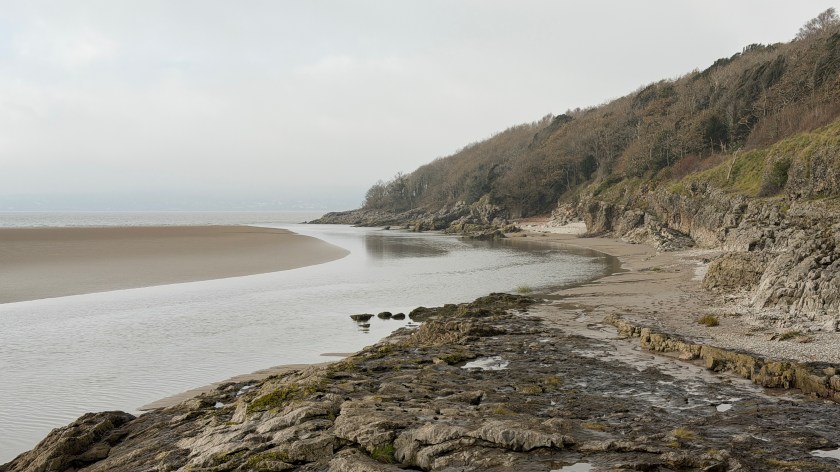
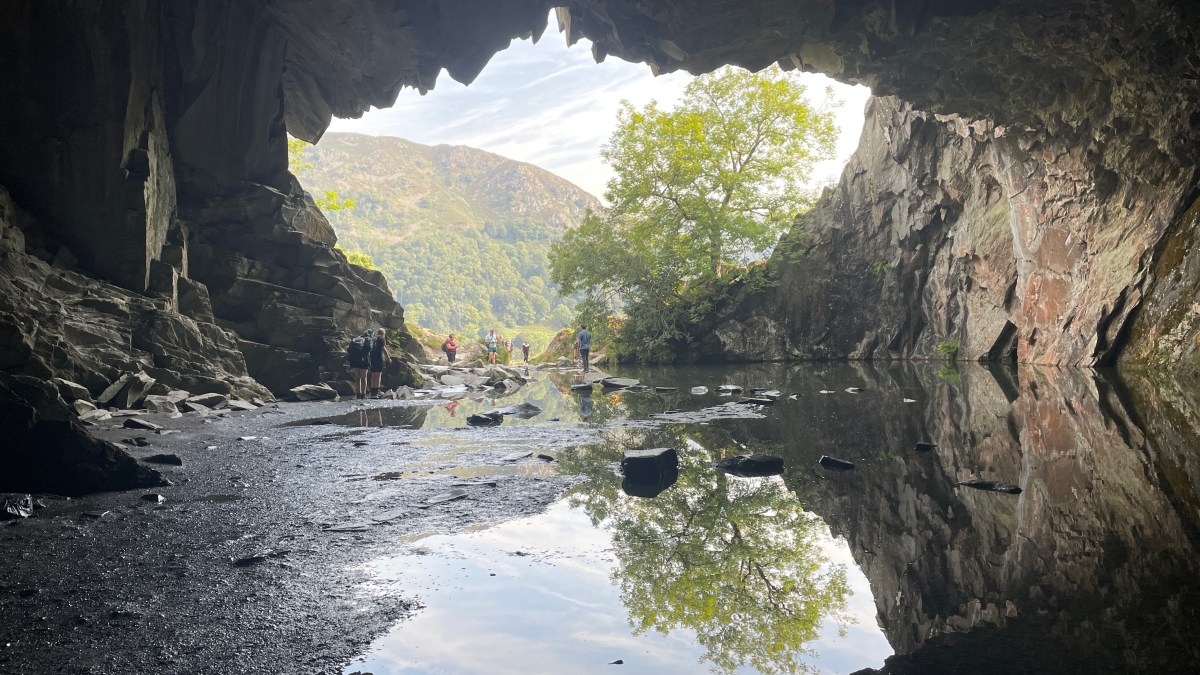
Header Image: It wouldn’t be the same without a visit to Rydal caves.
“You did what?” I switching to a MacBook as my ‘home’ laptop

The joys and frustrations of retraining myself to use a MacBook after decades as a Windows person.

For personal reasons it became an opportune time to refresh the device that I use for ‘home’ and for the first time I chose an Apple MacBook.

You did what?

There are people for whom the choice between Windows and Mac is almost a religious one, I’m a bit more pragmatic than that, I want what makes me productive.

A long time ago there were the famous and celebrated Get a Mac adverts which pitched PC v Mac, these adverts had the opposite effect on me and pushed me away from the Mac.

For most of my working career I have been a Microsoft Windows user, before that I was a DOS, VMS, UNIX and MVS user. If you don’t know what most of those acronyms mean, then don’t worry about it all they indicate is that I have been using Windows for about as long as it has existed.

In many ways, Windows is how I think when I look at a screen.

My ‘smart’ mobile life, however, has been almost exclusively Apple iPhone and iPad. Again, there was a time before the iPhone when I spent a lot of my life bashing away on a Blackberry Keyboard, but that’s a different history.

For the last couple of years, I’ve also been an Apple Watch wearer. So even further into the Apple ecosystem.

My employer is heavily Microsoft Windows, and I don’t see that changing anytime soon, so Windows isn’t going anywhere for much of my life.

I considered not having a “home” laptop at all, after all surely I can do everything I need to do on an iPad? Why do I even need a full-fat operating system?

Decisions are always a mixture of logic and feelings; in this case it was the feelings that won. There really wasn’t a deal breaker with any of the options I was considering, there were some things I really liked about the MacBook, so I purchased a MacBook.

Impressions so far

My first concern was how long it would take me to become productive.

So much of what we do on our devices has become instinctive, we don’t really think our way through the menu options or the keyboard shortcuts, we just use them when we need them. I have developed a way of working in Windows that I think is efficient, would the MacOS get in the way of that?

There has been some frustration along the way, but for the most part things are working quite well.

Thankfully I’ve not had to replace any apps, what I use is either available on both Windows and Mac, or I already prefer the Apple version from my iPhone.

Some time ago I switched to a desk setup that made use of a USB-C switch the connected to a suitable power supply for my work Windows Laptop, peripherals, monitor, etc. I was delighted when I first plugged my MacBook into this set-up and everything just worked.

It took me less than a half a day to get to a working setup that gave me 80% to 90% of what I needed to be productive.

I’ve found most of the interface changes easy to get used to, even the closing of a window which is in the opposite corner for a Windows person.

Further Joys

I might be giving up on Windows for personal use, but I’m not giving up on Office just yet. I use OneDrive for storage, my email is in Outlook, I’m used to using Excel, Word and PowerPoint. In the past Office on Mac was clunky and didn’t really feel like it was either Office or a truly Mac. From my experience so far those days are thankfully behind us.

I’m a big keyboard-shortcut user and for the most part these are the same between Mac and Windows, although some of the keys are in different places. The basic set using the same letters – cut (command+x), copy (command+c), paste (command+v), undo (command+z), select all (command+a).

Before I purchased the MacBook several people raved about the Apple processors and the amazing battery life that this enabled. So far, I agree with them wholeheartedly. I’ve been working away from home for a few days this week and several times a day I’m having to find power for my work HP Z-Book, but the MacBook that I’ve used almost as much is still sitting at 70% battery. I didn’t think that the battery issue was one that would really impact me, but I’ve been surprised by how much I’ve noticed it, or rather, not noticed it, I just assume that the MacBook has power.

I am loving the ecosystem integrations. Having photos on my MacBook is brilliant, when I write the Graham’s Guides having the photos there, on a map, is excellent. Not having to switch to my iPhone to send a message is another one.

I am privileged to have a Windows laptop with a camera that supports Windows Hello for authentication, something that just works. I wasn’t looking forward to using the fingerprint reader on the MacBook, but little did I know that Apple had built in Apple Watch proximity recognition so for most of the time I don’t need to.

The physical build quality of the MacBook is so good.

Some Frustrations

My primary annoyance is that some keys are in different places, the main one being the swap of the @ and the .

The other strange one that keeps interrupting my flow is the position of the command key in comparison to the ctrl key on Windows keyboards. I’m still having to look down to find the command key, finding the ctrl key on Windows is still second-nature.

I do miss the home key and the end key; it’s taking me a long time to make the mental shift to command+right-arrow and command+left-arrow. This is particularly irksome when I use an external keyboard that also has a home and end key that both do something very different to their function on Windows.

Another key I miss is the Windows key as a rapid way to access the Windows Start screen. I quite regularly start applications by pressing the Windows key and typing the name of the app. Spotlight via Command-Space is another mental shift I haven’t yet got used to.

Mouse scroll direction is another interesting one. When I sit at a desk, I like to use an external keyboard and an ergonomic mouse. The mouse has a scroll wheel – the default scroll on the MacBook is in the opposite direction to Windows. I can change this, but I haven’t yet decided whether I want to, I don’t want to be one of those people who buy a Mac and set it up to work like Windows. I’ve also toyed with the idea of changing the direction on my Windows setup.

When I am working on multiple screens, I would love the Mac Dock to be visible on all of them, that’s a personal preference I know, but seems like such an obvious thing to do. The option to automatically hide and show the Dock goes part way there and may become my option of choice.

Yet to be Fully Explored

I can’t honestly say that I’ve properly explored the capabilities of the MacBook trackpad. I’ve never been a huge fan of any of the trackpad technologies, even on Windows, so I’ve got some way to go before I can honestly say I’m proficient.

I like the way on Windows that you can navigate to the window that you want from the taskbar, control+click on the app icon in the Dock doesn’t yet feel as intuitive.

The Apple Watch recognition works most of the time, but sometimes it doesn’t and then I need to enter my password. I’m not sure why this is; the cause doesn’t seem clear.

Finder and the way it’s structured still feels a bit strange, I’m not even sure I know what it is, but something makes me wary of it. One little example is the file save dialogue in applications, on Windows it seems obvious how to create a new folder, this isn’t obvious to me on the MacBook.

Other Oddities

I have a Bluetooth keyboard and ergonomic mouse that support multiple connections. I’ve used this combination to support both my work and home laptops at the same time on my desk. This makes for relatively easy switching from device-to-device, I say “relatively” because the keyboard switch is very easy having physical keys dedicated to the different input, the mouse also has a button to switch, but it’s tiny and it’s on the base of the device. Having to pick up the mouse and press a tiny button only takes a few seconds, but the fact that it’s a two-handed operation makes it feel like an utter faff. I suspect that there is a combination of keys on the mouse that will do the switch, but the manual for this model doesn’t mention one. I may have to investigate an alternative; I’ve had this mouse a long while.

This blog, and others, was first written in Typora, a markdown editor, the license nicely includes the ability to run more than one device. I was really pleased to experience that the Typora app on the MacBook is just as good as the Windows version and I can run both at the same time.

Concluding

I’m very happy with my purchase; the joys are outshining the frustrations. There is certainly some confirmation bias in this statement, but it would be a strange situation if there wasn’t. There isn’t any buyers remorse.

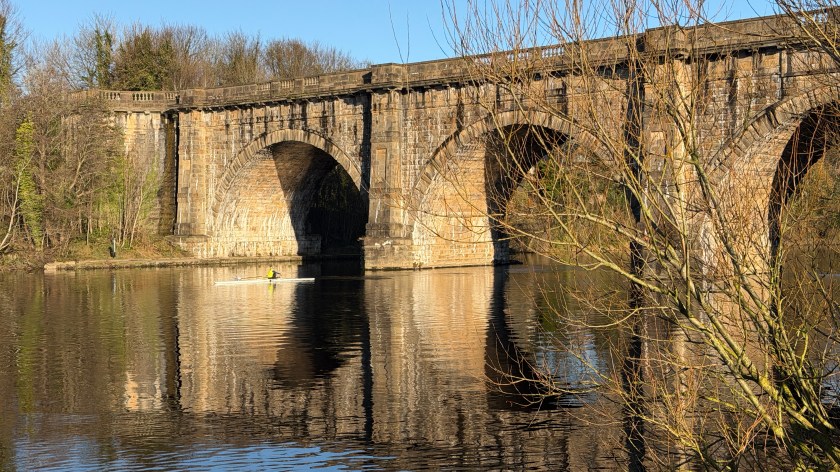
Header Image: This is Crummock Water on a glorious day just before we went for a swim. Crummock can get quite busy in places, but it can also be gloriously tranquil if you know where to look.

My changing workplace – part 9: An “Individual Contributor” in the second half of 00s and early 10s

After a gap of 13 years, it feels like a good time to return to a series. These are imperfect remembrances of days long passed.

Time for another change of role and a change of working practice.

Having spent much of the early 00s on the road building a visiting a team across several sites in the UK a change of role brought a change of working location.

The change came after I realised that I wasn’t really cut out to be a full-time people manager. The team wanted a team leader; I was constantly being distracted by the interesting technical stuff. It was a mindset thing. Given a burgeoning list of things to do I would avoid, at all costs, those administrative ones that were really important to people. The thought of fighting with the organisation to get some training approved filled me with dread. This was especially so when the choice was between expenses and a customer with a high-priority red-hot complex incident that needed someone to dive in deep. The team deserved better than I was shaped to give them.

It was about this time that the term “individual contributor” was going through a resurgence. Here was a definition that I could identify with. There was a realisation that I didn’t need to be a manager to gain salary, achieve recognition, or any of those other reasons why people stay at their level of incompetence. As an individual contributor I could feed my family and do a job that I enjoyed.

I became aware of an opportunity to join the team that was helping one of our biggest customers define their strategy and to govern the technical side of a large portfolio of projects. Brilliant, an individual contributor role, bringing high value to an important customer, but what did I know about strategy and governance? As it turns out, I knew about as much as everyone else and while that wasn’t a lot, it was a massive opportunity to learn.

The other huge advantage to this role was the location. It was based in an office just a couple of miles from my house. Physical meetings were still dominant, but the teleconference was starting to become mainstream. These were the days when special people were issued with a conference number and a pin. If you weren’t special-enough you would have to borrow someone else’s number or schedule time using the team number. When the time for the meeting came you would reach for your desk phone, if you were fortunate, you’d put on your headset, and you’d dial, dial and dial. First was the number for the external conferencing service, then the number for the meeting, then your pin. The conference service would likely ask you several questions about the meeting and then you’d be in. If you were fortunate no-one else was using your number, if they were you’d have to politely point out that you had need for your number and that they should go elsewhere. You’d then wait for others to join which was indicated by a beep, or if you’d set it up that way, they would announce themselves with a recording of their name.

You’d have to do a rollcall to work out who you had, if it was a sensitive meeting you’d check the number of people on the meeting with the rollcall. The two never rarely first time around, so you’d try again. Eventually you’d convince yourself that you’d got the people you were expecting.

If there was a group of people in a room they would join from a spider phone from which the sound would be terrible. The meeting would be peppered with people saying “John/Mary please get closed to the microphone” or “Can whoever is eating crisps next to the spider phone please stop it or move the phone” or “Whoever is having a separate meeting in the meeting room please go elsewhere to have it.”

In the situations where most of the people were in a meeting room and you were the one who was on the phone you had no chance of being an active participant. The best you could hope for was that people would forget you were there.

The desk-phone headphones were all uncomfortable. They were made of materials that made your ears bake. They had heavy cables that pulled down on one side of your neck. The sound quality was, at best, poor. There was no volume normalisation, and you’d go from listening intently to catch a word to having your eardrums blown out by that colleague who was related to Brian Blessed.

We’ve still not fixed some of these issues.

Yet, despite all the drawbacks this was now the standard way to work in an organisation with multiple locations.

I would spend several hours of every day dialling into calls with different teams, contributing to the project or problem that they were working on.

This was also the era of the mobile phone car kit. While Bluetooth existed, it wasn’t mainstream enough to be standard in most cars. If you wanted to use your mobile in the car you needed to get a kit fitted for your specific make and model of mobile phone. Using a phone without a handsfree capability, while driving, became illegal in the UK in 2003.

As I look back on it, I see how deadly the combination of these two things was. Mobile phone access in your car, conference calls on your mobile. How any of us survived that distracted era is a miracle, several did not.

There was also a couple of changes in the major mobile phone manufacturers during this time, the emergence of the laptop as the standard device for most workers, the explosion of home internet and the growth of Instant Messaging.

However, I’m already over 1,000 words so I think I’ll leave those thoughts for another day. Oh, also, what I did and how I went about it changed significantly.

My changing workplace:

Header Image: Out and about in the local farmland this hansome fella wanted to say hello. Thankfully there is a wall betwen the two of us.

Working Amongst the Cafe Crowd

There’s something about the clatter of a busy place that helps me see things differently. Sometimes the answer isn’t found in quiet contemplation, but in the subconscious thought of a noisy place.

I am a remote worker, working for most of my days in a room at my house. My nearest office is 150 miles and a 3-hour drive away, my most accessible office is a 2 hour and £300 train ride away. The nearest colleague, someone in my team, is a 2-hour flight away. When organizations talk about the power of face-to-face connections I am with them, but it’s not very practical in my current situation.

This morning, I woke up with a feeling I’ve had before it’s a kind of dull low-level loneliness. I look into my office and the thought of spending all day there doesn’t fill me with joy. Today was a day to be amongst people – a cafe day.

I don’t just work on a cafe day, they are wonderful days for watching people. There are a set of individuals that inhabit most cafes, similar yet unique, character and caricatures.

The first people I notice are two men who, from their demeanor, I am assuming are retired. They are sat at two different tables, looking in opposite directions as if they were school children who have fallen out in the playground. They both have caps on and are carrying little bags which I’m assuming they use to carry the phones that they are doom-scrolling through. One of them looks up from their screen, looks out of the window and stops, they stay there for several minutes, watching the world go by only there isn’t much world outside this particular cafe. I want to introduce the two of them and suggest that they have a chat. I don’t think they are waiting for anyone, they’ve been here for quite a while. I look to my side and notice another man, similar age, same doom-scrolling. Are they happy in their isolation? Is this time a treasured distraction? What wisdom do they carry around not knowing its value? What is their history? What is their future?

To my right I notice a business meeting, four middle-aged men, four laptops. The conversation bounces between football and finances. One of them is using their laptop to describe the permutations for the end of the season, who’s going up and for them, sadly, who is going down. Another laptop is constructing a PowerPoint slide with way too many bullet-points. They are all wearing polo shirts and smart jeans, the standard attire of the video conferencing home-worker. I look down at myself knowing that I am wearing exactly the same combination.

In the far corner there are four dark-haired trim-bearded men, they are a bit younger and could all be family. Their attire is black corporate work-wear with dark-gray knee-pads, I think there’s a logo on one side the chest, but it’s too far away to make out. The work-wear is clean and unscathed so it’s either new, or the work isn’t too demanding on the fabric. One of them is holding court as the others listen with varying levels of concentration. They were a little further away so I couldn’t tell you what they were talking about but I even if I’d been closer I doubt that I would have understood.

I’m not the only one clattering away at a laptop keyboard. There’s a younger lady to my right who looks like she has deliberately chosen a table that’s the closest thing to quiet in this establishment. She’s wearing the female equivalent of smart jeans and a polo shirt. Periodically she stops to read what she’s written then returns to her finger dance, her long nails clacking with each letter. She was here before me and doesn’t look like she’s leaving any time soon. I suspect that this is corporate work for her also, but perhaps she’s a world renowned hacker, or TikTok influencer? I wonder if she’s simply doing what I am doing and seeking a different outlook for a change.

Two older couples have arrived at the table next to me. One of the women is telling the others, in a voice that the whole cafe is forced to contend with, that she’s going on a cruise and has recently ordered over 20 dresses from John Lewis. Her afternoon job was to try them all on and return the ones she doesn’t like. “I’ve spent nearly £2,000 on my credit card so far. The great thing about John Lewis, though, is that you can return it to Waitrose, and it’s so easy to do.” I now know all about the way that returns are processed at John Lewis and about how quickly it works. “I’m so glad I didn’t get them from M&S, have you seen all of the problems they’ve had recently.” The other lady doesn’t look like someone who has ever shopped at John Lewis. I look at her husband and suspect that he’s never shopped at John Lewis either even though he’s in things you’d find in John Lewis, head-to-toe.

Two ladies come in, one after the other. They meet with a cheek-kiss and a genuine smile. They too have laptops, they are also going to do some work, but it looks so much more social than the other groups. They look excited about the work they are managing to get done, there’s a twinkle of creativity on their faces.

I return to my keyboard and the conundrum before me.

Thankfully Mrs. Cruise Dresses needs to dash off to do something vital and leaves the other three to a more gentle chat. Mr. Football Tables has moved on to more serious matters. Mrs. Long Nails is quietly reading. Thankfully, today, no-one is on a speaker phone. Mr. and Mr. Doom-scroller are still there, isolated by an impenetrable few meters.

There’s something about the clatter of a busy place that helps me see things differently. Sometimes the answer isn’t found in quiet contemplation, but in the subconscious thought of a noisy place.

Header Image: The wild garlic in the local woods is almost at full bloom and is competing with the bluebells to be the dominant fragrance.

Dear Rwanda

This visit has been along time coming. In some ways it’s been 30 years in the making, but even once the decision was made it took another four years for us to feel your orange soil beneath our feet.

We have loved the warm, warm hospitality of your people and give thanks for so many hand shakes.

We have glimpsed your pain and heard a little of its impact upon you.

We have breathed in your verdant green hills and thousands of small farms.

We have loved exchanging a wave and a fist-bump with your beautiful children.

We have watched as you crisscross lake Kivu in your small boats.

We have watched the hippo and interacted with the elephant, puzzled at the height of the giraffe and the speed of the impala.

We have glimpsed the rhino, the leopard and the Nile crocodile.

We have been in awe of the power of the lion and chuckled at the mountain monkey.

We have savoured the taste of a truly fresh banana and ripe pineapple.

We have been surprised by the new taste of the tree tomato.

We have enjoyed cassava and Irish potato in the simplest of households with the warmest of people.

We have wondered at what can be carried up, and down, your hills on a bicycle pushed by one, two and sometimes three people.

We have marvelled at the ladies carrying a hoe on their head as if it’s the most natural place for it to be.

We have tasted your fine coffee and smelled the fragrance of the tea plantations.

We have enjoyed your vibrant fabrics and fine Sunday dress.

We have become used to sleeping with the gecko, almost.

We have been astonished by your ability to talk, actually talk, on a mobile phone in any and every situation.

We have loved listening to your intricate language and stumbled our way through the simplest of greetings. We are so grateful for your ability to speak our language.

We have experienced your fine new roads and the Rwandan massage on the dirt track.

We have watched, wide eyed, as your vast workforce of motorbike taxis going about their daily work on their red TVS Victor GLX 125s.

We have become used to explaining that we live near Manchester. We have come to expect “Manchester United” as a reply and been surprised by those who say “Manchester City.”

We have been surprised by our lack of breath before realising that we were at 2,500m, way higher above sea level than our lungs are used to.

We have spoken with some left paralysed by backbreaking work and heard a little of the impact that this has on their family. We have been thankful for those seeking to make a difference.

We have worshiped with a people of joy in the church and the workplace.

We have swayed and clapped with many choirs.

We have witnessed just how much can be done in bright yellow sliders.

We have given thanks for the work of a hospital and a polytechnic having lasting impact in the midst of a mostly rural community.

We are so very thankful for those who spent hours driving us and serving us in so many ways.

It will soon be time for home and I can’t say whether we visit you again.

Some have asked if we would be your ambassador as we talk with others, that I will gladly do.

Thank you for the adventure

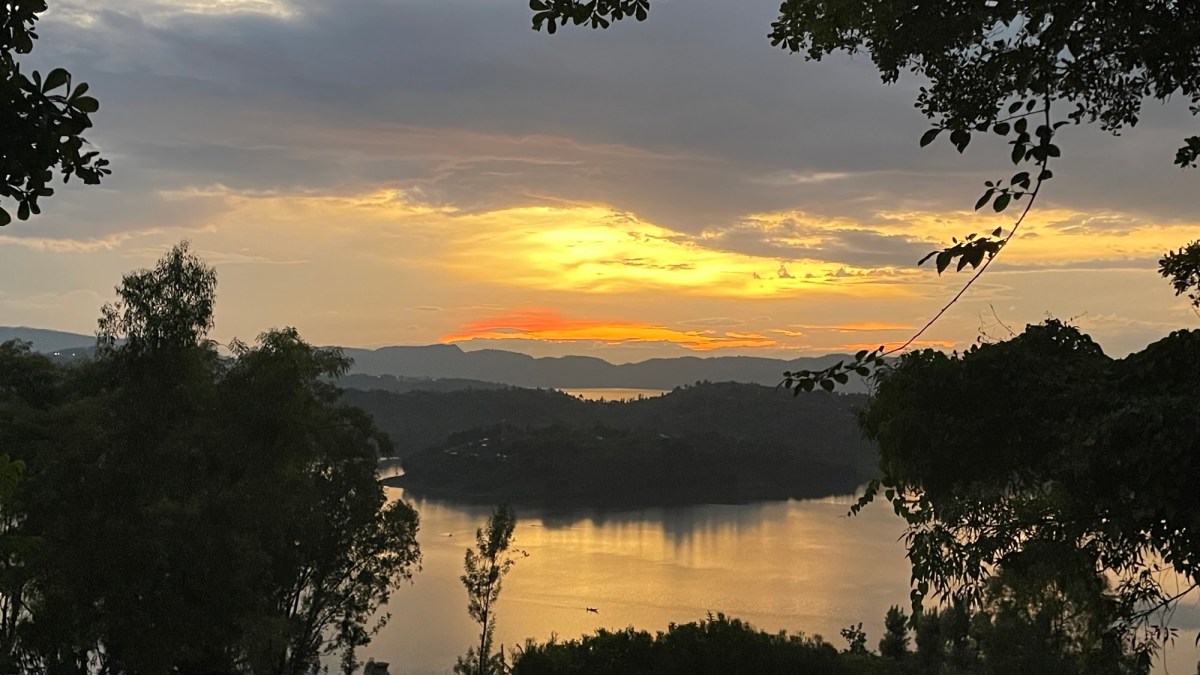
Header Image: sunset over Lake Kivu, if you look closely you might spot a small boat.

Blessings #207 – Petrichor, the smell of first rain

Who remembers this series? I’m not sure why I stopped, the last one was back in 2017, but I was struck by a thought on my morning walk today and it felt perfect for a Blessings post.

Petrichor: a pleasant smell that frequently accompanies the first rain after a long period of warm, dry weather:

Here in the UK, we have had an exceptionally dry, and hot, late spring.

The river that runs through the country’s wettest valley has completely dried up.

The seas around the UK are exceptionally, alarmingly, warmer than they should be.

Disposable BBQs have caused devastation across several areas of natural beauty and fire crews are on high alert.

I’ve not been out of my shorts for weeks.

(I try to keep shorts for social time. Even though I work from home I try to wear trousers to work in, it feels more businesslike.)

There’s also been a dryness in my spirit. I’m not going to go into details here, it’s sufficient for me to say that Sue and I have been through, and are still going through, a time of notable change which hasn’t been easy. In times of dryness, it’s easy for our eyes to be focused inward and to miss everything that is wonderful around us. I have had a daily practice of writing down three things that I am grateful for and another three that I am excited about but even that has become stale and repetitive.

I remember starting to write this series of posts with the intention of reminding myself of all the blessings that I have in my life. Using the act of writing them down as a method of meditation. So here I am again, contemplating the blessings around me.

As I stepped out of my house this morning for my regular morning walk, I could smell the rain in the air. The petrichor was already evident to my nasal senses, the odour of ozone and geosmin being carried by the light breeze ahead of the darkening sky. There wasn’t a drop of water to be seen, but I knew that it was coming, the scent of rain was telling me it was on its way. I debated putting a coat on, but concluded that I would rather be wet from the rain than wet from my sweat.

In the last couple of days, we have experienced petrichor on a few occasions. We are a long way away from the levels of rainfall we would normally expect for this time of year, but the weather here has changed.

The change may only be temporary and may not give us everything that we hope for, but the relief is welcome all the same.

The petrichor being a promise of imminent change to come, a pledge of refreshment.

In my own life I also sense a petrichor, telling me of a change on its way.

It is worth me noting here, that some of the petrichor has been accompanied by thunderstorms and flash flooding. Much of the flash flooding is caused by everything being so dry that the water just flows off the top and doesn’t soak in. I hope that I’m not too dry to receive the rain when it comes.

I’m holding on to the promise of what I am sensing. I am counting the petrichor as a blessing.

Rain features quite a lot in the Bible, but I feel drawn to one of the parables, the stories, that Jesus told:

“Anyone who listens to my teaching and follows it is wise, like a person who builds a house on solid rock. Though the rain comes in torrents and the floodwaters rise and the winds beat against that house, it won’t collapse because it is built on bedrock. But anyone who hears my teaching and doesn’t obey it is foolish, like a person who builds a house on sand. When the rains and floods come and the winds beat against that house, it will collapse with a mighty crash.”

Matthew 7:24-27 – Building on a Solid Foundation

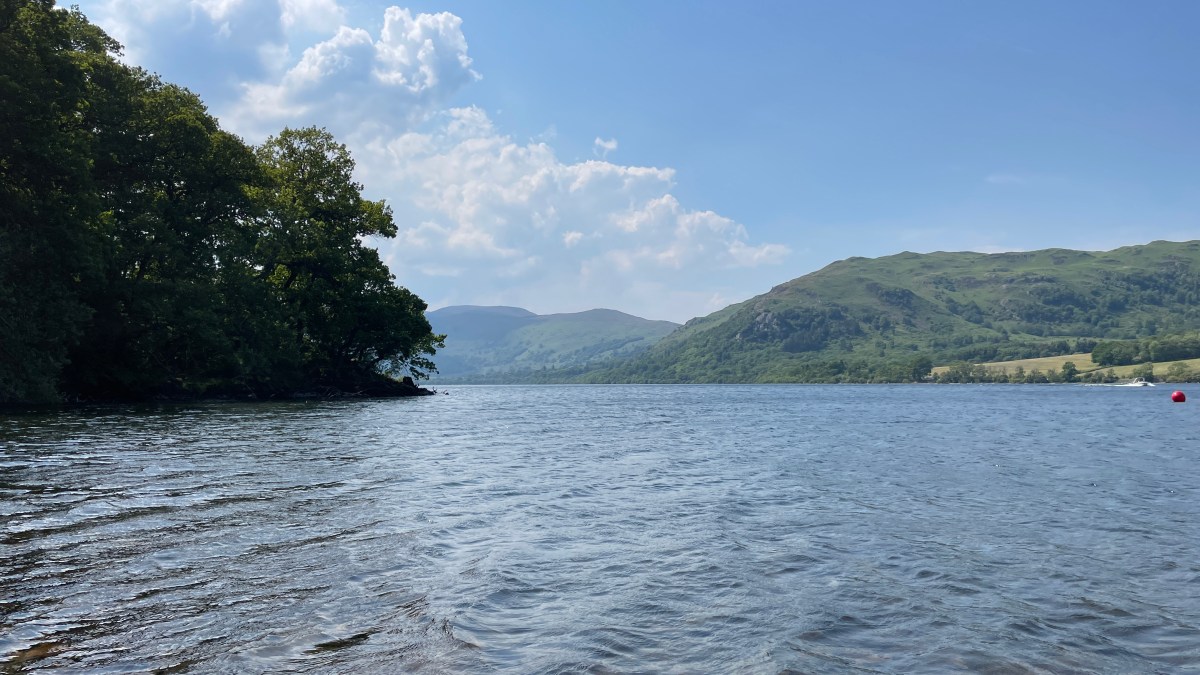
Header Image: Just to show that when it’s dry in the UK, it’s not really barren. This is Ullswater in the Lake District from a couple of weekends ago. You can’t tell from this picture, but this lake is a lot lower than it should be.

The Personality of Cable Connections – Do they talk to you as well?

I may be revealing a bit too much about myself in this post, but here goes 😊

In my mind different connector types have different personalities and they speak to me in different voices.

Take USB as an example.

A solid chunky Type-A USB connector has those characteristics to its personality. It speaks in the low adult voice of someone who has been around for a while and seen it all. There’s nothing stressed about a Type A, it knows its place in the world, it knows that it is still THE standard despite what others think.

The Type-B connector doesn’t really have a voice, more of a whisper. It’s so rarely seen out in public choosing to hide away in the back of printers mainly. (If you don’t know what a Type-B is then I think I’ve made my point 😉)

The Mini-AB connector is the stressy one of the bunch; watch out for its sharp corners. It feels that it could have been used for so much more, if only it had been given the chance. Sullen is the tone of its replies when I scrabble my way to the bottom of the cable box where it lurks on the rare occasion when it’s needed. Sometimes it gets into reminiscing for the good old days when things were different, and it saw far more of the limelight.

The Micro-AB connector is a self-assured mid-lifer. It’s a bit geeky but knows its place in the world. It has the self-assurance of someone who has changed the world, even if it does need to be treated a bit more carefully than Type-A and is no longer the star of the show. Its voice reflects this quiet confidence, it sounds a bit like a middle-manager running a successful organisation.

Type-C is the hipster of the group – cool in every way. Seeing a massive future ahead of it, its crafted curves give it a laid-back voice. It looks over a Type-A and says, “well done old-timer, shall we walk together for a while?” knowing it is the heir.

HDMI connectors come as a family, the only difference in their voices is the pitch. They have exactly the same attitude, which is temperamental and unpredictable.

RJ45 connectors sound like the chipmunks from the cartoon.

I’ve gone too far already but wanted to end on an old favourite that I still see occasionally.

The VGA connector speaks the soft voice of someone who has seen too many years. It’s considered and precise but can only really talk about one subject. It always talks about the past.

I sometimes wonder what they talk about while they are together in the black box in the cupboard?

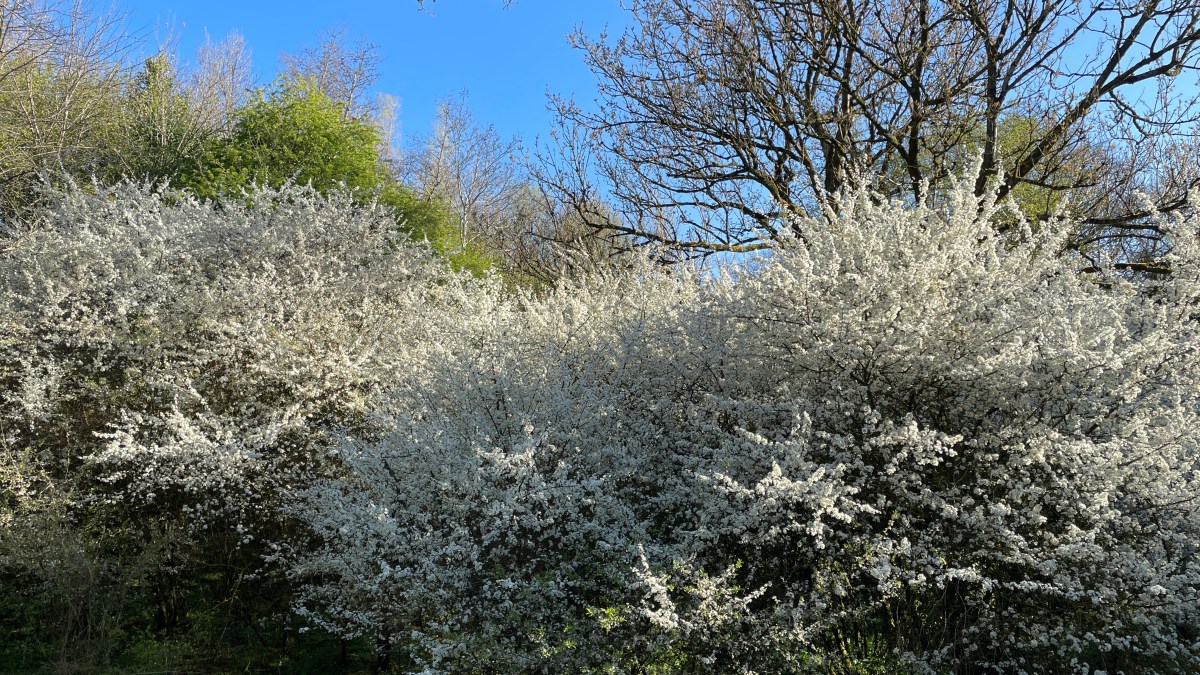
Header Image: The Hawthorn is fabulously in bloom at the moment.

I’m Reading… “Wild Fell” by Lee Schofield

My wife’s family heritage is rooted in the hill farms of the Lake District, and I’ve been fascinated by the history, nature and indeed the natural history of the fells of what is now Cumbria for as long as we’ve known each other. My father-in-law was born in a farmhouse, by a tarn, in a hamlet a few miles from a main road.

Perhaps my interest started earlier than that?

I remember secondary school geography classes where we were shown the impact of tourism on the National Park. We studied the volume of cars and the need for roads and parking, which was nothing compared to today. The pressure for accommodation, cafes, and shops. We looked at the significant impact on the Lak District hotspots, of Bowness & Windermere in particular. That was more than 35 years ago. Today the pressure of tourism is greater than ever, and in amongst it all there are communities trying to work out a livelihood within the constraints of being a National Park and a UNESCO World Heritage site.

The Lake District countryside has been shaped over thousands of years by two things farming and mining. Mining may no longer be economic; the farms, however, are still there. It may look like an idyllic way of life, but all is not well.

There’s a conflict between the desire for the National Park to be a place of natural beauty and the needs of farmers to make a living. I’m no expert on the challenges on either side, they are deep seated and long in the forming, but I would like to understand more, hence the reading pattern.

Across the Lake District there are groups of people trying to change things, experimenting with different paths. People trying to see if there are different healthier ways, ones that provide a long-term future for people and wildlife, together. One such group is the RSPB in Haweswater, Lee Schofield is one of the rangers there and this is the story of their journey.

Schofield talks about a desire to see wildlife, flora and fauna, return to a corner of the National Park that gets a moderate number of tourists, but is off the standard tourist routes. Situated on the eastern edges Haweswater is a man-made reservoir that supplies water to Manchester via a 96 mile long gravity-fed aqueduct. About 25% of the water for the North West of England comes from here, which makes it nationally important. In many ways Haweswater is industrial, yet it is also remote and peaceful. When I’ve walked there, I’ve always enjoyed a sense that I am somewhere where others aren’t, but I’ve not been looking with the eyes of Lee Schofield.

One the joyful parts of this book are the names of the various plant species that I so easily overlook. I can’t even remember most of the names but Schofield reels them off in a way that is glorious – Alpine Catchfly, Sessile Oak, Devil’s Bit Scabious, Goldenrod, Wood Crane’s-Bill, Lesser Meadow-Rue, Yellow Mountain Saxifrage, Globeflower, Melancholy Thistle, Common Polypody, Bog Myrtle, Bedstraw, Tormentil. The sad part is that this diversity is all too sparse in an environment where it should be abundant.

Although Schofield works for the Royal Society for the Protection of Birds, this book is much more about the creation of the right environment for the flora to thrive and in so doing enable the fauna to rejuvenate, including the birds.

This book is subtitled “Fighting for nature in a Lake District hill farm” – while I find the word “fight” to be a bit over-combative, having read the book, it’s certainly a struggle. The farming community is a loyal group and having outsiders come in was never going to be an easy journey. The book outlines those challenges, but also the inspirational successes that can be achieved when you work with people.

There is a big plan for Haweswater, the area is huge and there’s lots to do – rewiggling of rivers to allow healthy meandering, blocking water drains to enable mosses to reform and bogs to come back to life, fencing in areas to reduce the impact of grazing, changing grazing patterns and species to encourage different flora, to name a few. Each one having a different impact on the ecology of the whole area.

I’ve read a few other books covering similar themes:

If these book share something in common it’s not surprising Lee Schofield and James Rebanks are practically neighbours, and they’ve both been inspired by the work of Isabella Tree at Knepp.

The book concludes with the dream of a better future, a future that is thankfully looking like it might just be possible. Until a few years ago Haweswater was famous for being the only place where you could still see a Golden Eagle in England, sadly that’s no longer the case. I look forward to a day when we enable their return.

Header Image: This is the view across Haweswater with the dam at the far end. The few trees in the distance on the right are old woodland, the trees nearby aren’t native species. I’ve walked through both and the difference in diversity is stark.

I’m reading…”Prisoners of Geography – Ten Maps That Tell You Everything You Need to Know About Global Politics” by Tim Marshall

This book was first published in 2015. It’s first chapter is a commentary on the geographic position of Russia. This chapter concludes that war between Ukraine and Russia is almost inevitable. Why? The geography.

Here we sit in 2022 and Russia has invaded Ukraine, having previously annexed Crimea.

We rarely see geography mentioned as an aspect of global politics. What Prisoners of Geography does is to take us around the globe pointing out some of the key geographical features and their impact.

In the case of Russia and Ukraine the challenge is access to the oceans. While Russia is a vast country, it’s northern position means that all its ports are inaccessible throughout the winter, that’s not a good thing for a world power.

Other chapters take us around the globe from China to the USA, from Western Europe to Africa, from The Middle East to India to Pakistan. Eight different global areas. The book concludes with a chapter on the Arctic.

I’d never considered, before, how geography has enabled countries and regions to become wealthy and powerful, like the navigable rivers of Western Europe and the USA. While, on the other hand, the lack of navigable rivers has impacted much of Africa and South America and their ability to trade.

There’s China, the growing global superpower, and the geographic impact of the oceans around them. So many good travelling around the world passing through a web of waters belonging to other nations and strategic assets controlled by other powers. Some of them close, like the Straits of Malacca, others further afield, imagine the potential impact of the Suez and Panama canals to a global trading superpower.

Then over to the west there’s another growing power, India, and between them and China is a huge geographic feature, the Himalayas. In our age of flight and the global internet we forget what a huge barrier this is. While we are in the region, there’s Tibet. When I was a teenager, I remember there being lots of discussion about this vast region, I even remember looking it up on the map, but couldn’t see any significance in it. For some reason I never considered it from the Chinese perspective.

Why all the fuss over the Arctic? One of the reasons we miss the significance of this is that our maps are all wrong. In the UK we predominantly see the world through the Mercator projection which nicely shows our small island right in the middle of the action. What this map also does is to massively stretch the geography at the top and the bottom of the globe – Africa is wider than Russia, by a long way. If you look at a projection of the globe with the arctic at the centre things look very different. The recent discussions about Sweden and Finland joining NATO look more significant from this angle. The desires of Russia to extend its control and secure access to valuable minerals make more sense. The mythical North West Passage makes more sense.

I’m not sure that this book quite lives up to its subtitle of telling me everything I need to know about global politics, but it definitely highlighted a dimension that I’d previously overlooked.

Header Image: This is Devoke Water and it’s time for a swim.

Walking and the Anxiety of Interactions

I tend to be a solitary walker; I like it that way. I like to be with my thoughts and the inspiration of a good audiobook.

I don’t dislike walking with other people, I quite like people, but while I’m out solitary walking I find that interactions with other people, strangers in particular, can cause all sorts of anxiety.

For me, each interaction is loaded with choices and moral dilemmas.

Let me explain by giving you some examples.

The other day I was out walking and ahead of me was a couple who were walking slower than me, that’s normal. They had a dog and people with dogs always walk slower. Where they were was not too far from a path that I was wanting to take.

This is what is going on in my head: Do I speed up, zip around them (as much as anyone walking ‘zips’) and head up the path? Do I slow down and let them pass the junction so that I can continue my route without disturbing them? If I go slower, how much slower do I need to go to leave them enough room so that it isn’t obvious that I’m waiting for them to get out of the way? How do I do that without looking weird? What happens if I go slower and they slop altogether, what do I do then? If I catch them up, I will need to interact with them, what does that look like? What kind of interactions would be appropriate?

As it was, I decided to move a bit slower and let them pass the fork, then I could be on my way. Unfortunately, my pondering had missed another option, what would happen if they also decided to take the junction? Which they did.

I was getting close to them when this happened, and an awkward interaction was now inevitable. I was either going to have to stay behind them all the way up the forked path, which was narrower than the main path. This would look awkward as they knew I’d already caught them up, or I was going to have to ask them to let me past. That’s what I thought anyway. As it was the couple stopped just a few steps up the fork and let me past, giving me a smile as I went.

Is this just me?

Another study case.

Over a week ago I was heading along a wide path when I noticed a man walking towards me on the same side of the path. As he was a little way off, I crossed over to the other side so that we didn’t crash into each other. It seemed like the polite thing to do and walking down the extreme of a path is a COVID thing that persists around here. As the man approached me, I recognised him and I’m quite sure that we’d previously smiled and said “hello.” This time he completely blanked me. In that split second, I recognised that he was from a different racial heritage to myself. Again, my brain goes into super-drive: what if he’d seen me crossing over and interpreted it as a racially motivated act? Deliberately crossing to the other side of a street to avoid someone can be an immensely powerful statement. Was I a bit overenthusiastic in my movements? What will happen the next time I see him?

A few days later I saw the same man, this time we were already walking down opposite sides of the path. He looked up, smiled, and said “hi.” I returned the niceties.

Interactions with single women are especially burdened with dilemmas. I know that I am safe, but no woman out there knows that. I can see how an approaching man on his own, without a dog, is a potential threat and needs to be treated with suspicion.

I’m not a dog owner, but I have noticed how men walking dogs are regarded as somehow safer than men on their own. With a dog is OK, without a dog is somehow strange? Perhaps it’s that the presence of a dog indicates the person with it cares about it at least enough to take it out for a walk.

Anyway, getting back to the subject – approaching women.

I go through all sorts of anxious mental gymnastics when approaching women walking on their own. The worst scenario for this is when I am out walking down a narrow path and approach a woman from behind. In most cases I am going faster and will need, at some point, to make a choice between staying back and overtaking.

This is a bit like the first scenario, but worse. Again, my brain goes into a spin: I don’t want to catch up quickly that would feel especially threatening, but slowing down and following is especially strange? It’s a narrow path there really is no way of overtaking without interacting and how do I do that without being threatening? How much eye contact is polite, too much eye contact makes me a threat? Do I say “Hi”, or not? What about a smile? If I stay back, will I be noticed, or not? If I am noticed, how will they respond? Is there anywhere wide enough to overtake? How do I indicate that I would like to come past? It’s a minefield of dilemma.

On a narrow path a woman walking towards me has a distinct set of anxieties: When is the right time to step to one side? Is there somewhere obvious to get out of the way? If there isn’t it feels very weird to only make a narrow space to pass, but it would be strange to climb over a fence just to make space? What is the best way to interact? When is the right time to interact?

There are no clear rules here anymore. I’ve wondered about reintroducing the tradition of doffing. What do you think, would that just make me look eccentric, or strange?

We aren’t particularly good at discerning the feelings of others and many of my anxieties are predicated on how the other person views the interaction. I’m sure that most of my worries are unfounded and that the other person isn’t thinking what I think they are. I suspect that most of the time they’re not anxious about my presence at all. That knowledge doesn’t, however, stop me processing each interaction.

Please tell me that I’m not the only one who has these thoughts?

Header Image: Sunrise from my morning walk a few weeks ago.

I’m reading… “Utopia for Realists: and How We Can Get There” by Rutger Bregman

Do you live in “utopia”? Looking back on the last two years of pandemic I can’t imagine that there are many of us leaping to a positive answer to that one.

Now imagine you are living 200 years ago and picture a time in the future when:

“billions of us are suddenly rich, well nourished, clean, safe, healthy and occasionally even beautiful. Where 84% of the world’s population still lived in poverty in 1820, by 1981 that percentage had dropped to 44%, and now, just a few decades later, it is under 10%.”

Rutger Bregman, Utopia for Realists

Is this “utopia”?

Numbers, despite the meaning behind them, rarely communicate the full story. Bregman describes where we are now not as “utopia” but as the “Land of Plenty”:

“According to Oscar Wilde, upon reaching the Land of Plenty, we should once more fix our gaze on the farthest horizon and rehost the sails. “Progress is the realization of Utopias,” he wrote. But the farthest horizon remains blank. The Land of Plenty is shrouded in fog. Precisely when we should be shouldering the historic task of investing in the rich, safe, and healthy existence with meaning, we’ve buried utopia instead. There’s no dream to replace it because we can’t imagine a better world than the one we’ve got.”

Rutger Bregman, Utopia for Realists

In Utopia for Realists Bregman seeks to paint that “better world than the one we’ve got” to sail to – not as some kind of mythical unachievable state, but by outlining a set of ideas that are just there on that far horizon.

What are these grand ideas? That would be giving too much away, but they are very interesting.

The ideas that are there on that far horizon have all been widely tested, some have even been implemented in some countries, and yet all of them would be regarded as counterintuitive, even counter-logical by most people. (I’m continuing my run of books that tell me I’m wrong.)

In the UK, where I live, welfare is a constant political battleground. Just this week the deficiencies in the existing system have been brought into stark relief by stories of an elderly woman riding the bus to stay warm at a time of escalating living costs. Yet others argue that we can’t afford to do any more. Bregman has a big idea for that. Bregman’s approach to this problem is certainly radical.

We live in a time when work is going through a massive upheaval. Many people have spent the last two years working from home and now the bosses are seeking a return to “normal” office life. Vast numbers of people are dreading the idea of returning to a place which sapped them of energy and required them to sit in long queues on motorways for no apparent reason. Personally, I’m getting a bit tired of seeing people saying “working from home”, while putting the “working” in air-quotes, as if somehow the many hours that people have been putting in aren’t real work. Bregman has a radical, yet tested, idea for that, and no it’s not better hybrid working.

(hybrid working is another term I dislike, it maintains the suggestion that working in an office is somehow better than working from home when for many roles the office is the least productive place for people.)

You might recognise the “Land of Plenty” but there are hundreds of millions of people who wouldn’t. They are still living on less than a dollar a day. The global community has spent billions of dollars trying to overcome this problem, Bregman puts the figure at $11.2 billion a month, or $5 trillion over the last 50 years. Yet poverty is still a massive problem and, according to Bregman, no-one really knows whether this development money has made a difference. Again, Bregman has an idea for this problem, and it’s probably not what you were expecting it to be. Another idea that is very timely and massively counter-cultural to many global governments, to the current British government certainly.

This book is titled “Utopia for Realists: and how we can get there”, having the ideas is only a small part of the challenge. Implementing the ideas is the greater part.

In the epilogue to the book Bregman writes:

“For the last time, then: how do we make utopia real? How do we take these ideas and implement them?

The path from the ideal to the real is one that never ceases to fascinate me”

Rutger Bregman, Utopia for Realists

He concludes with some advice to the realists and an encouragement that “more people are hungry for change”. I hope so.

This book is, in many ways, a prequal to I’m reading…”Human kind” by Rutger Bregman which uses many of the same ideas but focussed more on the personal aspects of change. We need both personal and political change if we are going to move towards that “far horizon”.

Header Image: This is Loughrigg Tarn, it’s within driving distance of my home and is a fabulous place for a swim. In the background are the Langdale fells.

Walking and finding a phone

It was a lovely spring day. The walking had been lovely. The views were beautiful. The weather was crisp and clear.

There were a few people around, but for the most part it had been a quiet day, despite the car park being full when I arrived at eight in the morning.

I was loving a slow descent along the ridge from High Street to The Rigg which makes you feel like you are on top of the world and gives you panoramic views in every direction.

The “Birds, Beasts and Relatives” audiobook by Gerald Durrell was playing through my jawbone headphones. Occasionally I would pause the audio a few times to locate the skylarks singing overhead, they sing so beautifully.

As I stood for a little while taking it all in a different noise grabbed my attention. Initially I thought that it was on the audiobook, like the reader had inadvertently left their phone alarm on. Something made me stand a little while and eventually I came to my senses and realised that this noise was not coming through my headphones and was nearby. Looking around I noticed, a good way off the path a mobile phone beeping for attention.

Climbing down I picked it up and started to ponder my next steps.

When I initially picked the phone up it was receiving a call, but I wasn’t quick enough to answer it. After that it continued making a noise that I took to be the locator tone that most modern phones allow you to activate.

The phone was, of course, locked, so I couldn’t call any obvious numbers and this wasn’t a time to use the emergency call option.

I was half-way up a hill, which meant that I was also half-way down. There are routes that are mostly up, and some that are mostly down, but this one didn’t have that obvious inclination. If I headed down, there would become a point where there wasn’t going to be a signal and I suspected that I wasn’t far off that point.

While I was in the middle of my pondering a couple passed me, also heading down. Naturally I asked them if they were looking for a phone, they said they weren’t. The woman of the couple then said to me something that made me ponder: “There were those three young lads and the girl heading up the hill, I bet it’s the girls.” The man agreed with a nodding affirmation.

As she said this I was struck by the strangeness of this classification, why would it be the “girl”? What made her think that?

There was nothing on the phone to indicate a potential gender, the phone was in a nondescript plain black cover after all. The background image on the phone was of a group of four young women, but she hadn’t seen that. Even having seen the image I’m not sure I would have leapt to the assumption that the phone belonged to a woman. I’m not even sure why she felt the need to classify it down to one of the group, I would have expected a man to come for it just as much as a woman.

Let’s be clear here, the group being described were people in their twenties, I guess, so not “boys” or “girls”. The couple who had classified them this way can only have been in her thirties themselves. I wondered how they would have felt being defined this way.

Sometimes procrastination is the best approach, I hadn’t finished my food or my coffee and decided that I would sit a while, wait and take in more of the surroundings. All this time the phone continued its occasional beeping, for which there didn’t appear to be any mechanism of responding while the phone was locked. While I sat there, I sent Sue a text to include her in the pondering. The skylarks continued their singing.

As I drank my final mouthful of coffee the phone burst into life with a different tone. Looking at it the screen told me that the phone was receiving a call from “Tom”. A thought flashed through my mind “what do I say now?” It hadn’t occurred to me before that point quite how to answer the phone. Swiping to answer the phone I said to myself “Just say ‘hi’ you muppet.”

Tom was, indeed, a member of the group that the earlier couple had mentioned. He explained that the phone belonged to the woman and that she was on her way back down the path. I stood up, waved to show where I was and told him that I was wearing an orange jacket. He could see me from where he was, and I could see the woman coming towards me. I headed back up the path towards her and handed the phone over. She said thank you, explained how she had been using the phone locator software to make it beep. I explained how I’d found it and wished her a great day walking.

I sent another text to Sue telling her that the phone had been returned to its rightful owner. The skylarks continued their singing.

Heading down I was so disappointed that the couple had been correct in their classification.

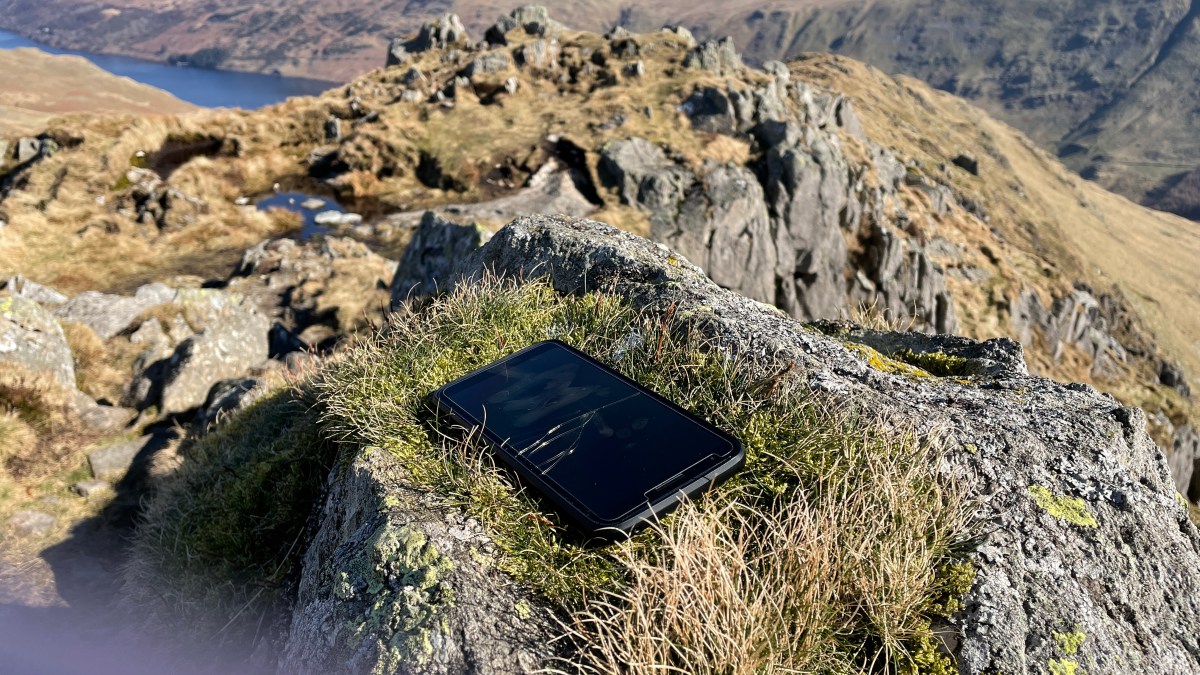
Header Image: The phone beeping away as I waited for something to happen. Slightly disappointed that the image has part of my finger it.