Repeat after me: “Meetings are work” | Working Principles

It’s a work morning and I open my calendar to see what the day has in store for me. It’s heavily littered with meetings, and I wonder to myself “when am I supposed to get some work done?”

Later on that day a meeting, amazingly, finishes early and I quietly vocalize to myself “Great, now I can get some work done.” I look down at my list of tasks and realise that my brain is too addled to be able to get anything constructive done in the fifteen minutes that I have.

I’m not a fan of meetings, perhaps you already guessed, I’m in good company:

Meetings are by definition a concession to deficient organization. For one either meets or one works.

Peter Drucker

A committee is an animal with four back legs.

John le Carre

If you had to identify, in one word, the reason why the human race has not achieved, and never will achieve, its full potential, that word would be ‘meetings.’

Dave Barry

I’ve searched all the parks in all the cities – and found no statues of Committees.

Gilbert K. Chesterton

What is it about meetings that make us feel this way? Why doesn’t a gathering of people around a subject make us feel fulfilled, energised? Why would I rather be writing a document?

What is it that is so broken here?

Is it the way that meetings are run that is broken? Or perhaps it’s my attitude, others appear to have an enthusiasm for gatherings that I can’t muster? Or maybe it’s a collective problem that we all need to own our part of?

Let’s take a look at a few more quotes:

“The magic to a great meeting is all of the work that’s done beforehand.”

Bill Russell

Let’s start by thinking about the work that happens before a meeting.

Most of us can tell when someone is winging it and most of us are rightly frustrated by those meetings where a lack of preparation wastes everyone’s time.

So many good meetings are created in the hours before the session.

I’m currently doing a series of meetings which are really training sessions. These meetings are being recorded because we expect people to go back over the content which is motivating us to be prepared.

Those meetings feel so rich.

“If we have a clear agenda in advance, and we are fully present and fully contributing, the meetings do go much faster.”

Unknown

We live in a very distracted world and no more so than at work. We apply half our attntion to many virtual meetings and the result is that things that could happen in ten minutes take twenty, thirty, forty minutes.

Despite what you think, you are not enabled for multi-tasking.

I hope that’s we’ve all attended meetings where we’ve been in the zone, fully present, and felt the exhilaration of getting something done that perhaps you didn’t think could be done, or would take a long time to get done.

“The longer the meeting, the less is accomplished.”

Tim Cook

In our virtual working world it’s so easy for people to call a meeting and pick the length. It’s a truism to say that the time taken for a meeting grows to meet the time available. How many 1 hour meetings should have been 30 minutes? How many 30 minute meeting should have been an email? Meetings rarely finish early while I’m sure much of that is to do with people’s attention to the meeting sometimes it was just poor meeting management.

I’ve worked internationally for over 30 years and have learnt to recognise that timekeeping differs around the world. There are some cultures where time appears to be more liquid than we expect in the UK.

In every organisation there are individuals that have their own view on the meaning of an hour and a minute. I make no apology for my reputation as a fierce timekeeper. Far too many meetings have all of the energy sucked out of them by the weight of time.

The thing that is regularly going through my head in these situations is the cost-benefit analysis of the meeting. Yet, there are times when I come out of a meeting and know that the value of the gathering was way higher than the hours spent, that things were achieved that would have taken days to get done in any other way.

“Great things in business are never done by one person. They’re done by a team of people.”

Steve Jobs

This is the reality of business, it’s about the team and teams need to communicate. We have many different ways of communicating but nothing comes close to the meeting. While so many meetings are frustrating, time-wasting, energy sapping, distracted, sinkholes for precious, never to be recovered, minutes there really is no replacement for them. When they are well-prepared, engaging, focussed, enlightening gatherings they can be magical places where real work gets done.

I am trying to change my attitude and to remind myself that meetings are work – but I have a long way to go.

Header Image: This is a sculpture called the The Praying Shell which overlooks Morecambe Bay near to where 23 Chinese cockle pickers tragicly died in 2004. The sculpture was envisioned before the tragedy it’s become something of a symbol for it.

Complain to the Empowered, Complain with your Power | Working Principles

“Why are you telling me? What do you think I’m going to do about it?” These were the thoughts going through my head as I sat in another late-night meeting listening to a team struggling with a problem.

Here in the UK, we have a reputation for being a bit whingy, particularly with our friends in the southern hemisphere. As with many reputations it’s not wholly true, but there is an inner truth to it. There have been many times when interactions with my countryfolk have been heavily moan laden.

From this evidence some might conclude that we are good at moaning, but the reality is, our inbuilt timidity makes us awful complainers.

I was at the gym the other week, and this was the conversation in the sauna:

  • Me: “I see that the showers are out of action again.”
  • Other Gym Member: “Yes, they’ve been out for a couple of days this time.”
  • Me: “I wonder how long they are going to be out.”
  • Other Gym Member: “No idea. Have you complained to anyone?”
  • Me: “No.”
  • Other Gym Member: (Looks back at me and shrugs)

We both know that neither of us are going to do anything about the situation, that’s the end of that conversation.

Part of our reticence is that our expectation of resolution is low, an expectation that has been set by previous experiences trying to find people who can influence an outcome. We know that the kindly young man, in ridiculously tight gym-wear, on the front desk isn’t empowered to resolve the issue. We suspect that even the manager of the gym, who we rarely see, has limited influence. The manager is normally quite good at sorting things. There’s a feeling that this is outside local control and that no one locally is empowered to get the problem resolved. A shared shrug is the best we can do.

It’s worth acknowledging here that everything above is speculation, and the gym manager may have a plan that they are already enacting. We aren’t going to do the work to find out because we’ve taken on a form of learned helplessness. Our desire for change hasn’t overtaken our reticence and so we sit dormant.

The reality is many people live much of their working life in similar situations. They want to get something done, but they don’t see a way to get it done. They look at the people around them and don’t see anyone who can resolve the issues that they face. Eventually they turn to moaning and complaining to anyone who is listening. I’ve done it, I suspect we’ve all done it, but it isn’t going to get any of us anywhere. This type of complaining does little more than reduce us to hot air rattling the wind.

What should we do?

One of the challenges I see is that people haven’t learnt to complain effectively, there is an art to effective complaining.

People often complain to people who can’t do anything about the situation that they are complaining about. We need to find the people who are empowered and seek to get them to make a change. That isn’t always as easy as it sounds.

I think that one of the reasons that we dislike call centre interactions so much is that we suspect that the person on the other end of the call, on the other side of the planet, has little empowerment to resolve our issue. We answer the questions that “George” in Hyderabad or Krishna in “Newcastle” has on their list to ask us knowing that the result of this box-ticking-exercise is going to be a second conversation with a “specialist” who is going to ask the same questions. I recently had a situation where I answered the same set of questions for five different specialists who each asked me to try the same things each of which took several minutes. When I asked the third person why we were needing to redo the same tests they told me that they needed to show on the call handling system that they had been done. Eventually the fifth person agreed to send me some new equipment. The only empowerment that “George” had was to get me to the next person, the person with real power was shielded from me.

There are other situations, though, were we need to step outside of our timidity and engage the person who is empowered.

We need to acknowledge our power in these situations. While we can often feel powerless, we often have more power than we think we do. In the gym situation I am a customer, I am paying money, which gives me a voice. I need to be careful how I use it, but it has some weight. In the callcentre situation I knew that my power was in my perseverance and that eventually we would get to the end of the questions. There wasn’t any point in me using my voice to get aggressive I would have been complaining to people who couldn’t change the situation that we both found ourselves in.

We need to change our attitude from one of complaining to one of changing.

“What you’re supposed to do when you don’t like a thing is change it. If you can’t change it, change the way you think about it. Don’t complain.”

Maya Angelou, Wouldn’t Take Nothing for My Journey Now

We need to learn to be better complainers. Complaining to the unempowered isn’t changing anything. Complaining to others might make us feel a bit better, but it’s not changing anything either.

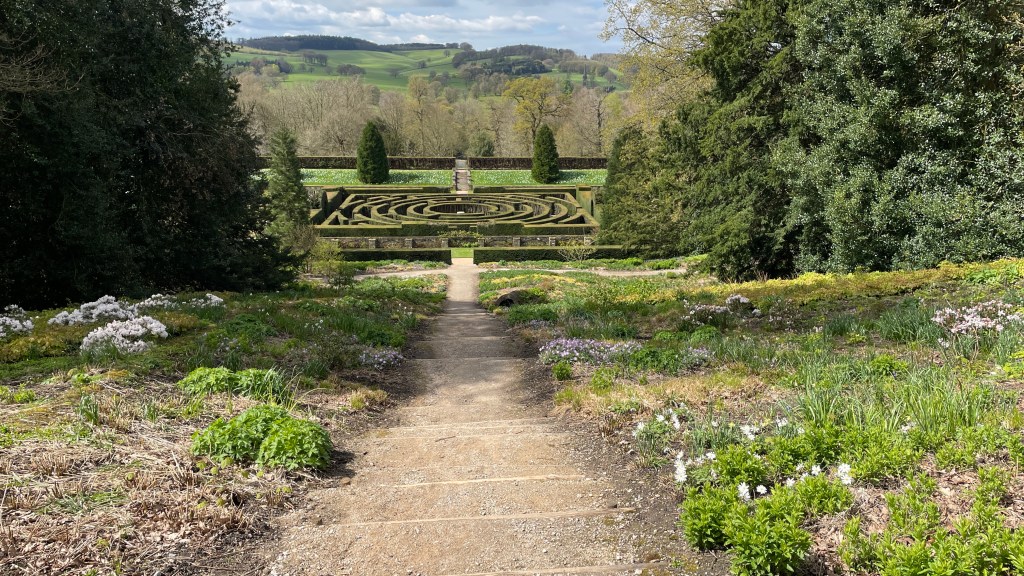
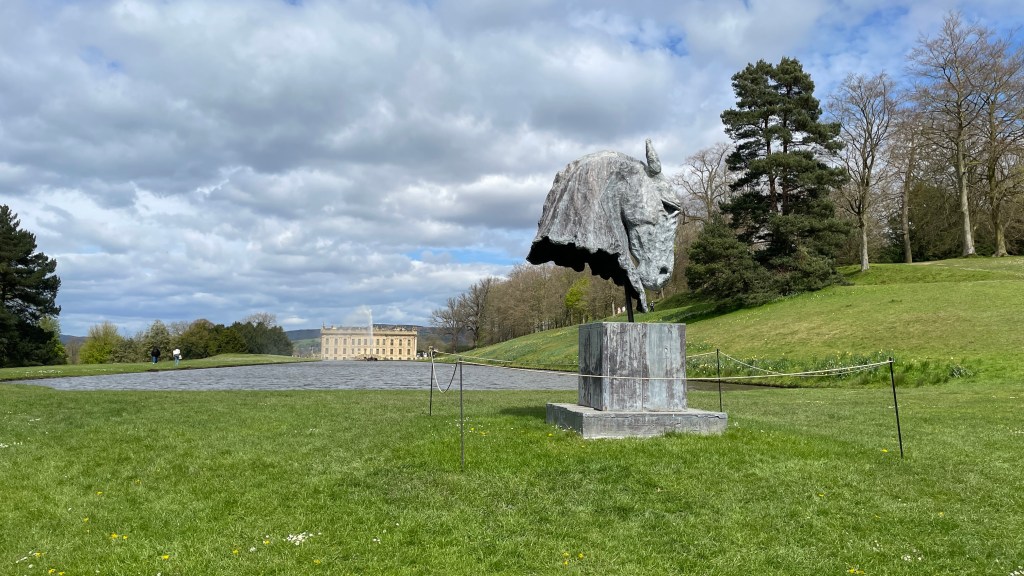
Header Image: These are the grounds at Chatsworth House in Derbyshire on a glorious spring day with friends.

Optimise the System | Working Principles

I work in technology that means that I spend a lot of my time working with technologists.

There’s a saying:

“If all you have is a hammer, everything looks like a nail”

Unknown

This pithy proverb is a central feature of The Law of Instrument of which Abraham Maslow and Abraham Kaplan were both contributors.

The concept is that we all carry around a bias to overuse familiar tools.

Within my world the technologists tend to solve problems by using technology, this our bias. Being a bias, it constrains our thinking to the parts of a problem that can be fixed by technology, but it goes further than that. We tend to solve problems with the latest, new-and-shiny, technology. If we are honest; quite often we find some new-and-shiny technology, then look around for problems to fix with it. That’s the way that our minds work.

What this approach gives us is a Heath Robinson (Rude Goldberg if you are American) set of solutions where we have bolted different bits of technology together to produce an outcome of a fashion. Things work together, but not in the best way, and certainly not in an optimal way. Part of the system are over-engineered while other parts haven’t received any engineering at all. Multi-million-pound systems are linked together by spreadsheets or someone manually typing something.

Technology is what I know, but it’s not the only place where I see this problem. I like to watch how the system is working in restaurants, so many of them are poster children for this. In its simplest form you see bottlenecks in the flow from table to kitchen, everything is good at the table, everything appears to good in the kitchen, but the linkage between the two is a disaster. There’s one café I go to where the kitchen always looks like it’s working seamlessly, but you only have to sit and watch for a short while to realise that the food storage is at the other end of the facility with staff running through the tables to grab boxes of ingredients. I was sat in another cafe a few months back and noticed that the clean cutlery was stored in a low drawer below the point-of-sale equipment. You could either reset a table, or do all of the meriad of things that you do on a point-of-sale device, but not both. This was a popular cafe and people were constantly phoning to book tables meaning and the person on the phone was regularly apologising to customers that they couldn’t answer their query because they couldn’t get to the point-of-sale equipment. Added together there was a lot of staff time spent waiting for this little corner.

My dad has recently spent time in hospital, another exemplar of the craft. Each role appears to have created its own way of doing things which I’m assuming worked for them, but from the patient’s perspective it was utterly chaotic with overlapping and competing priorities.

Imagine a car, and I’ve seen this done, where someone decides that they are going for sporty. They replace various parts of the engine with high-end equivalents. They even get the car firmware updated to improve the available horsepower. Having spent a small fortune on innovative technology they get into the car and the engine sounds sweet. Pressing on the accelerator releases a beautiful low growl. Shifting into gear they press down on the accelerator again and go nowhere. There’s a squealing noise and smoke billowing from the tyres then a lurch forward. While it is possible to get this car moving without spinning the wheels it’s very difficult and within a couple of weeks the tyres need replacing. What’s more the local council has decided that it’s time to resurface the main road near to their house and the delays are awful. What’s more they receive an update from their insurance provider who has decided that the modifications to the car will more than double the premiums. Is this really better performance?

It often helps to take a few paces back, look at the bigger picture and fix the biggest thing that you see. Let’s be conscious of our biases and, for me, realise that technology can only take us so far, and sometimes it will take us backwards. We need to think about the system and not just the parts.

Header Image: This is Derwentwater on a wintery day. It looks cold, it was cold, but it was also beautiful.

Watch out for the autonomy thieves | Working Principles


Imagine this situation. You’ve been working on a problem for a few days, it’s been a journey of discovery, you’ve learnt some new skills and you’re quite sure that what you’ve concluded is going to make an enormous difference to your team. Some of the solution is within your team’s normal responsibilities but much of it lies with other teams. You’ve put a document together to describe the problem and the conclusion.

You present the document to your leader, and they look through it and say “thanks, I’ll take it from here.” How do you feel?

Have you ever been involved in the definition of responsibilities assignment matrixes. You might know them as RACI, RACIQ or ARCI matrix (I didn’t realise how many alternatives there were until I looked it up.) They are a method of defining what part people play in a set of tasks – the main tasks being Responsible, Accountable, Consulted, and Informed.

Organisations can, and do, spend hours defining these things. In complex structures they can be massive. They can turn into a never-ending cycle of detail if you aren’t careful, every task can always be broken down into a more detailed set of tasks.

Where these matrixes tend to fail is in the same way as the starting scenario fails, the area of autonomy.

Back in 2014, nearly 10 years ago, I wrote an article on autonomy, mastery and purpose which has continued in the top 20 posts on this site for all that time. It’s based on the writing of Dan Pink in the book Drive. The book’s recommendation is that if you want to motivate people then you should move away from carrot-and-stick approaches and think about autonomy, mastery and purpose as the three fundamental drivers.

In the starting scenario you feel deflated as the autonomy that you used to get to a resolution was stripped away the moment your leader said, “I’ll take it from here”. You’d walked the path, defined a way forward only to be told to wait outside the gate.

In the RACI tables autonomy is diminished by the task-by-task-by-task definition. Somewhere between accountable and responsibilities people are supposed to navigate their way to a resolution. Furthermore, the scattering of consult and inform places strain on people’s ability to get the job done. I don’t think I’ve ever seen a RACI matrix where most of the lines contain a single RA without a plethora of C&I. Conversely, I’ve been involved in many debates where it was difficult to get down to a single A and a single R. Autonomy is scattered as the RACI becomes a vehicle of control – the RACI becomes a stick.

The bigger an organisation gets the more difficult it is to keep autonomy. It’s not surprising that many large organisations show low levels of engagement when they spend so much time removing people’s autonomy. Likewise, it’s not surprising that people spend so much time doing things hidden away from others, putting off the day when it will be taken from them.

As leaders we need to see ourselves as defenders of autonomy, protectors of people taking the initiative. Sometimes this is as simple as empowering people to see something through to the end, at other times we need to be more proactive.

Control leads to compliance; autonomy leads to engagement.

Daniel H. Pink

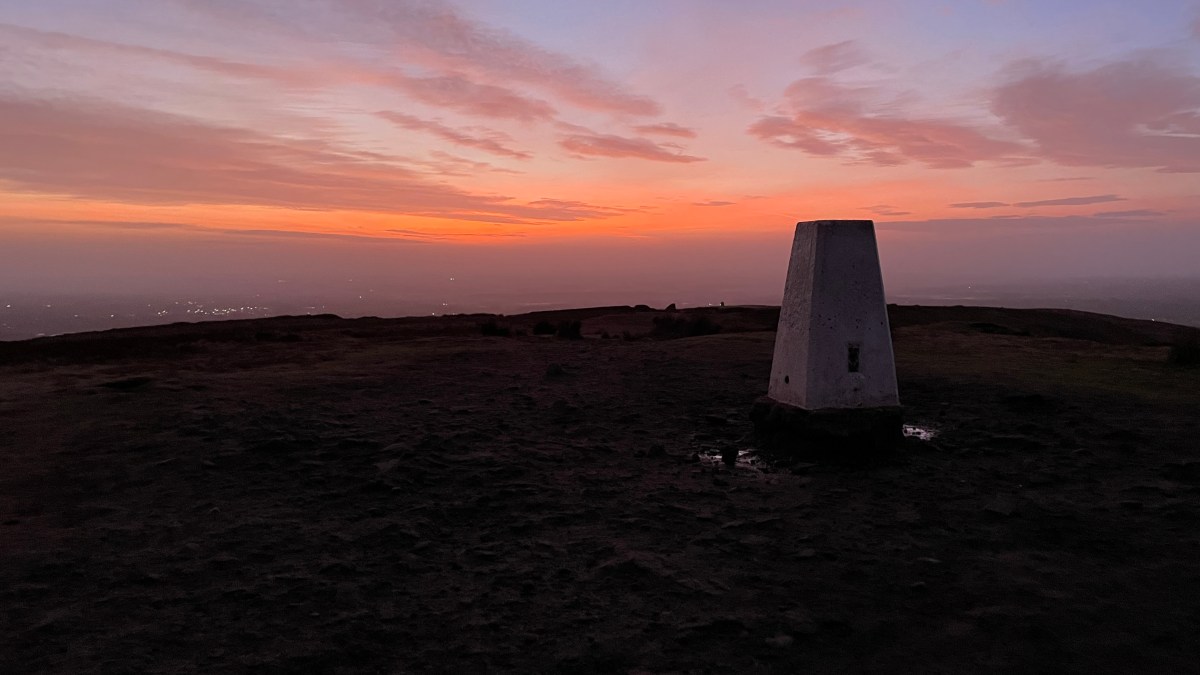
Header Image: A sunset view from the top of Nicky Nook. The post is one of the remaining trig points/pillars that used to be a common feature of hills across the UK.

We are wired for story | Working principles

An interesting thing happened in the UK last week – a television dramatization woke everyone up.

There’s been a long running scandal in the UK involving one of the worlds leading IT providers (Fujitsu), the Post Office, the Government and the people who run the fabulous, generally small, Post Offices known as sub-postmasters.

For those of you who aren’t from the UK, the Post Office might not be a concept you understand and it’s not at all easy to explain, but I’m going to try. At its simplest a Post Office is the place you go to send a parcel, but it’s a lot more than that. In many ways a Post Office is an extension of the government, but it’s also more than that. It’s more like the ultimate service desk. If you are a foreign national you can apply for residency here, this is also the place to exchange currency, the place for photo ID validation, they also allow you to put money into and withdraw money from hundreds of bank accounts, and the list goes on.

There are over 11,000 of these facilities across the country and everyone at some point interacts with a Post Office. I’d be surprised if there are many people in the country who don’t know where there nearest one is.

I’m not going to retell the story of the scandal here, there are far more knowledgeable and skilled people to do that:

What I am going to comment on is the power that has been unleashed across a nation now that everyone, at least it feels like everyone, has connected with the stories of the people involved.

Here’s the trailer for everyone outside the UK:

This isn’t a new story, the Panorama documentary listed above is from 2022, significant court cases date back to 2010, there was huge exposure of court cases in 2019. And, yet, none of this connected with the psyche of the British people in quite the same way as a dramatization of the story in which we follow the struggle of an unlikely band of sub-postmasters against the might of corporations and government.

This dramatization has connected with people in way that everything else hadn’t. The show has touched hearts in a way that statistics never did. I’ve followed this story for a long while and this dramatization changed me. Being transported into the midst of the situation created emotions that no news report ever did, which I find interesting, because the news reports were about real people.

What was the result: A petition has started requesting that the former head of the Post Office side be stripped of a CBE, a national honour, and (today) over 1 million people have signed it. The government is hurriedly rushing out statements about blanket exoneration of all of the sub-postmasters involved in the scandal. My own social media has been alight with people wanting to do something. A retired senior colleague decided that this was the subject that would make him return to LinkedIn, as just one example.

I don’t fully know why now, why this telling of the story, has blown everything open. What I do know is that we are wired for story and that is a signifcant part of the answer.

Why do we dread KPI, SLA, SLO, and any one of the statistical treatments that we face very day? Perhaps it’s because they don’t include any story?

Why does our heart sink when we see a set of bullet points on a slide? Again, no story, no metaphor?

If it’s stories that lead to change, why do we tell so few of them in the corporate world?

Even within the Agile/Scrum community, where a story is a method for gathering needs, I think we’ve turned something helpful into a monster by connecting it with the dreaded story point.

If you want to see someone change, connect them with someone who’s already made a change, why? The person who’s already made the change has a compelling story to tell.

I have a grandson who is nearly 3, he can tell me story after story. We’ve visited a revisted the worlds of Peter Rabbit, Chase and the Paw Patrol, the Gruffallo and Zogg to name just a few. His imagination is continually sparking stories, building farmyards and aligning other toys in the narative. We are wired for story.

Time to start practive your story telling.

Header Image: This is the tope of Helm Crag, also known as the Lion and the Lamb because of it’s appearence from the village Grasmere below.

You can hear a smile (and a frown) | Working Principles

Working from home 100% of the time, as I do, most of my communication is voice only – sans video.

Even when I am on video my visual attention is on the material that is being presented, not on the faces of the other people.

Yet, still, I am conscious of the emotional countenance of the other people participating in the gathering. You can hear the shape of people’s faces.

This post is titled “You can hear a smile” for a good reason, it was also a deliberate choice to use the word “countenance.” I’m not saying that what I am hearing is whether someone is in high spirits, or even low ones, what I am hearing, and responding to, is the tension in the facial muscles. Try it sometime, you sound different when you smile, likewise, you can tell when you take on a frown.

Does it matter? Yes it does.

People are more likely to want to work with someone who smiles, we are attracted to a smile. Likewise, we are wary of a frown and a scowl.

A smile gives people the impression that you are confident and confidence communicates success.

Smiling can also reduce stress further enhancing your meeting experience. Surely low stress meetings are preferable for everyone. I don’t know whether the opposite of this is true, but I suspect that a glum, or angry, face will increase the stress in a meeting.

There have been times when I’ve not been looking forward to a meeting where I’ve made the conscious decision to smile through it. It wasn’t easy to wear a smile, but I was determined to do it and I’m sure that it made a difference to the positive outcome. Even a forced smile can help you to be and to remain positive.

You can hear all of that. Even if you aren’t conscious of it, you are hearing it and responding to it.

Try wearing a smile tomorrow, it will make a difference to your day.

“You’ll find that life is still worthwhile, if you just smile.”

Charlie Chaplin

“Among the things you can give and still keep are your word, a smile and a grateful heart.”

Zig Ziglar

I don’t know anything about the countenance of the people attending the meeting but not speaking. Personally I’ve never seen the point of attending a meeting into which I’m not going to contribute. I wonder how many hours are spent by people attending meetings? Perhaps that’s a subject for another day.

Header Image: This is the view across Derwentwater from just above Lodore Falls on a glorious calm sunny autumn day.

“Just” can be an extremely expensive word | Working Principles

I have a red flag word, it’s “just”.

When I’m in business conversations with people I’m watchful for its every use:

“We could just do…”

“Why haven’t we just…”

It’s often a warning word for someone saying something that they really haven’t thought through, or even have the skills to think through.

Hidden inside those four letters is a sealed box, and inside the sealed box is trouble.

“I just want a…”

Here is my warning to you, there is likely to be a very good reason why something hasn’t “just” been done. What may appear simple and straightforward can be hiding untold effort.

“They just need to…”

I remember as a child visiting a local beach and finding one end of a rope. The other end was “just” under the surface of the sand. So, I pulled it until I couldn’t pull it any longer without reaching the other end of it. I decided to dig some of the sand away, I couldn’t be that far from the other end, could I? I’ll “just” go a bit further I thought to myself, how long can a piece of rope be? These were the carefree days of childhood, so I continued “just” a bit further,then “just” a bit more, for most of the afternoon. It was lots of fun, but I never did get to the end.

I’ve started out on many projects that were “just” about getting one thing done, only to find myself diging my way along a beach with no end in sight.

“Why don’t we try just one more time…”

When I hear the word “just” I ask myself a question “why hasn’t someone just done this before?” If the answer isn’t obvious then I assume that there was a good reason for their lack of impetuous. I presume that others had the same information that I now have, and the ability that I have, and so there had to be something that they knew that I don’t yet know that held them back.

There are many times when what I see and what I know are different to what others had before them and so we are able to “just” do something, but there have also been an abundance of times when “just” has been a very expensive word.

If someone is trying to sell you a “just” ask yourself whether they are in a position to pay out on that commitment. What would they do if each “just” cost £100,000 or even £1M.

“Just” can be a sinkhole waiting to swallow you up, be wary of it.

Header Image: Halfway up the Old Man of Coniston are a set of quarry works. Some of them tunnel deep into the mountain. This is just the start of one of those tunnels on a very misty day.

Watch out for the Choke Levers | Working Principles

I’m showing my age in this post. If you are younger than 30 you probably have no idea what I am talking about.

Do you remember having a choke lever in your car? Do you still look for it in your current car? When was the last time you gave a thought to the fuel mix going to your engine? If it was recently, I suspect it was because you were driving a vintage vehicle, or more likely a petrol lawnmower, or generator. If you don’t know what a chuck lever is/was then here’s a quick overview: What is a choke and what does it do?

My last car had an automatic handbrake, it took me a while before I trusted it. When I got a new car without it, I had to relearn the process.

There’s a quote that is regularly attributed to Henry Ford:

“If I had asked people what they wanted, they would have said faster horses.”

Many of the projects that I work on are changing things for people and often those project starts with a phase called “requirements gathering”, or sometimes refered to as “user needs.”

I find this phase fascinating for many reasons, one of the main ones being the process of looking for the “choke levers.” People tend to state their requirement in the terms of what they currently do and the tools that they use. This isn’t surprising it’s what they spend much of their day doing and most of them aren’t being paid to think outside of the framework into which they have been fixed.

We aren’t so good at abstracting our requirements into actual needs.

Let me explain using the Choke Lever as my example.

Take this as a pProblem statement: “The Choke Lever is difficult to pull out.” This may well result in a requirement of “A Choke Lever that is easy to pull out.”

With the privilege hindsight you look on these and smile. You know that the answer to the problem isn’t an “Easy Pull Choke Lever.”

What went wrong here? Was the problem statement wrong, or the requirement? Neither is particularly wrong, it’s just that they both failed to go far enough, they both focussed on the Choke Lever. The problem and the need were constrained by the current framework, neither saw beyond the Choke Lever, neither saw beyond the need for faster horses.

Knowing what we now know we can draw out a far more sophisticated set of needs for the Choke Lever problem. We can see that the higher level need is to “start the engine”, and that in order to start the engine we need to “change the mix of fuel and air into the engine” and all of the associated needs like “adjust the mix back once the engine is warm.” A whole set of needs that gave us automatic chokes and computerised engine management systems.

But wait even these more sophisticated definitions of need are subject to the framing of “the engine.” Why do you need an engine? What about electric vehicles. I don’t need to start the engine in my electric lawnmower.

When we ask people about their requirements we need to recognise that they will communicate the problem they see before them and there are times that we need to help them to see beyond the frame and reach for a better outcome.

Header Image: This is the view from Edinburgh Castle on a late summer, early Autumnal day.

Deployment is just the first step – Adoption takes longer | Working Principles

A little personal story on the difference between deployment (getting something out there) and adoption (getting people to use and value it).

Last Friday morning I awoke feeling a bit strange, and aware of a raised heart rate. I’d only just woken up and being British decided that the best response was to wait a while. We don’t like to make a fuss about nothing, and this was bound to be nothing.

A short while into my wait I remembered that my new Apple Watch had an ECG App on it and wondered whether now was the time to give it a go. I clicked on the App and watched as it showed a trace of peeks and troughs which I assumed corresponded to what my heart was doing. Some 30 seconds later the App popped up to tell me that my heart wasn’t behaving quite as you might expect. Still being British I decided to sit a while longer because this still wasn’t worth making a fuss.

Having waited a little longer (well, an hour) everything settled down and it was time to get on with the rest of my day.

A couple of days later I decided that perhaps I should put my Britishness to one side and do as the ECG App had instructed me, which was to contact a doctor, or, more specifically I decided to contact the reception at my General Practitioner. I wasn’t sure quite how I was going to describe the events from the previous Friday, I still didn’t want a fuss, and I certainly didn’t want an ambulance needlessly turning up at my door. In the end I decided to start with what my Apple Watch had told me. I then described it again in a slightly different way because this was clearly something a bit unusual. The lovely, now confused, receptionist put me on hold while she went to speak to someone. A few minutes later she came back with a plan, she would send me a link where I could describe (again) what had happened and post some pictures from the App, they would then assess the information and get back to me.

I dutifully did as requested and awaited a phone call, which came a couple of hours later. The next phase of the plan was for me to go in to see a Nurse Practitioner, which I dutifully did.

The Nurse Practitioner was lovely, she asked me to describe the situation, again, which I did by showing here the ECG traces on my phone. She never really engaged with Apple Watch App data preferring instead, as I was expecting, to listen to my chest, take my pulse and check my blood oxygen. These were all normal, as I had expected they would be. The data on my phone was irrelevant to the conversation because, as the Nurse Practitioner said, she had no knowledge of whether the App was accurate or not. The deployment of the ECG App may have given me some value, but it wasn’t going to be able to give any value from this point on.

I have no idea what it takes for a diagnostic device to become adopted by the professionals of the NHS, but it was clear that this hadn’t happened for the Apple Watch ECG App, even though from what I can tell the data it produces is highly accurate – over 98%. I may have deployed a highly accurate piece of technology, but it hadn’t been adopted by the broader system. The broader system needed to carry on doing what it had always done. I’m sure this will change but it’s going to take time, it wasn’t that long ago that medical professionals didn’t trust the widely available electronic blood pressure machines, now they use them as their default tool.

The conclusion of the visit to the Nurse Practitioner was – more tests.

I little while ago I wrote about how long it was taking us to adopt our newly deployed kitchen – a similar challenge of deployment v adoption.

There are hundreds and thousands of technical solutions that have been deployed in businesses across the world with little or no adoption. There are plenty of piece of technology in our homes that sit dormant in cupboards awaiting their transition to the local recycling facility, eBay, Facebook Marketplace or equivalent. How many Apps sit unused on our smartphones? Most of these had a plan for deployment, but only a limited plan for adoption. One of the problems is that deployment is easy to measure, adoption is subtler less tangible, and often takes far longer than you think.

Businesses use a famous misquote from the 1989 film “Field of Dreams” – “If you build it, they will come.” You do need to build something for people to come, but even if they do come it doesn’t mean that they will hang around and enjoy the stay. Adoption isn’t the natural outcome of deployment.

As a maker of things, the objective isn’t to have the things deployed it’s to see them provide value, to see them used. We need to look beyond the first step of deployment and accept that the long journey of adoption is where the value is.

Header Image: This is York Minster on a lovely day of wandering around ancient streets filled with American tourists marvelling at a pub that was nearly 400 years old and spending vast amounts of money on Harry Potter merchandise.

Be a Good Customer | Working Principles

At the weekend I was walking into a small shop where I have been several times, it’s a bit of a favourite of mine, a place I’ve recommended to many people.

As we arrived something was clearly going on between the proprietors of the shop and a male customer who was being asked to leave. Eventually one of the owners stood up and pointed out to him that as the shop was Private Property and he had been asked to leave, that he was now trespassing.

Yet the man stood there, all the time complaining about something. In time the man was ushered out of the shop onto the pavement from where he continued his complaining from, telling the owners that they were rude and needed to go on customer care courses.

With a flourish one of the owners of the shop closed the door on the man, turned to us, sighed heavily, and put on a smile.

We looked at the proprietors and asked them if they were OK, they said they were, but you could tell that it hadn’t been an easy encounter.

We chatted a bit longer, they gave us some great advice on my purchase, helped me to find exactly what I was looking for, and we left happy. They were genuine, pleasant, helpful, amiable, expert, and professional.

What was the difference in these two encounters?

“The Customer is always right” or “The customer is king” are two phrases that are familiar to anyone who has done any form of customer care training. They represent ideas popularized by department store owners Harry Gordon Selfridge, John Wanamaker and Marshall Field. While the original intention behind these phrases may have been a good one, in recent years I’ve seen much more of their ugly side with people demanding their right to be “king” and using the phrases as an excuse for some awful behaviour.

Personally, experience tells me that I get better outcomes from people when I’m a good customer.

These are my working principles for being a good customer:

  • Be polite and respectful – There’s no need to be rude, the person serving you is a person.
  • Listen – When your supplier is talking it’s best to listen, it’s the only way you are going to learn something. What you learn may save you from a whole heap of trouble.
  • Takes advice – The person serving you has probably seen your need before. Your desire may feel unique to you, but it’s likely to be something already known for which there is already a great answer.
  • Be clear about what you want – There’s a skill in asking for things. Too precise and you miss the advice. Too vague and asking clarification questions can become embarrassing for the supplier.
  • Make decisions – Your job as a customer is to decide, it’s not the supplier’s job. Sometimes the right decision is to not decide, but don’t waste people’s time doing it.
  • State your time expectations – So many people expect immediate service, but some things take time. If you need something by tomorrow, you need to state it, you can’t expect your supplier to discern it.
  • It’s not all about business – The person supplying you has a life outside work. A chat can be so valuable.
  • Time is valuable to you and them – In your interactions be mindful of the time that you are taking. There’s a need to be balanced here – don’t outstay your welcome, but good service can take time.
  • Ask good questions – I think we’ve been there before.
  • You don’t need to be rude to be firm – When things aren’t going to plan you may need to be firm but that’s no excuse for being disrespectful.
  • Gratitude is free – When you receive what you need saying “thank you” doesn’t cost anything.
  • A smile is free – In most situations a smile will make a huge difference to the conversation. This is also true for voice only interactions, people can sense a smile in your voice.

In business many interplays don’t involve a retail transaction, but they are still customer-supplier interactions. When you need to ask someone for advice you are the customer, they are your supplier. When you need your boss to approve something you are, again, the customer. When you send a message to someone asking a question you are a customer.

Every time you are a supplier, you are also a customer. When someone needs you to answer a question or is looking for your advice, they are telling you something. Even if all they are telling you is that there is a question that needs answering you are a customer of their feedback.

How much healthier would our workplaces be if we were all better customers?

The purpose of a business is to create a customer.

Peter Drucker

Header Image: This is Ullswater as the rain leaves over Kirkstone Pass, having overstayed its welcome on a summer’s day.

Questions are Powerful | Working Principles

There’s a line in a U2 song:

We thought that we had the answers, it was the questions we had wrong.

U2

Most of business seems to be focused on answers, fast answers, definitive answers, simple answers, answers that lead to action.

Not much of business is focused on asking the right question.

Without the right question, we can’t get the best answer.

A big part of my current role is to be the person that people come to for answers. Quite often the questions I am asked are defined in simple terms with people looking for a specific answer. I’m grateful for this, people know I’m busy and don’t want to have a debate about something that is likely already covered in a document, or I can answer in a couple of sentences.

Although the answers are often straightforward sometimes experience tells me that there is something behind the question. When I get that feel my response to the question is often another question. Most of the time all it takes is a simple “tell me more?” from which the conversation hopefully opens into something more valuable.

I say hopefully because asking questions is tricky, particularly in written form.

In his book Nonviolent Communication, Marshall Rosenberg dedicates a whole chapter to the skill of “Observing without Evaluating” in which he summarizes:

“The first principle of NVC entails the separation of observation and evaluation. When we combine observation with evaluation others are apt to hear criticism and resist what we are saying”

The challenge with so many questions is that they come with hidden evaluation. I try to avoid the simplest question “why?” for that reason. While I may be genuinely asking “why?” what I risk people subconsciously hearing is “why are you asking that, that sounds like a daft idea, don’t you know better?” the result being that an open question instantly becomes a closed one.

Despite the risk of questions becoming loaded with evaluation I still think that they are the best way of broadening a conversation. Stepping back and ask the question is a powerful thing.

Another area where questions are powerful is in documentation. Returning to my previous post on writing for the reader, I’ve found that many people think in questions. I now spend as much time writing FAQ as I do on the formal documentation. We are no longer in a time when people read documents end-to-end and I’m not sure that we ever were.

What people need is to get an understanding. Knowing that the answer they seek is somewhere in the middle of fifty pages isn’t immensely helpful. Having the answer to a question that points you somewhere else can be more useful.

There is a challenge here, people who live by questions only know the answers to those questions. Their knowledge is limited to their ability to ask good questions. If you don’t know something exists, how are you going to know to ask about it. If you ask people at the beginning of a project what questions they think should be in an FAQ you’ll find that they are extremely limited.

I find that people who live by questions tend to miss the big picture and that robs them of the ability to rationalise other answers. As a way of breaking that down my FAQ answers sometime expect people to work for the answer, and in so doing they hopefully get the broader view.

Questions are everywhere, sometimes the answers are easy, sometimes they are more difficult, or even unknown, but questions are always powerful. I believe that the wise people of the future will be the ones who know how to ask good questions.

To question a wise man is the beginning of wisdom.

German Proverb

One who is afraid of asking questions is ashamed of learning.

Danish Proverb

To a quick question give a slow answer.

Italian Proverb

Header Image: Time for a swim in a somewhat chilly Devoke Water.

Writing for the reader | Working Principles

It’s time to start a new series, called Working Principles – a few ways of doing things that I find make life more successful when I follow them. I’m not sure how many of these there will be, I’ve never written them out before, but having started I already have several titles listed out.

In our education system we are taught to write essays. The purpose of authoring an essay is to demonstrate what we know about something. In education we write for our purposes – to pass an assessment.

When I started work, I would write in the same way, documents full of information that I knew, but I never stopped to consider the purpose of writing and who I was writing for. I was several years into my career before someone pointed out that I should flip my perspective around and ask a couple of questions when I write:

  • Who am I writing this for?
  • What do they need to know?

Simple questions, but it’s clear from the many communications that I read that they aren’t common questions. In my mind I have a phrase which applies to a lot of business writing “never mind the quality feel the width.”

There are so many documents, emails, presentations which completely miss the needs of the person they are trying to communicate with. A plethora of words missing their purpose. A mountain of lexicon going to waste.

These are questions I’ve tried to stick to over the years of my career and they’ve helped me and hopefully helped the people I’ve been writing for.

When the reader is in focus, I use fewer and simpler words.

When the reader is front-of-mind I write things in a different order. Putting the need first.

When I focus on what the reader needs, I can leave lots of unnecessary information out.

(When I write a blog post the person that I am writing for is mostly myself 😊)

You don’t write because you want to say something, you write because you have something to say.

F. Scott Fitzgerald

Header Image: This is the view from the local hills, just a few minutes drive from my house.