We need to feel the urgency | Working Principles

Are you a planner?

Do you prefer the last minute?

What makes you respond with urgency?

I was recently out on my morning walk when I stopped for a chat with one of the locals who likes to sit on a bench near my house. He’s an interesting character so when he started to tell me about some people “sleeping rough” in the fields nearby I didn’t think too much of it. Sitting there on the bench he theatrically described where they were and how he’d gone over to them earlier that morning, woken them and told them to “Get off my #*&%ing land!” He looks quite scary but they’d simply rolled over and ignored him.

I was planning on going that way so would take a look as I passed; out of curiosity.

Sure enough, as I crossed one field into another, there on the top of a small hill were a set of sleeping bags and other detritus. “That’s interesting” I thought and left them to it, it was early and they were asleep. Also, there were more of them and I’m not as scary as my friend from the bench.

They didn’t look like people who were homeless or in distress. Where they were camping was out in the open on an exposed hillock, not where you’d sleep if you were sleeping rough. They didn’t have tents or bags of belongings. It looked more like local kids making the most of the last few days of the summer holidays.

A few days later I was back out doing my walk and wondered to myself whether they were still “sleeping rough.” I was also hoping that they had left the field in good order. Sadly, there was rubbish spread across the area where they had been. Annoyed and saddened I looked around pondering what to do when I noticed a plastic carrier bag with the branding of the nearby convenience store.

That simple plastic carrier bag sparked an urgency in me. It was time to get this mess tidied up, an urgency that eventually resulted in me filling the carrier bag and creating another bag out of a fleece blanket that had been left behind. The spoils in hand I headed back home depositing the rubbish in a public dustbin on the way.

Why did I act? What was it that made this situation urgent? Why couldn’t I leave this mess for someone else to tidy up? Why did I feel an urgency to sorting it out?

All of the definitions that I could find for urgency include words like: swift, immediate, pressing, important, speedy, action.

Plenty of emotion in those words.

The litter made me feel an urgency.

And yet, in business we have a habit of forgetting the emotional aspects of urgency.

We create statistics that tell people that we are 5% behind the progress that we should be making.

We send people emails from senior people imploring them to fill in the latest survey with logical reasons why they should.

We use cascade techniques expecting each individual further along the line to care about the message that they are delivering.

We expend huge amounts of effort communicating facts that leave us cold and unmoved.

Is there any wonder that they don’t move us let alone move us with urgency?

I didn’t reason myself to urgency on that hillock, I felt annoyed, and the annoyance gave me an urgency. No statistical analysis changed my attitude.

If we want people to change, to act, we need to work out how me make them feel the urgency.

Some of the biggest challenges of our day, climate, war, are urgent. It’s time for us to work out how we feel that urgency.

People who bring transformative change have courage, know how to re-frame the problem and have a sense of urgency.

Malcolm Gladwell

Cover Image: From a morning walk a few months ago. This is the field where the “rough sleepers” were.
“Expensive” is a definition of value not cost | Working Principles

A few years ago, I was in a cafe where they roast their own coffee. This place is a special place for us.

While we were sat in the garden with our freshly brewed coffee the owner of the cafe came over for a chat. We talked about the great service they’d given us during the COVID lockdowns delivering wonderfully tasting coffee to our house. This led to a conversation about other places where we’d ordered coffee. He asked about a roaster that he knew which was nearer to our house and whether we’d ordered from them. I told him that I’d looked at their coffee, but that “it was expensive.” His reply to me was something along the lines of “so they didn’t manage to sell you their story.” It took me a few seconds to respond to him then what followed was a master class in the difference between cost and value.

When people say to me “that’s expensive” I return to that conversation and remind myself that what people are stating isn’t that something costs too much, what they are communicating is that they don’t see the value.

“Price is what you pay. Value is what you get.”

Warren Buffett

Value comes in all sorts of shapes and sizes but is always defined by the buyer. There are lots of different aspects to the definition of value and it’s rarely about one single thing.

Sometimes the value is seemingly straightforward and without differentiation – a litre of E10 petrol from the local supermarket will get me just as far as the litre from the motorway service station but one will cost me significantly more than the other. There’s a cost difference but the functional difference is negligible. Easy?

Sometimes the value is situational – the value of the expensive service station petrol changes if I’ve been stuck in traffic and don’t have enough fuel to get home. It’s then that I’m willing to pay whatever it takes to get me to where I need to be.

Sometimes the value is non-functional – in a world where there is little functional differentiation suppliers love to build non-functional elements like point-schemes and loyalty rewards. It’s amazing what people will do for points. I wonder how many people drive past one refuelling station to get too another “for the points”. There are many non-functional elements, perhaps it’s the ethics of an organisation, or the way that their app works, perhaps the people serving you are nicer, or the shop is cleaner.

At times you get what you pay for – there’s a proverb that says “buy cheap, buy twice” which I’ve certainly experienced. I do a lot of walking, and I’ve learnt over the years that the cheap boots aren’t up to the job. You won’t see a professional workman with cheap tools, they aren’t worth the effort.

Sometimes the value is mostly emotional – I don’t buy coffee beans from a small independent roaster hundreds of miles from my house because they make more litres of coffee than cheaper brands. I buy it because I like the taste and the reason I like the taste has a lot to do with the feelings surrounding the associated memories. It’s an emotional buy, there is a limit to how far I’m willing to go for an emotion, but I will go quite a long way for a taste.

As times the value is historic – there’s an electronics shop not far from my house where the service has been so poor, in the past, that I’m not going back again. It’s probably 10 years since I’ve been in and everything could have changed, but my history is preventing me from reliving past experiences. There are other places where I’ll return because the value is always good.

“A product is not quality because it is hard to make and costs a lot of money, as manufacturers typically believe. This is incompetence. Customers pay only for what is of use to them and gives them value. Nothing else constitutes quality.”

Peter Drucker

There are all sorts of values that we can associate to something. Sometimes the values add up to a story that feels expensive, at other times we are willing to pay more to get the value.

Next time someone tells you that you are too expensive, you could cut the cost, but the outcome for both of you will be so much better if you trying to work out how to increase the value.

“The reason it seems that price is all your customers care about is that you haven’t given them anything else to care about.”

Seth Godin

Header Image: This is the nearby Cockerham Sands on a glorious evening with birds flying everywhere.

Resist the urge for action | Working Principles

I recently entered a long thin room at a conference where a few chairs were set out in rows across the narrow part of the room. There were 30 or 40 chairs, and they were already spreading down the room.

Several people were already in the room when the organiser arrived. He looked at the room and said something like “We are expecting more than this, it’s going to work much better if we set the room up the other way around. If you are able, could you help, please.”

With those words everyone already in the room and those arriving sprung into action moving chairs. I happily joined in by taking some chairs to the far end of the room to start some new rows, other people stood up and made other new row where they were, some did little more than turn their chair, and one or two around them through, 90 degrees so they were facing a different wall.

All this time the organiser of the meeting was trying to get people to work together to build longer rows across the full length of the room, with little effect.

Some stewards were bringing in extra chairs which was taking a while because they needed to navigate through from one end of the room, which was now full of randomly placed chairs, to the other, where there were far fewer chairs. It didn’t help that some of the chairs they brought in were broken and needed to be taken out through the same maze of randomly placed seats.

Everyone was expending effort, actively participating in the mele, contributing towards the goal. I’m sure everyone felt great about their involvement in the experience, there’s something very uplifting about being helpful.

The result was a hodgepodge of rows with significantly more seats on the side of the room where they had been initially and only a few around where the speakers where in the middle of the length of the room.

I suspect that two or three people who knew what they were doing could have sorted the whole thing in about half the time and with a significantly more elegant outcome.

This need for action is seen in businesses across the globe every day. Enacting something is better than doing nothing, isn’t it? In my experience quite often, the answer is “no.” I regularly find myself in situations where a bit of thought, a moment of planning, a conversation or two would have significantly reduced the time to complete and improved the outcome.

Yet, the need for action is a strong one and I’ve learnt to accept that sometimes you just need to let people do something, anything. I’m sure that there are times when people schedule a meeting just to be able to log some action. Another method I’ve used has been to create a harmless task for the masses to do just to keep them busy while reviewing a situation for the best approach. Asking people to fill in a tracking spreadshet is perfect for this. This is, of course, wasted effort. It would be much better to resist the urge to action, take a breath, think, and then act.

There’s a quote that is often ascribed to Victor Frankl, almost certainly inaccurately as it can’t be found in his writings, but I like it all he same:

Between stimulus and response there is a space. In that space is our power to choose our response. In our response lies our growth and our freedom.

We need to learn to resist the urge to fill the gap with action and instead take the power and use the space to think through the next steps. Utilising the gap might feel uncomfortable, but it will lead to a better, speedier, answer.

Header Image: This is the view from the top of High Cup Nick having walked up the middle of High Cup Gill to get here. This walk has been on my list for a long time, and it didn’t disappoint.

Our expectations shift with each new wonder that we see

I was recently in a cafe doing some work when a couple in their twenties came and sat at the table next to me.

They both retrieved a laptop from funky bags and open them onto the table.

A conversation about the voluminous size of the portions in the branded refreshment establishment followed.

I was trying to get some work done and not listen, but it was difficult.

One sentence caught my attention though – “I can’t work on 4G, but I get 5G so rarely.”

My immediate reaction was “What? You can’t work on 4G? What work are you doing?” followed by a feeling of “I’m old.”

I remember the day when a bump in speed from 14.4Kbits to 28.8Kbits or even the dizzying heights of 56Kbits required a new modem and a way to justify the significant expenditure. Each one of those jumps was a wonder to behold, enabling us to download 1024×768 pictures so much quicker. Universal high speed mobile communications were reserved for the characters in sci-fi films.

Now, here I was sitting in a cafe, surrounded by mobile communications devices and the 30Mbits that we typically get from 4G in the UK isn’t good enough?

We’ve moved to a position where bits fly through the air at a rate 535 times higher than the highest speeds I could get down my phone line at home are no longer good enough for some people’s work needs? The marvel from 2014 that is 4G is on the road to redundancy.

How our expectations shift from wonder to expectation, from expectation to obsolescence.

This isn’t one of those “they’ve never had it so good” posts.

This is me marvelling at our ability to adopt and adapt, to see something new and to build employment and commerce around it.

This is me looking at the huge changes that are coming our way and cheering on the future shapers and modelers.

This is me choosing to look away from the gloomy side and towards a hopeful view of the future.

This is me wondering at the work that could require more than 4G and what that could be.

It won’t be a future that looks anything like the ones people are currently envisioning, that’s almost certain, but I do hope that it’s a good one.

I’ll finish with another story of wonder.

We were recently on holiday in another country and were making use of a hire car. We weren’t planning on doing many miles and had chosen the most basic car that we could, which turned out to be a Dacia Sandero with a few years on the clock.

As I got into the driver’s seat, I noticed a USB socket. “Great” I thought “I wonder if I can plug my iPhone in.” Which, of course, I did having reached into the small bag of cables that I carry with me on holiday and retrieved the appropriate combination of ends.

Instantaneously my iPhone asked me if I wanted to allow the device to be connected, I clicked “yes” and there on the car screen popped AirPlay from my iPhone. Another 10 seconds later and I’ve searched for a nearby cafe on a beach using Google maps and we are on our way with satellite imagery directing us to a joyous table of tapas in the sun.

So many wonders to list if you look. The marvel that is USB becoming truly universal for so many different connectivity requirements. The phenomenon that is free global satellite navigation which knows about the tiniest of roads on a small island. The sensation that is a mobile network that allows me to connect instantaneously and at local speeds (for a small roaming fee, but we can overlook that, it was less than the cost of one of the tapas plates.) The geneous that is a touch screen. The wonder that is the GPS network which always knew where I was. I could go on, but I won’t, hopefully you get the point.

I posted about the cafe conversation at the star this post on Threads and it got a few comments. If you would like to reminisce the days of the 14.4Kbits modem, or the negotiation required to use the phone line, that’s the place for you.

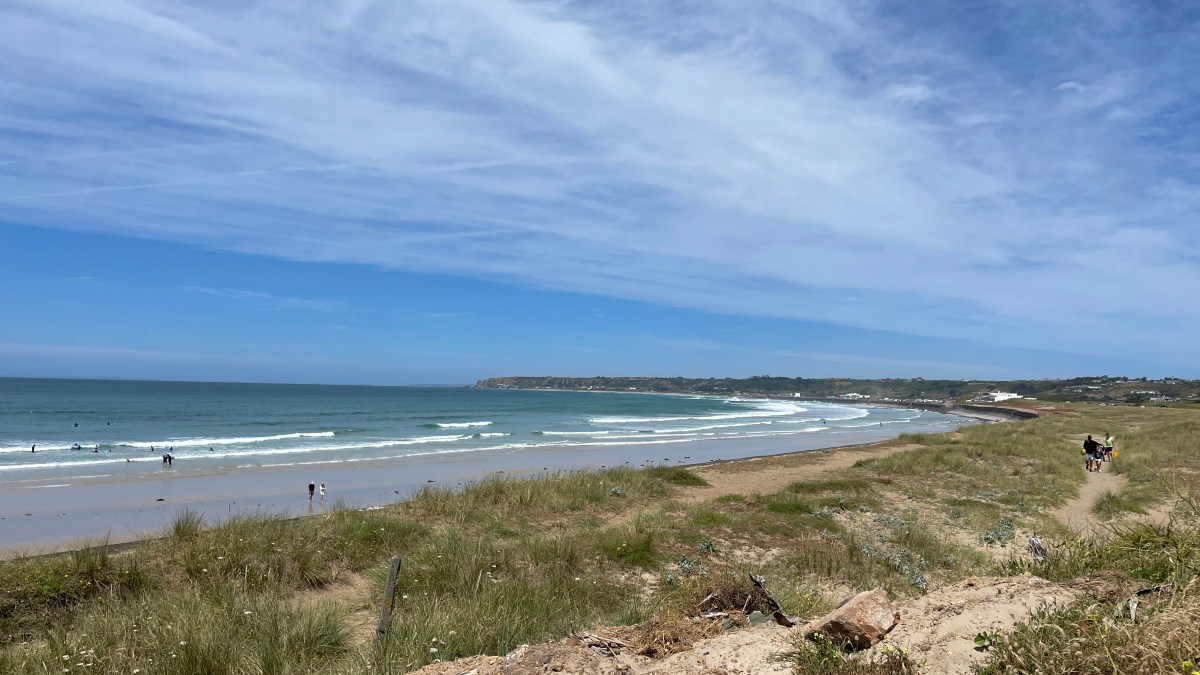
Header Image: This is St Ouen’s Bay, Jersey where you’ll find a very nice cafe serving wonderful tapas right next to the beach.

Repeat after me: “Meetings are work” | Working Principles

It’s a work morning and I open my calendar to see what the day has in store for me. It’s heavily littered with meetings, and I wonder to myself “when am I supposed to get some work done?”

Later on that day a meeting, amazingly, finishes early and I quietly vocalize to myself “Great, now I can get some work done.” I look down at my list of tasks and realise that my brain is too addled to be able to get anything constructive done in the fifteen minutes that I have.

I’m not a fan of meetings, perhaps you already guessed, I’m in good company:

Meetings are by definition a concession to deficient organization. For one either meets or one works.

Peter Drucker

A committee is an animal with four back legs.

John le Carre

If you had to identify, in one word, the reason why the human race has not achieved, and never will achieve, its full potential, that word would be ‘meetings.’

Dave Barry

I’ve searched all the parks in all the cities – and found no statues of Committees.

Gilbert K. Chesterton

What is it about meetings that make us feel this way? Why doesn’t a gathering of people around a subject make us feel fulfilled, energised? Why would I rather be writing a document?

What is it that is so broken here?

Is it the way that meetings are run that is broken? Or perhaps it’s my attitude, others appear to have an enthusiasm for gatherings that I can’t muster? Or maybe it’s a collective problem that we all need to own our part of?

Let’s take a look at a few more quotes:

“The magic to a great meeting is all of the work that’s done beforehand.”

Bill Russell

Let’s start by thinking about the work that happens before a meeting.

Most of us can tell when someone is winging it and most of us are rightly frustrated by those meetings where a lack of preparation wastes everyone’s time.

So many good meetings are created in the hours before the session.

I’m currently doing a series of meetings which are really training sessions. These meetings are being recorded because we expect people to go back over the content which is motivating us to be prepared.

Those meetings feel so rich.

“If we have a clear agenda in advance, and we are fully present and fully contributing, the meetings do go much faster.”

Unknown

We live in a very distracted world and no more so than at work. We apply half our attntion to many virtual meetings and the result is that things that could happen in ten minutes take twenty, thirty, forty minutes.

Despite what you think, you are not enabled for multi-tasking.

I hope that’s we’ve all attended meetings where we’ve been in the zone, fully present, and felt the exhilaration of getting something done that perhaps you didn’t think could be done, or would take a long time to get done.

“The longer the meeting, the less is accomplished.”

Tim Cook

In our virtual working world it’s so easy for people to call a meeting and pick the length. It’s a truism to say that the time taken for a meeting grows to meet the time available. How many 1 hour meetings should have been 30 minutes? How many 30 minute meeting should have been an email? Meetings rarely finish early while I’m sure much of that is to do with people’s attention to the meeting sometimes it was just poor meeting management.

I’ve worked internationally for over 30 years and have learnt to recognise that timekeeping differs around the world. There are some cultures where time appears to be more liquid than we expect in the UK.

In every organisation there are individuals that have their own view on the meaning of an hour and a minute. I make no apology for my reputation as a fierce timekeeper. Far too many meetings have all of the energy sucked out of them by the weight of time.

The thing that is regularly going through my head in these situations is the cost-benefit analysis of the meeting. Yet, there are times when I come out of a meeting and know that the value of the gathering was way higher than the hours spent, that things were achieved that would have taken days to get done in any other way.

“Great things in business are never done by one person. They’re done by a team of people.”

Steve Jobs

This is the reality of business, it’s about the team and teams need to communicate. We have many different ways of communicating but nothing comes close to the meeting. While so many meetings are frustrating, time-wasting, energy sapping, distracted, sinkholes for precious, never to be recovered, minutes there really is no replacement for them. When they are well-prepared, engaging, focussed, enlightening gatherings they can be magical places where real work gets done.

I am trying to change my attitude and to remind myself that meetings are work – but I have a long way to go.

Header Image: This is a sculpture called the The Praying Shell which overlooks Morecambe Bay near to where 23 Chinese cockle pickers tragicly died in 2004. The sculpture was envisioned before the tragedy it’s become something of a symbol for it.

Complain to the Empowered, Complain with your Power | Working Principles

“Why are you telling me? What do you think I’m going to do about it?” These were the thoughts going through my head as I sat in another late-night meeting listening to a team struggling with a problem.

Here in the UK, we have a reputation for being a bit whingy, particularly with our friends in the southern hemisphere. As with many reputations it’s not wholly true, but there is an inner truth to it. There have been many times when interactions with my countryfolk have been heavily moan laden.

From this evidence some might conclude that we are good at moaning, but the reality is, our inbuilt timidity makes us awful complainers.

I was at the gym the other week, and this was the conversation in the sauna:

  • Me: “I see that the showers are out of action again.”
  • Other Gym Member: “Yes, they’ve been out for a couple of days this time.”
  • Me: “I wonder how long they are going to be out.”
  • Other Gym Member: “No idea. Have you complained to anyone?”
  • Me: “No.”
  • Other Gym Member: (Looks back at me and shrugs)

We both know that neither of us are going to do anything about the situation, that’s the end of that conversation.

Part of our reticence is that our expectation of resolution is low, an expectation that has been set by previous experiences trying to find people who can influence an outcome. We know that the kindly young man, in ridiculously tight gym-wear, on the front desk isn’t empowered to resolve the issue. We suspect that even the manager of the gym, who we rarely see, has limited influence. The manager is normally quite good at sorting things. There’s a feeling that this is outside local control and that no one locally is empowered to get the problem resolved. A shared shrug is the best we can do.

It’s worth acknowledging here that everything above is speculation, and the gym manager may have a plan that they are already enacting. We aren’t going to do the work to find out because we’ve taken on a form of learned helplessness. Our desire for change hasn’t overtaken our reticence and so we sit dormant.

The reality is many people live much of their working life in similar situations. They want to get something done, but they don’t see a way to get it done. They look at the people around them and don’t see anyone who can resolve the issues that they face. Eventually they turn to moaning and complaining to anyone who is listening. I’ve done it, I suspect we’ve all done it, but it isn’t going to get any of us anywhere. This type of complaining does little more than reduce us to hot air rattling the wind.

What should we do?

One of the challenges I see is that people haven’t learnt to complain effectively, there is an art to effective complaining.

People often complain to people who can’t do anything about the situation that they are complaining about. We need to find the people who are empowered and seek to get them to make a change. That isn’t always as easy as it sounds.

I think that one of the reasons that we dislike call centre interactions so much is that we suspect that the person on the other end of the call, on the other side of the planet, has little empowerment to resolve our issue. We answer the questions that “George” in Hyderabad or Krishna in “Newcastle” has on their list to ask us knowing that the result of this box-ticking-exercise is going to be a second conversation with a “specialist” who is going to ask the same questions. I recently had a situation where I answered the same set of questions for five different specialists who each asked me to try the same things each of which took several minutes. When I asked the third person why we were needing to redo the same tests they told me that they needed to show on the call handling system that they had been done. Eventually the fifth person agreed to send me some new equipment. The only empowerment that “George” had was to get me to the next person, the person with real power was shielded from me.

There are other situations, though, were we need to step outside of our timidity and engage the person who is empowered.

We need to acknowledge our power in these situations. While we can often feel powerless, we often have more power than we think we do. In the gym situation I am a customer, I am paying money, which gives me a voice. I need to be careful how I use it, but it has some weight. In the callcentre situation I knew that my power was in my perseverance and that eventually we would get to the end of the questions. There wasn’t any point in me using my voice to get aggressive I would have been complaining to people who couldn’t change the situation that we both found ourselves in.

We need to change our attitude from one of complaining to one of changing.

“What you’re supposed to do when you don’t like a thing is change it. If you can’t change it, change the way you think about it. Don’t complain.”

Maya Angelou, Wouldn’t Take Nothing for My Journey Now

We need to learn to be better complainers. Complaining to the unempowered isn’t changing anything. Complaining to others might make us feel a bit better, but it’s not changing anything either.

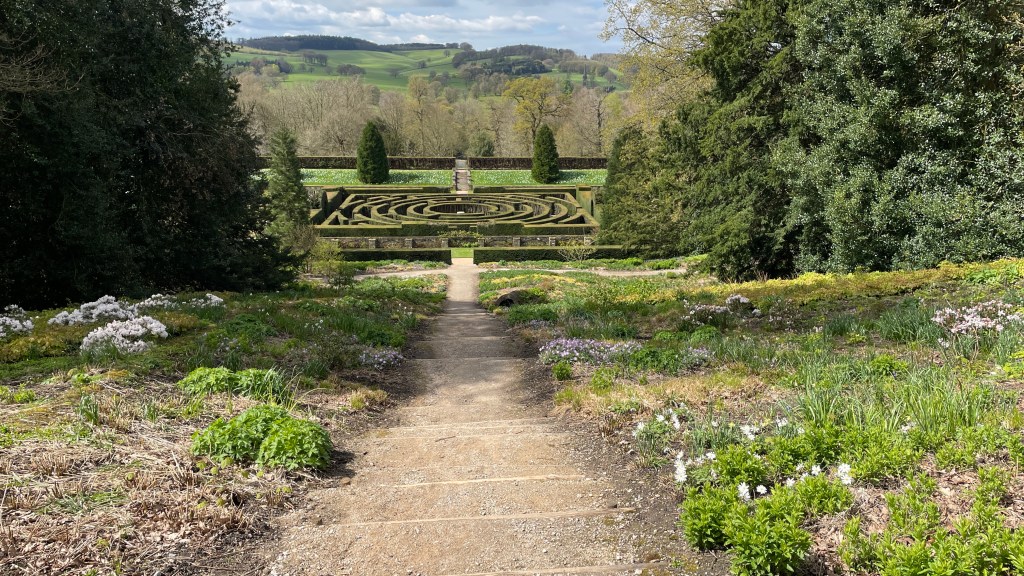
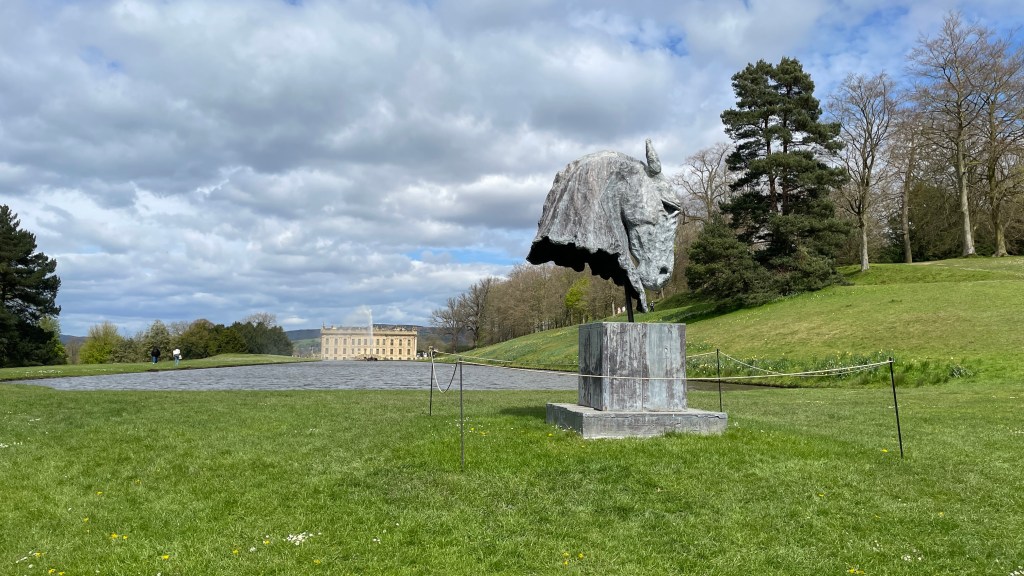
Header Image: These are the grounds at Chatsworth House in Derbyshire on a glorious spring day with friends.

Optimise the System | Working Principles

I work in technology that means that I spend a lot of my time working with technologists.

There’s a saying:

“If all you have is a hammer, everything looks like a nail”

Unknown

This pithy proverb is a central feature of The Law of Instrument of which Abraham Maslow and Abraham Kaplan were both contributors.

The concept is that we all carry around a bias to overuse familiar tools.

Within my world the technologists tend to solve problems by using technology, this our bias. Being a bias, it constrains our thinking to the parts of a problem that can be fixed by technology, but it goes further than that. We tend to solve problems with the latest, new-and-shiny, technology. If we are honest; quite often we find some new-and-shiny technology, then look around for problems to fix with it. That’s the way that our minds work.

What this approach gives us is a Heath Robinson (Rude Goldberg if you are American) set of solutions where we have bolted different bits of technology together to produce an outcome of a fashion. Things work together, but not in the best way, and certainly not in an optimal way. Part of the system are over-engineered while other parts haven’t received any engineering at all. Multi-million-pound systems are linked together by spreadsheets or someone manually typing something.

Technology is what I know, but it’s not the only place where I see this problem. I like to watch how the system is working in restaurants, so many of them are poster children for this. In its simplest form you see bottlenecks in the flow from table to kitchen, everything is good at the table, everything appears to good in the kitchen, but the linkage between the two is a disaster. There’s one café I go to where the kitchen always looks like it’s working seamlessly, but you only have to sit and watch for a short while to realise that the food storage is at the other end of the facility with staff running through the tables to grab boxes of ingredients. I was sat in another cafe a few months back and noticed that the clean cutlery was stored in a low drawer below the point-of-sale equipment. You could either reset a table, or do all of the meriad of things that you do on a point-of-sale device, but not both. This was a popular cafe and people were constantly phoning to book tables meaning and the person on the phone was regularly apologising to customers that they couldn’t answer their query because they couldn’t get to the point-of-sale equipment. Added together there was a lot of staff time spent waiting for this little corner.

My dad has recently spent time in hospital, another exemplar of the craft. Each role appears to have created its own way of doing things which I’m assuming worked for them, but from the patient’s perspective it was utterly chaotic with overlapping and competing priorities.

Imagine a car, and I’ve seen this done, where someone decides that they are going for sporty. They replace various parts of the engine with high-end equivalents. They even get the car firmware updated to improve the available horsepower. Having spent a small fortune on innovative technology they get into the car and the engine sounds sweet. Pressing on the accelerator releases a beautiful low growl. Shifting into gear they press down on the accelerator again and go nowhere. There’s a squealing noise and smoke billowing from the tyres then a lurch forward. While it is possible to get this car moving without spinning the wheels it’s very difficult and within a couple of weeks the tyres need replacing. What’s more the local council has decided that it’s time to resurface the main road near to their house and the delays are awful. What’s more they receive an update from their insurance provider who has decided that the modifications to the car will more than double the premiums. Is this really better performance?

It often helps to take a few paces back, look at the bigger picture and fix the biggest thing that you see. Let’s be conscious of our biases and, for me, realise that technology can only take us so far, and sometimes it will take us backwards. We need to think about the system and not just the parts.

Header Image: This is Derwentwater on a wintery day. It looks cold, it was cold, but it was also beautiful.

Watch out for the autonomy thieves | Working Principles


Imagine this situation. You’ve been working on a problem for a few days, it’s been a journey of discovery, you’ve learnt some new skills and you’re quite sure that what you’ve concluded is going to make an enormous difference to your team. Some of the solution is within your team’s normal responsibilities but much of it lies with other teams. You’ve put a document together to describe the problem and the conclusion.

You present the document to your leader, and they look through it and say “thanks, I’ll take it from here.” How do you feel?

Have you ever been involved in the definition of responsibilities assignment matrixes. You might know them as RACI, RACIQ or ARCI matrix (I didn’t realise how many alternatives there were until I looked it up.) They are a method of defining what part people play in a set of tasks – the main tasks being Responsible, Accountable, Consulted, and Informed.

Organisations can, and do, spend hours defining these things. In complex structures they can be massive. They can turn into a never-ending cycle of detail if you aren’t careful, every task can always be broken down into a more detailed set of tasks.

Where these matrixes tend to fail is in the same way as the starting scenario fails, the area of autonomy.

Back in 2014, nearly 10 years ago, I wrote an article on autonomy, mastery and purpose which has continued in the top 20 posts on this site for all that time. It’s based on the writing of Dan Pink in the book Drive. The book’s recommendation is that if you want to motivate people then you should move away from carrot-and-stick approaches and think about autonomy, mastery and purpose as the three fundamental drivers.

In the starting scenario you feel deflated as the autonomy that you used to get to a resolution was stripped away the moment your leader said, “I’ll take it from here”. You’d walked the path, defined a way forward only to be told to wait outside the gate.

In the RACI tables autonomy is diminished by the task-by-task-by-task definition. Somewhere between accountable and responsibilities people are supposed to navigate their way to a resolution. Furthermore, the scattering of consult and inform places strain on people’s ability to get the job done. I don’t think I’ve ever seen a RACI matrix where most of the lines contain a single RA without a plethora of C&I. Conversely, I’ve been involved in many debates where it was difficult to get down to a single A and a single R. Autonomy is scattered as the RACI becomes a vehicle of control – the RACI becomes a stick.

The bigger an organisation gets the more difficult it is to keep autonomy. It’s not surprising that many large organisations show low levels of engagement when they spend so much time removing people’s autonomy. Likewise, it’s not surprising that people spend so much time doing things hidden away from others, putting off the day when it will be taken from them.

As leaders we need to see ourselves as defenders of autonomy, protectors of people taking the initiative. Sometimes this is as simple as empowering people to see something through to the end, at other times we need to be more proactive.

Control leads to compliance; autonomy leads to engagement.

Daniel H. Pink

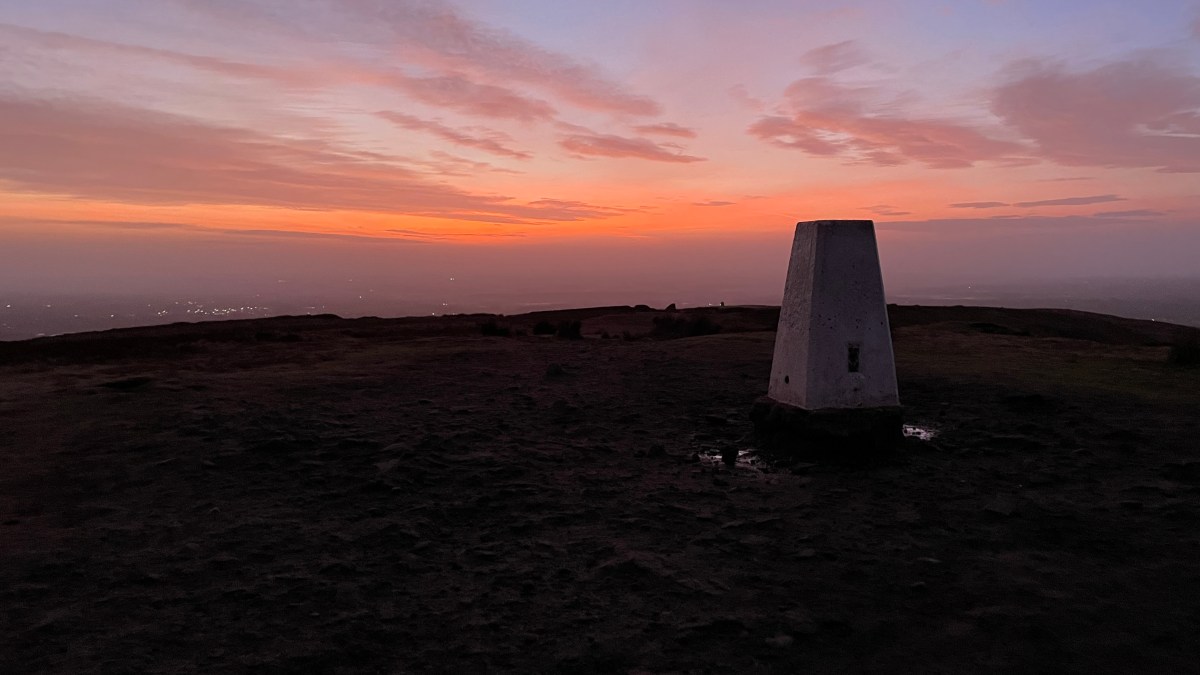
Header Image: A sunset view from the top of Nicky Nook. The post is one of the remaining trig points/pillars that used to be a common feature of hills across the UK.

We are wired for story | Working principles

An interesting thing happened in the UK last week – a television dramatization woke everyone up.

There’s been a long running scandal in the UK involving one of the worlds leading IT providers (Fujitsu), the Post Office, the Government and the people who run the fabulous, generally small, Post Offices known as sub-postmasters.

For those of you who aren’t from the UK, the Post Office might not be a concept you understand and it’s not at all easy to explain, but I’m going to try. At its simplest a Post Office is the place you go to send a parcel, but it’s a lot more than that. In many ways a Post Office is an extension of the government, but it’s also more than that. It’s more like the ultimate service desk. If you are a foreign national you can apply for residency here, this is also the place to exchange currency, the place for photo ID validation, they also allow you to put money into and withdraw money from hundreds of bank accounts, and the list goes on.

There are over 11,000 of these facilities across the country and everyone at some point interacts with a Post Office. I’d be surprised if there are many people in the country who don’t know where there nearest one is.

I’m not going to retell the story of the scandal here, there are far more knowledgeable and skilled people to do that:

What I am going to comment on is the power that has been unleashed across a nation now that everyone, at least it feels like everyone, has connected with the stories of the people involved.

Here’s the trailer for everyone outside the UK:

This isn’t a new story, the Panorama documentary listed above is from 2022, significant court cases date back to 2010, there was huge exposure of court cases in 2019. And, yet, none of this connected with the psyche of the British people in quite the same way as a dramatization of the story in which we follow the struggle of an unlikely band of sub-postmasters against the might of corporations and government.

This dramatization has connected with people in way that everything else hadn’t. The show has touched hearts in a way that statistics never did. I’ve followed this story for a long while and this dramatization changed me. Being transported into the midst of the situation created emotions that no news report ever did, which I find interesting, because the news reports were about real people.

What was the result: A petition has started requesting that the former head of the Post Office side be stripped of a CBE, a national honour, and (today) over 1 million people have signed it. The government is hurriedly rushing out statements about blanket exoneration of all of the sub-postmasters involved in the scandal. My own social media has been alight with people wanting to do something. A retired senior colleague decided that this was the subject that would make him return to LinkedIn, as just one example.

I don’t fully know why now, why this telling of the story, has blown everything open. What I do know is that we are wired for story and that is a signifcant part of the answer.

Why do we dread KPI, SLA, SLO, and any one of the statistical treatments that we face very day? Perhaps it’s because they don’t include any story?

Why does our heart sink when we see a set of bullet points on a slide? Again, no story, no metaphor?

If it’s stories that lead to change, why do we tell so few of them in the corporate world?

Even within the Agile/Scrum community, where a story is a method for gathering needs, I think we’ve turned something helpful into a monster by connecting it with the dreaded story point.

If you want to see someone change, connect them with someone who’s already made a change, why? The person who’s already made the change has a compelling story to tell.

I have a grandson who is nearly 3, he can tell me story after story. We’ve visited a revisted the worlds of Peter Rabbit, Chase and the Paw Patrol, the Gruffallo and Zogg to name just a few. His imagination is continually sparking stories, building farmyards and aligning other toys in the narative. We are wired for story.

Time to start practive your story telling.

Header Image: This is the tope of Helm Crag, also known as the Lion and the Lamb because of it’s appearence from the village Grasmere below.

Office Speak: One Stop Shop

Let’s take this one apart:

  • One Stop – the only place you need to go
  • Shop – where you get whatever you need

Brilliant – the only place I need to go to get whatever I need. Do I need to say more? Well…

Unfortunately, in office speak, the billing of these projects rarely meets the title.

The one stop shop reporting solution is great for certain types of reporting, but not great for others.

The one stop shop procurement solution is great until you want to procure something that wasn’t thought of by the procurement team.

I’ve been hearing this term for more than 20 years, probably 30 years. According to Google its heyday was in the early 2000s, so it’s been around a while. The things is, though, I can’t honestly think of a time when the promise has been delivered. That’s not a criticism, it’s meant as an acknowledgement of reality and the reality is people don’t want a one stop shop, their needs are rarely that simple.

Even Amazon isn’t really a one stop shop, it carries literally millions of different items, but even so, there will be times in your life when you will shop somewhere other than Amazon. There are times when what isn’t available on Amazon.

The one stop shop knowledge system is fine as long as your knowledge can be consumed by the system.

The one stop shop quality management system carries all the processes that the business follows, apart from the many informal processes that make the organisation work.

The other One Stop Shop that I’ve seen is the one that is so narrow in its scope as to make the term meaningless – “this is the one stop shop request system for my team of 5 people” or “this is the one stop shop reporting capability for the data held in this single tool.”

The great thing about most organisations is that there are so many one stop shops to choose from.

This is another one of those terms that has been through the full concept entropy cycle and now has little more than a background temperature value.

On a more possitive note; the One Stop Shop likely does carry the things that most people want, or most people are happy with, but they rarely cover the specific or the specialist. You might argue that the specific and the specialist isn’t important, but that’s often where the higher value is. Why isn’t there a one stop shop for clothes? Or one for watches?

Honestly, I’d rather people didn’t use the term, but I understand why they do. It’s a way of indicating to people that this is the place where you should start and probably has what you are looking for, I concede that “The Probably Have What You Are Looking for Shop” doesn’t sound anything like as snappy, perhaps they should be “Start Here Shops.”

The term has been with us for a long time, and I doubt it’s going to go anywhere soon.

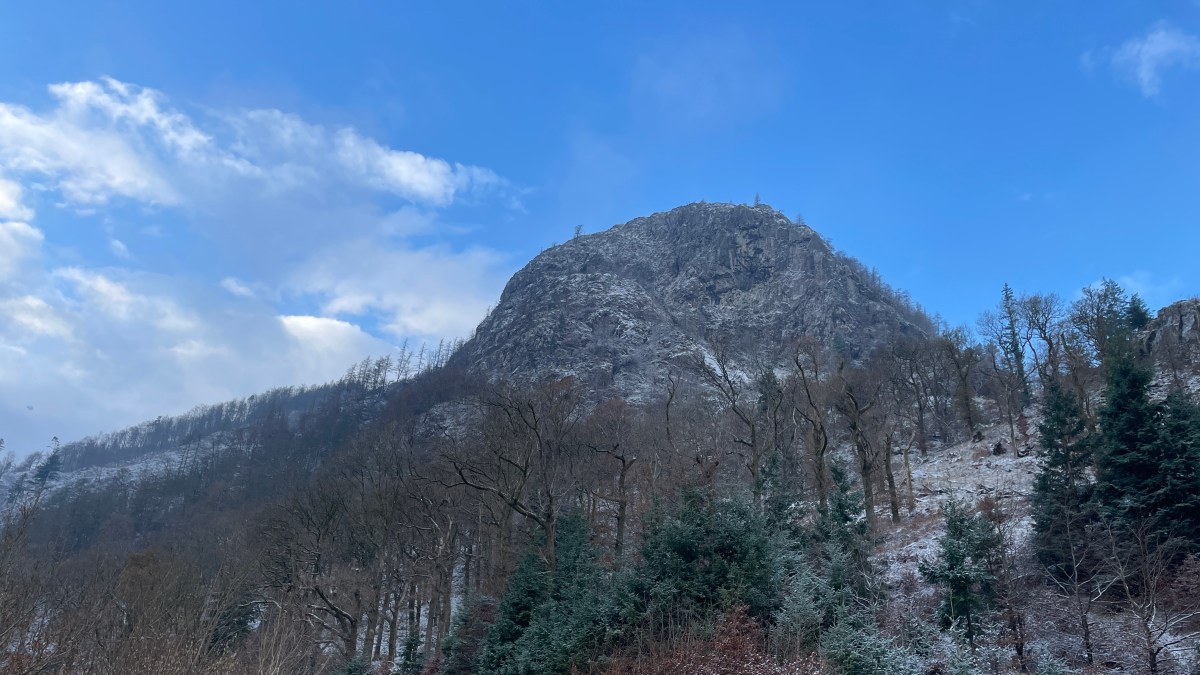
Header Image: This is Raven Crag that sits at the end of Thirlmere on a day when we enjoyed the first snows of the season. Unfortunately, many others got caught in the same snow and had to spend the night in church halls and cafes while the roads were cleared.

You can hear a smile (and a frown) | Working Principles

Working from home 100% of the time, as I do, most of my communication is voice only – sans video.

Even when I am on video my visual attention is on the material that is being presented, not on the faces of the other people.

Yet, still, I am conscious of the emotional countenance of the other people participating in the gathering. You can hear the shape of people’s faces.

This post is titled “You can hear a smile” for a good reason, it was also a deliberate choice to use the word “countenance.” I’m not saying that what I am hearing is whether someone is in high spirits, or even low ones, what I am hearing, and responding to, is the tension in the facial muscles. Try it sometime, you sound different when you smile, likewise, you can tell when you take on a frown.

Does it matter? Yes it does.

People are more likely to want to work with someone who smiles, we are attracted to a smile. Likewise, we are wary of a frown and a scowl.

A smile gives people the impression that you are confident and confidence communicates success.

Smiling can also reduce stress further enhancing your meeting experience. Surely low stress meetings are preferable for everyone. I don’t know whether the opposite of this is true, but I suspect that a glum, or angry, face will increase the stress in a meeting.

There have been times when I’ve not been looking forward to a meeting where I’ve made the conscious decision to smile through it. It wasn’t easy to wear a smile, but I was determined to do it and I’m sure that it made a difference to the positive outcome. Even a forced smile can help you to be and to remain positive.

You can hear all of that. Even if you aren’t conscious of it, you are hearing it and responding to it.

Try wearing a smile tomorrow, it will make a difference to your day.

“You’ll find that life is still worthwhile, if you just smile.”

Charlie Chaplin

“Among the things you can give and still keep are your word, a smile and a grateful heart.”

Zig Ziglar

I don’t know anything about the countenance of the people attending the meeting but not speaking. Personally I’ve never seen the point of attending a meeting into which I’m not going to contribute. I wonder how many hours are spent by people attending meetings? Perhaps that’s a subject for another day.

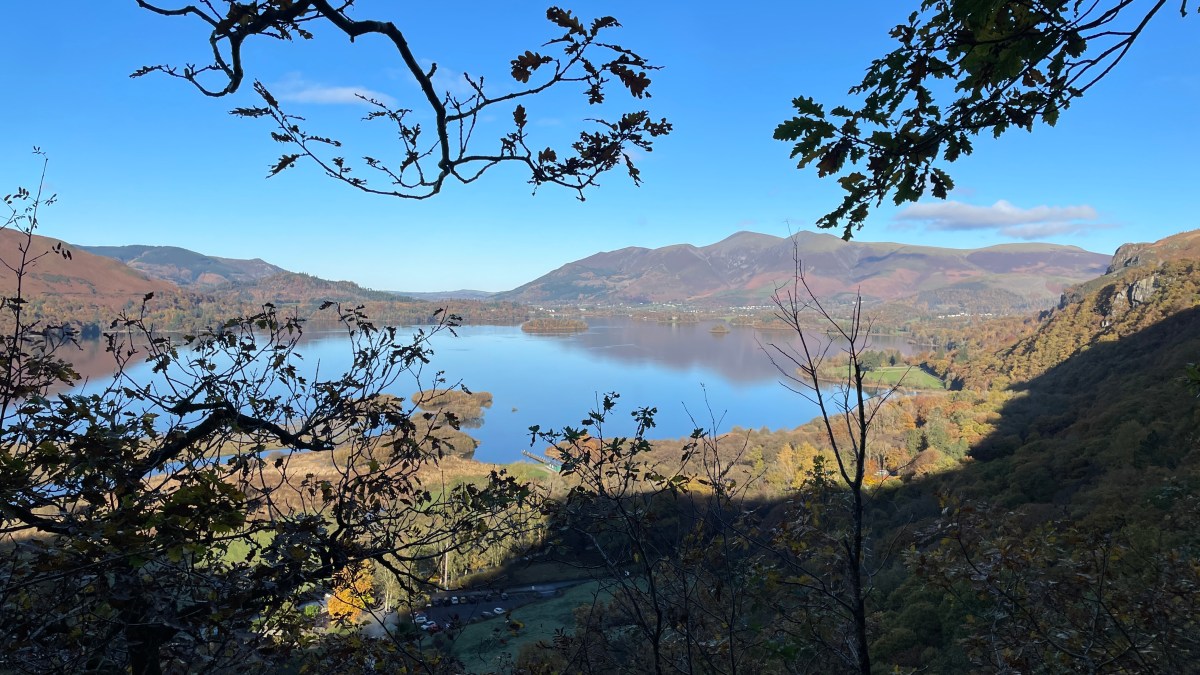
Header Image: This is the view across Derwentwater from just above Lodore Falls on a glorious calm sunny autumn day.

“Just” can be an extremely expensive word | Working Principles

I have a red flag word, it’s “just”.

When I’m in business conversations with people I’m watchful for its every use:

“We could just do…”

“Why haven’t we just…”

It’s often a warning word for someone saying something that they really haven’t thought through, or even have the skills to think through.

Hidden inside those four letters is a sealed box, and inside the sealed box is trouble.

“I just want a…”

Here is my warning to you, there is likely to be a very good reason why something hasn’t “just” been done. What may appear simple and straightforward can be hiding untold effort.

“They just need to…”

I remember as a child visiting a local beach and finding one end of a rope. The other end was “just” under the surface of the sand. So, I pulled it until I couldn’t pull it any longer without reaching the other end of it. I decided to dig some of the sand away, I couldn’t be that far from the other end, could I? I’ll “just” go a bit further I thought to myself, how long can a piece of rope be? These were the carefree days of childhood, so I continued “just” a bit further,then “just” a bit more, for most of the afternoon. It was lots of fun, but I never did get to the end.

I’ve started out on many projects that were “just” about getting one thing done, only to find myself diging my way along a beach with no end in sight.

“Why don’t we try just one more time…”

When I hear the word “just” I ask myself a question “why hasn’t someone just done this before?” If the answer isn’t obvious then I assume that there was a good reason for their lack of impetuous. I presume that others had the same information that I now have, and the ability that I have, and so there had to be something that they knew that I don’t yet know that held them back.

There are many times when what I see and what I know are different to what others had before them and so we are able to “just” do something, but there have also been an abundance of times when “just” has been a very expensive word.

If someone is trying to sell you a “just” ask yourself whether they are in a position to pay out on that commitment. What would they do if each “just” cost £100,000 or even £1M.

“Just” can be a sinkhole waiting to swallow you up, be wary of it.

Header Image: Halfway up the Old Man of Coniston are a set of quarry works. Some of them tunnel deep into the mountain. This is just the start of one of those tunnels on a very misty day.