Irreplaceable = Unpromotable | Working Principles

A version of this has happened to me multiple times in my career:

I get chosen as the technical person on a new project.

This new project is seeking to do something that’s never been done before in my organisation, and I start the project by researching the new topic and develop a plan. I love getting to know something new with all its intricacies and foibles.

The project is hard work but is successful and soon I’ve become known as the expert for this new capability.

Within a short while I’m receiving emails and teams chats from all around the organisation asking for my help. People are contacting me from every layer of the organisation and if I’m honest I love the notoriety.

It doesn’t take long for me to become the “go-to” person. In extreme cases I’m taking my work phone with me on holiday just-in-case I’m needed.

“Get Graham on a call I’m sure he’ll know what to do.”

“Graham, can we get 5 minutes of your time to work through this issue.”

All the while I’m becoming ever more proficient and seeing all sorts of opportunities for the new capability. I’m also seeing other areas where I could apply what I’ve learnt to really benefit the organisation.

It’s time, though, for others to start picking up some of the responsibility. I can’t be the only person in the organisation who knows how things work. I look around and realise that I’ve not invested enough in the skills of other members of the team, and they aren’t picking up their responsibilities. I’ve let the notoriety get to my head and tried to be the person who answers everyone’s questions and now I’m the only one that anyone asks.

Organisations love to build dependency and I’ve let myself become the one on whom that dependency has been built.

I see a project that I think would be a great next step so talk to my boss about a shift. They say, “Well Graham I think, for now, you are irreplaceable. on this capability.”

It’s then that some of my Dad’s advice comes to me: “If you are irreplaceable you are also unpromotable.”

How have a I let this happen again, haven’t I learnt from last time?

There is a lot in the human psyche that seeks out adulation, notoriety and the approval of others. There’s also something deep in many of us that means we want to do a good job. I’m not saying that’s any of that is bad, what I am pointing out is that these feelings come with a trap. Lean too much in and we become hemmed in. By becoming the “go-to” person we risk being stuck as that person.

Most of the time recognising the position that I’ve put myself in and making a few adjustments has been all that I’ve needed to do. There have, however, been times when I’ve needed to make more drastic shifts just to be able to get out from under the constraint of dependency.

If you are struggling to make a move perhaps it’s because you are too valuable in your current position. If you think you are irreplaceable, then remember that you are also unpromotable.

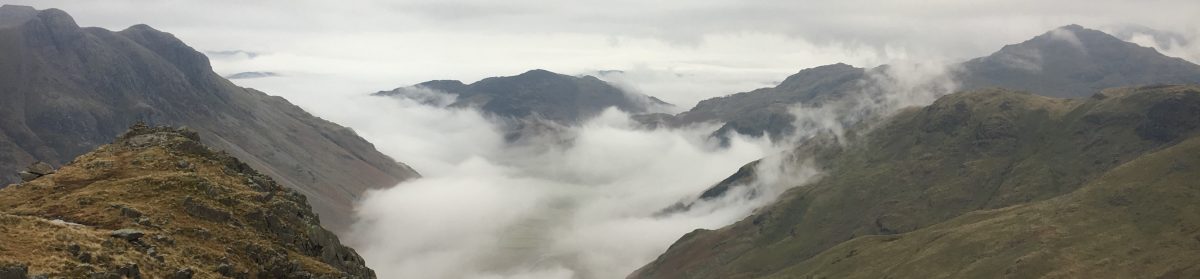
Header Image: We’ve had a little winter recently and it’s been great to get out into the calm and cold. This is the view across Grasmere from Loughrigg Terrace.


Goodbye Twitter/X

Yesterday I signed into my Twitter/X account, selected “Settings and Privacy”, selected “Deactivate your account”, clicked on “Deactivate” and then confirmed my actions.

Twitter/X is deactivated and will soon be fully deleted.

A few weeks ago, I removed the Twitter/X app from all my devices and logged out of Twitter/X in the places where I use a browser. I took this first step because I wasn’t sure that I’d really reached the end of the Twitter/X road

The break confirmed to me that the road was at an end.

Some of you may be wondering about my reasoning for leaving a platform I’ve used for many years. Perhaps you are wondering whether it’s a response to the current direction of Twitter/X or the current leadership team. Perhaps you are wondering whether I was becoming frustrated by the algorithms. Perhaps you think that I may be getting increasingly frustrated with the need for a paid subscription. There are aspects and elements of these reasons in my decision, but they aren’t the root cause.

My underlying reason can be summarised in one word – boredom.

I found myself asking the Marie Kondo question: “Does this spark joy?” I found it difficult to answer with anything more joyful than a “meh.”

What about all those connections built over the years, did they spark joy? Not really. All the connections that sparked joy are friends who I’m far more likely to connect with over WhatsApp or in-person.

Was there something that I had recently read that had sparked joy? Not that I could think of.

Following through with Marie Kondo, the conclusion had to be that it was time that I decluttered my online life and that Twitter/X was first to go.

Deactivating Twitter/X feels good.

Others may follow.

Header Image: A recent sunrise in the Lake District overlooked the Eastern Fells from somewhere near Dacre.

Details Distract and Detract | Working Principles

I’ve joined a meeting and we have 30 minutes to understand a situation and to make a couple of decisions.

A team has been working on understanding the decisions that are before us and come to the meeting armed with a PowerPoint deck.

They open the slide deck. My eyes immediately recoil from the detail shown.

There are shapes scattered across the page. Each shape contains words, acronyms and abbreviations in different sizes, directions and colours. Some of the shapes are inside other shapes, none of the shapes are aligned, not one of them is the same size as another one. Each box is connected to other boxes with straight lines, curved lines, dashed lines and coloured lines. Some of the lines do a lap of the page before happening upon a shape with which to partner. Other lines navigate through the middle of the boxes shapes and curving as they go. Each lines has a legend in different font sizes and various colours. It takes me a little while to digest the salad of acronyms and abbreviations.

Somewhere in the middle of all of this is a story, a meaning.

After 20 minutes we miraculously get onto the second slide where we are greeted by 25 bullet points in an 8 point font. The slim hope of finishing in 30 minutes evaporates.

Each bullet point is a fully crafted sentence with many caveats and conditions, but there doesn’t appear to be an order to the them. Each bullet stands next to another bullet to which it has little in common.

Somewhere in the middle of all of this is a story, a meaning.

Those of us who are trying to understand the situation are utterly bamboozled by the level of detail being displayed to us.

From what I understand of the situation the decisions that we need to make are quite straightforward but we are so distracted by the level of detail that the only thing that we can do is ask that the team schedule another meeting.

The team are frustrated by our lack of progress, the reviewing team are equally frustrated and take that frustration into their next meeting.

What I’ve described here is a caricature, an embellishment, an exaggeration, but not a massive one. Many will recognise this scene.

You may think that I’m blaming the presenters here, but those of us who are reviewers are as much at fault here. How well did we define the brief? Were the team clear about the purpose of the meeting before they attended? How many of the team have been trained in communication skills, or design?

Is the team expecting that reviewer to be there, the one who always wants to go digging, deeper and deeper. Have they previously experienced the embarrassment of not having enough detail and are determined, even subconsciously, not to go through that humiliation again.

Did anyone do a pre-review with the team?

We are taught in our academic years to be thorough. We are given assignments that a defined by length – “1,000 words on the life and times of a ping-pong ball”, or was that just me. In business the requirement is different, most of the time we want to get to decisions. I don’t need 1,000 words if 10 will help me make the decision. This, however, is where business is far more challenging. Take a quote by the very detailed Albert Einstein:

“Everything must be made as simple as possible. But not simpler”

What a great manifesto for so much of business communications but how do I know that I’ve gone too simple? How do I know that I’ve done enough to communicate?

Various organisations try to embed the idea of simplification into their working processes and standards. An example of this is the Amazon press release approach. The simple idea here is two fold, the first one being to get people to think with the end-in-mind, the second idea is one of constraint. If you can’t communicate it in a couple of pages at the level of a press release then there’s a problem.

I like the idea of giving people a framework that creates constraints on the level of detail, but it doesn’t work in every situation and many have a tendency towards detail and away from simplicity.

Back to Einstein:

“Genius is making complex ideas simple, not making simple ideas complex”

“If you can’t explain it simply you didn’t understand it well enough”

If Einstein is right and it takes genius to make complex ideas simply then we shouldn’t expect it to be easy. Genius is normally demanding work.

We live in a world where we can generate huge amounts of detail on seconds, but explanation doesn’t come from the detail. Explanation comes from understanding. Personally I find that metaphor and story are often much better ways of helping the meaning to come out. The best stories are the ones that we can tell in our own way because the storyline is simple and understandable.

We have to acknowledge here that for many there is an internal fight going on. I’ve already mentioned the fear of embarrassment from a lack of detail, but I think there’s more to it than that. Sometimes we want to demonstrate that we’ve put in the effort and detail shows effort in a way that simple doesn’t. There are times when we use detail to mask our lack of understanding, using it as a smokescreen.

The important thing is the principle, we should be aiming to simplify not to complexify. We need to fight against those inner urges to add detail and strive to remove the distractions.

Header Image: I thought I would use something complex to communicate simplicity just to show that detail can be glorious. This is the entrance to the Niyo Art Gallery in Kigali, Rwanda.

Dear Rwanda

This visit has been along time coming. In some ways it’s been 30 years in the making, but even once the decision was made it took another four years for us to feel your orange soil beneath our feet.

We have loved the warm, warm hospitality of your people and give thanks for so many hand shakes.

We have glimpsed your pain and heard a little of its impact upon you.

We have breathed in your verdant green hills and thousands of small farms.

We have loved exchanging a wave and a fist-bump with your beautiful children.

We have watched as you crisscross lake Kivu in your small boats.

We have watched the hippo and interacted with the elephant, puzzled at the height of the giraffe and the speed of the impala.

We have glimpsed the rhino, the leopard and the Nile crocodile.

We have been in awe of the power of the lion and chuckled at the mountain monkey.

We have savoured the taste of a truly fresh banana and ripe pineapple.

We have been surprised by the new taste of the tree tomato.

We have enjoyed cassava and Irish potato in the simplest of households with the warmest of people.

We have wondered at what can be carried up, and down, your hills on a bicycle pushed by one, two and sometimes three people.

We have marvelled at the ladies carrying a hoe on their head as if it’s the most natural place for it to be.

We have tasted your fine coffee and smelled the fragrance of the tea plantations.

We have enjoyed your vibrant fabrics and fine Sunday dress.

We have become used to sleeping with the gecko, almost.

We have been astonished by your ability to talk, actually talk, on a mobile phone in any and every situation.

We have loved listening to your intricate language and stumbled our way through the simplest of greetings. We are so grateful for your ability to speak our language.

We have experienced your fine new roads and the Rwandan massage on the dirt track.

We have watched, wide eyed, as your vast workforce of motorbike taxis going about their daily work on their red TVS Victor GLX 125s.

We have become used to explaining that we live near Manchester. We have come to expect “Manchester United” as a reply and been surprised by those who say “Manchester City.”

We have been surprised by our lack of breath before realising that we were at 2,500m, way higher above sea level than our lungs are used to.

We have spoken with some left paralysed by backbreaking work and heard a little of the impact that this has on their family. We have been thankful for those seeking to make a difference.

We have worshiped with a people of joy in the church and the workplace.

We have swayed and clapped with many choirs.

We have witnessed just how much can be done in bright yellow sliders.

We have given thanks for the work of a hospital and a polytechnic having lasting impact in the midst of a mostly rural community.

We are so very thankful for those who spent hours driving us and serving us in so many ways.

It will soon be time for home and I can’t say whether we visit you again.

Some have asked if we would be your ambassador as we talk with others, that I will gladly do.

Thank you for the adventure

Header Image: sunset over Lake Kivu, if you look closely you might spot a small boat.

Working Principles – Top 10

I’ve been writing the Working Principles posts for a little while now and really enjoyed the process.

Different ones have received different levels of engagement, with most of them provoking a response from someone. Thank you for the time you spend reading and responding.

If you’ve not seen all of them here’s a little bit of a Top Ten on the basis of the number of views for each post:

Repeat after me: “Meetings are work” | Working Principles

In which I wrestle a bit with an inner tension to regard work as the things that happen outside of meetings and a tendency to regard meetings as somehow not work.

We are wired for story | Working principles

We live in a world of data, but it’s not data that moves us it’s story that does that.

Optimise the System | Working Principles

There are many point-solutions to make individual parts of our working life more productive that result in little or no impact overall. We only get true change when we look at the whole system.

Complain to the Empowered, Complain with your Power | Working Principles

Few people complain effectively because people tend to complain to the wrong person. We should spend more time working out who has the power to change a situation.

“Expensive” is a definition of value not cost | Working Principles

When someone says something is expensive our tendency is to try to work out how to make it cheaper when we should really be trying to communicate the value.

Watch out for the autonomy thieves | Working Principles

People who take the initiative are highly valuable and yet much of what we do strips away peoples ability to take the next step.

Resist the urge for action | Working Principles

The need for action is a strong force and often takes us nowhere. By taking some time to consider we can often get to a better conclusion in less time.

We need to feel the urgency | Working Principles

Without a stimulus things don’t get done. In a busy world we need to feel an urgency.

You can hear a smile (and a frown) | Working Principles

Even if people can’t see you, they can hear your demeanour. People who smile project that smile in their voice, people who frown likewise.

“Just” can be an extremely expensive word | Working Principles

“Just” is a bit of a trigger word for me. Rarely is something “just” anything, behind the four letters lurk all sorts of trapdoors.

Notable Favourites

This list is missing some posts that I expected to be in the Top 10 viewed and as this is my blog I’m going to add them in here as my recommendation of ones you should look at:

I’ve still got plenty of Working Principles idea, some of which will be coming soon.

Header Image: The bracken is brown and the wind is chill. This is the view from above Watendlath looking down onto the hamlet and tarn from the Dock Tarn path on an early autumnal day. To the right is High Seat, in the distance is Skiddaw.

Concept of the Day: Continuous Partial Attention

I am sat at home and the TV is showing a programme that I like, but I’ve seen it before. I’m also engaged in general chit-chat with my wife. I occasionally look down at my phone as various notifications pop-up. Then my watch vibrates and tells me that it’s time to stand up. I am suddenly conscious that my wife is looking at me expecting a response. I know where the conversation was going, but somewhere in my automated switching between stimuli I’ve lost the thread and it’s floating away. This is where I have a choice, I can try to style my way out of the situation and hope that a chuckle and a smile is enough to get things going forward in the hope that the thread will return, or I can own up to being distracted again, take the consequences of this revelation, and continue watching the TV, engaging in the chit-chat and flicking through my phone. Another possibility is that I apologise for being a poor husband turn the TV off and put the phone out in the foyer and seek to engage fully in a conversation with my wife.

This is the world that we live in. This is the world of continuous partial attention.

Something interesting pops up on my watch, it’s too long to read on the phone so I pick up my phone to investigate a little further. I see that it’s another report on the latest celebrity news so move on quickly. While I have my phone in my hand, without thinking, I open a social media app, death scroll my way through it. Then switch on to another social media app and do the same. Everyone is a member of at least four social media apps right? I scroll through each one absent-mindedly. Almost automatically I move on to a couple of news apps and get depressed by the world. Finally I take a quit look at the stock market and check who’s up and who’s down, unfortunately for me today is a red day.

This is the world that we live in. This is the world of continuous partial attention.

I am sat on a train trying to write a blog post, this one, I’m making good progress when a chat from a colleague pops onto my screen. While I’m responding to the message I notice the person on the other side of aisle from me. They are a tall athletic looking individual cuddling a tiny white fluff of a dog while, at the same time, running WhatsApp across three different phones. He’s jumping from one to another as we travel, switch-scroll-type-switch. My watch vibrates and it’s a friend asking if I’m available for the usual Wednesday breakfast catch-up. I look back at the blog post and wonder I was up to.

This is the world that we live in. This is the world of continuous partial attention.

You might be reading this and thinking that I’m describing multi-tasking and perhaps you are right, but I like the differentiation of Continuous Partial Attention as something diffeent.

Linda Stone, who first publicized the term, puts it like this:

Continuous partial attention and multi-tasking are two different attention strategies, motivated by different impulses. When we multi-task, we are motivated by a desire to be more productive and more efficient. Each activity has the same priority – we eat lunch AND file papers… At the core of multi-tasking is a desire to be more productive. We multi-task to create more opportunity for ourselves – more time to do more and time to relax more.

In the case of continuous partial attention, we’re motivated by a desire not to miss anything. There’s a kind of vigilance that is not characteristic of multi-tasking. With CPA, we feel most alive when we’re connected, plugged in and in the know. We constantly scan for opportunities – activities or people – in any given moment. With every opportunity we ask, “What can I gain here?”

Time Management Continuous Partial Attention — Not the Same as Multi-Tasking – BusinessWeek (archive.org)

I spend far more time in Continuous Partial Attention than I do multi-tasking. I’m much more likely to be switching to fulfil my desire to be in the know, on the pulse, all caught up, connected. When I sit on my sofa in an evening with multiple screens, usually at least three, I’m not seeking to achieve something on each one, I’m quietly urging each one to be bring me something interesting.

This isn’t good for us. We aren’t built to process all of the inputs that are being fired at us every day. We are meant for a simpler life.

The Wikipedia article on Continuous Partial Attention highlights some of the areas where this behaviour is probably not good for us. I don’t have the attention cycles available to go and check, so I’ll let you link over there and see whether it makes sense. If nly half of what is written there is true we have a lot to be worried about.

Header Image: This is the view along the length of Thirlmere whilst descending Steel Fell after a day of two halves weather wise.

Reliving the Corporate IT experience on the train?

It’s been a strange morning.

It started with an early alarm call so that I could get to the railway station in time for a meeting down in London. I used to do this trip regularly but it’s been a while, so long that I felt like a novice. The timing from bed to being seated on a travelling train used to be highly tuned with very little hanging around. Today I was stood on the platform 25 minutes early wondering what I was doing there.

The journey to London is only just over 2 hour according to the timetable. This makes for a long day but not a ridiculously long one. I’d rather do a long day than spend multiple nights in a hotel. I like my home comforts and never sleep that well in a hotel bed, besides, I needed to be back to go to the theatre on the following evening.

Sat on the cold platform with my coffee and pains-au-raisin all seemed good (why are station platforms always a few degrees colder than anywhere else, and why are platform benches made of metal?) I met someone I knew and we chatted for a while before the train arrived. It was 11 mins late, but we’ve learnt to regard that kind of delay as normal for this trainline.

Resting comfortably in my seat we travelled through the Lancashire countryside and into Cheshire and on to Staffordshire. Warwickshire beckoned on what was a misty autumnal morning. The green of summer was starting to give way to the golden colours of the new season.

The first hour was sailing along and it felt like my plans for the day were going to work out just fine.

I was admiring the light shining through the mist when we started to slow down. “Not good” I thought. Eventually we came to a complete stop somewhere in the middle of the country. I couldn’t tell you exactly where because this also happened to be somewhere with little phone signal and the wifi was being hammered.

Eventually the Train Manager came on the intercom with an ominous “ping-pong”.

“There is a technical fault with the train and the driver is currently talking to signaling for advice. I’ll keep you informed when we know more. Hopefully we will be on our way soon.”

“Ah well,” I thought, “I’ve got plenty of time before my meeting.”

This is where it all got very Corporate IT.

The next update from the Train Manager was that the driver was going to “turn the train off and back on again” this would apparently take 10 minutes and the lights would go off for that time.

“You need to turn it off and back on again?” 🤦‍♂️

How many times has a Corporate IT Service Desk given someone that advice? It happens so often that it’s become a running joke. If you are really smart you don’t even bother calling the Service Desk until you have turned everything off and restarted it all.

(There’s a reason that you are told to do this and it’s probably not what you think it is.)

The impact of restarting an application or even a PC is minimal, it’s annoying for the individual concerned, but a train? I couldn’t decide whether this was their way of explaining the process in a simplified way so that everyone kind of understood, or whether that was really what was going to happen.

True to their word and after a period where the lights went out, the Train Manager was back on the intercom. Unfortunately a reboot of the train hadn’t fixed the fault and we were going to run in “safe mode” to the next station. The image in my mind was of the Windows xp safe mode screen, which was etched on my memory from many a long evening trying to fix an issue.

The next station was only a few minutes away and we’d then have to get off the train and wait for the next one. I’m assuming “safe mode” meant that we were traveling more slowly than normal but it was hard to tell.

As you would expect the next train was itself already late. It had been waiting for us to get going and it was rammed full. I could have chosen to wait for the next one a few minutes later still, but I decided that standing for an hour was a safer option.

I made it to my meeting an hour later than planned having stood by the carriage doors with several other bored screen obsessed, non-communicative, passengers all of us in the same predicament.

When I got to my my meeting I told the others about my experience. One of the other attendees told us how his car did the same thing and required the same treatment from time to time. “They tell you to reboot your car?” 😲

Some people are very worried about the robots taking over and subjugating their human masters. I don’t think we have too much to worry about just yet. If they do become too dominant we’ll just turn them off and back on again, that should sort it 😉

Header Image: Not today, but a recent morning view on my regular morning walk near my home.

We need to feel the urgency | Working Principles

Are you a planner?

Do you prefer the last minute?

What makes you respond with urgency?

I was recently out on my morning walk when I stopped for a chat with one of the locals who likes to sit on a bench near my house. He’s an interesting character so when he started to tell me about some people “sleeping rough” in the fields nearby I didn’t think too much of it. Sitting there on the bench he theatrically described where they were and how he’d gone over to them earlier that morning, woken them and told them to “Get off my #*&%ing land!” He looks quite scary but they’d simply rolled over and ignored him.

I was planning on going that way so would take a look as I passed; out of curiosity.

Sure enough, as I crossed one field into another, there on the top of a small hill were a set of sleeping bags and other detritus. “That’s interesting” I thought and left them to it, it was early and they were asleep. Also, there were more of them and I’m not as scary as my friend from the bench.

They didn’t look like people who were homeless or in distress. Where they were camping was out in the open on an exposed hillock, not where you’d sleep if you were sleeping rough. They didn’t have tents or bags of belongings. It looked more like local kids making the most of the last few days of the summer holidays.

A few days later I was back out doing my walk and wondered to myself whether they were still “sleeping rough.” I was also hoping that they had left the field in good order. Sadly, there was rubbish spread across the area where they had been. Annoyed and saddened I looked around pondering what to do when I noticed a plastic carrier bag with the branding of the nearby convenience store.

That simple plastic carrier bag sparked an urgency in me. It was time to get this mess tidied up, an urgency that eventually resulted in me filling the carrier bag and creating another bag out of a fleece blanket that had been left behind. The spoils in hand I headed back home depositing the rubbish in a public dustbin on the way.

Why did I act? What was it that made this situation urgent? Why couldn’t I leave this mess for someone else to tidy up? Why did I feel an urgency to sorting it out?

All of the definitions that I could find for urgency include words like: swift, immediate, pressing, important, speedy, action.

Plenty of emotion in those words.

The litter made me feel an urgency.

And yet, in business we have a habit of forgetting the emotional aspects of urgency.

We create statistics that tell people that we are 5% behind the progress that we should be making.

We send people emails from senior people imploring them to fill in the latest survey with logical reasons why they should.

We use cascade techniques expecting each individual further along the line to care about the message that they are delivering.

We expend huge amounts of effort communicating facts that leave us cold and unmoved.

Is there any wonder that they don’t move us let alone move us with urgency?

I didn’t reason myself to urgency on that hillock, I felt annoyed, and the annoyance gave me an urgency. No statistical analysis changed my attitude.

If we want people to change, to act, we need to work out how me make them feel the urgency.

Some of the biggest challenges of our day, climate, war, are urgent. It’s time for us to work out how we feel that urgency.

People who bring transformative change have courage, know how to re-frame the problem and have a sense of urgency.

Malcolm Gladwell

Cover Image: From a morning walk a few months ago. This is the field where the “rough sleepers” were.

“Expensive” is a definition of value not cost | Working Principles

A few years ago, I was in a cafe where they roast their own coffee. This place is a special place for us.

While we were sat in the garden with our freshly brewed coffee the owner of the cafe came over for a chat. We talked about the great service they’d given us during the COVID lockdowns delivering wonderfully tasting coffee to our house. This led to a conversation about other places where we’d ordered coffee. He asked about a roaster that he knew which was nearer to our house and whether we’d ordered from them. I told him that I’d looked at their coffee, but that “it was expensive.” His reply to me was something along the lines of “so they didn’t manage to sell you their story.” It took me a few seconds to respond to him then what followed was a master class in the difference between cost and value.

When people say to me “that’s expensive” I return to that conversation and remind myself that what people are stating isn’t that something costs too much, what they are communicating is that they don’t see the value.

“Price is what you pay. Value is what you get.”

Warren Buffett

Value comes in all sorts of shapes and sizes but is always defined by the buyer. There are lots of different aspects to the definition of value and it’s rarely about one single thing.

Sometimes the value is seemingly straightforward and without differentiation – a litre of E10 petrol from the local supermarket will get me just as far as the litre from the motorway service station but one will cost me significantly more than the other. There’s a cost difference but the functional difference is negligible. Easy?

Sometimes the value is situational – the value of the expensive service station petrol changes if I’ve been stuck in traffic and don’t have enough fuel to get home. It’s then that I’m willing to pay whatever it takes to get me to where I need to be.

Sometimes the value is non-functional – in a world where there is little functional differentiation suppliers love to build non-functional elements like point-schemes and loyalty rewards. It’s amazing what people will do for points. I wonder how many people drive past one refuelling station to get too another “for the points”. There are many non-functional elements, perhaps it’s the ethics of an organisation, or the way that their app works, perhaps the people serving you are nicer, or the shop is cleaner.

At times you get what you pay for – there’s a proverb that says “buy cheap, buy twice” which I’ve certainly experienced. I do a lot of walking, and I’ve learnt over the years that the cheap boots aren’t up to the job. You won’t see a professional workman with cheap tools, they aren’t worth the effort.

Sometimes the value is mostly emotional – I don’t buy coffee beans from a small independent roaster hundreds of miles from my house because they make more litres of coffee than cheaper brands. I buy it because I like the taste and the reason I like the taste has a lot to do with the feelings surrounding the associated memories. It’s an emotional buy, there is a limit to how far I’m willing to go for an emotion, but I will go quite a long way for a taste.

As times the value is historic – there’s an electronics shop not far from my house where the service has been so poor, in the past, that I’m not going back again. It’s probably 10 years since I’ve been in and everything could have changed, but my history is preventing me from reliving past experiences. There are other places where I’ll return because the value is always good.

“A product is not quality because it is hard to make and costs a lot of money, as manufacturers typically believe. This is incompetence. Customers pay only for what is of use to them and gives them value. Nothing else constitutes quality.”

Peter Drucker

There are all sorts of values that we can associate to something. Sometimes the values add up to a story that feels expensive, at other times we are willing to pay more to get the value.

Next time someone tells you that you are too expensive, you could cut the cost, but the outcome for both of you will be so much better if you trying to work out how to increase the value.

“The reason it seems that price is all your customers care about is that you haven’t given them anything else to care about.”

Seth Godin

Header Image: This is the nearby Cockerham Sands on a glorious evening with birds flying everywhere.

Resist the urge for action | Working Principles

I recently entered a long thin room at a conference where a few chairs were set out in rows across the narrow part of the room. There were 30 or 40 chairs, and they were already spreading down the room.

Several people were already in the room when the organiser arrived. He looked at the room and said something like “We are expecting more than this, it’s going to work much better if we set the room up the other way around. If you are able, could you help, please.”

With those words everyone already in the room and those arriving sprung into action moving chairs. I happily joined in by taking some chairs to the far end of the room to start some new rows, other people stood up and made other new row where they were, some did little more than turn their chair, and one or two around them through, 90 degrees so they were facing a different wall.

All this time the organiser of the meeting was trying to get people to work together to build longer rows across the full length of the room, with little effect.

Some stewards were bringing in extra chairs which was taking a while because they needed to navigate through from one end of the room, which was now full of randomly placed chairs, to the other, where there were far fewer chairs. It didn’t help that some of the chairs they brought in were broken and needed to be taken out through the same maze of randomly placed seats.

Everyone was expending effort, actively participating in the mele, contributing towards the goal. I’m sure everyone felt great about their involvement in the experience, there’s something very uplifting about being helpful.

The result was a hodgepodge of rows with significantly more seats on the side of the room where they had been initially and only a few around where the speakers where in the middle of the length of the room.

I suspect that two or three people who knew what they were doing could have sorted the whole thing in about half the time and with a significantly more elegant outcome.

This need for action is seen in businesses across the globe every day. Enacting something is better than doing nothing, isn’t it? In my experience quite often, the answer is “no.” I regularly find myself in situations where a bit of thought, a moment of planning, a conversation or two would have significantly reduced the time to complete and improved the outcome.

Yet, the need for action is a strong one and I’ve learnt to accept that sometimes you just need to let people do something, anything. I’m sure that there are times when people schedule a meeting just to be able to log some action. Another method I’ve used has been to create a harmless task for the masses to do just to keep them busy while reviewing a situation for the best approach. Asking people to fill in a tracking spreadshet is perfect for this. This is, of course, wasted effort. It would be much better to resist the urge to action, take a breath, think, and then act.

There’s a quote that is often ascribed to Victor Frankl, almost certainly inaccurately as it can’t be found in his writings, but I like it all he same:

Between stimulus and response there is a space. In that space is our power to choose our response. In our response lies our growth and our freedom.

We need to learn to resist the urge to fill the gap with action and instead take the power and use the space to think through the next steps. Utilising the gap might feel uncomfortable, but it will lead to a better, speedier, answer.

Header Image: This is the view from the top of High Cup Nick having walked up the middle of High Cup Gill to get here. This walk has been on my list for a long time, and it didn’t disappoint.

Our expectations shift with each new wonder that we see

I was recently in a cafe doing some work when a couple in their twenties came and sat at the table next to me.

They both retrieved a laptop from funky bags and open them onto the table.

A conversation about the voluminous size of the portions in the branded refreshment establishment followed.

I was trying to get some work done and not listen, but it was difficult.

One sentence caught my attention though – “I can’t work on 4G, but I get 5G so rarely.”

My immediate reaction was “What? You can’t work on 4G? What work are you doing?” followed by a feeling of “I’m old.”

I remember the day when a bump in speed from 14.4Kbits to 28.8Kbits or even the dizzying heights of 56Kbits required a new modem and a way to justify the significant expenditure. Each one of those jumps was a wonder to behold, enabling us to download 1024×768 pictures so much quicker. Universal high speed mobile communications were reserved for the characters in sci-fi films.

Now, here I was sitting in a cafe, surrounded by mobile communications devices and the 30Mbits that we typically get from 4G in the UK isn’t good enough?

We’ve moved to a position where bits fly through the air at a rate 535 times higher than the highest speeds I could get down my phone line at home are no longer good enough for some people’s work needs? The marvel from 2014 that is 4G is on the road to redundancy.

How our expectations shift from wonder to expectation, from expectation to obsolescence.

This isn’t one of those “they’ve never had it so good” posts.

This is me marvelling at our ability to adopt and adapt, to see something new and to build employment and commerce around it.

This is me looking at the huge changes that are coming our way and cheering on the future shapers and modelers.

This is me choosing to look away from the gloomy side and towards a hopeful view of the future.

This is me wondering at the work that could require more than 4G and what that could be.

It won’t be a future that looks anything like the ones people are currently envisioning, that’s almost certain, but I do hope that it’s a good one.

I’ll finish with another story of wonder.

We were recently on holiday in another country and were making use of a hire car. We weren’t planning on doing many miles and had chosen the most basic car that we could, which turned out to be a Dacia Sandero with a few years on the clock.

As I got into the driver’s seat, I noticed a USB socket. “Great” I thought “I wonder if I can plug my iPhone in.” Which, of course, I did having reached into the small bag of cables that I carry with me on holiday and retrieved the appropriate combination of ends.

Instantaneously my iPhone asked me if I wanted to allow the device to be connected, I clicked “yes” and there on the car screen popped AirPlay from my iPhone. Another 10 seconds later and I’ve searched for a nearby cafe on a beach using Google maps and we are on our way with satellite imagery directing us to a joyous table of tapas in the sun.

So many wonders to list if you look. The marvel that is USB becoming truly universal for so many different connectivity requirements. The phenomenon that is free global satellite navigation which knows about the tiniest of roads on a small island. The sensation that is a mobile network that allows me to connect instantaneously and at local speeds (for a small roaming fee, but we can overlook that, it was less than the cost of one of the tapas plates.) The geneous that is a touch screen. The wonder that is the GPS network which always knew where I was. I could go on, but I won’t, hopefully you get the point.

I posted about the cafe conversation at the star this post on Threads and it got a few comments. If you would like to reminisce the days of the 14.4Kbits modem, or the negotiation required to use the phone line, that’s the place for you.

Header Image: This is St Ouen’s Bay, Jersey where you’ll find a very nice cafe serving wonderful tapas right next to the beach.

Repeat after me: “Meetings are work” | Working Principles

It’s a work morning and I open my calendar to see what the day has in store for me. It’s heavily littered with meetings, and I wonder to myself “when am I supposed to get some work done?”

Later on that day a meeting, amazingly, finishes early and I quietly vocalize to myself “Great, now I can get some work done.” I look down at my list of tasks and realise that my brain is too addled to be able to get anything constructive done in the fifteen minutes that I have.

I’m not a fan of meetings, perhaps you already guessed, I’m in good company:

Meetings are by definition a concession to deficient organization. For one either meets or one works.

Peter Drucker

A committee is an animal with four back legs.

John le Carre

If you had to identify, in one word, the reason why the human race has not achieved, and never will achieve, its full potential, that word would be ‘meetings.’

Dave Barry

I’ve searched all the parks in all the cities – and found no statues of Committees.

Gilbert K. Chesterton

What is it about meetings that make us feel this way? Why doesn’t a gathering of people around a subject make us feel fulfilled, energised? Why would I rather be writing a document?

What is it that is so broken here?

Is it the way that meetings are run that is broken? Or perhaps it’s my attitude, others appear to have an enthusiasm for gatherings that I can’t muster? Or maybe it’s a collective problem that we all need to own our part of?

Let’s take a look at a few more quotes:

“The magic to a great meeting is all of the work that’s done beforehand.”

Bill Russell

Let’s start by thinking about the work that happens before a meeting.

Most of us can tell when someone is winging it and most of us are rightly frustrated by those meetings where a lack of preparation wastes everyone’s time.

So many good meetings are created in the hours before the session.

I’m currently doing a series of meetings which are really training sessions. These meetings are being recorded because we expect people to go back over the content which is motivating us to be prepared.

Those meetings feel so rich.

“If we have a clear agenda in advance, and we are fully present and fully contributing, the meetings do go much faster.”

Unknown

We live in a very distracted world and no more so than at work. We apply half our attntion to many virtual meetings and the result is that things that could happen in ten minutes take twenty, thirty, forty minutes.

Despite what you think, you are not enabled for multi-tasking.

I hope that’s we’ve all attended meetings where we’ve been in the zone, fully present, and felt the exhilaration of getting something done that perhaps you didn’t think could be done, or would take a long time to get done.

“The longer the meeting, the less is accomplished.”

Tim Cook

In our virtual working world it’s so easy for people to call a meeting and pick the length. It’s a truism to say that the time taken for a meeting grows to meet the time available. How many 1 hour meetings should have been 30 minutes? How many 30 minute meeting should have been an email? Meetings rarely finish early while I’m sure much of that is to do with people’s attention to the meeting sometimes it was just poor meeting management.

I’ve worked internationally for over 30 years and have learnt to recognise that timekeeping differs around the world. There are some cultures where time appears to be more liquid than we expect in the UK.

In every organisation there are individuals that have their own view on the meaning of an hour and a minute. I make no apology for my reputation as a fierce timekeeper. Far too many meetings have all of the energy sucked out of them by the weight of time.

The thing that is regularly going through my head in these situations is the cost-benefit analysis of the meeting. Yet, there are times when I come out of a meeting and know that the value of the gathering was way higher than the hours spent, that things were achieved that would have taken days to get done in any other way.

“Great things in business are never done by one person. They’re done by a team of people.”

Steve Jobs

This is the reality of business, it’s about the team and teams need to communicate. We have many different ways of communicating but nothing comes close to the meeting. While so many meetings are frustrating, time-wasting, energy sapping, distracted, sinkholes for precious, never to be recovered, minutes there really is no replacement for them. When they are well-prepared, engaging, focussed, enlightening gatherings they can be magical places where real work gets done.

I am trying to change my attitude and to remind myself that meetings are work – but I have a long way to go.

Header Image: This is a sculpture called the The Praying Shell which overlooks Morecambe Bay near to where 23 Chinese cockle pickers tragicly died in 2004. The sculpture was envisioned before the tragedy it’s become something of a symbol for it.