Rydal and Loughrigg Terrace Circular | Graham’s Guides

An all-year-round favourite with glorious views and plenty of other interest.

Graham’s Walks📌
Distance4.3 miles
DifficultyModerate
Map🗺
GPX📁
Graham’s Cafe?No
Swim?Yes

We start this walk from the Pelter Bridge Car Park at the southern/easterly end of Rydal Water near to the village. Pelter Bridge is one of the Lake Districts smaller places to leave your vehicle and can often be full. As an alternative I’ve included instructions when starting from either White Moss Carp Park or Rydal Water Car Park. These car parks are bigger but can also get full.

My walking guides tend not to take you step-by-step through your journey, I prefer to give you an outline of where to go, then make the mapping information available. If you just have the words below I can’t guarantee that I haven’t missed something important.

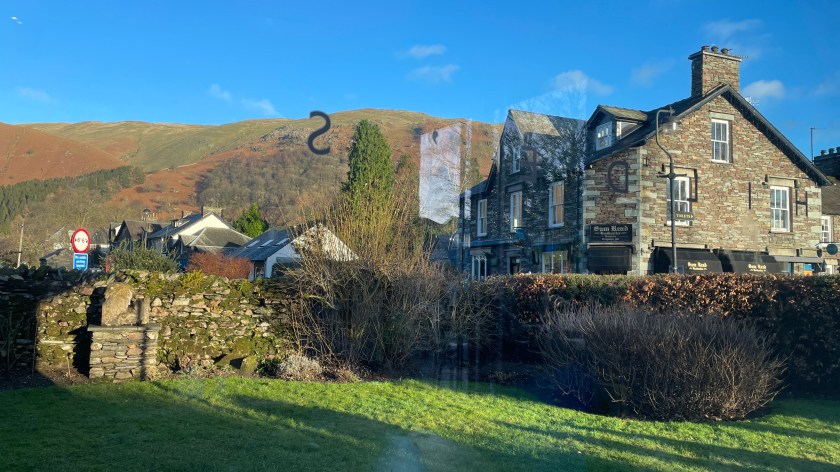
The first part of this walk takes us along the former quarry tracks up to Rydal Cave. Simply head up the road that you’ve just driven on to get to the car park and carry on once you get to the gate at the end. Just after the gate you’ll get your first view across Rydal Water (the header image). You may, at this point, start to feel something poetic building inside you, if you do you wouldn’t be the first. The village of Rydal was the favourite home of the acclaimed poet William Wordsworth, his family, and his sister Dorothy, who deserves far more acclaim than she receives.

Dorothy Wordsworth’s Journals, many written in Rydal and Grasmere, are wonderfully poetic:

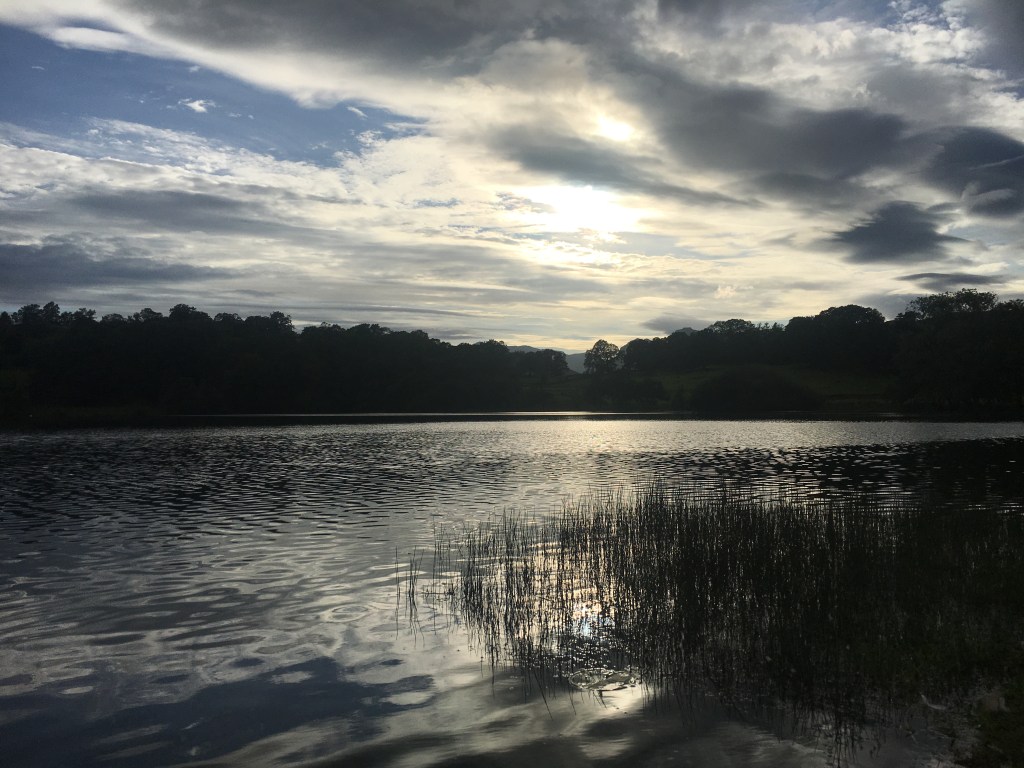
After tea we rowed down to Loughrigg Fell, visited the white foxglove, gathered wild strawberries, and walked up to view Rydale. We lay a long time looking at the lake; the shores all dim with the scorching sun. The ferns were turning yellow, that is, here and there one was quite turned. We walked round by Benson’s wood home. The lake was now most still, and reflected the beautiful yellow and blue and purple and grey colours of the sky.

Dorothy Wordsworth

(I don’t know when Rydale became Rydal, other than to note it was at some point after the early 1800s which is when Dorothy was writing.)

You’ll see from this vantage point that there is a path running alongside the lake, we are coming back that way, for now we are going to head up to Rydal Caves keeping left on the higher path.

There is one very famous cave directly on this route which you can go into with ease, but before that there are a few smaller caves which are more challenging to get into. One of the smaller caves used to have a drum kit inside it which sounded amazing. It’s been a while since I’ve been in that cave, as it now requires a rope to get in, so can’t confirm whether the drum kit is still there.

These caves are the result of slate mining and as you work your way along this lane and into the vast cathedral space it is worth remembering that this was a place of noisy, dusty, dangerous toil.

The Lake District is littered with various mines and quarries, the area wouldn’t be the same without them. This is a land shaped by people.

Having stepped inside the large cave and taken in the view and the acoustics, it’s time to carry on along the side of Rydal Water towards Grasmere. I love the views of Nab Scar towering over the diminutive Rydal Water from this elevated position.

As you near the end of Rydal Water there is a fork in the path where you should continue to take the higher option. This path will take you around the corner onto Loughrigg Terrace with elevated views across Grasmere including Helm Crag (also known as the Lion and the Lamb) and Dunmail Riase (remembering the last king of Cumbria who is reportedly buried below the cairn near to the top).

Carry on along Loughrigg Terrace to the end and into the woods. You need to go through one gate at the end of the path and then a slight right through another gate into Red Bank Wood. This is a gentle walk through established trees marking the seasons by their attire.

Eventually you’ll reach a cottage next to the road between Grasmere and Loughrigg Tarn. At the entrance to the driveway for the cottage there is a path to the right which cuts back through the woods heading downhill and on to the lakeside path below Loughrigg Terrace. The beach here is a great place for a swim but can get a bit crowded.

On leaving the beach you’ll come to a wooden footbridge across the stream. You have a choice here, the route I’ve provided takes you along the southern edge of the stream this path can be flooded when the river is high, but rarely. It can also be a bit uneven. If you prefer something a bit more even, you can cross the bridge take a right hand turn on the other side and follow the path along the other side of the river. Both paths meet at a metal bridge.

The metal bridge is where you’d join the route if you’ve parked at either White Moss or Rydal Water car parks.

From the metal bridge head through the woods up the hill until you reach a gate. Through the gate turn left and along the path by the wall. You should be able to see Rydal Water ahead of you. Walk along this path all the way to the other end of the lake. There are several places to swim along this part of the route, it’s also a great place to practice your skimming, there are plenty of flat stones available.

As you near the end of the lake you’ll notice the gate that you came through on your way to the cave higher up on your right. We are going to go through the lower gate. This route takes you through some more woods and along the river where you’ll get views of the boathouse which is a classic Lake District photo opportunity. Soon you’ll come to a footbridge, don’t go over the bridge but head right and up the hill through some woods and onto the car park road. You’ll reach the car park road via a small gate; the car park is down the hill to your left.

There are several variations to this walk:

As hinted a couple of times you can start this route from White Moss Carp Park or Rydal Water Car Park. There are a few reasons why you may choose to do this, the first being parking. The second is access to a toilet which can be found in the woods between White Moss and Rydal Water car parks. The third reason being access to refreshments; there is normally a pop-up coffee van by the side of the stream near to the toilets.

You can extend the walk a bit near the end. Instead of turning right up onto the car park road you can turn left across the footbridge, from there you can cross the road into the village. In the village there are several places of interest.

Almost directly opposite the exit from the footbridge is Dora’s Field which is full of daffodils in the spring. The daffodils were planted as a memorial to one of the Wordsworth’s daughters who died aged 43 of tuberculosis. Dora’s Field has a gate into the church grounds, both the grounds and the church are lovely with even more Wordsworth associations. Up the hill from the church is Rydal Mount where the Wordsworth family lived for a while.

As you go up the hill, before Rydal Mount there is an entrance to the ground of Rydal Hall. The hall is a Christian retreat, but the grounds are open to the public where there are several walks and gardens to explore. Within the ground is one of the Lake District’s most photographed waterfalls with The Grot alongside it. The Grot is a great place to spend some time in quiet. Swimming is not permitted in the waterfall.

Within the grounds of Rydal Hall is the Old School Room Tea Shop which we’ve visited several times and always had great food, but haven’t visited for a while and hence it’s not currently included in Graham’s Cafes.

There are a couple of Graham’s Cafe’s nearby, last time we did this walk we ventured to Lucia’s Coffee + Bakehouse in Grasmere.

Another option on this walk is to follow the Coffin Trail along the other shore back to your car, I’m going to cover that route as a whole new guide.

The view across Rydal Water towards Grasmere
Inside the cave
Inside the cave
The view from the start of Loughrigg Terrace towards Grasmere Village
The view across Grasmere towards Dunmail Raise
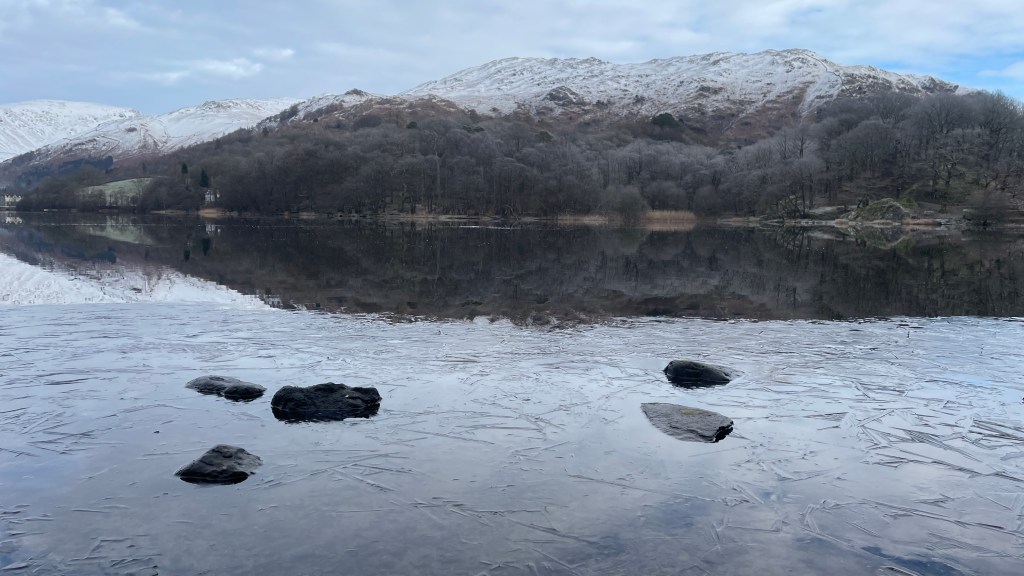
A frozen Rydal Water towards Nab Scar
The Daffodils of Dora’s Field

Loughrigg Tarn Circular from Skelwith Bridge | Graham’s Guides

A wonderful walk, fabulous views and one of the best outdoor swim spots in the country.

Graham’s Walks📌
Distance2.5 miles
DifficultyModerate
Map🗺
GPX📁
Graham’s CafeChesters by the River

I like to plan walks with a reward half-way around, in today’s walk that reward is the opportunity to swim in a beautiful tranquil tarn.

We start this walk in Skelwith Bridge. If you can, park on the Langdale road (B5343) near to the Skelwith Bridge Hotel. There’s also the option of using the car park another 0.4 mile further up the road or some spaces in the ground of the old slate-works. Don’t park in the hotel car park, or in the Chesters by the River car park.

This is one of those walks where to get a parking space you have to understand the rhythm of tourism in the Lake District. If you arrive on a sunny day in the middle of the morning through to the middle of the afternoon you aren’t likely to be able to park, especially if it’s a school holiday or a weekend. You may be fortunate, but you can’t rely upon it. Arrive earlier, or later, than that and you’ll have a much better chance of getting parked, these are also the times with the best light and hence the best views.

For us this is either an early morning walk with lunch back at Chesters by the River, or it’s an afternoon, into the evening, walk with a picnic tea.

We normally take our time on this walk, it’s a tramp, it’s not a route-march.

Opposite the Skelwith Bridge Hotel is a kissing gate with an easily identifiable path up the hill to another gate. Here the path is more narrow and uneven, it’s only for a short distance but is the reason I mark this route as Moderate. There’s something soothing about walking in the dappled light of a wood especially when the birds are singing.

Soon you’ll come out into the Neaum Crag holiday park where the route through is reasonably well marked. You are heading straight across, past the pool and up the hill which veers to the left. This is where, in the winter, this walk can get a bit icy.

At the top of the hill there’s another gate out into open countryside. Soon you’ll be rewarded with views of Loughrigg Fell and the Langdales in the distance followed shortly afterwards by views of the tarn. In the spring you’ll be greeted by Bluebells, in the summer by Bracken. The path traverses a bank, downwards towards the road past a quintessentially Lake District farm at Loughrigg Fold.

Once you’ve reached the road follow it to the left for a short distance before you arrive at a stile on the right. The path around the lake is quite clear here, across the field, through another gate, across another field right alongside the tarn.

If you are planning to swim there are numerous options here, some have shade, some in the open. The further round you go the better your view across the tarn and back towards the Langdales. These views are particularly magical at sunset. A favourite swimming spot for many is marked by a lone tree that bends out over the tarn.

In the spring and early summer, Cuckoos and Woodpecker can often be heard in the woods nearby. The Waterlillies are gorgeous in the summer and so is the cruely named Bogbean.

Fortunately, this place of beauty is remote enough to avoid being overcrowded. We’ve never been when it has resembled the more popular tourist locations just a few miles down the road. There are often a few other groups, but each of them respecting the tranquillity of the place.

Please note that you aren’t allowed to take craft or inflatables onto the tarn, this isn’t Bowness.

Once you’ve finished your swim, picnic, yoga, contemplations, or whether it is you do in such a place, continue on the path towards a small gate in the fence by the lane. Through the gate turn right. Take the lane around to the road, and then the road back to Loughrigg Fold. The road is generally quiet, but please remember, you are sharing the space with vehicles.

From Loughrigg Fold retrace your route up the lane, into Neaum Cragg Holiday Park and eventually back down to your vehicle.

There are some variations on this walk:

If you have parked in the car park below Neaum Crag, you can take a different path up and over to the tarn. This path brings you down to Loughrigg Fold from where the route is the same as above. Alternatively, you can cross the road and down onto the Elterwater path. If you take a left you can follow the river down towards the waterfalls at Skelwith Force and into the slate-works, from where you can join the path as described. The waterfalls are worth a visit at any time, but especially if the river is high.

If you just want do a circuit of the tarn without all the uphill and downhill bits there are a few car parking spaces just at the point beyond Loughrigg Fold where the path crosses the field. There are only a few and please park sensibly.

You could also extend your walk just a very small amount by incorporating a visit to Chesters by the River, a long time Lake District favourite.

You could massively extend the walk by adding in a trip to the top of Loughrigg Fell but that would make it a completely different walk with a different name.

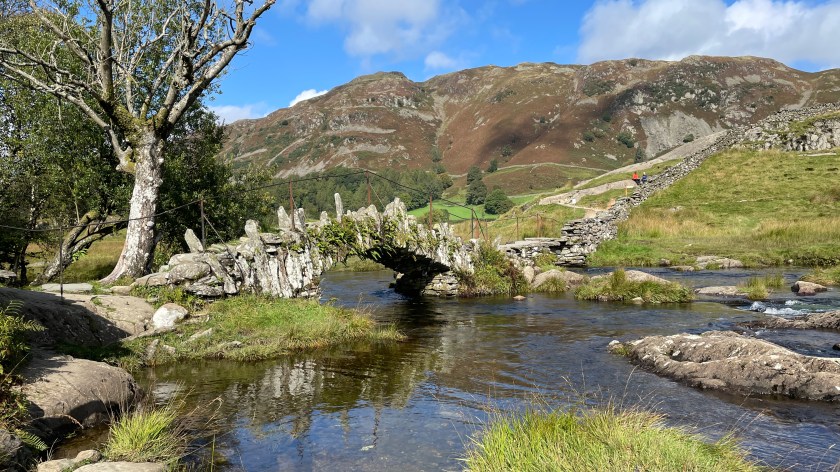
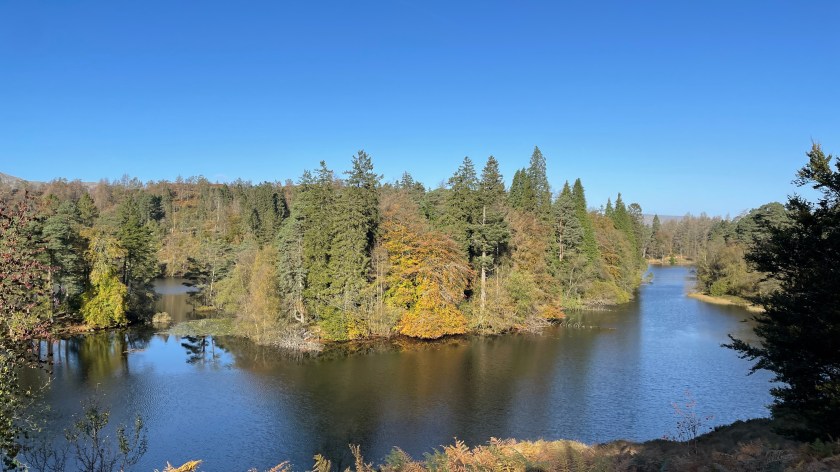
Header Image: Loughrigg Tarn looking up toward Loughrigg Fell.

Loughrigg Tarn
Loughrigg Tarn
Loughrigg Fell from Loughrigg Tarn
Loughrigg Tarn

Brockholes Circular from Preston Crematorium | Graham’s Guides

Does a crematorium feel like a strange place to start a walk?

Graham’s Walks📌
Distance4 miles
DifficultyModerate
Map🗺
GPX 📁

Most days I enjoy walking straight from my front door. There are plenty of options for a morning walk and getting in a car to go somewhere feels an unnecessary complication. Also, where I live, the main road can become a slow moving carpark making movement slow and frustrating – which is somewhat counter to the purpose of going for a walk.

There are some days, though, when I want to mix things up a bit and this little walk is a very short drive for a welcome change of scenery.

Brockholes is a local Wildlife Trust Nature Reserve situated in a former sand-pit. At one side it is enclosed by the River Ribble, along another side it’s the M6, around two other sides are wooded banks. Through the middle runs the Guild Wheel which also provides us with the pathway for the start of this walk.

Brockholes is worth a visit with its floating visitor village, play area, wildlife hides and country walks. It’s easily accessible off J31 of the M6. The only charge is to park and as this walk start by parking elsewhere that doesn’t apply. Because of that I would encourage you to think about how you might contribute financially to the nature reserve.

(Note: There is also a Brockhole (without the ‘s’) between Windermere and Ambleside, don’t get the two confused.)

My walk starts at Preston Crematorium which is accessed via a long tree-lined drive off Longridge Road. Part way along the drive is a small carpark on outward side of the road, followed by another small carpark on the inward side. Park in the outward side carpark if you can, the path runs alongside.
Note: The driveway to the crematorium has gates and they are closed in an evening. There are different opening times for Winter and Summer. Please make sure that you check that you will be able to get your car out at the end of your walk. There is always a notice at the gate and one at the start of the path, the opening times are also on the web site.

At the start of the path, we are on the Guild Wheel which is nicely tarmacked for cyclists and pedestrians alike. This is a shared path, and you should expect to see cyclists.

There is some historical interest in this area. The walk starts in the grounds of the former Red Scar House, home of one William Cross who also helped to model Winckley Square in Preston. The house is long gone, having been demolished in 1939, but you can still see the basic outline of the grounds in the trees that remain. The adjacent industrial estate, for which the house was demolished, then became Courtaulds Red Scar Works one of the largest producers of rayon in Britain and employing 4,000 people. The Courtaulds days came to an end in 1979, but local people still refer to as by that name.

From the carpark, I follow the Guild Wheel through the woods, across some more open land towards Red Scar Woods. It’s springtime and the trees are in full leaf, but I can still catch glimpses of the River Ribble, and the Ribble Valley views beyond.

The tarmacked section eventually runs out just about where there’s a fork in the path. I take the path to the left alongside the woods and then, eventually, into the woods and down the hill. The hill is moderately steep and can be slippery.

At the bottom of the hill, I take a path off to the left towards the river. The river is tidal at this point and different every time. Depending on the time of year this is a great place to see kingfisher, sand-martins and various other waterfowl. On this occasion it’s too early for the sand-martin and no blue flash of a kingfishers either. I’m still hoping to see an otter.

There’s something therapeutic about walking alongside water, it’s flowing gently today. The river can flood here and needs to be treated with respect.

You can walk alongside the river all the way into Preston, but I only go as far as the entrance to the nature reserve, continuing to the right alongside the M6.

One evening I stood for several minutes watching a barn owl hunting in this section. They are magical to watch, silently, effortlessly flapping and gliding then suddenly dropping like a stone. I take a short diversion to sit in one of the hides overlooking the ponds, the ponds are a great place to watch Starling murmuration. The starlings don’t always nest in the same place, so you do need to track them down.

I steadily work my way back to the bottom of the hill, then it’s back to the top and along the woods to the car. In the early spring the wooded bank that I came down and need to climb are adorned with bluebells, this wood is also a wonderful place to see the local deer.

There are a few variations to this walk:

The route outlined skirts around the edge of the reserve, if you want to see the visitor village where there are toilets and a cafe, there are several places where you can branch off.

If you do branch off to the visitor village there are several other hides to explore. One of the hides is regularly visited by a local Kestrel, known as Kevin, who is happy to show off their hunting prowess.

At the start of the walk there are several options to walk through the woods before you go down the banking. Some of these are more arduous than others but will give you better views of the panorama when the leaves are on the trees.

You can also drive into the nature reserve, park up, and explore from there. This is an especially useful option if you are looking for a walk without a hill.

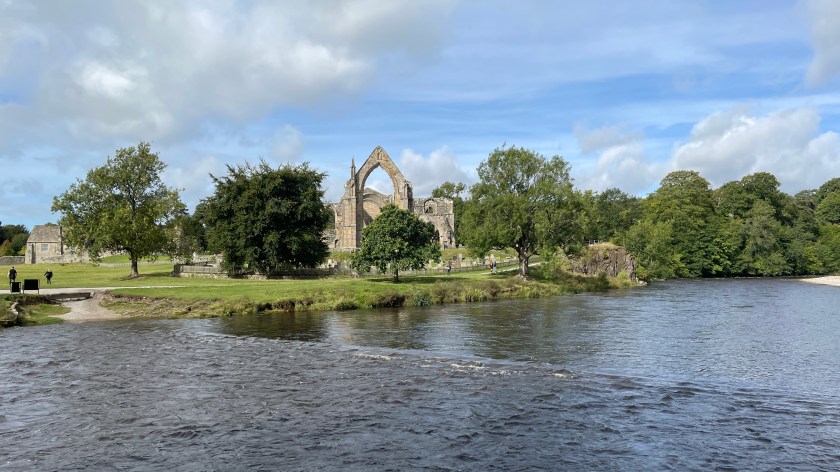
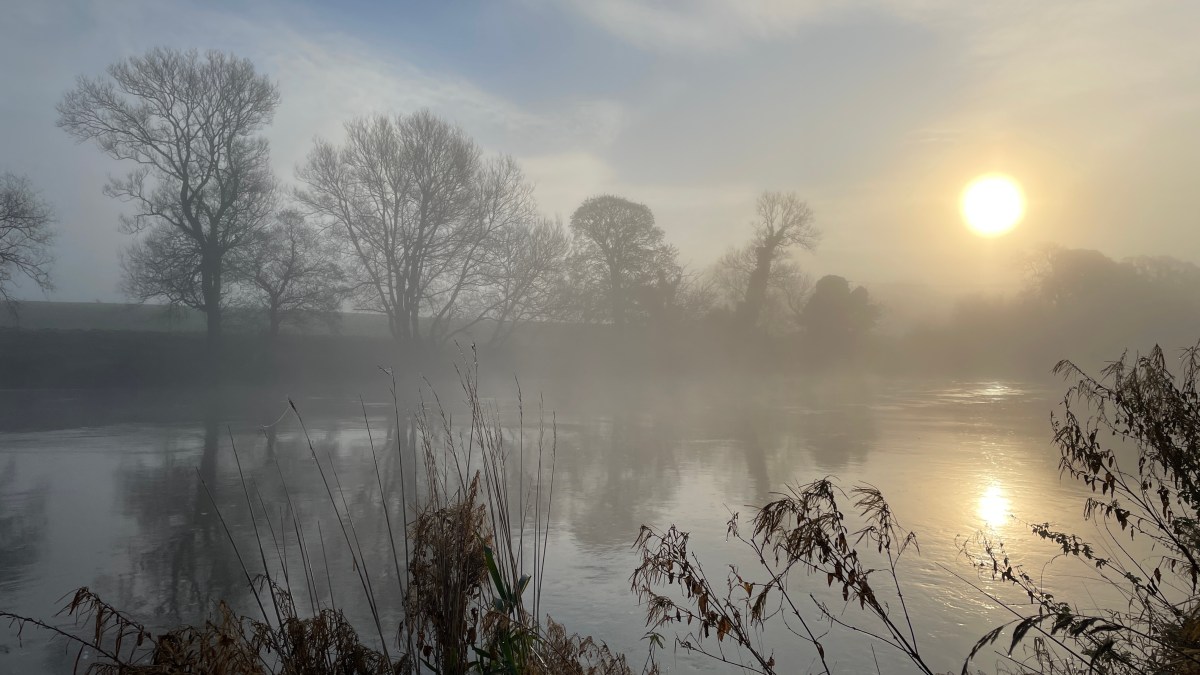
Header Image: The view across the Ribble on a misty morning.

Rossall Beach Promenade | Graham’s Guides

Is there anything quite like a walk along a windy beach?

Graham’s Walks📌
Distance5.2 miles
DifficultyEasy
OS Maps Route🗺️
GPX📁

Here in the UK we like a seaside promenade on a sunny day, taking in the blue skies and sea.

However, the British weather is never guaranteed, which means we are conditioned to be just as happy walking along a windy promenade on a cloudy day with the white capped waves careering into the sands. It was precisely these conditions that greeted me as I parked in the promenade car park at Rossall Beach on a recent Sunday afternoon.

There are several places to walk along the Fylde coast each with their own charms. The charm of Rossall Beach is that it’s a quiet sandy beach where you get great views across to Morecambe Bay to the Lake District and even as far as the Isle of Man. If you want fish-and-chip shops, ice-cream parlours and amusement arcades you need to be a few miles further south. Rossall Beach is more rural, although also, almost suburban.

From the Rossall Beach promenade car park I head north along the beach taking in the changing skies and relishing in the occasional burst of sunshine sparkling off the Irish Sea. I’m conscious that the wind is on my back and that, at some point, I am going to need to turn around and walk directly into it. The tide is on its way out and there’s ample firm sand to walk on. It’s a shorts and jumpers day.

I’ve set myself the target of getting to the Rossall Point Observation Tower, to give it it’s Sunday name, about 2.5 miles (about 4 km) away. This rather strange structure has various uses including a public observatory. There are also public toilets here.

Part way along I pass Rossall School a place of education since 1844. The buildings are from a different time to everything that surrounds them making it look strangely out of place even though it was here first.

The weather continues to change as I enjoy the scenery, there are a few other people around, but this isn’t a day where the beach is full. I don’t think I’ve ever seen the beach flooded with people here, that’s part of the joy of the place it’s easy to get to but it also feels isolated.

Having reached the tower it’s time to head back facing into the strengthening wind. It looks like the weather may turn to rain so I choose the promenade for my return. There has been lots of work on the sea defenses in recent years including the integration of paths, boulder groins, various seating options and art installations. There’s also areas set aside for nature on the onshore side of the defences forming the Larkholme Grasslands. I particularly like the Sea Swallow sculptures forming part of the Mythic Coast project.

This is a great place for a sunset, not that there is going to be one on this particular day the cloud is thickening fast.

I’m passed by various joggers and cyclists many of whom have the look of people rapidly heading for a safe haven. One young man passes me in short-shorts and a vest top, muscles pumped. He’s in fully Rocky mode punching away at some invisible opponent. He stops not far in-front of me and proceeds to go through a routine of upper-cuts, hooks and jabs, then continues his run. He’s carrying a portable speaker that’s proving musical accompaniment.

Having returned to the car park I look at the houses with views of the sea, that also overlooking the expanse of cars. There are always at least one of them for sale and it’s become obligatory to look them up on Rightmove. Views of the Irish Sea come at a premium.

There are a few variations you can make to this walk.

If you start the walk a bit further south at Jubilee Gardens you can visit the Sea Ogre and take pictures of Mary’s Shell. If you are a Star Wars fan you can stand in part of the set at FBKafe which featured in the Andor spin-off.

At the far end of the walk you can choose to walk a bit further and take in the events at the boating lake.

Part way back from the observation tower, you can choose to head inland and make your way via the Larkholme Grasslands. This can make for a less windy return.

You can, also, make the walk to the Observation Tower much shorter by starting at the Rossall Point car park heading south.

Header Image: This is the view of the observation tower from the beach.

Three Sisters Coffee Shop and Kitchen (Fulwood) | Graham’s Guides

Yay, at last, a good local independent coffee shop.

Graham’s Guidelines* Rating (1 to 5)
Coffee5*
Food4* (see note)
Conversation5*
People Watching3*

Some months ago we were delighted to hear that one of our favourites – Three Sisters in Penwortham – were in the process of opening a second outlet within easy reach of our house.

There are several coffee shops a short distance from our house, but they are all corporate ones – 3xC and 1xSB. I don’t like the SB coffee roast, never have. The C coffee roast is OK, but it’s only OK. I can’t recall the last time I went to the SB, even though I pass it on my morning walk regularly. I reluctantly visit one of the Cs every couple of weeks.

I prefer an independent coffee shop, one that understands coffee, if they roast their own that’s even better.

Three Sisters in Penwortham is only 6 miles away, however, it is on the other side of Preston, making 6 miles a journey of more than 20 minutes drive. In the preceding sentence “more than” is a very important phrase, Preston is not designed for people who want to go from one side to the other, at any point and without warning “more than” can be “double” or even, when the M6 is closed “triple”. To put it more succinctly – getting to Penwortham is regularly a faff.

This last weekend it was the glorious open day for Three Sisters Coffee Shop and Kitchen in Fulwood.

Sue and I went on Saturday morning, and I went again on Monday morning.

The coffee was wonderful; there own roast. The cakes selection fabulous; the carrot cake lovely. The custom steady.

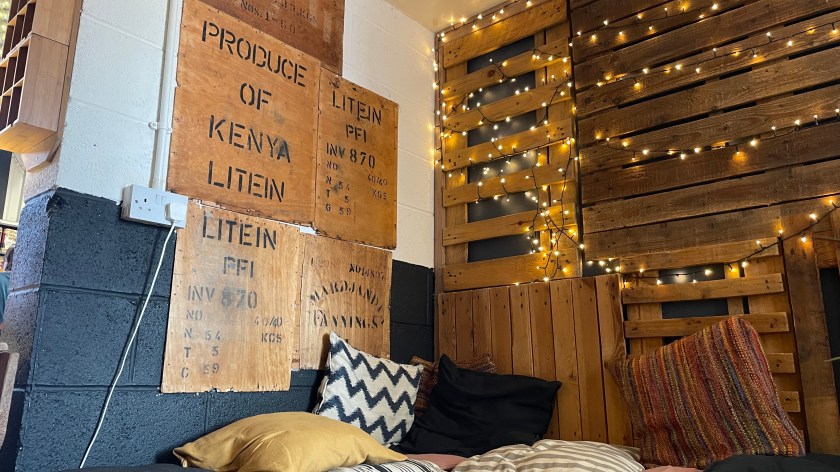
As you can see from the pictures they’ve created a great space to sit and relax, and also work. As well as the room in the pictures, there’s also a more enclosed quieter room further back. While I was there on Monday morning it wasn’t so busy that I felt the need to retreat into the back, but it’s nice to know the option is there.

There are several small businesses in the area and some came in while I was there, all of them enthusiastic about the new option available to them. Hopefully this results in even more custom for them.

They are doing a progressive opening, with drinks and cakes for now – lunch options and their famous cinnamon swirls on a Saturday will follow at a later date.

I really want this place to succeed. The lack of a decent coffee shop in the area has been something that has irked for quite a while. I will be back, C will see even less of me now.

Following our trip on Saturday a neighbour visited on Sunday and simply text “10/10 🥰”.

Three Sisters Coffee Shop and Kitchen
159 Garstang Rd,
Fulwood,
Preston
PR2 3BH

https://threesisterscoffee.co.uk/

Three Sisters (Fulwood)

Header Image: The view from my table, there’s another room beyond this.

My changing workplace – part 9: An “Individual Contributor” in the second half of 00s and early 10s

After a gap of 13 years, it feels like a good time to return to a series. These are imperfect remembrances of days long passed.

Time for another change of role and a change of working practice.

Having spent much of the early 00s on the road building a visiting a team across several sites in the UK a change of role brought a change of working location.

The change came after I realised that I wasn’t really cut out to be a full-time people manager. The team wanted a team leader; I was constantly being distracted by the interesting technical stuff. It was a mindset thing. Given a burgeoning list of things to do I would avoid, at all costs, those administrative ones that were really important to people. The thought of fighting with the organisation to get some training approved filled me with dread. This was especially so when the choice was between expenses and a customer with a high-priority red-hot complex incident that needed someone to dive in deep. The team deserved better than I was shaped to give them.

It was about this time that the term “individual contributor” was going through a resurgence. Here was a definition that I could identify with. There was a realisation that I didn’t need to be a manager to gain salary, achieve recognition, or any of those other reasons why people stay at their level of incompetence. As an individual contributor I could feed my family and do a job that I enjoyed.

I became aware of an opportunity to join the team that was helping one of our biggest customers define their strategy and to govern the technical side of a large portfolio of projects. Brilliant, an individual contributor role, bringing high value to an important customer, but what did I know about strategy and governance? As it turns out, I knew about as much as everyone else and while that wasn’t a lot, it was a massive opportunity to learn.

The other huge advantage to this role was the location. It was based in an office just a couple of miles from my house. Physical meetings were still dominant, but the teleconference was starting to become mainstream. These were the days when special people were issued with a conference number and a pin. If you weren’t special-enough you would have to borrow someone else’s number or schedule time using the team number. When the time for the meeting came you would reach for your desk phone, if you were fortunate, you’d put on your headset, and you’d dial, dial and dial. First was the number for the external conferencing service, then the number for the meeting, then your pin. The conference service would likely ask you several questions about the meeting and then you’d be in. If you were fortunate no-one else was using your number, if they were you’d have to politely point out that you had need for your number and that they should go elsewhere. You’d then wait for others to join which was indicated by a beep, or if you’d set it up that way, they would announce themselves with a recording of their name.

You’d have to do a rollcall to work out who you had, if it was a sensitive meeting you’d check the number of people on the meeting with the rollcall. The two never rarely first time around, so you’d try again. Eventually you’d convince yourself that you’d got the people you were expecting.

If there was a group of people in a room they would join from a spider phone from which the sound would be terrible. The meeting would be peppered with people saying “John/Mary please get closed to the microphone” or “Can whoever is eating crisps next to the spider phone please stop it or move the phone” or “Whoever is having a separate meeting in the meeting room please go elsewhere to have it.”

In the situations where most of the people were in a meeting room and you were the one who was on the phone you had no chance of being an active participant. The best you could hope for was that people would forget you were there.

The desk-phone headphones were all uncomfortable. They were made of materials that made your ears bake. They had heavy cables that pulled down on one side of your neck. The sound quality was, at best, poor. There was no volume normalisation, and you’d go from listening intently to catch a word to having your eardrums blown out by that colleague who was related to Brian Blessed.

We’ve still not fixed some of these issues.

Yet, despite all the drawbacks this was now the standard way to work in an organisation with multiple locations.

I would spend several hours of every day dialling into calls with different teams, contributing to the project or problem that they were working on.

This was also the era of the mobile phone car kit. While Bluetooth existed, it wasn’t mainstream enough to be standard in most cars. If you wanted to use your mobile in the car you needed to get a kit fitted for your specific make and model of mobile phone. Using a phone without a handsfree capability, while driving, became illegal in the UK in 2003.

As I look back on it, I see how deadly the combination of these two things was. Mobile phone access in your car, conference calls on your mobile. How any of us survived that distracted era is a miracle, several did not.

There was also a couple of changes in the major mobile phone manufacturers during this time, the emergence of the laptop as the standard device for most workers, the explosion of home internet and the growth of Instant Messaging.

However, I’m already over 1,000 words so I think I’ll leave those thoughts for another day. Oh, also, what I did and how I went about it changed significantly.

My changing workplace:

Header Image: Out and about in the local farmland this hansome fella wanted to say hello. Thankfully there is a wall betwen the two of us.

Working Amongst the Cafe Crowd

There’s something about the clatter of a busy place that helps me see things differently. Sometimes the answer isn’t found in quiet contemplation, but in the subconscious thought of a noisy place.

I am a remote worker, working for most of my days in a room at my house. My nearest office is 150 miles and a 3-hour drive away, my most accessible office is a 2 hour and £300 train ride away. The nearest colleague, someone in my team, is a 2-hour flight away. When organizations talk about the power of face-to-face connections I am with them, but it’s not very practical in my current situation.

This morning, I woke up with a feeling I’ve had before it’s a kind of dull low-level loneliness. I look into my office and the thought of spending all day there doesn’t fill me with joy. Today was a day to be amongst people – a cafe day.

I don’t just work on a cafe day, they are wonderful days for watching people. There are a set of individuals that inhabit most cafes, similar yet unique, character and caricatures.

The first people I notice are two men who, from their demeanor, I am assuming are retired. They are sat at two different tables, looking in opposite directions as if they were school children who have fallen out in the playground. They both have caps on and are carrying little bags which I’m assuming they use to carry the phones that they are doom-scrolling through. One of them looks up from their screen, looks out of the window and stops, they stay there for several minutes, watching the world go by only there isn’t much world outside this particular cafe. I want to introduce the two of them and suggest that they have a chat. I don’t think they are waiting for anyone, they’ve been here for quite a while. I look to my side and notice another man, similar age, same doom-scrolling. Are they happy in their isolation? Is this time a treasured distraction? What wisdom do they carry around not knowing its value? What is their history? What is their future?

To my right I notice a business meeting, four middle-aged men, four laptops. The conversation bounces between football and finances. One of them is using their laptop to describe the permutations for the end of the season, who’s going up and for them, sadly, who is going down. Another laptop is constructing a PowerPoint slide with way too many bullet-points. They are all wearing polo shirts and smart jeans, the standard attire of the video conferencing home-worker. I look down at myself knowing that I am wearing exactly the same combination.

In the far corner there are four dark-haired trim-bearded men, they are a bit younger and could all be family. Their attire is black corporate work-wear with dark-gray knee-pads, I think there’s a logo on one side the chest, but it’s too far away to make out. The work-wear is clean and unscathed so it’s either new, or the work isn’t too demanding on the fabric. One of them is holding court as the others listen with varying levels of concentration. They were a little further away so I couldn’t tell you what they were talking about but I even if I’d been closer I doubt that I would have understood.

I’m not the only one clattering away at a laptop keyboard. There’s a younger lady to my right who looks like she has deliberately chosen a table that’s the closest thing to quiet in this establishment. She’s wearing the female equivalent of smart jeans and a polo shirt. Periodically she stops to read what she’s written then returns to her finger dance, her long nails clacking with each letter. She was here before me and doesn’t look like she’s leaving any time soon. I suspect that this is corporate work for her also, but perhaps she’s a world renowned hacker, or TikTok influencer? I wonder if she’s simply doing what I am doing and seeking a different outlook for a change.

Two older couples have arrived at the table next to me. One of the women is telling the others, in a voice that the whole cafe is forced to contend with, that she’s going on a cruise and has recently ordered over 20 dresses from John Lewis. Her afternoon job was to try them all on and return the ones she doesn’t like. “I’ve spent nearly £2,000 on my credit card so far. The great thing about John Lewis, though, is that you can return it to Waitrose, and it’s so easy to do.” I now know all about the way that returns are processed at John Lewis and about how quickly it works. “I’m so glad I didn’t get them from M&S, have you seen all of the problems they’ve had recently.” The other lady doesn’t look like someone who has ever shopped at John Lewis. I look at her husband and suspect that he’s never shopped at John Lewis either even though he’s in things you’d find in John Lewis, head-to-toe.

Two ladies come in, one after the other. They meet with a cheek-kiss and a genuine smile. They too have laptops, they are also going to do some work, but it looks so much more social than the other groups. They look excited about the work they are managing to get done, there’s a twinkle of creativity on their faces.

I return to my keyboard and the conundrum before me.

Thankfully Mrs. Cruise Dresses needs to dash off to do something vital and leaves the other three to a more gentle chat. Mr. Football Tables has moved on to more serious matters. Mrs. Long Nails is quietly reading. Thankfully, today, no-one is on a speaker phone. Mr. and Mr. Doom-scroller are still there, isolated by an impenetrable few meters.

There’s something about the clatter of a busy place that helps me see things differently. Sometimes the answer isn’t found in quiet contemplation, but in the subconscious thought of a noisy place.

Header Image: The wild garlic in the local woods is almost at full bloom and is competing with the bluebells to be the dominant fragrance.

Less Haste, More Speed – Measure Twice, Cut Once | Working Principles

My grandma loved this saying and repeated it often. Whenever something went wrong with her latest piece of knitting, or needlework, she’d chide herself under her breath – “less haste, more speed.”

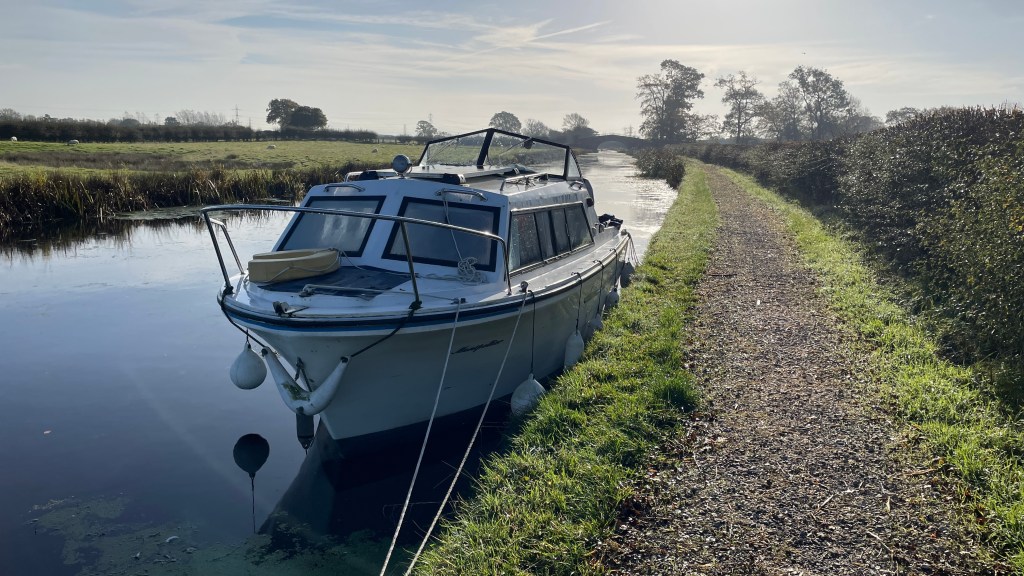
I was recently on a day out with a friend in his canal boat. Canals in the UK are a construct of the Industrial Revolution that have, in recent years, been reclaimed for leisure purposes. The one we were traveling on dates from 1792.

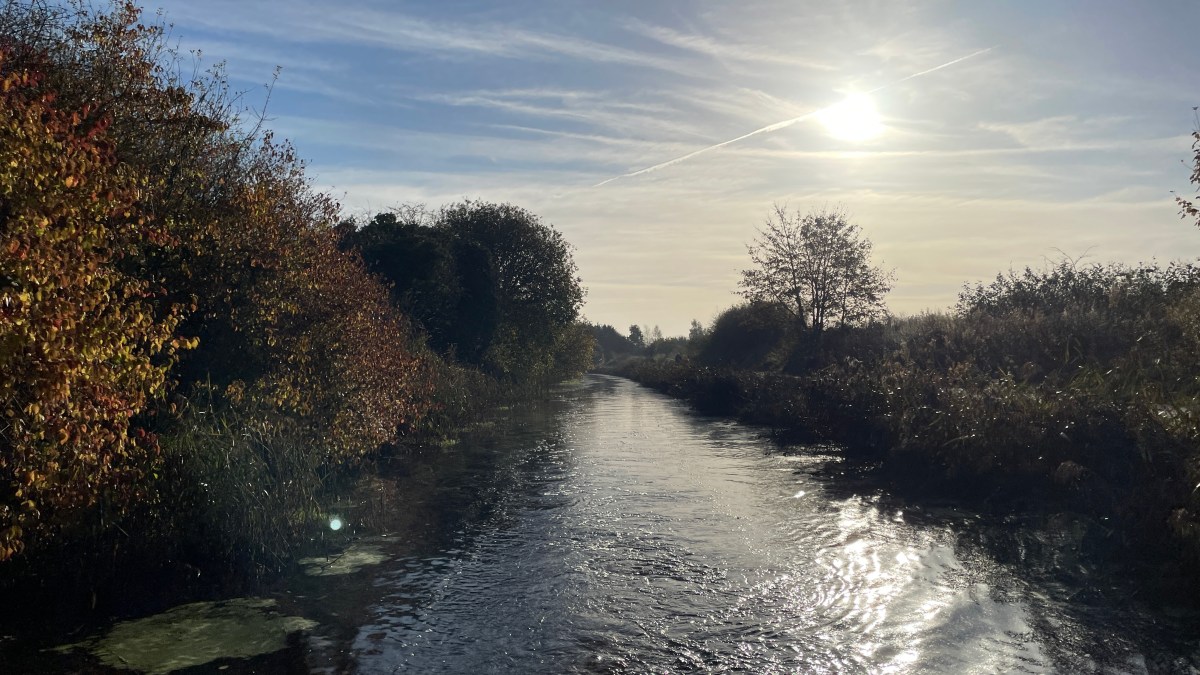
If you are from the UK then you know what I mean when I talk about a canal, if you are from outside the UK the header image and a couple at the end will give you a good idea.

Each of these narrow, relatively shallow, waterways were used to transport heavy goods around the country at the speed of a horse’s walk. This was at a time when the speed of a horse’s walk was a lot faster than any other way of transporting such bulky goods. We were in a small leisure craft enjoying the sunshine at a sedate 4 mph (human walking pace).

My friend doesn’t have a traditional iron/steel narrow boat, but a fiberglass leisure craft known on the canals as a yogurt pot.

I was driving and trying to keep a good pace so that we could make it to the pub for lunch. We’d recently pulled past another slower boat that had kindly pulled over for us (overtaking is not allowed) when I felt the boat veering off to one side. In my haste I over-corrected and the boat swung off to the other side. Still feeling the pressure to act I turned back the other way resulting in the boat leisurely, but forcefully, veering off into a bush on the bank with a firm stop. The strange thing was even at walking pace it all felt like it happened very quickly.

To get out of the bush we needed to reverse, slowly, make sure there wasn’t any damage, manoeuvre to the right part of the canal and then we could continue. Before long the slower boat we’d sped (slowly) past earlier was up behind us and waiting for us to get on our way. It would have all been a lot simpler if I’d driven just a little bit slower and not taken any hasty actions. Even at 4 mph it is quite easy to get yourself somewhere you don’t want to be.

I may know the phrase “less haste, more speed” from my grandma, but it’s really an old Scottish phrase according to the small amount of research I’ve done.

Interestingly I remember the saying this way around, but in the old Scottish it’s the other way around “more haste less speed”, or for those of you who speak old Scottish “of fule haist cummis no speid.”

It is a very old saying. It was documented in the 1600s which means it’s almost certainly much older than that, not too many things were documented before then.

There is a similar saying in the Proverbs of the Old Testament of the Bible making the sentiment much older still:

Enthusiasm without knowledge is no good;
haste makes mistakes.

Proverbs 19:2

It may be an ancient saying, something deeply rooted into our thinking, but it doesn’t stop us needing to repeatedly learn its lesson.

Can you remember a time when someone was criticized for a decision that was too slow?

Can you remember a time when someone was criticized for a decision that was too hasty?

It’s all a matter of perspective.

Fast sounds better than slow.

Measured sounds better than hastily.

Rapid sounds better than protracted.

Deliberate sounds better than reckless.

In my working career I’ve been in many situations where people have been desperate for a swift decision. Looking back, many of these decisions were taken in haste and would have been much better for being more measured.

We sometimes need to sit back, take a deep breath, and resist the need for speed.

Much of the time the impact of hasty decisions is minor but there are many decisions for which a correct answer is vital.

Here’s another very old saying much beloved of makers and decorators alike:

Measure twice, cut one.

(Apparently, if you are Russian, you measure seven times before you cut.)

There are many decisions that don’t involve a “cut”, but the ones that do need to be right.

Organisations can get stuck treating all decisions as the same and expecting all answers to be processed at the same speed – fast. We can do the same in our personal life when we anxiously ponder over a decision that once made can be reversed immediately while blindly rushing into other decisions with long lasting consequences.

Some organisations use a framework popularized by Jeff Bezos and talk about one-way door and two-way door decisions. The decisions with a cut are the one-way doors needing careful consideration because once made, they are made. If there were any decisions around which haste should be avoided, it is these one-way door ones.

There is much in business that is too slow, too pedestrian, but we need to be careful that our relentless drive for speed doesn’t set us on a course where we find ourselves in a bush on the canal bank.

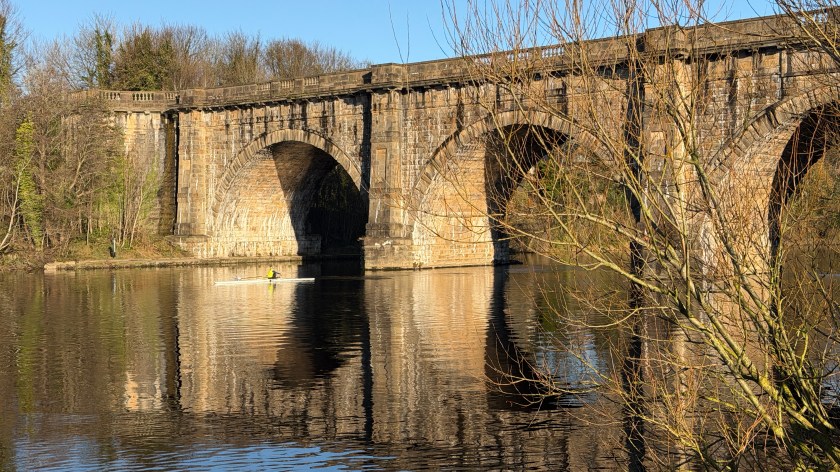
Header and Footer Images: These are some images from the Lancaster Canal on a sunny day making progress at 4 mph.

Learn to remove – it may be harder, but the results are way better | Working Principles

I’ve worked around corporate IT systems for most of my adult life and what follows is a common, if slightly embellished, history of how organisations get into a mess:

  • We had a need for a system to do X.
  • Another team had a need to do Y. The managers of team X and Y are in different parts of the organisation that don’t like to collaborate.
  • Despite the lack of collaboration we decided that we needed some of the information from Y in X. We built another system, Z to move some of the data between them.
  • Y didn’t work very well so we built A, but never decommissioned Y. We had already added some customers to Y and it is always difficult to move customers. One customer who uses Y is particularly difficult.
  • People liked to use A so we added some customers to it, but different customers from the ones that use Y.
  • Another team in another part of the organisation build B. We then discovered that B was similar to Y but worked differently, so we built C to make them work together in a similar way to Z.
  • We then got a new leader who had worked with D in their previous organisation and have spent the last year trying to get D to work like Y, with data from X, A and B. We needed another system, E, to move the data between D and Y as an interim solution while we did the development.
  • The leader who was a fan of D has since left the organisation and everyone is unsure of its future. The technical people the leader recruited from their previous organisation have also left to join them at their new venture.
  • The team that built Y has since been allocated to other work so no-one in the team knows how it works anymore. We need Y to work, because the difficult customer is still using it.
  • We’ve recently experienced problems where we’ve been getting inconsistent results from some of these systems and it’s becoming embarrassing with our customer.
  • Given these recent issue there’s a strong tendency for action hanging over everyone and the prefer actions is to add something. “Perhaps we need system F?” says someone “I’ve used it before and it was brilliant.”
  • The reality is, though, system D will do everything every team needs and D is already being paid for, but moving everyone over to it will take work. It’s going to be particularly difficult to move the long-term middle managers over who are heavily invested in X, Y, and Z. Each team is convinced that what they do, and how they do it, is unique and vital to the running of the business.
  • No one really knows how A, B and C work and are scared of touching them, fearing a catastrophic breakage. That fear includes a fear of shutting them down.
  • Another challenge is going to be moving the customers away from Y and A, what’s in it for them? There’s also that difficult customer to worry about.
  • Perhaps adding in F isn’t such a bad idea after all?

One addition has lead to another. The result has created further complication and even more technical debt.

There were plans to remove some of the technology, but they were never achieved. The whole thing has become like that tangled box of cables you have stored away somewhere.

I’ve seen the same thing with processes with particularly experience of review processes. The story is almost identical to the above:

  • Review A spawns review B and C.
  • Review B and C spawn reviews D, E, F, G and H.
  • Review H spawns review I and J.

Each of these reviews takes an hour and 5 people (if you are fortunate) – the burden of a simple review is 50 hours without preparation time.

There’s always going to be a noisy middle manager who insists on having their own review meeting and it’s not always easy to resist these demands, but giving in to them has a very high cost.

Before you know it people are spending more time reviewing things than creating things, particularly the poor people presenting.

It is hard to remove in these situations, but the results are way better than adding “system F”. You know that taking everything out of that cable box and throwing half of it in the recycling is a much better answer than trying to wheedle out the one cable that you are looking for. You know that shutting down the spawned reviews is a much better answer than keeping them going and frustrating everyone.

Adding “system F” might feel like a better answer, but it’s a bit like eating another cookie to help you feel better about being unfit.

Header Image: This is St. Mary’s Church, Longsleddale looking down the dale on a recent spring morning.

What gets measured gets manipulated | Working Principles

This post portrays a fiction, a caricature. I have never worked in this organisation, but I have seen parts of it in many organisations.

There’s a much-used management saying that often get mis-attributed to Peter Drucker: “What gets measured get managed” it also exists in the negative form “What doesn’t get measured doesn’t get managed.”

This is a mantra bouncing around inside the head of millions of people and today it will be regurgitated in hundreds of thousands of meetings.

Somewhere in the world, right now, there is a team of people meeting together who have been given a problem to solve and one of their first tasks will be to get the data together.

“How often has this happened?”

“Who has this problem?”

“What is the evidence for this problem?”

Somewhere else a team will be trying to work out how they complete a task, run an operation, define a service level, design a sales campaign, or any one of a thousand scenarios. In each of them somewhere conscious and subconscious will be the phrase “What doesn’t get measured doesn’t get managed.”

To many this is known as the understanding phase, or the problem definition phase, sometimes it’s known as the fact-finding phase. In this time of chaos people need information to help them to make decisions and take actions.

This is where it can all start to go a bit wonky. Somewhere in the mind of one of the meeting participants is another phrase “How are we going to measure success?” This question is followed by an equally wonky question “What are we going to report to the management?”

These two thoughts coalesce together into another thought “We need a metric.”

Not “some metrics”, not “a balanced scorecard”, not “metrics and observations”. That’s all too complicated for “the management”, they are too important and too busy to cope with anything fuzzy or squishy, they need a metric.

Once the team has a metric they can create dashboards, draw charts, create RAG (Red, Amber, Green) status charts. They can show that all of the effort is producing results because the metric says it is. The team is a success because you can’t argue with the metric.

The team looks around to see what the metric could be. Measuring overall business value is too difficult, too abstract, but there is a metric that can be used. This metric is easy to collect from the systems available and doesn’t require any complicated analysis. If the team focuses on this metric then it’s “guaranteed” to increase the value to the business, isn’t it?

And thus the task is set: the metric will be communicated, a dashboard will be built, the metric will be reported, the metric will be reviewed, the metric will be served. There will be consequences if the metric doesn’t go in the right direction.

Unfortunately, no-one in the team has given any consideration to the law of unintended consequences. The metric has been chosen without any consideration towards the people factors involved in the metric.

The communication of the metric begins “Reducing/increasing the metric is our highest priority.” The organisation has been set a new focus and the new focus will be served.

People’s focus switches to the metric and away from all other metrics. One unintended, but inevitable, consequence of an increase in focus on one area is a decrease in focus on all other areas.

Middle managers suspect that this will be another one of those short-lived initiatives so look at ways in which they can influence the metric without doing too much work. As they analyse the metric they realise that there are several factors involved in its composition.

These middle managers are wily operators who’ve seen this show before, they know that there are things that they can do to manipulate the metric.

They instruct their staff to enter details onto the system early/late so that the next collection of the metric is higher/lower.

They look through the list of things that are included in the metric and reclassify work into/out-of the metric.

They split/join records in the systems so that the metric is again higher/lower.

They start to record some records in an excel spreadsheet away from the corporate system to serve the metric.

They shift their focus away from the big things that only influence the metric a small amount onto the little things that influence it a lot.

They move staff away from work that doesn’t influence the metric and onto metric changing activities.

These middle managers are careful though, they don’t use all these measures from the beginning. They know that the metric and how it is shown on the dashboard will need to continue to change. It’s not enough for the metric to change once, it needs to change every week/month/quarter. The dashboard needs to move from red to amber to green. It can’t suddenly go green no-one will believe that. They sandbag some of their manipulations for the next iteration of the metric.

Steadily the metric begins to move. Everyone involved waves their hands in the air and cheers the success.

The team is seen as a huge success and is moved onto another project/problem/etc. where they again analyse the problem, define a new metric, and develop a new dashboard. No one visits the old dashboard anymore. The senior managers cancel the review meetings for the original metric, it’s still collected but it’s ignored. Everyone’s attention has moved to the new metric, the new dashboard and the new meetings.

Only a few people notice the irony of the attention given to the original metric being the cause of the new problem and the need for the new metric. The new metric, again, ignores the human aspects.

Beware of the metric – cave de metrico.

Header Image: This is a view of the Vatnajokull Glacier as it flows out toward the south of the island. (No, I don’t know how to say that word.)

Organisations think at the pace of their product life cycle | Working Principles

I have worked with many different organisations, mostly businesses, in many different sectors.

In that time, I have noticed this general rule: businesses think at the pace of their product life cycle, in everything.

Where this applies to me is the knowledge that there isn’t a pace at which organisations think about their IT, organisation think at their pace a pace that is set by their product life cycle.

I first noticed this when I switched projects between two organisations in two completely different sectors. The first organisation was a utility engineering organisation where the product life cycles could be measured in the decades, the second an advertising and marketing organisation where they were launching products all the time and campaigns might only last a few days. One was purposeful and methodical in its adoption of IT and consumption of change, some would say, slow. The other was all about action with quick fire decisions made every day, and the worst thing you could do was not act.

I’ve since observed different organisations in different arenas and found this rule to be generally true (with some exceptions of course).

Manufacturing organisations where the life cycle of the product is 20+ years think at a similar pace to financial services organisations that focus on long life cycle products like pensions.

Consumer insurance companies can be launching new products all the time and think at a similar pace to a consumer technology organisation.

Deep in the back office of these organisation you have the corporate IT team, which itself has a desired life cycle and a desired pace. There is some flexibility in that pace, but there are huge external forces defining the minimum pace. Security compliance demands a rate of patching and updates. Technology vendors demand a pace of upgrades to retain supportability, and profitability. The currency of skills also plays a significant part.

The person stuck in the middle of these mismatched paces is the IT manager who needs to think at two paces. They are a bit like a drummer trying to make music while playing one tempo in their left hand and another one in their right.

The current transformation around AI is, again, highlighting this dilemma.

I am sure there are IT managers in long life cycle organisations who are head down avoiding the bright young things in their own team who want to transform their company by adding AI here or by sprinkling an agent there. Meanwhile, in these more methodical organisations, the IT manager is trying to work out how to get spare parts for the 1980s manufacturing systems that keep the organisation solvent. Or they are trying to work out how much longer they will have the skills available to maintain the pensions application last updated in 1999. Over in the faster-paced organisation the IT manager is trying to work out how they get all of those bright young things to talk to each other and stop the costs ballooning.

This IT manager is the same one who thought they had managed to ride out the same pressures from everyone wanting them to move at the pace of the cloud.

The life cycle correlation is often strongest in organisations where the IT department report to the VP for Finance, so perhaps it’s Finance that sets the pace?

(It’s also worth noting that both the fast-paced and more slow-paced organisations both have a problem with technical debt. One struggles to make decisions fast enough to keep up, the other struggles to give attention to decommissioning things.)

Personally, the lesson here is one of expectation. I set my expectations on pace by the life cycle of the customer product. Expecting a slow-moving, methodical organisation to make decisions fast is a road to frustration. Expecting the fast-paced organisations to consider their decisions leads to a different frustration. Sometimes I am wonderfully surprised, I’d rather be surprised than frustrated.

Header Image: We are in snowdrop season as the first signs of spring start to show. These are on the grounds of a local historic house which is now owned by the local community.

Create and guard the margin – you need space for the high-value | Working Principles

How busy are you? Was your immediate response “too busy”? You aren’t the only one.

Many of us know that frustrating feeling of being asked about an action in a meeting only to realise that we haven’t made any progress because we’ve been in back-to-back meetings since the action was given to us. Why didn’t we make progress on the action? Because we didn’t have any margin.

If we don’t even have margin to complete our actions then how are we going to start new things, more interesting, more fulfilling things.

There’s a relationship here with my previous post Irreplaceable = Unpromotable | Working Principles.

Organisations are littered with activity that is no longer required, things that are being done because they’ve always been done, business that is consuming our margin to do that special something.

When was the last time you looked through your daily activities and asked yourself – why? Why am I doing this? If I stopped doing it would anyone notice, would anything break? If I don’t attend this meeting, will it make a difference to the outcome?

I have occasionally run little experiments where I have quietly stopped doing things. In most of these experiments my lack of activity went entirely unnoticed. A big part of my workday is taken up with meetings and it turns out that there are many meetings that run just fine without me.

If we don’t even bother asking ourselves why we do things when was the last time you contemplated these questions? Is there a better way of doing this? How does Jane/John do this so much quicker than I do? Where can I learn from others? What can I do to simplify and automate this activity?

Remaining curious is a wonderful thing and another great way of ceasing activity, but we need margin to even start to answer these questions.

Another question we should be asking ourselves is, what is all this activity costing? I’m primarily talking here about the missed opportunities. Yes, there’s a cost in the churn of time, but there’s a much bigger and far more significant cost when we consider the things we didn’t do.

What if we had attended that training rather than attend that meeting?

What if we had worked through that difficult problem rather than respond to those 200 emails?

What if we had ignored all those chats and instead taken a walk at lunchtime?

There are all sorts of complex reasons why we don’t do this, it’s not easy. Life is full of competing “what if’s.” What if I don’t attend that meeting and something vital happens? What if I don’t respond to those emails and miss one that is crucial? What if I ignore those chats and one of them is from my boss needing my urgent help? There’s a potential cost to stopping, but there’s already a cost to continuing.

We need to create and guard the margins, the best way to create margin is to stop doing things, but that’s just the first step. Having eked out a margin, we need to protect it. Sadly, not many of us work in organisations where they manage our margin for us, we are going to have to be the watchkeepers of our time and attention.

For me there are a few ways that I try to master my margin. The first way I do it is to use the tools available to me and define Focus Time in Outlook. This is one of those areas where a little bit of AI helps in the form of Viva Insights and the Focus Plan. Rather than booking the same time every day which is impractical for most of us, using Viva Insights my Focus Time is created in the slots without prearranged meetings. The Focus Time is booked with notifications turned off and my status set to “Do not disturb.” There are some people who I need to respond to if they reach-out, so they are defined as “priority contacts.” They know that if they really want me to respond they’ll have to mark the message as urgent.

The other thing that I do is to make sure that my priority list for the day starts with the high-value item that I want to do in my Focus Time. There’s a mental note there that the highest priority is in the highest value, not in the meetings, the messages or the emails.

Even with Focus Time defined I still need to protect my margin from myself. It can be a temptation to regard Focus Time as a great time to go through my inbox which is highly unlikely to result in anything of true value. The curse of urgency over importance.

Another important part of guarding my margin is my morning walk, a time when I try to focus on being present. Margin is as much about mental state than anything else.

Some people have more freedom and flexibility than others. Some people are better at this kind of self-organisation than others. We each need to find our own way but if we don’t create margin we generating huge missed opportunity costs.

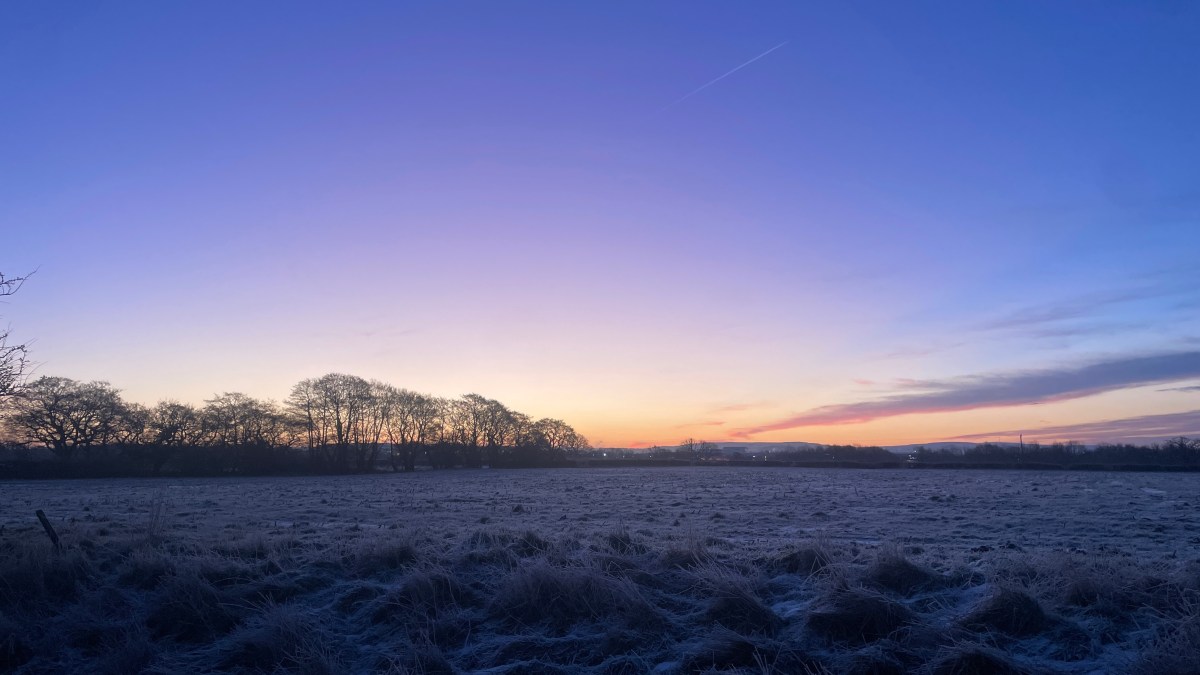
Header Image: A recent frosty morning walk sunrise.