Is it time we stopped having "users"?

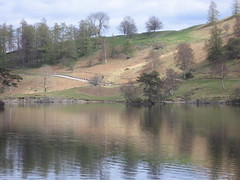
Rain in Lancashire? How are you going to get across there?Josh Bernoff writes:

The more I write and read about social media, the more frustrated I get with the term “users.”

When I started in the business twenty-mumble years ago, writing software manuals, people who used software were unusual (and had to be masochists). We spent a lot of time talking about users. The word user was helpful — it helped us to keep in mind that there was a poor slob on the other end of what we were building.

Those times are long gone. We know users are important now. Disappoint them and you lose. So why do we still have to call them “users,” which puts the emphasis on the technology they are using?

Josh’s point is that it makes us see the customers of the things that we do differently. If someone is a “user” they are somehow out of the ordinary. Ordinary people aren’t users, they are just people. Describing them as “users” dehumanizes them.

I’ve tried for a long time not to describe people as “users” not because of the reasons Josh is outlining (to change the way we see these people) but because I think it’s a demeaning term. The only other business with “users” is the illegal drugs industry and I don’t want to see any of my customers in that way.

Having said that, I find that it’s great shorthand that people understand. Not using it can make the documents that I write sound a bit politically correct. There is a real danger that using a different word just shifts the problem on to that word we already have this problem with words that describe people who are older or people with some form of disability/special need/etc. (you see my problem).

BlackBerrys and PDAs bad for work/life balance – Really !?!?!?

An early start for a long driveIt’s becoming a popular trend of reporting “BlackBerrys and PDAs bad for work/life balance“.

Is that really true?

Is the device itself actually bad for work/life balance?

Does the very presence of a Blackberry or a PDA have a negative effect on your ability to balance your time?

It’s another case of us humans abdicating our responsibility over to the machines and letting them take the blame.

It’s not the machine that is the problem – it’s our attitude to the machine!

Do I have the ability to turn my Blackberry off? Of course I do!

Do I have the ability to leave my BlackBerry at home when I go out for the day? Of course I do!

It’s a tool that I use, it’s not my master and I’m not a slave to it.

If my boss sends me an email at midnight, that’s his problem! I don’t see why I should carry my BlackBerry around just in case he does.

If I choose to go through my emails on the night before returning from holiday so that I can have an easier run in on Monday morning that’s my choice. It’s not the machine making me do it. If I blame the machine then I’m just ducking the real issue.

When I was a child I kicked a ball through a window. When I was caught I blamed the ball, but I was still the one that was punished. N-one would expect otherwise.

I know that, for many people, the need to respond to something is very strong, but we need to learn to ignore it, or to turn it off. I would be a very rich man if I had a £1 for every time someone interrupted a face-to-face meeting we were having so that they could answer the phone. But it’s still not the phones fault for ringing, it’s our fault for answering it.

The Joys of Working from Home

Tarn HowesOne of the interesting things about working from home is having to provide your own power and connectivity.

It’s gone very dark outside because of a thunderstorm. The power has already dipped a number of times and I’m using CTRL+S (Save) rather more than normal just in case.

Thankfully the domestic supply in the UK is quite reliable, but it’s not guaranteed. As more people work from home, I wonder whether we’ll start to see the utility companies offering a premium service for home workers.

I'm on Facebook

Picnic by DerwentwaterOh dear, what possessed me! Why on earth have I done this thing?

Perhaps I thought it was time to get down with the kids.

Perhaps I thought there was something I was missing out on.

Perhaps I thought that there was some sort of experiment in social engineering that it might be interesting to understand.

I don’t know, but I’ve done it now, and once I’ve done something it’s done.

I have no idea where I am going to find the time to do anything with it though.

I’m not going to give you a link or anything, because I think that should be part of the experiment .

What does collaboration and collaboration technologies mean to you?

Picnic by DerwentwaterIt’s a question posed by Stu to which I was going to write a comment, but the comment got too big, so I turned it into a post.

Some thoughts.

Working together is a good thing

In most situations working together is a good thing. There are all sorts of sayings down through time that would support this:

  • Many hands make light work.
  • Two minds are better than one.
  • Two people are better off than one, for they can help each other succeed. If one person falls, the other can reach out and help. But someone who falls alone is in real trouble. (Proverbs 1000-600 b.c.)

So it’s long been recognised that working together produces more.

There are constraints to working together

Although we know that working together is a good thing we work within a set of constraints. Some of these constraints are physical, some of them are more to do with our individuality as humans.

The time and space barrier

Two of the major physical barriers to working together are time and space, we cannot all be in the same place at the same time.

One of the ways we overcome these barriers is to arrange a time and a place where we can work together – we call this a meeting. Meetings are as old as mankind, we’ve always done it. Overcoming the time and space barriers by having a meeting is an expensive thing to do, but it’s also a very rich experience where we use all of our senses and all of our intelligence if it’s done well (considering how long we have been doing meetings it’s a mystery to me why there are so many bad ones).

One of the reasons we write, draw, paint, sculpt, model is to overcome the time and space barriers. Art creates an expression of our thoughts or feelings that transcends the time in which it was created, it can also transcend the space in which it was created. Expressions in art may not, however, provide the richest experience. When I visit art galleries I love to read the labels next to the art because it gives me a richer experience. At one gallery I went to they had a recorded commentary from the artist, this gave an even richer experience, I suspect that had the artist been there in person the experience would have been even richer.

The human barriers

We are all individuals, as such we work with other people in different ways. There are some things we love to do together, there are some things we prefer to do on our own. Each of us has individual preferences. If we are to work together in an effective way we need to build a whole set of things between each of the individuals: trust, respect, experience, understanding, etc.. These things do not necessarily come easily and normally do not come quickly.

My best experience of working together has been on teams where we had worked together long enough, on a common goal, where the human barriers no longer existed and we were able to work in freedom from them. I’ve recently been on FranklinCovey 7 Habits of Highly Effective People course. They call this type of working “synergistic working”. As a British person there is something about the word “synergistic” that sticks in my throat, but I know what they mean. Synergy is about working in such a way that the result is greater than the sum of the parts. Another way of thinking about it could be the principle of resonance.

What does collaboration mean to me?

So, back the Stu’s question.

Collaboration is working together in a way that tends towards synergy.

What does collaboration technology mean to me?

Collaboration technology is a set of technology that is aiming to enable collaboration outside the time and space barriers while still providing an appropriate richness of experience. It’s the richness of the experience that helps us to overcome the human barriers.

I’ve talked before about the different ways that we talk on a telephone conference call. I am sure that I have a completely incorrect impression of some people because I have only interacted with them on conference calls. Conference calls are definitely not a synergistic experience, there isn’t enough richness for that.

There have been many occasions when I have built up an impression of someone from their emails, only to have it smashed to bits by meeting them in person.

I regularly find myself in the situation where the technology has enabled me to overcome the time and space barriers without providing the appropriate richness of experience. In that sense then, for me, collaboration technology is still a yet to be fulfilled promise.

GROMIT Update

Grandad take a liftThe whole idea of GROMIT (Grumpy Old Men of IT) seems to be gaining some momentum.

I’ve had a load of comments from people, but for some reason most of them have chosen not to post a public comment on the blog, instead preferring to stay a bit more anonymous .

Office XML gets Massachusetts Green Light

Jimmy and Grandad survey FarnhamThere is some history to this story. A while back (2005) Massachusetts decided that all of the document sit dealt with would be open XML formats. At the time this meant ODF because the view was that the Microsoft format wasn’t open enough.

Many people expected others to follow the Massachusetts lead.

Today it seems that Microsoft have indeed done enough to make Open Office XML (OOXML) a suitable format.

Similar to my last post, this is a fight about primacy. In this case this is Microsoft fighting to retain primacy in the office application space by retaining primacy in the file format space. Microsoft wasn’t going to hand over it’s primacy without a fight. they may have had to become more open to retain it, but they have probably gone a long way to securing the file format primacy.

Technorati tags: , , , ,

Online Music Still in Flux – The Fight for Primacy

Jimmy and Grandad watch CricketThere have been a couple of events over the last couple of days that show that the online music industry is still in flux.

The struggle that seems to be at play here is the struggle between content and content delivery; who dominates? Is it the content owner that has the primacy, or is it the content deliverer?

This struggle is one that we are going to see in many areas.

Many web sites owners have already handed their primacy over to Google as the content deliverer. Some of them have lived to regret this as they fall down the search rank and their business suffers.

Many retail businesses have already handed their primacy over to eBay as the content deliverer. Again, some have lived to regret this as eBay changes its policy and their business suffers.

It’s difficult to know whether the advertisers still have primacy over Google, or whether it’s Google that now has primacy over advertising.

The music industry seems to have decided that it is going to fight to retain primacy. Whether they are successful or not remains to be seen.

Technorati tags: , , ,

BBC: Blackberry ban for French elite

Jimmy and Grandad take a trip to LondonThe BBC are reporting on a ban on Blackberry use for French Officials:

“French government officials have been ordered not to use handheld Blackberry devices amid fears that foreigners could spy on them, reports say.

Workers in the French president’s and prime minister’s office have been told their e-mails risk falling into foreign hands, Le Monde newspaper reports.

France’s SGDN security service is worried because Blackberries use US- and UK-based servers, the paper says.”

What I found interesting about this article wasn’t the erroneous security issues but this statement:

“But some officials are flouting the ban and using them in secret, it adds.

“They tried to offer us something else to replace our Blackberries but it doesn’t work,” one unnamed official told the paper.”

This is another example of the strength of User Innovation. These officials are really important people who should be very concerned with security. Their need to communicate is greater than their need to obey by the rules. I’ve witnessed similar behaviour in many organisations; people needing to get things done doing whatever it takes to get it done. If the French security services can’t stop people working outside the defined security envelope what chance to other organisations have.

The thought of all these French officials using these things in secret conjures up all sorts of clandestine images for me. I’m imagining lots of people in dark glasses and overcoats congregating down dark alleys to feed their addiction. Others are sitting next to each other in a public place agreeing the sign for the time when they should surreptitiously leave. Such is their need.

Technorati tags: , ,

Virtual Earth gets terrain

Microsoft’s Virtual Earth has integrated terrain for Great Britain.

A couple of examples.

The view of Scafell from Great Gable:

The view of Catbells and the Jaws of Borrowdale from Friars Crag:

Google earth has had terrain for a while, but this would appear to be more detailed than their offering (but not a lot)

I’m bigging this one up because it has come to Great Britain first, I always like it when we are ahead .

Bang goes a whole load more hours looking at things for no real purpose.

Technorati tags:

Windows Live Writer – Playing

Mossy dry stone wallsBeta 2 of Windows Live Writer was released yesterday. This is just me playing with it a bit…

It seems to work fine. They still haven’t done anything about the dictionary so it looks like I’m going to have to reapply my UK dictionary hack.

The spell checker now works inline with nice squiggly lines, even after the hack.

The interface has got a bit more cluttered, and I’m not sure it’s for the better. There seem to be more options that I rarely use taking focus of the ones I use a lot. Moving categories to the bottom seems like a change for changes sake rather than something that needed to be done.

Technorati tags:

A Creative Commons Example: I've had a picture published!!!

Skiing in Bansko, BulgariaI use flickr to publish my photos so that I can use them on the blog, but also so friends and family can see them. Photography is a hobby which I enjoy and could really get into, but I have decided to restrict myself for now.

My standard setting for flickr copyright is Creative Commons Attribution-NonCommercial. This one happens to be covered by version 2.0. I’m quite relaxed about people using my pictures, but I don’t want them making lots of money out of me (as if that was possible).

A few weeks ago I was contacted by someone putting together a free magazine that gets distributed at a number of regional airports in the UK. They liked one of the pictures we posted from our skiing holiday in Bansko, Bulgaria and wanted to use it in a feature.

Even though the magazine is free, it’s still commercial, so they were seeking permission in lines with the copyright agreement.

I gave permission asking that the “attribution” still stood and for a copy of the magazine in return.

Last week two copies of the magazine arrived with my photo in them and my name by the photo .Published Bansko Picture

It’s a surprisingly good feeling to know you are a published photographer – even if it is just in a free magazine.

Creative Commons worked. They had access to the file, they could have just used it without asking, but they didn’t. Others may have used pictures without asking and without attribution but the fact that someone went through the process of shows that it can work.


Technorati tags: ,