Sue Reading Blogs – how well do I know my wife?

Cordeline

Sometimes it’s good to give a relationship a bit of a test. this time it’s me that has set myself one – how well do I know my wife? This is also a test in the maturity of blogs, or more specifically RSS. If Sue can get into it, then they are probably good for almost everyone. If she doesn’t see the point, then so will many others in the general population. I’ve used Sue as this type of benchmark before and she is great at keeping my feet firmly on the ground.

I have set her up with an aggregator built into Outlook (RSS Popper) so as not to confuse her with another application to learn, and she spends all her life sending emails about this that and the other (that took her a while, but once she caught it she was away).

But then what to point her towards to get her started. There is no point in putting this site in, because she isn’t interested in anything technical at all.

She likes Oak Grove Happenings because that’s about us.

Ummm.

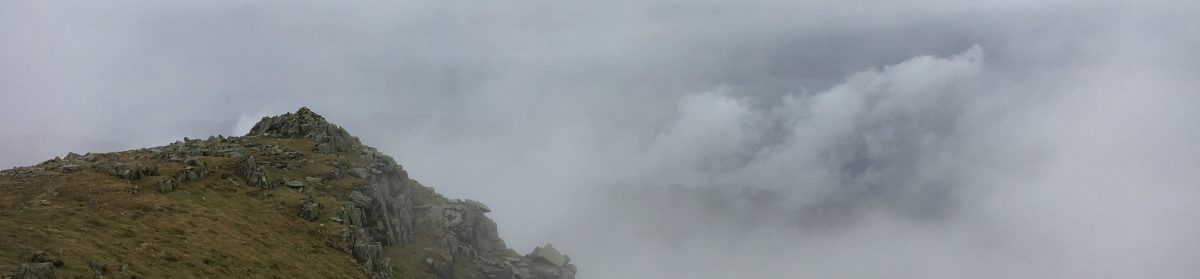
Well what does she like, what interests her. Well she really loves stories about people so Sand in the Gears seems like a good place to go. And she likes pictures so it’s worth putting our Flickr set in there, and perhaps it’s worth putting the Lake District pool in too, because that’s where she grew up.

But then after that, umm, not sure, time for some research I think.

(Any ideas would be gratefully received, as usual).

Count Your Blessings #8 – Paddling pools

Water

Today is a rare day in my particular part of the world. It’s sunny and it’s warm. Lancashire is not renowned for either of these two things, though partly it’s an impression we like to give in order to keep the numbers down.

Because this weather is generally unexpected we all react to it by going a little crazy. We also feel it is necessary to fit everything into a single day that people in warmer climates know they can spread across the whole summer.

In warmer climates people have water fixed into their gardens as a permanent feature. For those of us in Lancashire spending money on such extravagance seems like a pointless activity . We have a much better more cost effective mechanism for enjoying water in the sun, we use a paddling pool. In our case a paddling pool is simply an inflatable puddle, not much bigger than the average car tyre. The great thing is that size doesn’t matter; it still manages to delight half a dozen primary school children.>

As a parent it is a real blessing to see your children having fun, being children. Seeing a face light up when it’s been covered by a splash of water gives a completely different perspective on the world. Hearing children revelling in doing the same thing over and over again makes us adults want to regain that type of joy.

Installation Idea

IMG_1472

It’s only just occurred to me how much time I spend looking to see if something is installing OK on the various machines around the house, and I know it must also be the case in smaller businesses where they don’t have a big deployment infrastructure to rely upon.

You set something running and then go off and do something else because you know it;s going to be a while. When you come back 10 minutes later you realise that the installation stopped 30 seconds after you left it.

What I would really, really like is a way of flagging the installations to send me an alert (email, SMS, etc..) whenever it wants a question answering without me needing to go and find that out.

(Just going down stairs to look at Sue’s computer because it’s installing some patches)

It’s great on Windows XP Professional devices to be able to remote control them. But on Windows XP Home and Media Centre devices that luxury isn’t available. 

Upgraded to flick pro

AcerI have upgraded to flickr pro because I got above the 200 photograph limit of the normal account.

I’m not altogether happy with paying for something that is still marked as BETA, especially as all of the pictures in my blog point there. But that’s the risk you take.

I love the way that flickr generates community, I get far more comments on my flickr photos that I do on my blog. perhaps there is something to be learnt from that. I also like the concept of favourites too, there is definitely as need for the Internet to have a layer placed upon it which adds a level of confidence to a particular article or site. del.icio.us partly gets there, but the idea of marking things as favourites is also nice especially favourites that are visible to all. I have found myself doing searches over-and-over again because I can’t remember where an article is.

Stuart Downes starts a blog

Figus

There isn’t much there yet, but Stuart Downes has started a blog site.

Stuart is also a Flickr user.

Here we go again – into problem solving mode

Look like I have been sucked into another problem solving situation, and yet again I am dealing with the frustrations that it brings.

The primary frustration I have is that we end up with big problems because people won’t deal with the little problems. Everyone services their car and includes that in the standard cost of things, yet we so often find ourselves in the situation where people do not service IT systems.

The secondary frustration is that we deal with each of these problem situations in a bespoke way. Each one is unique. This gives us two problems, we struggle to understand what the problem is and at the same time struggle to understand how the team is operating.

How do I deal with frustration? Well for me it does actually make a difference if I put a smile on my face, even if it’s forced. That simple act makes me see things in a different light and help me to focus on the issues.

Happenings

Tree Fern

Just so that everyone knows. I run two blogs. This one for mainly technical, work type thoughts and Happenings for more personal views on the world.

Please feel free to visit both site and all comments are gratefully received.

Count Your Blessings #7 – Freedom to be alone

Local bench

My life is busy and full and active. I have a family. I have a job which requires me to communicate with people all day every day. I am not an overly gregarious person so can find all of this interaction quite waring. So it’s a real blessing to be in a relationship which allows me the freedom to be alone.

Times of solitude bring refreshment and renewal. If I am feeling wounded or tired; I’m not likely to want to go out and party. I’m far more likely to want a quite place. For me the garden is often this place, but not always.

Some of my best times of solitude are spent out walking. Most mornings I try to take a walk in the local woods, normally solitary, apart from the odd dog walker or two.

I can start a time of solitude in many different ways, angry, drained, hurt, tired, but nearly always finish feeling calmer and uplifted.

As a Christian I regularly meet with God in those times. I don’t necessarily start thinking that I need to get with God, it’s what happens.

Would I like to be Certified?

Langstrath

Microsoft have recently announced an Architecture Certification Program(me).

I have always been a bit wary of certification in the IT arena because it always seems to have been focussed on clicking the right buttons rather than on any form of aptitude towards the role. Assessing people’s aptitude can be quite difficult. But in going for a peer review process I think that they have probably hit onto the best way of assessing peoples architecture abilities.

Richard Godfrey has already been through it, and it looks fairly rigorous.

It will be nice to have a development goal to aim for.

Paying the Price for Knowledge

Local Bench

There is a story told of the famous engineer Charles Proteus Steinmetz who was instrumental in the making alternating current usable. It goes like this:

[Steinmetz] had worked on a very complex system [at General Electric] that was broken. No one could fix it no matter how hard the technicians tried. So they got Steinmetz back. He traced the systems and found the malfunctioning part and marked it with a piece of chalk

Charles Steinmetz submitted a bill for $10,000 dollar. The General Electric managers were taken back and asked for an itemized invoice.

He sent back the following invoice:

  • Making chalk mark $1
  • Knowing where to place it $9,999

Those of us who are knowledge workers still live in a world that asks questions just like this one “$10,000 that’s a lot of money – all you did was put a piece of chalk on the side of the machine”.

The value of a document is often viewed by the number of pages that it includes.

The value of a presentation is measured on the number of slides that it includes.

The value in an answer that is provided is regularly derived from the amount of time it took to answer the question. If it doesn’t take long to resolve the answer can’t be of much value.

There is often no immediate value in a knowledge worker having the knowledge before the question is asked, because people want to see you ‘working’.

I have just finished reading The Heart of Success by Rob Parsons and he focuses very clearly on being productive rather than spending lots of hours working. The problem is that actually we don’t know how to measure productivity. And because we don’t know how to measure it, we struggle to know how to reward it. we can measure the hours that people work, but we struggle to measure productivity, especially for knowledge workers. Perhaps it’s about time we started applying technology to answering that question.

Lots of statements and questions today, but not many answer so I’ll leave you with another thought from Charles Proteus Steinmetz:

“No man really becomes a fool until he stops asking questions.”

Final Working Productivity Assessment

Strawberry

Over the last few weeks I have been undertaking a quick semi-scientific assessment of my productivity when I am in the Office and when I am working from home. I’ve only managed to do this across a few days and hence it’s probably not that representative. The results are stark:

  • Home working productivity: 166
  • Office working productivity: 86

For those of you who haven’t read the previous articles, this assessment has been done solely on interactions (phone calls, meetings, IM, email, etc.) with extra weight being given to the times when I have been adding value and repeat business. I am a knowledge worker and these interactions are my work. I often consider them as extra to my work, but that’s just a mental and emotional shift I have never managed to make.

Is this study valid though, do I feel twice as productive at home as I do in the office. In short, no. I do feel more productive at home, but certainly not twice as productive. One of the things that I haven’t done is to rate the quality of the interactions and face-to-face interactions are certainly of a higher value than those through a technology interface (phone, email, etc.). This would certainly increase the value of the productivity gained from office working. But that assumes that the people I need to interact with are also in the office, which is generally not the case.

Having experienced worked from home there is nothing worse than sitting in an open office on a teleconference, especially as I sit next to an open meeting area and the noise can be terrible.

The flip side of the value of face-to-face interaction is the lack of focus that interactions have in the Office. I may interact casually with more people, but these are probably people who are not adding to my productivity.

The noticeable advantage to home working is the ability to undertake out-of-work activities and knowledge expansion activities. Both of these are non-existent for office working

Productivity through Training (and Technology)

Figus

Yesterday I spent some time reading through a couple of Microsoft articles:

Both of these papers  point towards a welcome change in the IT industry; one that drives us away from features and towards exploitation. In Enabling the New World of Work the author(s) write:

Today, the primary challenge is not about IT departments conquering the technology, but rather training and educating the workforce to adopt the technologies that IT deploys. This shift toward an information-worker-centered IT model focuses on the people who render information into action, rather than the technology itself.

And also:

In a recent study conducted by Gartner Research, it stated that the successful CIO will make a strategic transformation, through 2010, from a manager of IT resources to a business leader who uses IT to enable and empower the business. By 2010, 50 percent of Fortune 500 companies will have an integrated business and IT strategy. 

In Helping Employees Use Technology More Effectively at Microsoft they outline the new approach that Microsoft are taking towards training. They call it the Employee Productivity Education (EPE) program and it’s aim is to “to provide Microsoft employees with scenario-based and prescriptive information about Microsoft products and IT technologies.” They then go on to talk about how they are going to do this in a number of different scenarios.

The other day Ernie the Attorney talked about a scenario he had found himself in where the simple use of very old technology made a significant difference to a lawyer friends personal productivity. Ernie goes on to make a valid point:

Figuring out what’s possible is the hard part for most people, especially those who resist technology. People resist technology because they’ve learned that it’s too hard to deal with.

Productivity and effectiveness have become burning issues to me and have written about it a few times (here and here and here). I’ve also been undertaking a semi-scientific assessment of my personal productivity when in my different working environments.

Having worked on many IT infrastructure programmes that have undertaken dramatic changes in the technology base for large corporate customers words like these leave a bitter-sweet taste in my mouth. Having been involved in the initial creation of many of these programmes I have always sought to include significant budget for training in and exploitation of the technology that we were about to deliver. But in every one of the programmes the first victim of programme issues has been the training and exploitation budget. I recoil at phrases like “we’ll deal with that once we get it out there”; “this isn’t that different from the technology we have today”. For each of these programmes the stated requirements may have been met, but the objectives of the business have been severely curtailed.

Perhaps Microsoft have started down a path that others will seek to follow – scenario based training.It’s not that the training ‘information’ isn’t available to all; the issue we need to contend with is connecting people with the necessary information in a way that is relevant to them. I really like the scenario idea because it’s a metaphor that people can connect with – it’s also technology agnostic. It answers the question that is being asked rather than telling someone how a particular piece of technology could contribute.

Yet again the biggest challenge facing IT is the people challenge.

  • How do we teach adults to learn like children? Children love to find new ways of doing things. They love to compare what they do with their friends. They love to learn and learning brings change. They don’t worry about the change. They don’t worry about breaking something.
  • How do we teach business leaders that their role has changed to be one of exploitation rather than one of features?
  • How do we help people to realise that learning IS work?
  • How do we help people to realise that THEIR productivity is THEIR challenge?
  • How do we help people to realise that the productivity of the TEAM is also their challenge?