My grandma loved this saying and repeated it often. Whenever something went wrong with her latest piece of knitting, or needlework, she’d chide herself under her breath – “less haste, more speed.”
I was recently on a day out with a friend in his canal boat. Canals in the UK are a construct of the Industrial Revolution that have, in recent years, been reclaimed for leisure purposes. The one we were traveling on dates from 1792.
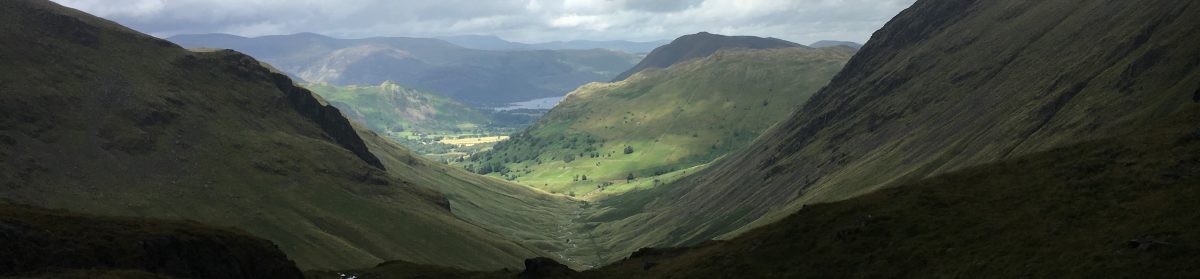
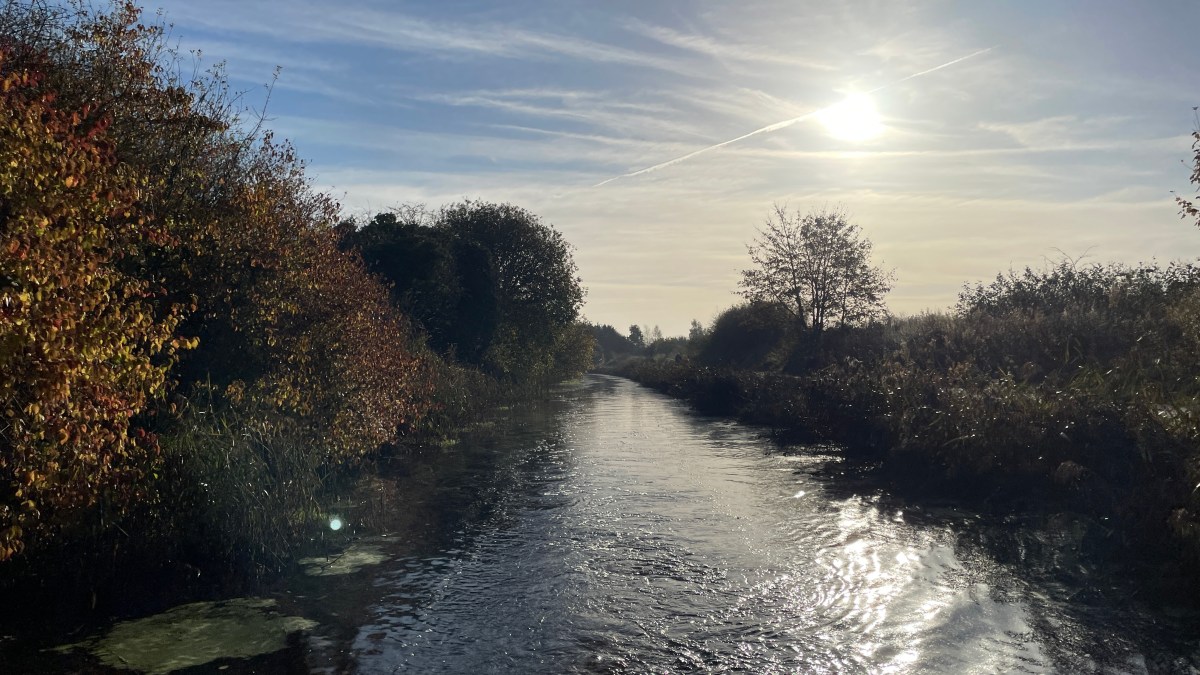
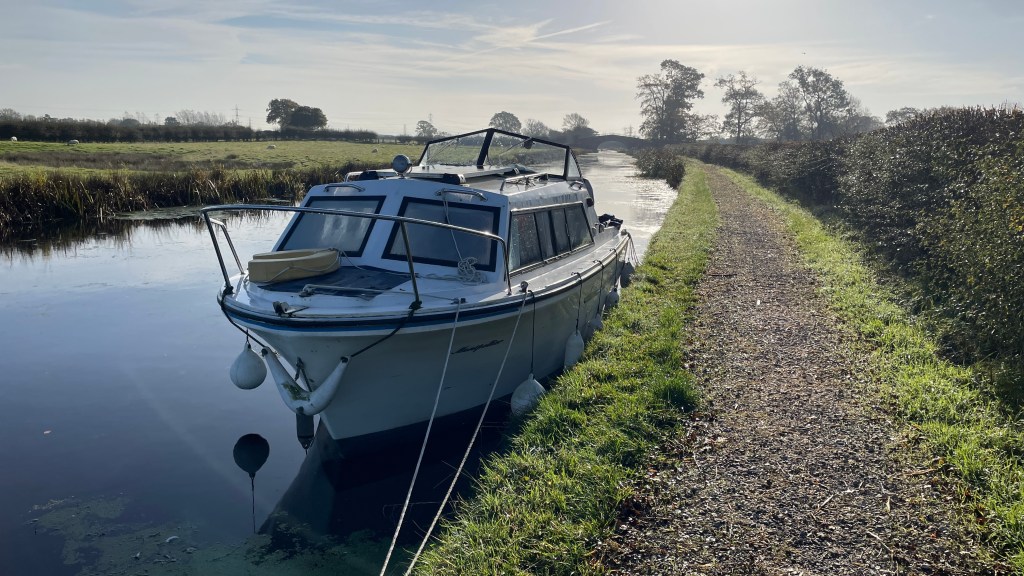
If you are from the UK then you know what I mean when I talk about a canal, if you are from outside the UK the header image and a couple at the end will give you a good idea.
Each of these narrow, relatively shallow, waterways were used to transport heavy goods around the country at the speed of a horse’s walk. This was at a time when the speed of a horse’s walk was a lot faster than any other way of transporting such bulky goods. We were in a small leisure craft enjoying the sunshine at a sedate 4 mph (human walking pace).
My friend doesn’t have a traditional iron/steel narrow boat, but a fiberglass leisure craft known on the canals as a yogurt pot.
I was driving and trying to keep a good pace so that we could make it to the pub for lunch. We’d recently pulled past another slower boat that had kindly pulled over for us (overtaking is not allowed) when I felt the boat veering off to one side. In my haste I over-corrected and the boat swung off to the other side. Still feeling the pressure to act I turned back the other way resulting in the boat leisurely, but forcefully, veering off into a bush on the bank with a firm stop. The strange thing was even at walking pace it all felt like it happened very quickly.
To get out of the bush we needed to reverse, slowly, make sure there wasn’t any damage, manoeuvre to the right part of the canal and then we could continue. Before long the slower boat we’d sped (slowly) past earlier was up behind us and waiting for us to get on our way. It would have all been a lot simpler if I’d driven just a little bit slower and not taken any hasty actions. Even at 4 mph it is quite easy to get yourself somewhere you don’t want to be.
I may know the phrase “less haste, more speed” from my grandma, but it’s really an old Scottish phrase according to the small amount of research I’ve done.
Interestingly I remember the saying this way around, but in the old Scottish it’s the other way around “more haste less speed”, or for those of you who speak old Scottish “of fule haist cummis no speid.”
It is a very old saying. It was documented in the 1600s which means it’s almost certainly much older than that, not too many things were documented before then.
There is a similar saying in the Proverbs of the Old Testament of the Bible making the sentiment much older still:
Enthusiasm without knowledge is no good;
haste makes mistakes.
It may be an ancient saying, something deeply rooted into our thinking, but it doesn’t stop us needing to repeatedly learn its lesson.
Can you remember a time when someone was criticized for a decision that was too slow?
Can you remember a time when someone was criticized for a decision that was too hasty?
It’s all a matter of perspective.
Fast sounds better than slow.
Measured sounds better than hastily.
Rapid sounds better than protracted.
Deliberate sounds better than reckless.
In my working career I’ve been in many situations where people have been desperate for a swift decision. Looking back, many of these decisions were taken in haste and would have been much better for being more measured.
We sometimes need to sit back, take a deep breath, and resist the need for speed.
Much of the time the impact of hasty decisions is minor but there are many decisions for which a correct answer is vital.
Here’s another very old saying much beloved of makers and decorators alike:
Measure twice, cut one.
(Apparently, if you are Russian, you measure seven times before you cut.)
There are many decisions that don’t involve a “cut”, but the ones that do need to be right.
Organisations can get stuck treating all decisions as the same and expecting all answers to be processed at the same speed – fast. We can do the same in our personal life when we anxiously ponder over a decision that once made can be reversed immediately while blindly rushing into other decisions with long lasting consequences.
Some organisations use a framework popularized by Jeff Bezos and talk about one-way door and two-way door decisions. The decisions with a cut are the one-way doors needing careful consideration because once made, they are made. If there were any decisions around which haste should be avoided, it is these one-way door ones.
There is much in business that is too slow, too pedestrian, but we need to be careful that our relentless drive for speed doesn’t set us on a course where we find ourselves in a bush on the canal bank.
Header and Footer Images: These are some images from the Lancaster Canal on a sunny day making progress at 4 mph.

Discover more from Graham Chastney
Subscribe to get the latest posts sent to your email.
 Graham Chastney