
There’s a line in a U2 song:
We thought that we had the answers, it was the questions we had wrong.
U2
Most of business seems to be focused on answers, fast answers, definitive answers, simple answers, answers that lead to action.
Not much of business is focused on asking the right question.
Without the right question, we can’t get the best answer.
A big part of my current role is to be the person that people come to for answers. Quite often the questions I am asked are defined in simple terms with people looking for a specific answer. I’m grateful for this, people know I’m busy and don’t want to have a debate about something that is likely already covered in a document, or I can answer in a couple of sentences.
Although the answers are often straightforward sometimes experience tells me that there is something behind the question. When I get that feel my response to the question is often another question. Most of the time all it takes is a simple “tell me more?” from which the conversation hopefully opens into something more valuable.
I say hopefully because asking questions is tricky, particularly in written form.
In his book Nonviolent Communication, Marshall Rosenberg dedicates a whole chapter to the skill of “Observing without Evaluating” in which he summarizes:
“The first principle of NVC entails the separation of observation and evaluation. When we combine observation with evaluation others are apt to hear criticism and resist what we are saying”
The challenge with so many questions is that they come with hidden evaluation. I try to avoid the simplest question “why?” for that reason. While I may be genuinely asking “why?” what I risk people subconsciously hearing is “why are you asking that, that sounds like a daft idea, don’t you know better?” the result being that an open question instantly becomes a closed one.
Despite the risk of questions becoming loaded with evaluation I still think that they are the best way of broadening a conversation. Stepping back and ask the question is a powerful thing.
Another area where questions are powerful is in documentation. Returning to my previous post on writing for the reader, I’ve found that many people think in questions. I now spend as much time writing FAQ as I do on the formal documentation. We are no longer in a time when people read documents end-to-end and I’m not sure that we ever were.
What people need is to get an understanding. Knowing that the answer they seek is somewhere in the middle of fifty pages isn’t immensely helpful. Having the answer to a question that points you somewhere else can be more useful.
There is a challenge here, people who live by questions only know the answers to those questions. Their knowledge is limited to their ability to ask good questions. If you don’t know something exists, how are you going to know to ask about it. If you ask people at the beginning of a project what questions they think should be in an FAQ you’ll find that they are extremely limited.
I find that people who live by questions tend to miss the big picture and that robs them of the ability to rationalise other answers. As a way of breaking that down my FAQ answers sometime expect people to work for the answer, and in so doing they hopefully get the broader view.
Questions are everywhere, sometimes the answers are easy, sometimes they are more difficult, or even unknown, but questions are always powerful. I believe that the wise people of the future will be the ones who know how to ask good questions.
To question a wise man is the beginning of wisdom.
German Proverb
One who is afraid of asking questions is ashamed of learning.
Danish Proverb
To a quick question give a slow answer.
Italian Proverb
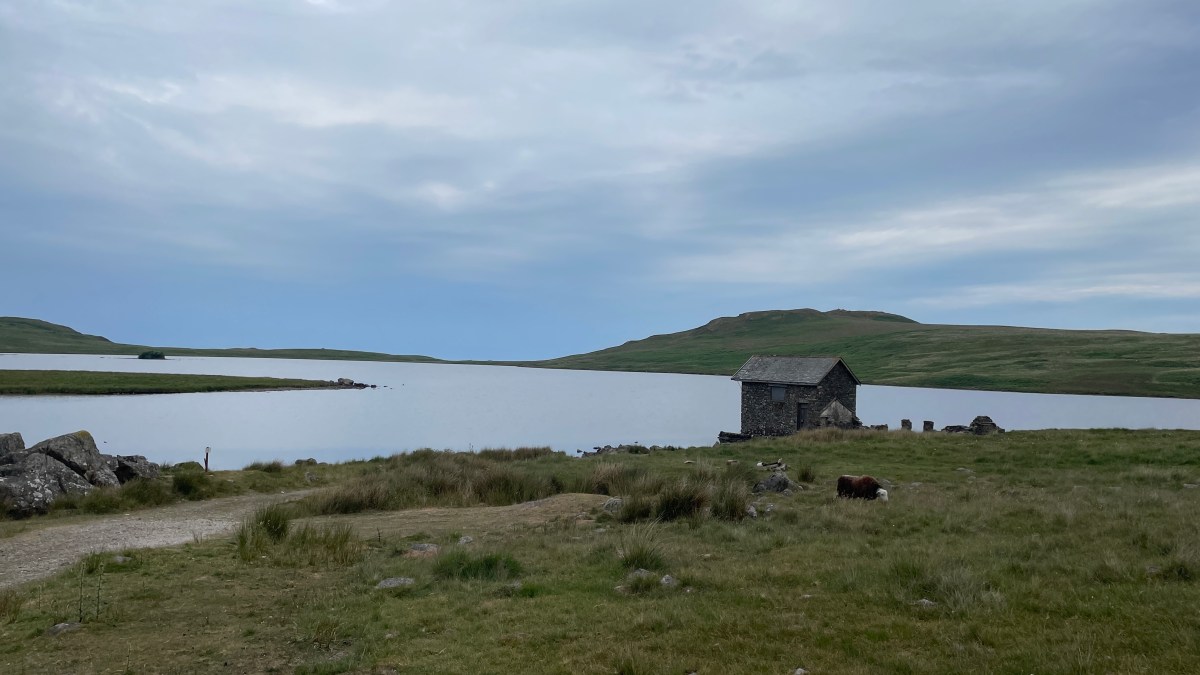
Header Image: Time for a swim in a somewhat chilly Devoke Water.
Discover more from Graham Chastney
Subscribe to get the latest posts sent to your email.
 Graham Chastney
2 thoughts on “Questions are Powerful | Working Principles”