Notes "Hannover" Screen-shots

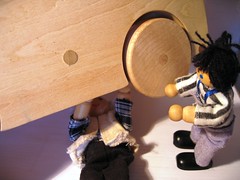
Jimmy helps Grandad mend the car

Ed Brill has some screen-shots of the upcoming Lotus Notes “Hannover” interface.

So what can we make from them.

First impressions are good, it looks a lot cleaner than the current Notes implementation. They’ll hate me for saying it, but I’m struck by how similar it is to Outlook hen in the Inbox and Calendar. The issues for me with the current Notes interface have only partly been about the way it looks. Most of my frustrations are with the actions that the interface takes, the gestures. If I double-click on an attachment I want it to open, that’s what I expect. Whether these things have been fixed I don’t know because I’m just working from some screen-shots.

Perhaps I should take the time to look at the real thing.

(PS: does anyone else think that Ed Brill has to be a made up name.)

Do comments drive interest?

Jimmy and Grandad still don't understand the end to 'Lost'

I have been running a bit of an experiment recently. I’ve decided that I need to be less of a viewer and do more interacting. So I’ve been adding comments to posts a lot more. There are a couple of reasons for this. The first is that I would like more comments on my post and you can’t expect what you don’t do yourself. the second is that I was intrigued to see whether my interactions would drive any traffic back to my site. I suppose I was seeing it as a bit of a mutual response and respect thing.

In normal conversation it’s polite to respond when someone makes a comment and I wondered whether we had naturally built the same etiquette in blogs.

The results have been quite mixed to be honest, but mostly people don’t check back. They certainly don’t leave any comments on my site, some respond on their own site but that’s really difficult to know if they have a long comment list.

The real question, though, is whether I care. Well on one level I don’t, because I have no massive aspirations to be a super-blogger or anything like that. On another level I do care because I want to know I am noticed, but that just some deep seated insecurity complex that most of us experience every day.  Does it puzzle me why some people get noticed and others don’t – definitely; but that isn’t limited to blogging it’s always been a mystery to me.

Google Earth Updated

Google earth pictures have been updated with even more detail:

“Now for many areas around the world you can see a lot more detail than you could before,” said Google Earth team member Chikai Ohazama. “Take a look at people standing at the gates of Buckingham Palace in London, or jump over the pond and see the Statue of Liberty in New York.”

Via: BetaNews

Sametime 7.5

Tyke doesn't think Grandma and Grandad are up to a walkFeel I should say something on Sametime 7.5 because it’s just been announced at Lotussphere – but Stu said it already.

The one comment I would add though is the similarity in the interfaces between Microsoft Live Communicator, Sametime 7.5, MSN Messenger and GoogleTalk. If they get too similar we might all be struggling to work out who we can communicate with where. I suppose we could all dream of communicating with everyone in one interface but I don’t think it’s going to happen any time soon even with the new announcements.

Windows Catches up with Netware – in one respect anyway

Jimmy

A long, long time ago I used to support Netware environments. When we moved people over to Windows file servers one of the biggest complaints from people was that they could now see all sorts of directories that they didn’t have access to and it made their world all cluttered.

Back in those heady days we just told them to get a life. Well now the option is available (just) for Windows file servers. It’s called Windows Server 2003 Access-based Enumeration. Now isn’t that nice. Not sure why it should become available now, or whether anyone still cares, but I’m passing on the information anyway.

From my perspective it’s something that would make users lives look cleaner and hence make file navigation quicker. This should then make them more productive which has to be a good thing. And as file navigation is something people do lots of the potential productivity gain is high.

First Skype SPAM

Grandad

Got my first Skype SPAM today. I’m not going to give them the pleasure of reprinting it here but it was the usual “Mr Chastney we are looking for…” type, this time from Moldavia.

It there is a technology someone will find a way of abusing it; it’s been the same since we invented fire and since we worked out how to sharpen things.

Count Your Blessings #47 – Spring is coming

Early SnowdropI know lots of people who have a favourite season. It is sometimes Summer because of the long warm days; sometimes it’s Autumn because of the colours; sometimes it’s Winter because of cold crisp days; for others it’s Spring because of the way it burst into life. My favourite season always seems to be the one that we are about to enter into. Perhaps I don’t actually have a favourite season and the thing that I love is the change of the seasons.

Most of us have different ways of identifying the seasons too, for me it’s normally the garden. Over the last few weeks my small patch of land has been telling me that it’s ready for Spring. Seems a bit of a strange thing to say considering we haven’t even exited January yet but that’s what it’s saying. The picture of the Snow-drops was taken today, there are some even further on but I couldn’t get a decent shot of them. They aren’t the only thing growing either, everything seems to be popping through the ground or shooting leaves.

It’s clearly time for a transition and transition brings transformation. There’s absolutely nothing I can do to halt it, it’s coming. When we were kids we used to play hide-and-seek (actually we still do, but that’s a story for another day) and the person who was ‘on’ used to count and when they had finished they would shout – COMING, READY OR NOT. I feel a bit like the garden is currently gently whispering – coming, ready or not – but soon it will be shouting – COMING, READY or NOT.

The garden is telling me how small and powerless I really am. I can type words on this computer and people around the world can see them, but that’s nothing compared to the changing of the seasons. It happens every year and there is nothing I can do to stop it. I know my place.

It reminds me of the story of King Canute who tried to stop the sea from coming in. It depends on which version of the story you read as to whether it was Canute trying to teach his people a lesson or whether he was just completely arrogant. Either way the lesson is clear – it doesn’t matter how powerful we are we can’t stand against the seas.

There once was a king in Babylon called Nebuchadnezzar he was a mighty ruler – powerful and rich. One day he had a dream and it troubled him. Nebuchadnezzar called for Daniel to try and interpret the dream, after some time God revealed the meaning to him. The result of the dream was that after his death the great king’s kingdom would be replaced by something much smaller and inferior. Everything that Nebuchadnezzar had worked for would be torn down and there was nothing he could do about it.

Daniel gave praise where praise was due:

“Praise the name of God forever and ever, for he alone has all wisdom and power.


He determines the course of world events; he removes kings and sets others on the throne. He gives wisdom to the wise and knowledge to the scholars. 


He reveals deep and mysterious things and knows what lies hidden in darkness, though he himself is surrounded by light.


I thank and praise you, God of my ancestors, for you have given me wisdom and strength. You have told me what we asked of you and revealed to us what the king demanded.”

We might not be able to stop the seasons, move the seas or change history, but the dream that Daniel interpreted had a promise in it too, a promise that was fulfilled when Jesus died on the cross and continues to be fulfilled today:

“During the reigns of those kings, the God of heaven will set up a kingdom that will never be destroyed; no one will ever conquer it. It will shatter all these kingdoms into nothingness, but it will stand forever. That is the meaning of the rock cut from the mountain by supernatural means, crushing to dust the statue of iron, bronze, clay, silver, and gold.”


Daniel 2

Red Bull – Microsoft and IBM

Hi Jimmy, hi Grandad

Stu talks about the latest Microsoft release of Lotus Notes to Exchange (and others) migration toolkit. He thinks it’s a good thing, so do I.

The thing that I personally find interesting though is how this huge reaction from the Lotus Notes side of the debate will impact on customer perception. A negative to reaction to something doesn’t always get the reaction you were looking for.

For instance, the only people actively promoting knowledge of the toolkit are people who would rather it was never used. Just by acknowledging it existence they are acknowledging that there is an issue. This will mean that some customers will become uncomfortable and start an assessment process that they never would have previously.

My personal belief is that IBM Lotus have a strong technical story but that they aren’t telling the story. The current round of updates have all been focussed (in their presentation) on stuff that end-users couldn’t care less about. IBM seem to have missed the point that the end-user, particularly in this arena, is king and queen. IBM seem to dismiss continually the issues that end-users raise about usability even though they are fixing them. I’ve even been in a discussion with a customer who has said that they are leaving Notes just because of the end-user experience, they were more concerned that their staff were not enjoying their technology experience than the cost of running the infrastructure. Whether Outlook was really the answer to this customers problems can be debated for ever, but the main point was that they didn’t see anything from IBM that was going to make it any better.

Knowledge workers who use Notes or Outlook spend more than 80% using the products and their experience has to be impeccable. All that you have to do is to add a few minutes to each user each day; project costs for a migration are tiny in comparison. Expand that experience into Instant Messaging and other collaboration tools and the numbers just get bigger and bigger.  

That is where IBM needs to take the fight to Microsoft – at the end-user. They are the ones who will make all of the decisions. But don’t do it for Notes, do it for the whole collaboration experience.

(I have no idea why it’s “Red Bull” – how naive of me)

AT&T Teleworking – Continued

Jimmy and Grandad show how big their feet are

David Goldes continues his article on collaboration at AT, more precisely about teleworking at AT&T. I’ve talked a lot about the process and business change issues with all technology before so it was interesting to see the three pieces of advice from Joseph Roitz, AT&T’s director of telework:

1. Keep in mind that technology is paramount; if the technology doesn’t work and support applications, whether it’s the intranet or connectivity, the initiative is doomed

2. Corporate culture is of paramount importance.  It’s necessary to create a culture that embraces telework, or at the very least allows it to exist.  Telework is subject to the network effect, where each incremental addition adds value.

3. Telework is a business strategy, not a perk.  It’s not a project or a program, it’s an entirely different way of doing business that is more effective, efficient, resilient, and flexible.

Value Multipliers

Grandad never did understand desk chairs

Jeffrey Phillips has a great article on Value Multipliers:

The military has a phrase that I like a lot – force multiplier.  What they mean by that are conditions,weapons, tactics or other factors that increase the force brought to beat on a particular enemy.  This means that because of other conditions and careful planning they get even more firepower or results from a small team.

I think we in business should define some value multipliers.  What processes, systems or cultural changes can we make to our business that will add significant value given the same inputs?  I think this is especially true in workgroups or teams.

A great example of a value multiplier for an individual is the Getting Things Done methodology.  As an individual, I can become more productive as I adopt the process and methodology and put it to good use.  But there is a limiting factor – as long as I’m the only one using the methodology and becoming more efficient, there’s an upper level impact to the gains for the work group or team.  What can we provide for teams or workgroups to multiply their value and results?

In a sense he is saying that the total value is greater than the sum of the parts. We see this issue in all sorts of places, unfortunately in reverse most of the time. How do we get through to an organisation culture that if everyone works together on something we all get the value, but if some choose to opt out we all loose. I’m yet to see an organisation, for instance, where everyone uses the calendaring capabilities of their infrastructure in a way that makes everyones time management as effective or productive as it could be. There is normally someone who refuses to put all of their appointments in their making everyones free and busy information of low value.

Having said that I have worked in teams where the team came together in a way which provided value that we could never have as individuals. If I could bottle that culture and that feeling I would not be sitting here now, that’s for sure.

Jimmy and Grandad on Flickr

Jimmy and Grandad contemplate going for a hair-cutJimmy and Grandad now have their own Flickr Set please feel free to comment on their adventures.