Comments, Conversations and Blogs

I’ve always thought that it was way too difficult to transition comments into a conversation. This is especially true when you go to another blog and add a comment; you then need to go back and see whether the other person has responded. Well it looks like that issue may be about to receive some technical answers.

www.cocomment.com looks like they have a great product ready to launch.

Via: Scoble and Jason Clark

(And their name doesn’t even have a ‘r’ at the end.)

Decided something – Independence

Grandad finally gets the deck chair sorted

I’ve spent the last few posts trying to work out how I balance my posts between the technologies which I am interested in. How do I give each of them a fair crack of the whip so that people know I’m independent? Been around it a few times and come to a conclusion:

I’m no longer going to try to be perceived as independent, I’m going to write about what I think and see. If that means there is a perceived bias at a particular point in time then so be it.

Each post sits at a point in time and can be misconstrued however hard I try; it’s easier not to try.

VMWare GSX Server to go for free – apparently

Grandad on Jimmy's funky new mountain bikeNews.com is reporting that VMWare is to start giving away GSX Server (not ESX, don’t get mixed up now).

It’s not actually been announced so this is actually speculation but it would be a big thing for many people. It smacks a little (not a lot) of a desperate measure to retain market share from the rest of the boys coming up, but it could just be that everyone who is serious about virtualisation is using ESX server anyway. Giving people GSX server would keep the virtual machines in VMWare format throughout the development cycle and make the final move to ESX that bit easier.

Selling Notes – the other story

Tyke tries to convince Jimmy to take him for a walk

Having gone through the “My Boss Loves Microsoft – where does that leave Lotus?” presentation from Ed Brill I think it’s only fair to also point out the more reasoned “How to Sell Notes and Domino Inside Your Organisation” session.

It goes some way to talking to the issues I raised. It still only mentions the overall strategy though, but then it is labelled “Sell Notes and Domino” and not “Sell IBM Collaboration”.

Count Your Blessings #50 – I’m not a celebrity

Christmas Lights

While I popped out at lunch today I was listening to Jeremy Vine on Radio 2, today’s discussion: the closure of the London Planetarium to make way for more celebrity waxworks. Two things struck me about this conversation. The first was the obvious one – that’s sad. The second one surprised me – wow, I’m glad I’m not a celebrity. I can’t see any benefit whatsoever to being a celebrity and yet I live in a country where hoards and hoards of people are desperate for just that. The comments from most of the people went something like this: “who wants to see dumb celebrities anyway”, “why are we dumbing down again”. Celebrity is one of those words which has completely reversed it’s meaning. It’s a bit like the word ‘cool’, which means ‘cold’ – generally not a good feeling – but is mainly used to describe something that is good. Celebrity comes from ‘celebrated’ but mostly means ‘dumb’ and ‘shallow’.

I am massively grateful that I am appreciated, that people care for me and actually want me around, that I am loved. Some people seem to think that the way you get this appreciation is through being famous, being a celebrity, but it’s a mirage. Celebrity has nothing to do with love.

If you are a celebrity you can only be one dimensional and that dimension is governed by the area for which you are celebrated. Love is significantly different it allows you to be the multi-dimensional individual that you are.

Celebrity spends all its time trying to prove how stupid you are – just ask Britney Spears: “The cool thing about being famous is travelling. I have always wanted to travel across seas, like to Canada and stuff.” Love seeks to build you up to show you how interesting you are.

Celebrity is gone in a whisper. Love, well that goes on and on.

Celebrity is completely impersonal. Love is relationship.

The evil might become world famous, strutting at the head of the celebrity parade, but still end up in a pile of dung. Acquaintances look at them with disgust and say, “What’s that?’ They fly off like a dream that can’t be remembered, like a shadowy illusion that vanishes in the light. Though once notorious public figures, now they’re nobodies, unnoticed, whether they come or go.


Job 20

Become a celebrity? No, thanks, I’ll stick with being me – thanks.

Notes – I wouldn't sell it like that

Jimmy and Grandad do the dishes

One of the requirements of my role is that I need to be independent in my technology arena – which happens to include the collaboration technology arena. I get involved in all sorts of discussions with people who are assessing their collaborative working environment, mostly with large organisation. Every now and then we have a discussion about the relative merits of the two major players in the arena Microsoft and IBM. As such I try to keep up to date with the individual technology arenas and customers feeling about them.

Today I read through Ed Brill’s presentation on “My Boss Loves Microsoft – where does that leave Lotus?” I have seen most of the arguments before a hundred times and to be honest – they don’t carry any weight with anyone I have ever talked to. I’m assuming that because this session is a popular re-run people are actually using these arguments but it’s not the reality I am living in.

These are the places where my experience contradicts Ed’s.

  • Influential people hate the Notes client, and they are the people who count. They are communication people not application people as such they couldn’t give a stuff about the applications. The counter argument that you can use DAMO doesn’t meet with a positive response. Most of these people tried it in earlier iterations when to be honest it sucked. The applications that they care about are the ones that they want to layer on-top to make their communication experience better, and their experience is that this is easier in Outlook.
  • The virus and security discussions doesn’t hold water either because they all know someone who is running Exchange successfully – “If my mate John at XYZ corporation can do it why can’t you”.
  • Hitting Microsoft with analysts reports, etc. just sounds like ‘sour-grapes’. I’ve heard it said to me “Microsoft must have a story that works because others are doing it.” Some of the technical spin in the presentation make this worse. Compare the two slides titled “Want a Full Microsoft Solution for Real-Time Communications” and “”Want a Full IBM Solution for Real-Time Communications” there are real differences in what the two solutions require, but adding Office 2003 SP2 & Outlook 2003 as separate lines and SharePoint Portal Server is just shoddy.
  • What is with IBM and Active Directory like it’s something that people either don’t already have or something that is  a problem to them. Everyone already has an Active Directory the lack of integration between it and the Notes directory is a problem that IBM should be encouraging people to resolve, not ignoring it as an issue.
  • The market is still very confused by IBM’s strategy. The presentation itself demonstrates this. At one point it says all you need is Sametime, Domino and Notes and then goes on to talk about Websphere and Workplace. They are particularly unsure where they stand with applications. I know what applications I have today but where should I develop them in the future. For whatever reason Notes is not regarded as today’s platform for development and everything already developed is regarded as ‘expensive legacy which is out of control.
  • I wouldn’t talk to much about Microsoft’s delayed/postponed/cancelled move to SQL Server too much because the stated move to DB2 isn’t going to well.
  • No-one ever talks to me about disk savings from Single Instance Storage.

No if it was me I would focus where this presentation doesn’t. I would focus on resolving these perceptions. I would accept that Notes is not the best client for communicators and say what I was going to do to make it the best client for them. By best I mean that I would focus on the communication management methodologies, like GTD, and ensure that Notes is significantly faster than Outlook when the chosen methodology is being used.

I would set a clear direction for application development so that businesses can understand that the absolutely best development environments are available from IBM and that together these environments make a compelling case. AN example of the issue – I want to develop an application to store some documents – what is the best way to do that today. I could develop in WebSphere, in Notes, in Quickplace, etc..

I would focus on Microsoft’s Achilles heals – scalability, availability and TCO. They haven’t got these issues done by any means. The Domino story is far cleaner.

I would communicate the integrate collaboration story in a much cleaner way. I would talk about the collaboration scenarios and demonstrate how easy they are. I would then work with partners and customers to make sure that they are implemented in the most efficient way removing every single blockage to the initiation of collaboration. Make sure that people understand the importance of each feature in the integrated set and give it the appropriate amount of time. Focus on the end-user much, much more.

Count Your Blessings #49 – Sky Blue

Beverley Snow

There is a lovely clear sky in Lancashire today. I love blue skies whatever time of the year. I particularly like the blue as it deepens just before nightfall. Skies in the Winter seem to be bluer than they are in the Summer.

Clouds add drama to a sky sometimes pressing down on us; blue skies draw us out of this world reminding us of the stars beyond.

“May flowers always line your path and sunshine light your day. May songbirds serenade you every step along the way. May a rainbow run beside you in a sky that’s always blue. And may happiness fill your heart each day your whole life through.”

Irish Blessing

Change to Comment Security

Jimmy and Grandad do the dishes

I have changed the comment security on this blog so that it requires authentication.

The reason for this is SPAM, but not the usual blog comment SPAM. Nik posted a comment and put in his email address because it was required, but he didn’t put in a web address. In this circumstance it turns out that TypePad displays the commenter’s details with a link to their email address. After this Nik noticed a significant increase in the SPAM he received, not surprisingly.

So I’ve changed the security so this won’t happen in the future and to protect you all. it means you need a TypeKey account but they are free it’s just a bit more hassle. I’ve also removed Nik’s comment so that the email link isn’t there – and not because I was offended by his comment .

I could have gone the other way and not required an email address but that wouldn’t have actually fixed the problem and I didn’t figure that reducing the security was the right way to go .

Six Apart are supposed to be changing things in this arena so it may all change again in the future.

Become successful, become big – become evil!

Time for bed Jimmy

Has the demonisation of Google started? They have been in the news a lot over the last few days and mainly for the wrong reasons.

Scoble highlighted a new web site “Google: Evil or Not?” joking that Microsoft wanted it’s evil back the other day.

Today’s Guardian is running an article: Should we fear Google? which highlights resent press coverage:

Since I began writing this piece Google has been in the headlines several times: for governments’ complaints about the spy-friendly -potential of the all-too-detailed satellite maps in Google Earth; for a new feature called Music Search, which does what it says on the tin; for announcing a plan to take a 5% stake in AOL; for being vulnerable to “black hat” tactics from Search Engine Optimisers, who specialise in boosting Google results; for hugely expanding its nascent Google Video service; for a dispute with the US government over data; and for this week’s rollout of a restricted Google site to China. The media are obsessed with Google, not least because they are so worried by it. (The general consensus is that Google, having once been seen as a technology company, should instead be regarded as a media company. You may not think it matters, but money people like to see things through the prism of a “business model”.) Other recent stories have concerned the company launching Google Talk as a potentially disruptive way of making free phone calls over the internet, pressing on with its ambitions for Google Book Search (formerly Google Print) to “make the full text of all the world’s books searchable by anyone”, and launching Google Base to take over the world’s classified advertising market. In the meantime, the company has launched a Toolbar, including a Desktop Search tool that searches for information on users’ own PCs – something Microsoft, the world’s biggest software company, has been trying and failing to do for a number of years.

It has an interesting conclusion too:

Google is cool. But Google also has the potential to destroy the publishing industry, the newspaper business, high street retailing and our privacy. Not that it will necessarily do any of these things, but for the first time, considered soberly, these things are technologically possible. The company is rich and determined and is not going away any time soon. It knows what it is doing technologically; socially, though, it can’t possibly know, and I don’t think anyone else can either. The best historical analogy for where Google is today probably comes from the time when the railroads were being built. Everyone knew that trains and railways would change the world, but no one predicted the invention of suburbs. Google, and the increased flow of information on which it rides and from which it benefits, is the railway. I don’t think we’ve yet seen the first suburbs.

It has always fascinated me that organisations that become big and successful soon get to the point where they are regarded as evil. Google has grown big faster than anyone else before them and have met the evil tag earlier than anyone too. One of their problems is their tag line, all tag lines are a target. So when you say ‘Don’t be evil’ people, and the press in particular will take it apart piece by piece and you’d better be sure it hold true. That’s one of the reasons organisations like Nike choose a line like ‘Just do it’.

A few years ago we had a prime minister (John Major) who’s tag line was ‘back to basics’, by this he meant that we should return to all that was moral and good. The press used it as an opportunity to take apart his government through a series of scandals and revelations. Google, you have been warned, mind you Microsoft seems to be doing OK with it’s evil.

Count Your Blessings #48 – Islands of Security

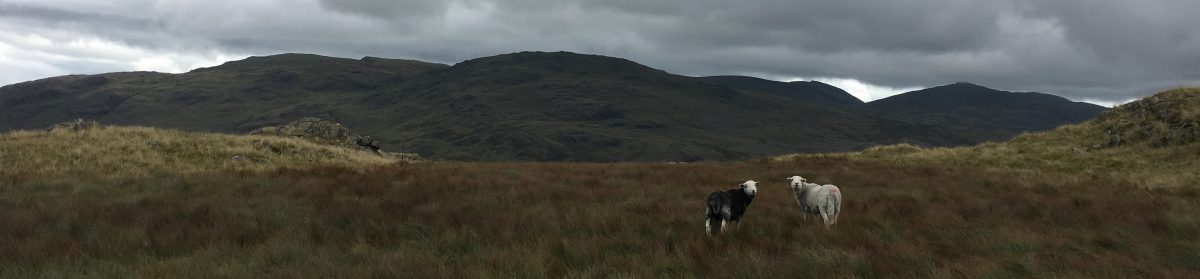
Borrowdale Boxing Day

Over the last few months I have found myself repeatedly in situations where the people I have been with have been insecure; insecure about their marriage; insecure about their health; insecure about their faith; insecure about their position; insecure about their standing. The thing about this insecurity was that it was evident and visible. These people all reacted in particular ways which demonstrated their insecurity. The thing is, for most of the people, in most of the situations there was no reason for them to be insecure at all.

Insecurity is a massive issue in our society. Being a member of that society I am obviously not immune and regularly find myself in situations where I am nervous and edgy. There is no logical reason for these nerves, they demonstrate an insecurity that is deep seated and defies logic.

I am blessed to have a number of islands of security, places where I feel secure, situations where I can be myself. I know that for many people their islands get smaller as they get older; I’m thankful that my current experience is that the islands are getting bigger and I feel secure in more places and more situations than I think I ever have.

One of the reasons that my islands are getting bigger is because I feel like I am becoming less bothered about what others think of me. I used to worry about the opinions of others a lot, even people of no consequence. I try to see things differently these days; I tend to think that people’s opinions of me are their issue and not mine. It doesn’t always work, but I feel like I’m getting their.

There are many reason to feel insecure. Nothing in life is certain, after all. But we can’t live our lives dwelling on the uncertainties. We need to find and expand our islands of security because it is only in these islands that we are truly ourselves. We tend to do strange things when we are insecure. People only see the real us when they see us on our islands of security.

I don’t have any silver-bullet for expanding an island, or even finding a new one, but the investment required is definitely worth it. To expand my islands I return to a story that Jesus told and the promise it included. It’s a well known story and includes a wonderful principle:

“Anyone who listens to my teaching and obeys me is wise, like a person who builds a house on solid rock. Though the rain comes in torrents and the floodwaters rise and the winds beat against that house, it won’t collapse, because it is built on rock. But anyone who hears my teaching and ignores it is foolish, like a person who builds a house on sand. When the rains and floods come and the winds beat against that house, it will fall with a mighty crash.”

Matthew 7
Count Your Blessings #48 – Islands of Security

Borrowdale Boxing Day

Over the last few months I have found myself repeatedly in situations where the people I have been with have been insecure; insecure about their marriage; insecure about their health; insecure about their faith; insecure about their position; insecure about their standing. The thing about this insecurity was that it was evident and visible. These people all reacted in particular ways which demonstrated their insecurity. The thing is, for most of the people, in most of the situations there was no reason for them to be insecure at all.

Insecurity is a massive issue in our society. Being a member of that society I am obviously not immune and regularly find myself in situations where I am nervous and edgy. There is no logical reason for these nerves, they demonstrate an insecurity that is deep seated and defies logic.

I am blessed to have a number of islands of security, places where I feel secure, situations where I can be myself. I know that for many people their islands get smaller as they get older; I’m thankful that my current experience is that the islands are getting bigger and I feel secure in more places and more situations than I think I ever have.

One of the reasons that my islands are getting bigger is because I feel like I am becoming less bothered about what others think of me. I used to worry about the opinions of others a lot, even people of no consequence. I try to see things differently these days; I tend to think that people’s opinions of me are their issue and not mine. It doesn’t always work, but I feel like I’m getting their.

There are many reason to feel insecure. Nothing in life is certain, after all. But we can’t live our lives dwelling on the uncertainties. We need to find and expand our islands of security because it is only in these islands that we are truly ourselves. We tend to do strange things when we are insecure. People only see the real us when they see us on our islands of security.

I don’t have any silver-bullet for expanding an island, or even finding a new one, but the investment required is definitely worth it. To expand my islands I return to a story that Jesus told and the promise it included. It’s a well known story and includes a wonderful principle:

“Anyone who listens to my teaching and obeys me is wise, like a person who builds a house on solid rock. Though the rain comes in torrents and the floodwaters rise and the winds beat against that house, it won’t collapse, because it is built on rock. But anyone who hears my teaching and ignores it is foolish, like a person who builds a house on sand. When the rains and floods come and the winds beat against that house, it will fall with a mighty crash.”

Matthew 7