What is Architecture?

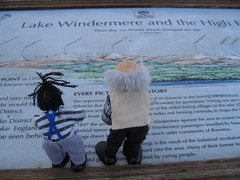
Jimm and Grandad try to work out what they are looking at

Michael Platt tries to define architecture. He plays around with a number of definitions and then as all good architects would he comes up with his own .

“Architecture is the use of abstractions and models to simplify and communicate complex structures and processes to improve understanding and forecasting.”

In my opinion defining architecture is a bit like trying to define cricket to an American. You have to experience it to understand it, and even then it requires some explanation. An American will try to relate cricket to baseball because they think they are similar, but actually they are so dissimilar that the relationship aids confusion rather than understanding. People try to relate IT Architecture to building architecture which actually drives more misunderstand than understanding, in my opinion.

As for Michael’s definition, I quite like it, I think though that it misses a significant element. Architecture is about abstraction and simplification because it is about understanding something so that the likelihood of what gets delivered is what’s required without having to deliver it first. In other words it’s about incremental and iterative agreement on the answer.

Tags:

Architecture Insight Conference Ramblings

Every picture paints a storyThe last few posts have been a set of rambling by myself while sat in sessions at the Microsoft Architecture Insight Conference. The problem was that the wireless LAN in the sessions was a bit dodgy so places where there should really have been links were missing. It was too much like hard work to get them. I’ll update the posts in a while and try to summarise some overall thoughts following the conference.

Architecture Insight Day 2 Session 4: Virtualisation Architectures

I bit to technical as a session or n architecture conference. Think we should have talked more about how we see each of the virtualisation architectures answering the infrastructure questions. We seem to be gaining more and more tools to answer more and more problems but we aren’t actually sure how the tools link to the questions.

Architecture Insight Day 2 Session 3: Enterprise Architectures

Um, very interesting session with loads of thoughts about using different techniques and frameworks and were they may fit in terms of the overall architecture landscape.

Architecture as a business function though, not as an IT function.

Architecture Insight Day 2 Session #1: Enabling Business Flexibility

As with my other posts these are just some thoughts.

Flexibility comes from having modules/systems/solution that have a limited set of dependencies. Where there are dependencies they are abstracted and well understood.

One of the huge challenges that face infrastructures is that the number of dependencies is increasing all the time. It’s one thing to talk about this issue in the application space, it’s another to talk about it down into the infrastructure. The challenge is that the infrastructure is probably changing more frequently that the applications in most businesses.

Do we have strategies for correctly sized components in the infrastructure.


Architecture Insight Conference Session #4: Parallels with the Victorian Engineers

The premise for this session is that as architects we are building the infrastructure for the information revolution that the generations that follow us will have to live with. This is in much the same way as we are dealing with the consequences of the decisions  made by the Victorian engineers.

Good fun abstracting Victorian technology innovations and IT innovations to create a parallel – parallels that are a bit too close for comfort sometimes.

Nice session to end the day with, a session to make you think about the long-term rather than all of the short-term pressures we face every day.

One of the examples that really made sense to me was a parallel of the Tay Bridge Disaster. Basically the design was poor because they guessed a lot of things and didn’t do the maths. The build was poor and didn’t even follow the design and the maintenance was poor. Nothing like IT projects then .


Architecture Insight Conference Session #3: Microsoft Solutions Framework

Interesting session with some key thoughts about projects and teams.

Main point for me was the highlight of the role given to ‘End User Experience’. It’s something myself and Steve Richards have been talking about for a while. Nice to see it coming through so strongly in other people’s thinking.

The post-lunch sleep effect was very strong though.

Architecture Insight Conference Session #2: Managing Identity in a Heterogeneous Environment

Met up with Owen Simpson in the break.

We are going to be looking at some of the concepts developed by Kim Cameron.

It’s Steve Plank. Steve’ s a good presenter so this should be good.

Some thoughts:

7 Laws of Identity:

  • User control and consent – the end-user control is key.
  • Minimal disclosure for a constrained use – people only get what they need to answer their question.
  • Justifiable parties
  • Directed identity – identity shouldn’t be broadcast, it needs to be requested in a direct way.
  • Pluralism of operators and technology – they all need to work together.
  • Human integration – the end-user experience is key.
  • Consistent experience across contexts – the end-user experience is key.

Sometimes in IT you look at things and know they are wrong, later on someone explains to you why they were wrong. This list really helps me to see why a number of identity initiatives have failed. Hopefully it will also help people to build successful ones.

Architecture Insight Conference Session #1: Infrastructure Modelling

This session is looking at the Service Definition Model initiative that Microsoft have been working on and starting to bring to fruition in Longhorn Server.

The Service Definition Model describes a services. Once described, this description can be applied to a server via the Longhorn role configuration infrastructure. These descriptions are also made available to MOM and SMS to finish off the story.

In conceptual terms it looks like Microsoft are finally finishing off the Windows Infrastructure configuration, management and monitoring story and moving towards towards dynamic systems.

Given that they are doing this in the infrastructure are others going to be able to compete? Will all of that expenditure in management frameworks look like a wasted investment?

Microsoft: "People-Ready" Business Value

Why would anyone want to wear that?

Microsoft announces its marketing strategy to business for the 2006/2007 wave of products and it all comes under the banner of “People-Ready”.

Lots of comment on it today from others: Beta News, Microsoft Watch, Clive Watson. It’s been reasonably popular on technorati too.

For some time Microsoft have been using the phrase “People-Driven Process” in the collaboration space. So what is being a “People-Ready” Business about. Well apparently it’s about:

“The company’s [Microsoft’s] People-Ready vision is based on the belief that people are the ultimate drivers of a business’ success. A business that is People-Ready gives its people software tools that enable them to collaborate and work together globally, to contact and serve customers instantly, and to streamline and reinvent processes intuitively.”

From: Microsoft Announces “People-Ready” Business Vision

And Microsoft is aiming to “apply its product portfolio and provide differentiated offerings to a much broader set of customer needs in the following categories”:

  • Unified communications and collaboration. 
  • Enterprise search. 
  • The mobile work force.
  • Business intelligence.
  • Customer relationship management (CRM).
  • Infrastructure.

Which seems to me to be a list of business issues that people are constantly talking about. Whether they are all relevant to every business, I doubt.

I’ve not had chance to read all of the stuff that’s out there so I’m not in a position to talk about the technology but the marketing strikes me as both interesting and puzzling.

What does the tag line of “Inside your company is a powerful force – your people. Are they ready?” actually mean. Yes, I know these people spend millions on creating these things and that they don’t always want to answer their own question, but this one strikes me as particularly obtuse. “Are they ready?” Ready for what? Ready to go home? Ready to join a competitor? Or perhaps they really mean: Ready to do their job? Ready to work smarter?

I think the problem I have is the word “Ready”, “Ready” implies “prepared and available” and “willing”; technology can help with the “prepared and available” bit but has little at all to do with the “willing” bit. Being “willing” needs a business culture the fosters a willingness to go into action. I suppose all I am saying is everything I have said before about business process, but this time I’m going further than that into business culture.

Tags: ,

XBox 360 Team breaths a sigh of relief: Sony PS3 Delayed

Jimmy climbs a tree

The XBox team took some stick for not including HD-DVD (or Blu-ray ) in the specification of the XBox 360. It now looks like Sony is regretting not making the same decision.

The Sony PS3 is delayed by 6 months a period in which half the world (roughly) will have a birthday and the XBox 360 envy increases. OK, they manage to make the important ‘holiday season’ but they manage to give Microsoft a whole year to establish the XBox 360 as the device to own with little competition from the PS2. More than that, all of those XBox 360’s continue to get embedded into the Windows Media Center and Windows Live eco-systems. Eco-systems that some people are finding even more compelling than the ‘games’.

It’s going to be very difficult for Sony to drag all of the XBox 360 fans back.

Helps me make my mind up anyway, all I need now is the XBox 360 prices to come down a shade.

Tags: ,,,

Goldilocks and the Origami

Jimmy plays in the puddles

(I’m still calling the Origami in the vain hope that sense will prevail and we won’t be calling these think UMPC’s in the future)

The Unofficial Microsoft Weblog has a great story about Goldilocks and the three devices today.

Just right .

Tags: ,,