Count Your Blessings #74 – Watering the plants

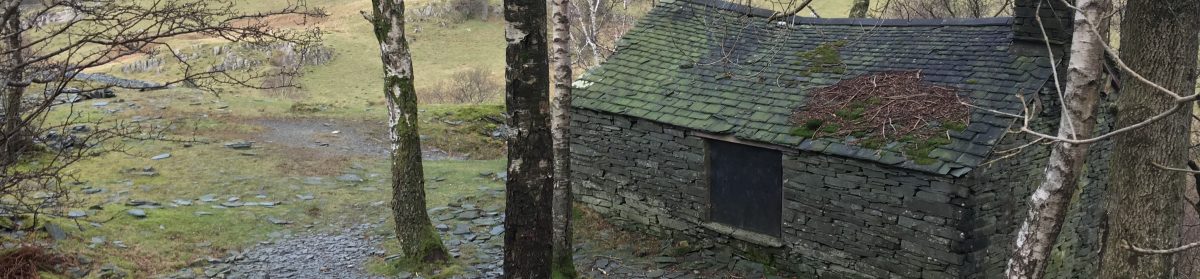
Galleny Force

My parents are really into gardening. When I was a child we had a large garden and two allotments.

For those of you who aren’t from the UK, an allotment is a piece of land that you hire (normally) from the local council in order to have more land to grow things on.

The three children were expected to help out, my brother, my sister and I.

One of the jobs that I had mixed feelings about was the watering. Some days the watering was fun, some days it was pure drudgery.

At the allotments that taps was not directly next to our plots. At one of them it was what seemed like a mile away, but I think it was only a few plots away. This one, I remember, was a screw tap which was really, really difficult to open and close.

At the other allotment the tap was only one plot away. This tap was different. In order to stop water wastage the council had fitted a plunger tap, the type that you press down when you want water and soon after you lift your hand off the water stops. You sometimes see this type in public toilets which is always a challenge because the thing you are trying to wash is the thing that is making the water run. The theory on water wastage hadn’t allowed for human ingenuity though. Hidden behind the tap was a piece of wood which had a slot in it; this slot was just the right size to fit over the top and bottom of the tap once the plunger had been depressed. You could fill a watering can without having to spend the whole time pressing the plunger, you could even wander off and forget about the watering can altogether.

My remembrance of watering at the allotments was that it took hours and hours, but I was a young boy who was easily bored. It probably didn’t take long at all.

Now I’m an adult and have my own watering to do I feel radically different about it. Watering the plants is quite therapeutic. I know that these plants rely on me to bring them life giving water. They need me. They aren’t massively demanding, but they still have a need. A need which I can fulfill.

Although I have fulfilled their need for today I will still need to water tomorrow though.

A woman, a Samaritan, came to draw water. Jesus said, “Would you give me a drink of water?” (His disciples had gone to the village to buy food for lunch.)

The Samaritan woman, taken aback, asked, “How come you, a Jew, are asking me, a Samaritan woman, for a drink?” (Jews in those days wouldn’t be caught dead talking to Samaritans.)

Jesus answered, “If you knew the generosity of God and who I am, you would be asking me for a drink, and I would give you fresh, living water.”

The woman said, “Sir, you don’t even have a bucket to draw with, and this well is deep. So how are you going to get this ‘living water’? Are you a better man than our ancestor Jacob, who dug this well and drank from it, he and his sons and livestock, and passed it down to us?”

Jesus said, “Everyone who drinks this water will get thirsty again and again. Anyone who drinks the water I give will never thirst—not ever. The water I give will be an artesian spring within, gushing fountains of endless life.”

John 4

Count Your Blessings #73 – Breakfast

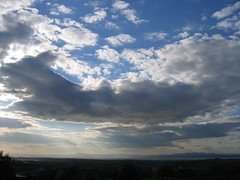
Big Sky

This morning I got out of bed and went downstairs. At the bottom of the stairs I turned right, went down a little corridor and into the kitchen. In the kitchen I opened a cupboard and took out a bowl. I placed the bowl on the work-surface next to another cupboard. I open the other cupboard and took out some cereal. I then reached into the fridge below the work-surface and took out some milk. I poured the milk onto the cereal. I then opened a draw and took out a spoon. Remembering first to shut all of the various cupboards I picked up my bowl of cereal and milk and proceeded into the lounge. In the lounge I ate my cereal.

This routine is similar to the one I follow almost every morning. I follow it so regularly that it has become familiar and almost automatic; so automatic that most of the time I forget what a luxury it is.

I don’t have to worry about whether there will be any cereal in the cupboard – there is always some sort of cereal in the cupboard.

I don’t have to worry whether there will be any milk. If there isn’t any in the fridge there is normally some on the doorstep. If things are really bad and there isn’t any on the doorstep I can get in my car and get some within 10 minutes.

It’s important that we remember that these are luxuries, for most people in the world food is a day-to-day hand-to-mouth struggle.

Sometimes I catch myself getting annoyed that the cereal available in the cupboard isn’t the cereal that I wanted that day when I realise what I am doing I feel ashamed.

Count the day-to-day blessings as well.

Count Your Blessings #72 – A Cake from a Friend

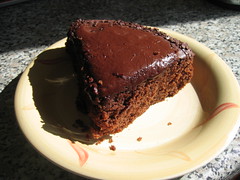
Chocolate Cake

A family friend was visiting yesterday. She bought with her a magnificent chocolate cake (pictured). It was still in good shape when she left – it isn’t now .

I can’t see it lasting the rest of the day, the diets are definitely out of the window today. I’ve already been down the gym this morning so I’m using that as my justification for just one more piece, or perhaps two, I did work very hard, honest .

I’m sure it was bigger than this when I left for the gym, perhaps the kids had some in their lunch boxes .

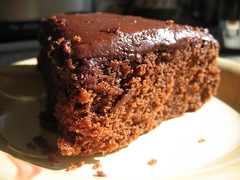
Chocolate CakeIt’s very nice with a cup of coffee.

Count Your Blessings #71 – Eating Something I Have Planted

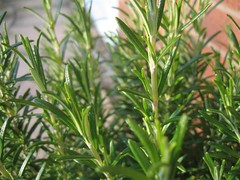
Rosemary

We don’t have a vegetable patch in our garden, but we do have a number of pots which we use to grow various things that we like to eat. Taste is not the only criteria for growing things though, we only grow stuff which doesn’t require too much attention, we also like things that produce results quickly.

Over the last few days we have started to eat some of the things that we have grown.

On Sunday we had a first carrots, thinned out little ones which were really tasty. The carrots were followed by wonderfully tasty strawberries.

Last night we had lettuce and rocket, along with new potato seasoned with fresh mint.

These all tasted infinitely better than anything we have bought in a shop. Whether an independent taste test would confirm this; I don’t know. If beauty is in the eye of the beholder, taste is definitely in the mouth of the grower. I grew them, and to me they taste fabulous.

We still have beans, peas, courgette, tomatoes and sweet corn to look forward too, as well as more lettuce, rocket, strawberries and carrots – delicious, perhaps not all in the same dish though.

I don’t really see myself as the grower though – I just planted them and gave them the occasional watering.

Jesus told a number of parables about crops and harvesting. It’s not surprising really, he was talking to a rural community. One of the famous ones is this one:

“What do you make of this? A farmer planted seed. As he scattered the seed, some of it fell on the road, and birds ate it. Some fell in the gravel; it sprouted quickly but didn’t put down roots, so when the sun came up it withered just as quickly. Some fell in the weeds; as it came up, it was strangled by the weeds. Some fell on good earth, and produced a harvest beyond his wildest dreams.”

Matthew 13

Another translation goes like this:

“A farmer went out to plant some seed. As he scattered it across his field, some seeds fell on a footpath, and the birds came and ate them. Other seeds fell on shallow soil with underlying rock. The plants sprang up quickly, but they soon wilted beneath the hot sun and died because the roots had no nourishment in the shallow soil. Other seeds fell among thorns that shot up and choked out the tender blades. But some seeds fell on fertile soil and produced a crop that was thirty, sixty, and even a hundred times as much as had been planted.”

Matthew 13

That’s an interesting story, but then Jesus goes on to say these words:

“Anyone who is willing to hear should listen and understand!”

Understand what? Hear what? Why was he talking in parables anyway? These were exactly the stories the disciples asked. If you read the rest of the chapter Jesus goes on to explain why he uses parables and the meaning of this particular parable. I’m not going to go over His explanation other than to say:

“The seed cast on good earth is the person who hears and takes in the News, and then produces a harvest beyond his wildest dreams.”

Count Your Blessings #70: Nostomania

Stone Circle

One of the mind games I try to play in order to keep my brain active is to try and learn a new word every day. I do this by subscribing to wordsmith.org A.Word.A.Day. I don’t always remember them because, to be honest, sometimes the word is not one I’m likely to use in my normal life.

I’ve been away on business this week. I left on Tuesday and returned late Thursday. On Wednesday the word for the day was nostomania.

Nostomania: An overwhelming desire to return home or to go back to familiar places.

I’m not sure I was suffering an ‘overwhelming desire’ but when I am away the desire to be home is always there.

I count it a real blessing that my home is somewhere that I actually want to return to.

Thing may not always be rosy at home, but I’d rather be here than anywhere else on earth.

But what makes a home – a home. It’s not the building, or even the things in it, it is the people inside and the people near by.

Count Your Blessings #69 – Dew Between My Toes

Evening Light

Today I went out into the garden to do some reading. I was reading from my computer so wanted to sit on a chair in the shade. As I tramped across the grass in my bare feet it suddenly became refreshingly cold and damp. It was a wonderful feeling on such a warm day.

Mean-tempered leaders are like mad dogs; 
the good-natured are like fresh morning dew.

Proverbs 19:12

(No it isn’t my garden in the picture, I’m not that fortunate)

Count Your Blessings #68 – Pleasant Surprises

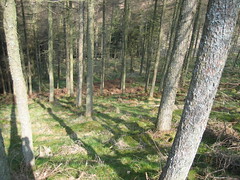
Trees

After a long frustrating day with lots of driving and good dollop of delays – I arrived home 2 hours after I had planned to. It had been one of those days when you don’t just get one delay, you get a wonderful variety of them. Some delays have a point and a meaning, today’s mostly didn’t. The most pointless was a 30 min delay on the M6 because everyone wanted to slow down to look at a car transporter which had turned over – on the other carriageway. I suppose I should be counting my blessings that I wasn’t on the other carriageway, they had a much longer delay ahead of them.

On days like this I like to go out for a walk to clear my head. It doesn’t need to be a long walk just long enough to replace the diesel fumes with something a bit more natural.

I am in wonderfully privileged position of being able to walk a short way and then turn off into some woods and meadows. It’s been raining a lot and the meadow smell fragrant. There was a nice sunset building. I could already feel the frustration starting to lift as I walked along. And then as I looked out of the corner of my eye over towards the little pond, stood quite still looking straight at me was a deer. It stood and it stared, quite still. It wasn’t stressed or tense, it was just looking. it was looking at me and I could almost hear it saying ‘Chill Graham. Let go of the frustration. It’s a beautiful evening’. We both stood there for several minutes until eventually the deer walked off towards the trees and nibbled at the fresh new shoots that were provided there.

What a pleasant surprise. Definitely one of those “should have bought the camera” moments.

I was so excited when I got back that I started to write this blog. Then Sue got back from her evening out and we both went off to see if the deer was still there, but it was off munching fresh new shoots on some other trees.

As the deer pants for streams of water, so I long for you, O God.

I thirst for God, the living God. When can I come and stand before him?

Psalm 42

Count Your Blessings #67 – Anywhere Worship

Helvellyn from Red Tarn

Some passages in the Bible require some background for them to have their true impact.

John chapter 4 documents a remarkable meeting. It’s known in Christian circles as ‘The Woman at the Well’.

In this encounter Jesus meets a woman at a well. She is the only one there and there is a reason for that, she is an outcast from her own society. She was collecting water at noon, something that isn’t a good idea in the searing heat of the day. Anyone walking past would have known she was an outcast, it didn’t require special powers on Jesus’ behalf to know it. It was so obvious that John doesn’t even bother giving any more details. From a Jewish perspective though it was worse than that, this woman was a Samaritan and the Jews hated the Samaritans. The Samaritan believed that the way they worshipped was the right way – the Jews clearly believed the opposite. For me as someone within a western culture, it also has to be noted, that this was a ‘woman’. Men didn’t talk to women outside their immediate family, that was a scandalous thing to do.

So does Jesus treat an outcast Samaritan woman?

Well, he asks her for a drink of water, the woman is astonished and so a conversation ensues. But this is no ordinary conversation over a glass of water this meeting is about to reveal something profound. A conversation in which Jesus opens up the woman’s life and reveals the route to salvation and redemption, but also a conversation in which Jesus proclaims the true place of worship.

“Oh, so you’re a prophet! Well, tell me this: Our ancestors worshipped God at this mountain, but you Jews insist that Jerusalem is the only place for worship, right?”

“Believe me, woman, the time is coming when you Samaritans will worship the Father neither here at this mountain nor there in Jerusalem. You worship guessing in the dark; we Jews worship in the clear light of day. God’s way of salvation is made available through the Jews. But the time is coming—it has, in fact, come—when what you’re called will not matter and where you go to worship will not matter.


“It’s who you are and the way you live that count before God. Your worship must engage your spirit in the pursuit of truth. That’s the kind of people the Father is out looking for: those who are simply and honestly themselves before him in their worship. God is sheer being itself—Spirit. Those who worship him must do it out of their very being, their spirits, their true selves, in adoration.”


John 4:19–24

sunset

Not only was the circumstances of the conversation shocking, but so was the conversation itself. Jesus proclaims that it doesn’t matter where you worship! It doesn’t matter if you worshipped on the mountain. It doesn’t matter if you worship in Jerusalem. You can worship anywhere.


I have spent much of my Christian life trying to live in the reality of that statement. Another Bible translation puts it like this: “But the time is coming and is already here when true worshippers will worship the Father in spirit and in truth.” It’s not about the words, or the music, or the place, or the time, it is about spirit and truth. I’d like to be able to say that I live every moment of my life at the same point on the worship experience quotient but I’d be lying. There are places, times, music and words that have helped me to go deeper in my experience of worship but that’s because those things have touched my spirit. The things that have touched my spirit are regularly not things that people would directly associate with a Christian experience of worship.


I have worshipped while reading psalms at the top of a very windy mountain. I have worshipped while on my morning walk listening to Bob Dylan. I have worshipped eating a meal with friends. I have worshipped driving to work while listening to Radio 4. I have worshipped in a plane while watching a movie. I have worshipped while sat next to a log fire relaxing with my family. I have worshipped in ancient churches where I was the only person present. I have worshipped in modern industrial units with smoke, loud music and lights. I have worshipped on my own. I have worshipped with thousands. I have worshipped in a tent while the rain patters down. I have worshipped on a beach ass the sea roars in. I have worshipped in a train watching the sunset out of the window.


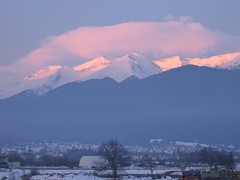
skiing in bansko, bulgaria

The woman said, “I don’t know about that. I do know that the Messiah is coming. When he arrives, we’ll get the whole story.”


“I am he,” said Jesus. “You don’t have to wait any longer or look any further.”


Just then his disciples came back. They were shocked. They couldn’t believe he was talking with that kind of a woman. No one said what they were all thinking, but their faces showed it.


The woman took the hint and left. In her confusion she left her water pot. Back in the village she told the people, “Come see a man who knew all about the things I did, who knows me inside and out. Do you think this could be the Messiah?” And they went out to see for themselves.


John 4:25–30


(I’m focusing on the ‘anywhere’ today, I’m planning an ‘anyhow’)

Count Your Blessings #66 – Shades of Grey

Rocks

Grey – what picture does that word paint in your mind. Is the picture characterised by dull, drab or even dreary.

I thought I’d have a look on the Dulux Paints web site to see how they describe grey. I looked through their vast range of colours but couldn’t find anything called ‘grey’. The grey colours are called wonderful things like ‘Ebony Mists’, ‘Ice Storm’, ‘Clouded Slate’ and ‘Quartz Flint’.

Grey isn’t just a colour though it’s used to describe and symbolise all sorts of things. If you are grey haired then you are old. If you look grey you look ill.

So why is grey a blessing?

There are two types of grey that I regard as a blessing. The first is the grey you find in black & white photographs. The thing with black & white photographs is that they aren’t black & white, they are shades of grey. There is something about a picture that is made up of shades of grey that brings a depth and vitality that you just don’t get with pictures in full colour.

The other grey I find a blessing is the grey that exists in the answers to so many questions that we ask. These questions don’t have an answer that is yes or no, right or wrong, black or white. The answers to these questions are grey, they are more complicated than black or white. We have a choice with these questions. We can either regard the grey as something of a problem, or we can regard the grey a something to treasure, something to contemplate and something to chew over. Chewing over the question doesn’t change the question, but it does change us, it often leads into other questions. Treasuring these questions can help us to understand how other people see the same question.

Martyn Joseph wrote a song about this:

Treasure the Questions

Locked in my heart there’s a child
Knocking the door to get out
Asking the questions that hurt and
Sometimes there’s a question of doubt
I can’t pretend that it’s easy
I can’t pretend that I win
When your search in this life is over
That’s when the struggle begins

And if I don’t find out the search is not in vain
And if I don’t find out I
Treasure the questions as they rage in my mind
I treasure the questions some day I will find
I ran out of answers such a long time ago
And I treasure the questions wherever I go

Searching Sahara’s of sorrow
Trying to understand why
But the journey has brought me so much closer
I don’t have to stand here and lie
Over and over I cried in the darkness
Over and over to see
The crime is to sit and not wonder
Renewing my mind set me free

And if I don’t find out the search is not in vain
And if I don’t find out I
Treasure the questions as they rage in my mind
I treasure the questions some day I will find
I ran out of answers such a long time ago
And I treasure the questions wherever I go

Count Your Blessings #65 – Being Put in My Place

Jesu Loves You

Today I sat at a computer, answered a few questions about driving and safety. This was all so that my employer could assess my driving risk. Common drivers (of which I used to be be one, but aren’t really anymore) are some of the most endangered people on the planet according to the web site.

At the end of it I fully expected to be told that my driving was OK.

My opinion of my own driving risk was not to be though.

“Overall Rating: At High Risk”

Oh great, that’s me told.

It does me good to be put in your place every now and then. When it comes to driving it’s good to be reminded of the risk that you place yourself and others in every time you sit behind that wheel.

Being put in your place works both ways though:

But you are the ones chosen by God, chosen for the high calling of priestly work, chosen to be a holy people, God’s instruments to do his work and speak out for him, to tell others of the night-and-day difference he made for you–from nothing to something, from rejected to accepted.

1 Peter 2:9–10

Count Your Blessings #64 – Stories, Fables and Parables

Harewood House Signs

For thousands of years ordinary people communicated almost exclusively by word-of-mouth. There wasn’t really any alternative because most people didn’t read or write. The richest forms of communicating are the story, the fable and the parable. And the best stories are those that are communicated by word-of-mouth. They have been passed from generation to generation. We seem to be hard wired to take in the meaning of a story in a way that simple instructions just don’t convey.

One of the most visited pages of this site is the story about the mayonnaise jar. I’m sure that most of you, if you have already read the story, will be able to tell me the end of the story after just a few short lines at the beginning to remind you of the story. You’ve perhaps ever remembered the story in a busy time, a time when you were focusing on the urgent rather than the important.

I’ve recently been reading the Coyote Workplace Fables by Adrian Savage. They are really well written stories that have a great ability to communicate a message. The one on Coyote Teaches Time Management has a real resonance with the Mayonnaise Jar Story.

Jesus was, of course, the Master story teller. The Parables are so rich in meaning and still connect today even though most of them were related to an agricultural existence that most of us no longer know. Jesus obviously knew that these words would last. Take the parable of the Wise and Foolish Builders:

“Anyone who listens to my teaching and obeys me is wise, like a person who builds a house on solid rock. Though the rain comes in torrents and the floodwater rise and the winds beat against that house, it won’t collapse, because it is built on rock. But anyone who hears my teaching and ignores it is foolish, like a person who builds a house on sand. When the rains and floods come and the winds beat against that house, it will fall with a mighty crash.”

Matthew 20

How’s that for simplicity, but what a profound message.

And then there are the truly profound ‘lost’ parables; the lost coin, the lost sheep and the lost son.

The Story of the Lost Sheep

By this time a lot of men and women of doubtful reputation were hanging around Jesus, listening intently. The Pharisees and religion scholars were not pleased, not at all pleased. They growled, “He takes in sinners and eats meals with them, treating them like old friends.” Their grumbling triggered this story.

“Suppose one of you had a hundred sheep and lost one. Wouldn’t you leave the ninety-nine in the wilderness and go after the lost one until you found it? When found, you can be sure you would put it across your shoulders, rejoicing, and when you got home call in your friends and neighbours, saying, ‘Celebrate with me! I’ve found my lost sheep!’ Count on it–there’s more joy in heaven over one sinner’s rescued life than over ninety-nine good people in no need of rescue.”

The Story of the Lost Coin

“Or imagine a woman who has ten coins and loses one. Won’t she light a lamp and scour the house, looking in every nook and cranny until she finds it? And when she finds it you can be sure she’ll call her friends and neighbours: “Celebrate with me! I found my lost coin!’ Count on it–that’s the kind of party God’s angels throw every time one lost soul turns to God.”

The Story of the Lost Son

Then he said, “There was once a man who had two sons. The younger said to his father, ‘Father, I want right now what’s coming to me.’

“So the father divided the property between them. It wasn’t long before the younger son packed his bags and left for a distant country. There, undisciplined and dissipated, he wasted everything he had. After he had gone through all his money, there was a bad famine all through that country and he began to hurt. He signed on with a citizen there who assigned him to his fields to slop the pigs. He was so hungry he would have eaten the corncobs in the pig slop, but no one would give him any.

“That brought him to his senses. He said, “All those farmhands working for my father sit down to three meals a day, and here I am starving to death. I’m going back to my father. I’ll say to him, ‘Father, I’ve sinned against God, I’ve sinned before you; I don’t deserve to be called your son. Take me on as a hired hand.’ He got right up and went home to his father.

“When he was still a long way off, his father saw him. His heart pounding, he ran out, embraced him, and kissed him. The son started his speech: ‘Father, I’ve sinned against God, I’ve sinned before you; I don’t deserve to be called your son ever again.’

“But the father wasn’t listening. He was calling to the servants, “Quick. Bring a clean set of clothes and dress him. Put the family ring on his finger and sandals on his feet. Then get a grain-fed heifer and roast it. We’re going to feast! We’re going to have a wonderful time! My son is here–given up for dead and now alive! Given up for lost and now found!’ And they began to have a wonderful time.

“All this time his older son was out in the field. When the day’s work was done he came in. As he approached the house, he heard the music and dancing. Calling over one of the houseboys, he asked what was going on. He told him, ‘Your brother came home. Your father has ordered a feast–barbecued beef!-because he has him home safe and sound.’ The older brother stalked off in an angry sulk and refused to join in. His father came out and tried to talk to him, but he wouldn’t listen. The son said, ‘Look how many years I’ve stayed here serving you, never giving you one moment of grief, but have you ever thrown a party for me and my friends? Then this son of yours who has thrown away your money on whores shows up and you go all out with a feast!’

“His father said, ‘Son, you don’t understand. You’re with me all the time, and everything that is mine is yours– but this is a wonderful time, and we had to celebrate. This brother of yours was dead, and he’s alive! He was lost, and he’s found!’”

Luke 15

These stories have a superb timeless quality to them, but if you do understand the historic context they are even richer. In the parable of the lost coin the coin probably wasn’t intended to be just an ordinary copper that she used to buy stuff at Asda. The listeners would have thought of the dowry coins that she would have been given, precious things. In the story of the lost son the son ends up feeding pigs; that sounds like a job I wouldn’t want to do but for a Jew that must have been lower than low. Again, in the parable of the lost son when the father saw the son “His heart pounding, he ran out, embraced him, and kissed him. ran out, embraced him, and kissed him.” He ran? That was a disgraceful thing for a man of honour to do only servants ran.


I like to think of these stories as road signs that guide our way as we progress along life. They inhabit our consciousness and remind us of truth at the correct time.


Some people have challenged me construct some stories around Jimmy and Grandad – what do you think? I’ve never really written stories, it might be fun to try.
Count Your Blessings #63 – Piles of Shoes

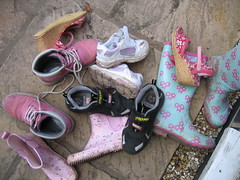
ShoesThere are regularly piles of shoes to be found at the Chastney household; large ones, small ones, boots, shoes, flip-flops, sandals, pink, black, clean, dirty, polished, trainers, wellington, jellies, red, green, brown, laced, velcro, unlaced, plastic, cloth, leather. Each of these shoes have brought with them someone who wants to come into our house.

Sometimes the shoes bring people in need, sometimes they bring people who want to have fun, sometimes they even bring members of the family.

We don’t have rules about the types of shoes which are allowed to come and we don’t have rules about the people they bring.

A pile of shoes is a sure sign that the shoes want to come for whatever reason. It’s a blessing to be privileged with so many of them visiting.

Never give up. Eagerly follow the Holy Spirit and serve the Lord. Let your hope make you glad. Be patient in time of trouble and never stop praying. Take care of God’s needy people and welcome strangers into your home.

Romans 12