| Graham’s Walks | 📌 |
|---|---|
| Distance | 4 miles |
| Difficulty | Moderate |
| Map | 🗺️ |
| GPX | 📁 |
Most days I enjoy walking straight from my front door. There are plenty of options for a morning walk and getting in a car to go somewhere feels an unnecessary complication. Also, where I live, the main road can become a slow moving carpark making movement slow and frustrating – which is somewhat counter to the purpose of going for a walk.
There are some days, though, when I want to mix things up a bit and this little walk is a very short drive for a welcome change of scenery.
Brockholes is a local Wildlife Trust Nature Reserve situated in a former sand-pit. At one side it is enclosed by the River Ribble, along another side it’s the M6, around two other sides are wooded banks. Through the middle runs the Guild Wheel which also provides us with the pathway for the start of this walk.
Brockholes is worth a visit with its floating visitor village, play area, wildlife hides and country walks. It’s easily accessible off J31 of the M6. The only charge is to park and as this walk start by parking elsewhere that doesn’t apply. Because of that I would encourage you to think about how you might contribute financially to the nature reserve.
(Note: There is also a Brockhole (without the ‘s’) between Windermere and Ambleside, don’t get the two confused.)
My walk starts at Preston Crematorium which is accessed via a long tree-lined drive off Longridge Road. Part way along the drive is a small carpark on outward side of the road, followed by another small carpark on the inward side. Park in the outward side carpark if you can, the path runs alongside.
Note: The driveway to the crematorium has gates and they are closed in an evening. There are different opening times for Winter and Summer. Please make sure that you check that you will be able to get your car out at the end of your walk. There is always a notice at the gate and one at the start of the path, the opening times are also on the web site.
At the start of the path, we are on the Guild Wheel which is nicely tarmacked for cyclists and pedestrians alike. This is a shared path, and you should expect to see cyclists.
There is some historical interest in this area. The walk starts in the grounds of the former Red Scar House, home of one William Cross who also helped to model Winckley Square in Preston. The house is long gone, having been demolished in 1939, but you can still see the basic outline of the grounds in the trees that remain. The adjacent industrial estate, for which the house was demolished, then became Courtaulds Red Scar Works one of the largest producers of rayon in Britain and employing 4,000 people. The Courtaulds days came to an end in 1979, but local people still refer to as by that name.
From the carpark, I follow the Guild Wheel through the woods, across some more open land towards Red Scar Woods. It’s springtime and the trees are in full leaf, but I can still catch glimpses of the River Ribble, and the Ribble Valley views beyond.
The tarmacked section eventually runs out just about where there’s a fork in the path. I take the path to the left alongside the woods and then, eventually, into the woods and down the hill. The hill is moderately steep and can be slippery.
At the bottom of the hill, I take a path off to the left towards the river. The river is tidal at this point and different every time. Depending on the time of year this is a great place to see kingfisher, sand-martins and various other waterfowl. On this occasion it’s too early for the sand-martin and no blue flash of a kingfishers either. I’m still hoping to see an otter.
There’s something therapeutic about walking alongside water, it’s flowing gently today. The river can flood here and needs to be treated with respect.
You can walk alongside the river all the way into Preston, but I only go as far as the entrance to the nature reserve, continuing to the right alongside the M6.
One evening I stood for several minutes watching a barn owl hunting in this section. They are magical to watch, silently, effortlessly flapping and gliding then suddenly dropping like a stone. I take a short diversion to sit in one of the hides overlooking the ponds, the ponds are a great place to watch Starling murmuration. The starlings don’t always nest in the same place, so you do need to track them down.
I steadily work my way back to the bottom of the hill, then it’s back to the top and along the woods to the car. In the early spring the wooded bank that I came down and need to climb are adorned with bluebells, this wood is also a wonderful place to see the local deer.
There are a few variations to this walk:
The route outlined skirts around the edge of the reserve, if you want to see the visitor village where there are toilets and a cafe, there are several places where you can branch off.
If you do branch off to the visitor village there are several other hides to explore. One of the hides is regularly visited by a local Kestrel, known as Kevin, who is happy to show off their hunting prowess.
At the start of the walk there are several options to walk through the woods before you go down the banking. Some of these are more arduous than others but will give you better views of the panorama when the leaves are on the trees.
You can also drive into the nature reserve, park up, and explore from there. This is an especially useful option if you are looking for a walk without a hill.
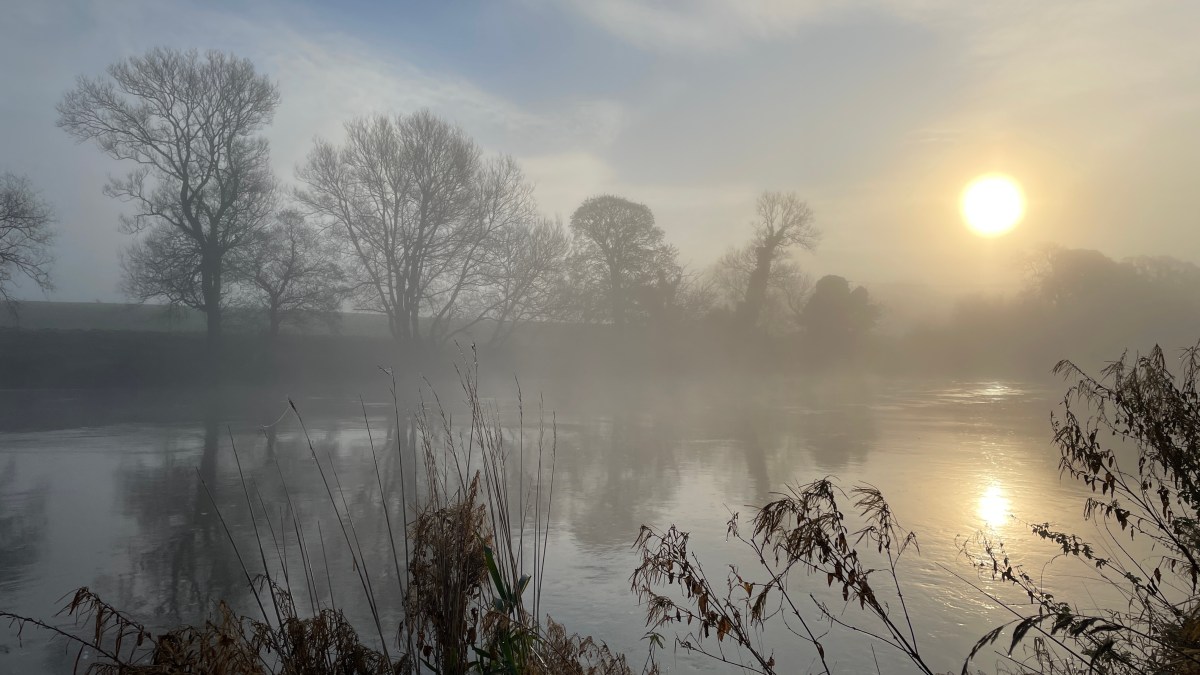
Header Image: The view across the Ribble on a misty morning.




Discover more from Graham Chastney
Subscribe to get the latest posts sent to your email.
 Graham Chastney